suzlon1

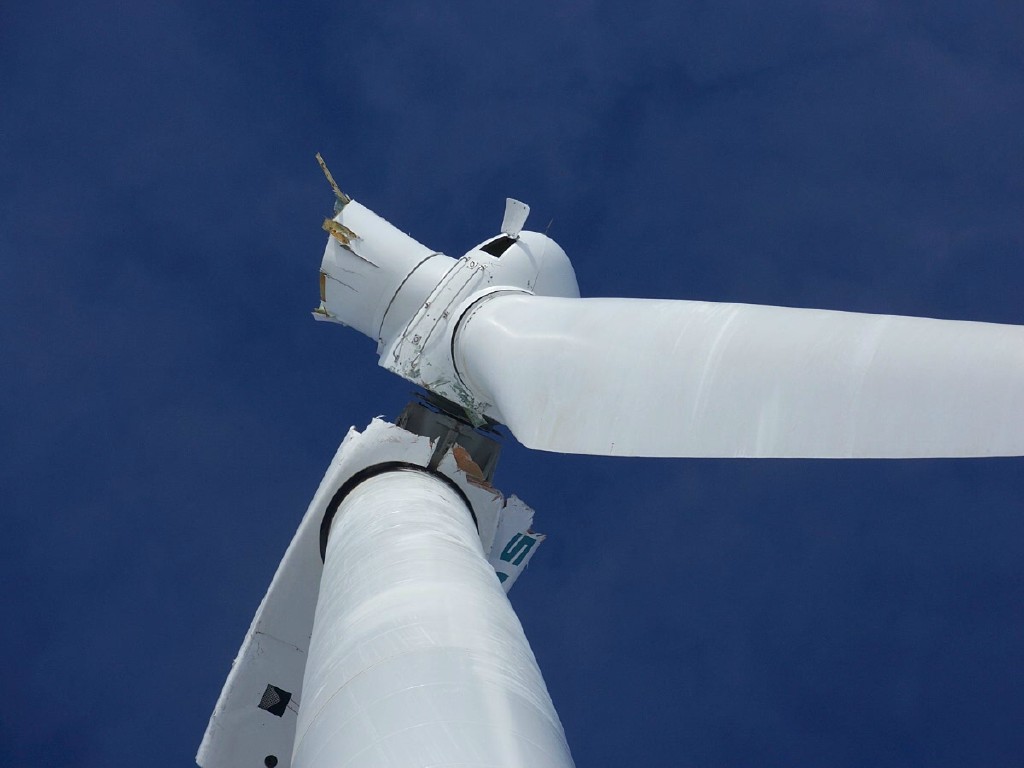
Oops, there goes a Suzlon…

Anyway, today the STrib has an editorial today about increasing setbacks — it’s a mixed bag — scroll way down below to read it.  This concern of setbacks is ramping up and  goes back to concerns raised over the years regarding individual projects as they wind their way through the permitting process.  Now there is this PUC Docket that is coming to a head, based on a survey report commissioned by the Commission — they’re supposed to have a PUC meeting addressing this docket, maybe this month, but no word yet, don’t worry, I’ll post notice here (we know they’re not so hot on giving notice to non-wind industry interests in this docket):

MN Dept of Health – Public Health Impacts of Wind Turbines

To look at that docket, CLICK HERE FOR PUC SEARCH, and search for docket 09-845.

This also comes at the time that Comments are due in the Goodhue Wind PPA docket.  To look at that, go to CLICK HERE FOR PUC SEARCH, and search for dockets 09-1349 and 09-1350.  For the Certificate of Need docket for Goodhue Wind, see Docket 09-1186.

Yesterday (the comment deadline WAS yesterday) I filed this for Goodhue Wind Truth:

Goodhue Wind Truth – Comment 2

Then it turns out the PUC had filed another extension for MOES (seems they can’t meet a deadline these days, the EIS for CapX was also just delayed today too) and the deadline is now 2/12 for Comments and 2/22 for Reply Comments.   GREAT!  Another whack at the apple…  Now’s your chance.  You can eFile them at the PUC site, or mail in, take a look at the Comment above to get an idea how to do it.

Back to wind generally — This opinion piece was in the Republican Beagle a few days ago:

Study of wind project may blow you away

Erin Logan

Zumbrota

I found out by pure accident my home is in the Goodhue Wind Project area by looking at the map published Dec. 9 Zumbro Shopper. What a surprise. Why wasn’t I notified?

I received a packet in the mail sometime around Dec. 15 from a Twin Cities attorney; let’s just call it “notification.” I decided I better read the information to find out what it means to be in the Goodhue Wind Project.

The 212-page document is a dry read, but some interesting information caught my attention. It includes a site map identifying homes and proposed placement of the 400-foot tall wind turbines.

To my surprise my home does not exist on the proposed project map, but it does show a wind turbine 100 feet from my home and two more within 1,500 feet. I wonder how many other homes have been omitted from or wiped off the map?

Let me share a few things I have learned since I read through this packet.

The Minnesota Public Utilities Commission has jurisdiction over this project due its size. The public can submit comments regarding the permit application until Jan. 22. I will definitely take advantage of this opportunity, although I’m not sure how much good it will do.

I understand the PUC was made aware of homes not included in the project application, but were not concerned with the detail of the site plan.

Reading through information on the PUC Web site I learned a state statute allows our county commissioners to adopt more stringent zoning ordinances for Large Wind Energy Conversion Systems. This means our local elected officials have the authority to define what is best for Goodhue County residents regarding this project.

The purpose of the setback is to protect adjacent landowners if the turbine falls over, mitigate noise levels and shadow flicker that may be imposed on their homes. It will also provide protection if any ice builds up on the blades, breaks off and plummets 400 feet to the ground.

I have learned that current Goodhue County zoning setback requirements do not allow a wind turbine to be erected within 750 feet of a dwelling. This is reciprocal in that a dwelling cannot be constructed within 750 feet of a wind turbine.

Hmmm, I think I just lost the right to build an attached garage or an addition between my house and that wind turbine 750 feet away.

The property line setbacks are less stringent: 500 feet for a 400-foot tall wind turbine.

I encourage anyone who has an unoccupied residence or temporary dwelling in place to speak up. This project could restrict where you are allowed to build on your property.

Gaps in the system like this make it clear to me we are not prepared to endorse a project of this magnitude. This is new territory that warrants some education in lieu of assuming we can rely on outdated regulations to provide safety, health and well-being to Goodhue County residents.

As I read through this permit application I see inaccurate data, incomplete information and open-ended statements. There are far too many to include in detail, so I’ll share a few of the items that seem fairly important to me.

• Actual wind turbine size — The permit application states that this can be changed to meet the needs of the project. Will they be 300 feet, 400 feet or taller?

• Equipment specifications — The application identifies the sound level created by the smallest wind turbine they would choose to install. This data is used to determine the distance the wind turbine can be located from your residence while ensuring they don’t exceed the maximum amount of noise pollution you can be subjected to.

• Project decommissioning — As stated in the application, all above-ground equipment and foundations, to a depth of 4 feet, will be removed. This does not meet Goodhue County Ordinance, Article 18, Section 5, Subd. 10.

• Economic impact — This is such a multi-faceted topic, but it is good to note the claim that the local economy will benefit from the dollars the project will pay in state and local taxes and the long-term beneficial impacts to the counties’ tax base. Take a look at the corporate Web site — http://www.nationalwind.com/minnesota_wind_facts — which lists the financial incentives for wind projects. The way I read that information, this project will be exempt from both property and sales tax.

I would also like to know what kind of long-term impacts this will have on local and county roadway lifecycles.

I hope enough people encourage our commissioners to update zoning ordinances to adequately mitigate the impact of a Large Wind Energy Conversion System on Goodhue County residents.

For anyone who thinks this doesn’t affect them, keep in mind wind conditions are similar throughout Goodhue County and there is a lot of land out there. Implementing this project may open the door for wind turbines in your neighborhood.

I need more information before I can make an educated decision on whether this project will be a benefit or a detriment. Perhaps others in and around the Goodhue Wind Project area have received more information.

This is a community-based project, yet I have never had one of the local representatives stop by during one of the many trips they’ve made past my home. I believe that a good idea is worth talking about, so why all of the secrecy?

Here’s the response of Ann Occhiato, a  landowner who lives in the proposed Greenvale project in Dakota County to the STrib editorial, below:

I am writing in response to today’s editorial on increased wind turbine setbacks.  While the editorial highlights the critical need to increase setbacks to maintain wind’s momentum, it minimizes the reasons why setbacks are important in the first place.

There is, in fact, credible evidence that low frequency sound from wind turbines can have a negative impact on health.  The Minnesota Dept. of Health’s white paper on the Public Health Impacts of Wind Turbines outlines this and recommends the cumulative affect of multiple turbines be taken into account when evaluating sound impacts, which is not currently done.  There is a huge amount of circumstantial evidence from homeowners living near turbines all over the world on the negative impacts to quality of life, health, safety, and property values.  While the wind industry and proponents of wind like to point to studies that minimize these issues, numerous other studies show these impacts to be real.

The fact is there are serious issues related to wind farming that need to be addressed including setbacks, environmental regulation, property rights, health, safety, quality of life, and economic justice, among others.  Industrial scale wind turbines clustered in “farms” can ruin neighborhoods and seriously alter the course of people’s lives.  Belittling their concerns will not help the wind industry in Minnesota and it certainly does not make us a national leader.

As wind continues to spread these problems will only become more pronounced.  Increased setbacks, pre-permitting site guidelines, community support and involvement, alternative modeling, and other solutions are necessary for the continued growth of the wind industry in Minnesota.  Developers, public officials, legislators, and environmental groups have a responsibility to address these issues.

Ann Occhiato

Here’s the STrib’s editorial:

Editorial: Reconsider setbacks for wind turbines

Expand wind energy while respecting rural livability.

To drive through the Minnesota countryside is to drive through contradiction. Those vast rolling fields — are they busy engines of production for the agriculture industry? Or are they places of natural beauty, serenity and tranquility?

It’s harder nowadays to have it both ways. The rapid advance of wind farming, for example, has transformed the rural landscape. Hardly anyone denies the value of the clean energy produced by the giant wind turbines going up on sparsely populated land all across the country. At last count there were nearly 1,500 such turbines operating in Minnesota, making it the nation’s fourth-largest wind power-producing state. Many more turbines are on the way, and that’s a good thing.

But if badly located, the machines can harm not only the beauty and serenity that so many rural people value, but invite thoughtless and pernicious opposition to wind power generation. That, in turn, could impede the changeover to greener energy that’s so badly needed. Minnesota must keep pace with its goal of producing 25 percent of its electricity from renewable sources (mostly wind) by 2025. The current share from wind is about 5 percent.

As the Star Tribune’s Tom Meersman reported last week, complaints about wind turbines are mounting, less on their merits than on their occasionally inappropriate locations. A family near Austin, for example, lives just across the road from a wind farm. One giant turbine, about 900 feet away, casts a flickering shadow over their 100-year-old farmhouse. There’s little they can do. State law allows commercial turbines as close as 500 feet from dwellings, although decibel restrictions typically stretch the actual distance to 700 to 1,000 feet. That’s still too close for a 400-foot turbine, especially if it’s not on your property.
Read the rest of this entry »

Delaware’s IRP for Delmarva

January 11th, 2010

The Delaware’s Public Service Commission (at least they still call it “public service”!!!) is holding meetings Tuesday, Wednesday and Thursday on the Delmarva Power and Light Integrated Resource Plan.

Tuesday, January 12 @ 7 p.m.

Carvel State Office Building, 2nd Floor Auditorium
820 N French Street
Wilmington – DE, 19801

Wednesday, January 13 @ 7 p.m.

DTCC – Owens Campus Theatre – Arts and Science Building
Rt 18, Seashore Hwy
Georgetown – DE, 19947

Thursday, January 14, @ 7 p.m.

Cannon Building, Ste 100
861 Silver Lake Blvd
Dover – DE, 19904

But wait… no plan has been filed, no plan is due to be filed until May…

EH?

chimp_scratching_head

Nothing there.  So let’s look at the DPS IRP site:

CLICK HERE FOR DPS IRP SITE

Ummmmmmm… THERE’S NOTHING THERE

Really, check it out, I defy you to find one thing on Docket 10-02!

EH?

chimp_scratching_head

So I says to myself, I says, “There’s LOTS that needs to be a part of this Delmarva IRP!”  Particularly where when I commented way back in December 2008 that demand was down and when would Delmarva produce updated forecasts and nada, they wouldn’t even address it.  Todd Goodman just got pissy, to the point where he deserved one of these:

horsesassaward

And so today, here’s what I sent in, gathering up some of the choice documents from this New Jersey Susquehanna-Roseland transmission fight, and wrapped it up and tied it with a bow:

Overland IRP Comment – 1-11-10

Exhibit C – MAPP Request to Suspend – Jan 8, 2010

Exhibit D – PATH-VA Press Release – Withdrawal 12-29-09

Exhibit E – PJM PATH Sensitivity Analysis & Cover Letters

Exhibit F – Letter NJ Comm. Fiordaliso – Official Notice 1-6-10

Exhibit G – Offshore wind and transmission Memorandum of Understanding

So now it’s your turn — it’s a blank slate!

Send Comments on Delmarva’s nonexistent IRP to:

ruth.price@state.de.us

Be sure to note on the Comment that it’s for IRP Docket 10-02.

EH?

chimp_scratching_head

lentvote

From ECM article…

On Monday, citizens of Lent Township organized a Special Meeting, as allowed under statute, and told the Town Board what they thought of LS Power’s Sunrise River Energy Station.  The hands raised you see in the photo is the vote telling the board that they should not approve a development agreement with LS Power.

The people say NO, but the township, the following day, went ahead and approved the Development Agreement:

Power Plant Gets Township Approval

And a view from the trenches:

We the PEOPLE – found in the Fish Lake Karpa

And here’s the report from the Post Review:

Citizens’ vote was to nix power plant


By MaryHelen Swanson

There were a few empty chairs, but if those standing at the back of the room had all wanted to sit, the attendance would still be considered “standing room only.”

lent meeting1.jpgThat was the scene at Lent Town Hall Monday night as a special citizen-petitioned meeting got underway.

The folks were divided by Lent residency and non-residency.

There were separate sign-in sheets and designated seating areas.

Called to order by Lent Township Clerk Laura LeVasseur, it soon became the people’s meeting when they elected Mark Koran moderator.

First order of business was the Pledge of Allegiance.

With the agenda adopted, resident Dave Milles introduced a resolution which was adopted by the people with no audible nays.

Milles went on to read the resolution.

It noted three things that were expected to happen that night:
• openly and publicly review and discuss the final draft of the development agreement by and among Lent Township and Sunrise River Energy, LLC (also known as LS Power) prior to any official vote of the Lent Township board to approve and/or sign the development agreement;

• to present and vote on a resolution requiring a public referendum on the question of approval or disapproval of any development agreement by the township and energy group prior to any official vote of the Lent township board to approve and/or sign the development agreement;

• and to present and vote on a resolution requiring Lent Township board to comply with the results of the referendum when taking any action or vote to approve and or sign the development agreement.

All of the above was accomplished Monday night.
Read the rest of this entry »

offshorewind

By standing up for offshore transmission for wind, Delaware’s Gov. Jack Markell stands up to Midwest coal!

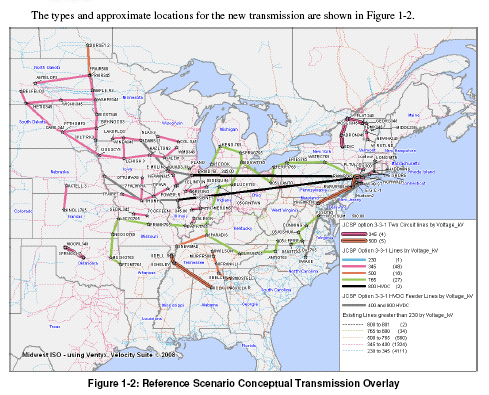
The Mid-Atlantic states have been standing up and opposing transmission from the Midwest.  They’ve gone on record in a number of venues, and in their opposition are citing Midwest transmission promoters’ disregard for eastern renewable efforts, that xmsn may well not be an economical way to get power to the east, and that THEY KNOW THAT MIDWEST TRANSMISSION PLANS INHERENTLY ARE ABOUT COAL. The plan they’re referring to is a massive transmission buildout known as JCSP, and it also applies to the big PJM buildout that includes the PA-NJ Susquehanna-Roseland transmission line that was the subject of a hearing last month.

Here’s JCSP (Joint Coordinated System Plan) note their site now talks about wind — but look where the transmission starts, DUH! The coal fields of the Dakotas:
jcsp08-xmsndream

Gotta give them, Delaware, Maryland and Virginia, a lot of credit for recognizing and stating what Midwest states have been unwilling to admit.

coal

That said, here’s what Mid-Atlantic states are doing — they’re banding together to propose offshore transmission.  If it’s underwater offshore transmission, that’s an idea that’s hard not to like.  But I’ll bet it throws PJM for a loop, what with all their “backbone” transmission schemes, a la Project Mountaineer, that are in the works:
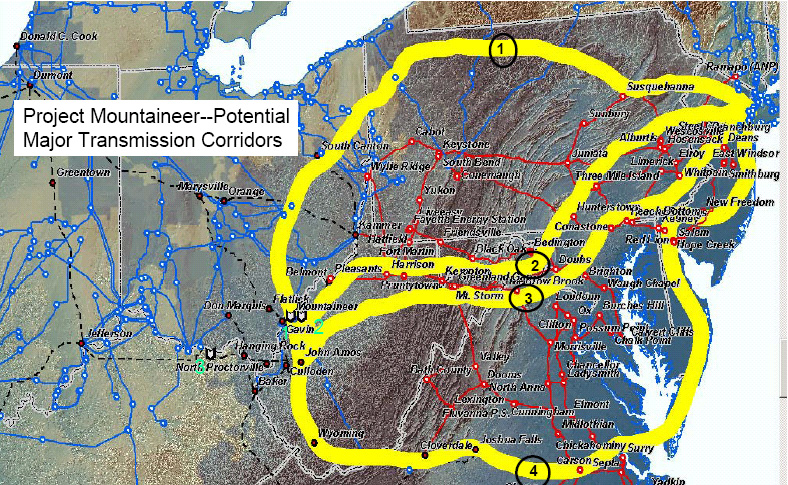
projectmountaineermap

The FERC birth of Project Mountaineer:

Exhibit STL D-6a (PSEG Discovery Response)

Exhibit STL D-6B (PSEG Discovery Response)

And you can see that those lines in play now, PJM’s “backbone” transmission projects like Susquehanna-Roseland (NE part of Project Mountaineer Line 1) and MAPP (NE part of Project Mountaineer Line 4) are part of the plan… the big transmission plan that does not work for the east coast.

Here’s the Memorandum of Understanding between Delaware, Maryland and Virginia:

DE, MD & VA Wind Infrastructure MOU

And recently, Gov. Jack Markell addressed these issues before American Wind Energy Association’s offshore windfest — but given the PJM big-transmission-projects-from-hell are referred to as “backbone” projects, I wish they’d find another term:

Delaware energy: ‘Backbone’ power line pushed for wind farms


By AARON NATHANS
The News Journal

BOSTON — If the Eastern Seaboard is to one day be dotted with thousands of wind turbines, they may as well work in harmony.

That’s the message 10 eastern governors are sending to the federal government as they advocate for a major underwater power line parallel to the East Coast.

U.S. offshore wind farm projects, all still on the drawing board, are being planned to include cables from the turbines to a substation on land to bring the power to the existing transmission grid.

The “backbone” power line the governors envision would connect the wind farms to each other, making it easier to spread wind power from areas where the wind is blowing robustly at that moment to states where electricity demand exceeds supply.

They see the backbone as preferable to a national investment in a transmission line that brings wind power from the Midwest to the East.

Gov. Jack Markell broached the subject this week in his address to the American Wind Energy Association’s offshore wind workshop, the industry event of the year on this side of the Atlantic. Markell signed onto letters the governors sent to members of Congress this summer, and the Federal Energy Regulatory Commission last month.

Governors of Vermont, New Hampshire, New York, Virginia, Maryland, New Jersey, Massachusetts, Rhode Island and Maine also signed the letters.

In an interview, Markell’s natural resources secretary, Collin O’Mara, said he wants to find out if there’s a way to spread out the costs of such a project. Building a backbone would help states satisfy their renewable electricity purchase requirements, and relieve the “spaghetti” structure of the current power grid, he said.

“Let’s have the conversation,” O’Mara said. “It’s extremely worthy of further study.”

Transmission is vitally important to getting offshore wind energy to population centers, said Denise Bode, the wind association’s president. And Gov. Donald Carcieri, R-R.I., called it “the elephant in the room.”

The power grid is “organized like a patchwork to meet local needs” rather than as a planned national system — almost an assemblage of local roads compared with an interstate, Carcieri said. The developers and government officials in attendance were very much aware of the role transmission will play in whether the offshore wind industry lives up to its potential.

The discussion comes as various offshore wind projects are maturing from concept to permitting, construction and design. At the moment, NRG-Bluewater Wind holds the only contract for offshore wind power, with Delmarva Power.

It’s starting the permitting process, getting ready to build weather towers off Delaware and New Jersey next summer, and preparing to bid for the right to develop an offshore wind project in New York City.

Jim Gordon, president of the Cape Wind venture that hopes to build in Nantucket Sound, told the convention he has all of the permits he needs from the state and federal government, but is working to overcome a tribal challenge that the waters in Nantucket Sound are protected.

The developer is working with the local utility — National Grid — to develop a contract to purchase power from the wind farm.

National Grid is also negotiating with Deepwater Wind for a contract to provide power to Rhode Island’s Block Island from a small, five-to-eight turbine facility in near-to-shore state waters. The company is also planning a larger wind farm in federal waters off the Rhode Island coast, which will take longer to build.

Deepwater, Bluewater and Fishermen’s Energy are planning wind farms off the New Jersey coast and the state government has provided incentives.

Deepwater CEO Bill Moore said, in principle, the backbone transmission line is “a terrific idea. It makes a lot of sense.”

But he said it’s a “daunting task” to complete an infrastructure project that crosses state boundaries, impacts different developers, and brings together different regional power grids.

“It obviously won’t happen in the absence of federal leadership,” he said.

Fishermen’s Energy President Daniel Cohen said it’s a good idea, but “it’s another moving part.”

“What comes first? Do you build the project or the backbone? People need to make decisions soon,” Cohen said, noting that the answer affects financing arrangements.

Gordon van Welie, president of ISO New England, the regional power grid manager, said there has been some investment in transmission upgrades, but a national plan is needed before new elements are selected.

“The rhinoceros in the room is the transmission cost allocation” — who benefits from a transmission line, and who pays for it, he said.

He noted that the New England governors adopted their own long-term vision of renewable energy, which included $6 billion in lines to transmit power from inland and offshore turbines to population centers.

The benefits of building lines transmitting wind power from the Midwest are less certain, he said.

“It will be difficult to get progress in this area until there are clear national goals,” he said.

Steven Bruckner, conservation chairman of the Virginia chapter of the Sierra Club, looked kindly upon the backbone idea. He said he didn’t have environmental concerns, although he wondered whether such a project would be economical.

“You’re talking hundreds, thousands of wind turbines off the coast, eventually displacing those coal burning power plants,” he said. “It’s the scale. It’s the beginning.”

Note that “cost allocation” is raised.  Since the 7th Circuit decision tossing out FERC approval of PJM’s transmission cost allocation dream/nightmare, all transmission projects 500kV and over based on that cost allocation scheme are in limbo.

Illinois Commerce Commission v. FERC – August 6, 2009

So as noted, who pays, and submarine transmission is EXPENSIVE, is THE big issue now.  It’s the big issue for land transmission, it’s the big issue for offshore transmission, and, given the uncertainty since the 7th Circuit decision, maybe some of the sturm and drang could be circumvented if it’s designed at 345kV or below, and uses the “benefactor pays” theory.  We shall see…

… and then there’s eminent domain!

First the spill, it’s “breaking” news, 210,000 gallons at least all over Staples, where a crew was “working” on the line.  This is, I believe, the old lines, not the new 24″ MinnCan pipeline right nearby:

Oil pipeline leak spills 210,000 gallons near Staples


By BOB VON STERNBERG, Star Tribune

Last update: December 4, 2009 – 4:13 PM

Crew members from state and federal pipeline safety agencies were working today to contain at least 210,000 gallons of crude oil that has spilled from a pipeline in central Minnesota.

There’s no indication the oil has reached any nearby waterways, said Kristine Chapin, a spokeswoman for the Minnesota Office of Pipeline Safety.

The spill, discovered about 6:30 a.m., came from a 16-inch pipeline that connects a pumping station with the Flint Hills refinery in Rosemount.

The pipeline was immediately shut down, Chapin said.

The leak occurred in a wooded rural area about three miles southeast of Staples.

Workers had been repairing the pipeline, but it wasn’t immediately clear if that was connected to the spill, Chapin said.

Assisting the state agency with the pipeline safety arm of the U.S. Department of Transportation.

A truck designed to vacuum up the spill arrived at the site this afternoon, she said.

Here’s the eminent domain news about a pipeline — tired of waiting around for “compensation” from the takers — one guy did what how many others want to do?  And “Engelking” … I wonder… is this guy any relation to Betsy Engelking???

Wis. man arrested for trespassing on his own land


Associated Press

Last update: December 4, 2009 – 8:37 AM

SUPERIOR, Wis. – A northwestern Wisconsin man who confronted a work crew building a pipeline across his land was arrested for trespassing on his own property.

Jeremy Engelking of Superior is expected to appear in Douglas County Circuit Court Friday.

The 27-year-old Engelking told workers Wednesday they had no right to be on his property because he hadn’t been compensated by the pipeline builder, Enbridge Energy Partners, for an easement.

A Douglas County sheriff’s deputy arrived on the scene as the confrontation continued. Engelking says the deputy drew his Taser gun and ordered him to the ground. Engelking was handcuffed, taken to jail and later posted bond.

The confrontation is the latest episode in a long-running dispute between Enbridge, Engelking and his father, who owns property next door.