11/19 – PPSA Annual Hearing
October 18th, 2019

It’s that time of year again, the Power Plant Siting Act Annual Hearing.

And here’s the…
Here’s the Power Plant Siting Act — Minn. Stat. Ch. 216E!
Why an Annual Hearing? Because the statute says so:
| 216E.07 | ANNUAL HEARING. |
Here are the reports from prior PPSA Annual Hearings:
2006 Report to PUC – Docket 06-1733
2007 Report to PUC – Docket 07-1579
2008 Report to PUC – Docket 08-1426
2009 Report to PUC – Docket 09-1351
2010 Report to PUC – Docket 10-222
2011 Report to PUC – Docket 11-324
2012 Report to PUC – Docket 12-360
2013 Report to PUC – Docket 13-965
2014 Summary Report– Docket 14-887
2015 Summary Report – Docket 15-785
2016 Summary Report – Docket 16-18
October 10, tRump HERE!
September 26th, 2019

Coal ash? Comment now!
September 22nd, 2019

Remember the huge coal ash impoundment ruptures/breeches dumping coal ash all over? THIS is why treatment and use of coal ash matters:
TVA coal ash slide – UPDATES
And even in Minnesota: TVA coal ash — we had our own ash slide here in MN
There was a rule update and comments in 2018, and it was remanded, and so here we go around again…
FEDERAL REGISTER ANNOUNCEMENT: Disposal of Coal Combustion Residuals from Electric Utilities
Comments must be received on or before October 15, 2019!
From the EPA’s announcement (CLICK HERE):
Public Hearing on the Proposed Changes to the Regulations for Coal Combustion Residuals: Enhancing Public Access to Information and Reconsideration of Beneficial Use Criteria and Piles
Wed, October 2, 2019
9:00 AM – 8:00 PM EDT
DoubleTree by Hilton Hotel
300 Army Navy Drive
Arlington, VA 22202
The public hearing will consist of three sessions:
- A morning session starting at 9:00 am and ending at noon.
- An early afternoon session starting at 1:00 pm and ending at 4:00 pm.
- An evening session beginning at 5:00 pm and ending at 8:00 pm.
CLICK HERE FOR THE PROPOSED RULE!
Just do it, comment away!!! Comments must be received on or before October 15, 2019.
Court DENIES Freeborn Wind/Xcel Motion to Dismiss
August 27th, 2019

Freeborn Wind, now owned by Xcel Energy, tried to get Association of Freeborn County Landowners booted out of the Appellate Court. Freeborn Wind’s Motion DENIED!
And here’s the Order of the Appellate Court:
And this delightful snippet:
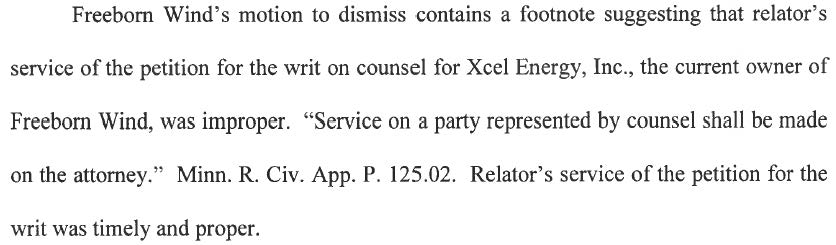
So now we’re off to the races!! We filed a Motion to Stay the Proceeding, because Xcel has filed its request for a site permit amendment. We shall see…
More transmission? They’re nuts!
August 19th, 2019
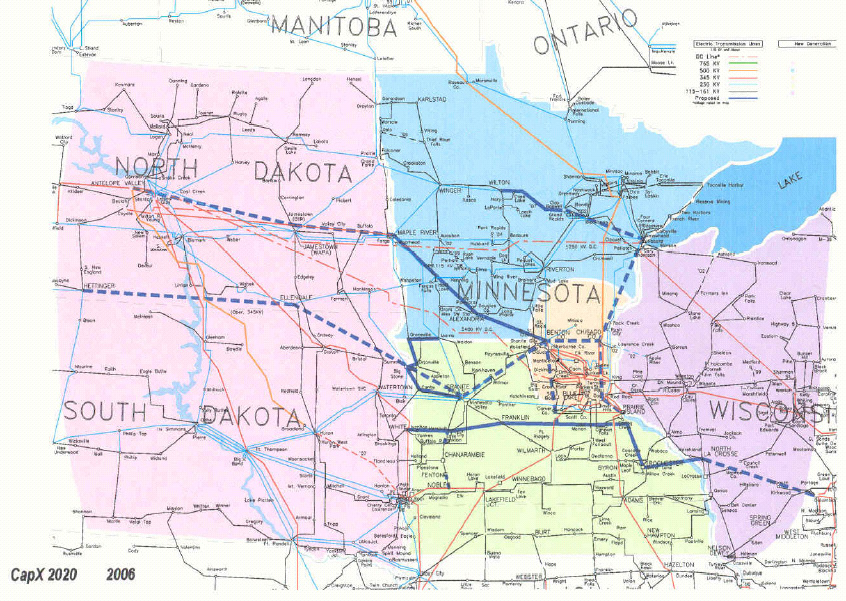
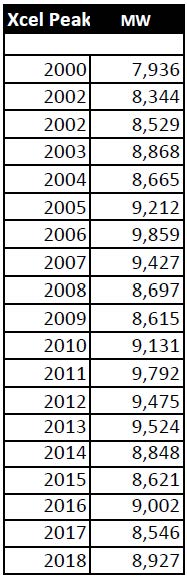
I saw this today and it’s nauseating.
First there was CapX 2020 transmission (following Arrowhead transmission, which was supposed to be the be-all and end-all of transmission)(and the SW MN 345kV line, precursor to CapX 2020. CapX transmission was based on a forecasted 2.49% increase in demand, which as we know, didn’t happen.
And there was the MISO 17 project MVP Portfolio:

Tomorrow, the Wisconsin Public Service Commission is making its decision regarding the Cardinal-Hickory Creek project, the southern part of #5 above, and the LAST of the MVP projects to go through state administrative approval.
So today, this is in the STrib:
Minnesota utilities will study if the $2B CapX2020 grid improvements were enough
By Mike Hughlett Star Tribune AUGUST 19, 2019 — 3:05PM

Photo: DAVID JOLESA utility worker assesses electrical power lines in south Minneapolis.
So that said, here’s Xcel Energy’s Integrated Resource Plan’s Appendix on transmission:Xcel IRP – Appendix I – Transmission & Distribution – from 20197-154051-03Download
The schedule for IRP hearings was just released, it’s in October, so there’s time to make time for it:

We know Xcel Energy gets a “handsome” rate of return for transmission capital expenditures (hence “CapX transmission), so of course they want to build more. The IRP is our time to tell them how they should get the electricity they need, whether their plans are making any sense.
How about shutting down some of those coal plants, and freeing up some capacity? How about siting solar on every rooftop, over every parking lot, putting the generation at load so we don’t need transmission? Oh, but wait, that makes too much sense, especially where a utility wants to keep control of the generation, and the expenditures, and rake in the dough.
Time to pay attention to the IRP. URP!