Joe-Arpaio1

There are too many people who think Sheriff Joe Arpaio walks on water.  Horrifying.  Thankfully, at long last, Arpaio is in trouble, deep, deep trouble, not just legally, but he’s probably going to loose the his bid for re-election, and may be sent to jail.  Can’t happen soon enough.

New poll shows Sheriff Joe Arpaio is in a tight re-election race

Another poll shows Sheriff Joe Arpaio in a tight general election race

New poll has Penzone leading Arpaio in race for sheriff

Could Donald Trump and Sheriff Joe Arpaio Cost John McCain His Senate Seat?

GettyImages-511816354_Arpaio

The Department of Justice investigation is moving forward, lawsuits abound, and Arpaio is losing, found in contempt of court for violating the court’s injunction.

Arizona’s Sheriff Joe hit with 1st round of punishments in contempt case

And on a parallel front, the Department of Justice is moving forward to document his many violations of the Constitution and federal law, and to shut him down, hold Maricopa County responsible, and that’s good.   About time!  Here are their links:

This guy needs to be OUT of office and thrown in jail.  The magnitude of his racist and blatantly unconstitutional policies and actions has been exposed, and must stop — despite the court ordered injunction, he continues…  Here’s hoping the judge does push for a criminal contempt case against Arpaio.  And once he’s gone, the entire Sheriff’s Office needs to be rebuilt.  Whew, that’s a big job.

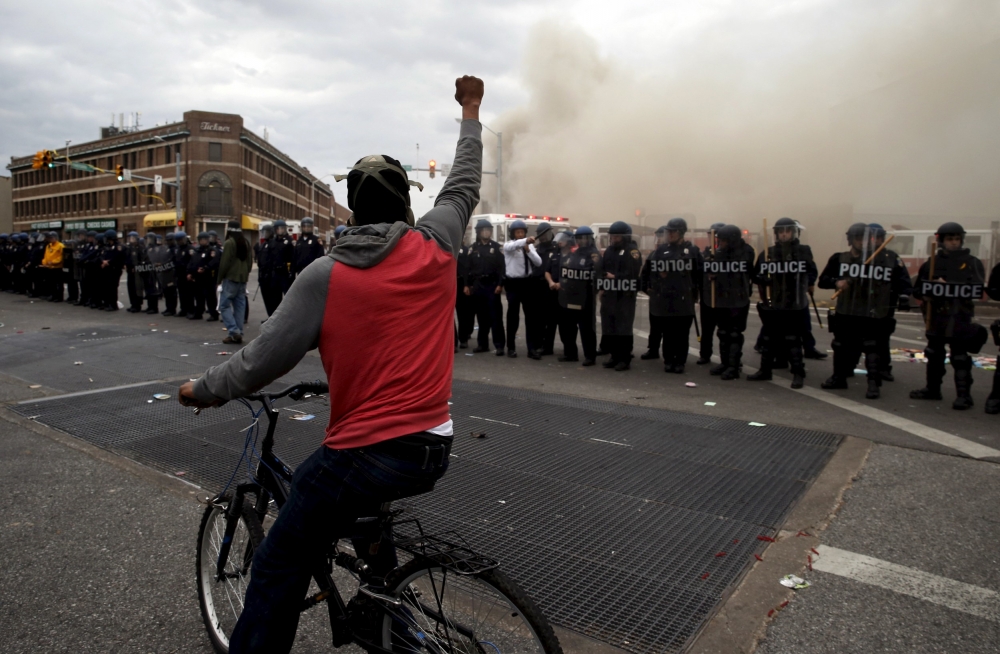
BaltimorePolice

THIS IS A MUST READ!  Apologies for the delay… Trying to catch up, this was released and I got bogged down in something else.

DOJ Report – Baltimore_Police_Department


baltimore-maryland

It’s grim.  For those questioning all the complaints regarding Baltimore police, just a scan of the table of contents is enlightening:

  • BPD MAKES UNCONSTITUTIONAL STOPS, SEARCHES, AND ARRESTS
  • BPD DISCRIMINATES AGAINST AFRICAN AMERICANS IN ITS ENFORCEMENT ACTIVITIES
  • BPD USES UNREASONABLE FORCE
  • BPD UNLAWFULLY RESTRICTS PROTECTED SPEECH
  • BPD’S HANDLING OF SEXUAL ASSAULT INVESTIGATIONS RAISES SERIOUS CONCERNS OF GENDER-BIASED POLICING

And the conclusion:

  • SYSTEMIC DEFICIENCIES IN BPD’S PRACTICES CONTRIBUTE TO CONSTITUTIONAL VIOLATIONS, ERODE COMMUNITY TRUST, AND INHIBIT EFFECTIVE POLICING

From the report:

The constitutional violations described in our findings result in part from critical deficiencies in BPD’s systems to train, equip, supervise, and hold officers accountable, and to build relationships with the broader Baltimore community. First, BPD fails to adequately supervise its officers. This lack of supervision manifests itself in multiple ways, including a failure to guide officer activity through effective policies and training; a failure to collect and analyze reliable data to supervise officer enforcement activities; and the lack of a meaningful early intervention system (EIS) to identify officers who may benefit from additional training or other guidance to ensure that they do not commit constitutional violations. Second, BPD lacks meaningful accountability systems to deter misconduct. BPD does not consistently classify, investigate, adjudicate, and document complaints of misconduct according to its own policies and accepted law enforcement standards. Indeed, we found that BPD personnel sometimes discourage complaints from being filed and frequently conduct little or no investigation—even of serious misconduct allegations. As a result, a culture resistant to accountability persists throughout much of BPD, and many officers are reluctant to report misconduct for fear that doing so is fruitless and may provoke retaliation. Third, BPD fails to have proper agreements in place to coordinate its activities with other agencies that are operating within its jurisdiction. Fourth, BPD fails to adequately support its officers through effective strategies for recruitment, retention, and staffing patterns, and does not provide them with appropriate technology and equipment. Fifth, BPD does not engage effectively with the community it polices. BPD’s failure to use accepted community policing strategies and transparency mechanisms erodes the community trust that is central to productive law enforcement.

  • BPD FAILS TO ADEQUATELY SUPERVISE ITS OFFICERS’ ENFORCEMENT ACTIVITIES
  • BPD FAILS TO ADEQUATELY SUPPORT ITS OFFICERS
  • BPD FAILS TO HOLD OFFICERS ACCOUNTABLE FOR MISCONDUCT
  • BPD DOES NOT COORDINATE WITH OTHER AGENCIES APPROPRIATELY
  • BPD FAILS TO ENGAGE IN EFFECTIVE COMMUNITY POLICING

And the conclusion?

For the foregoing reasons, the Department of Justice concludes that there is reasonable cause to believe that BPD engages in a pattern or practice of conduct that violates the Constitution or federal law. The pattern or practice includes: (1) making unconstitutional stops, searches, and arrests; (2) using enforcement strategies that produce severe and unjustified disparities in the rates of stops, searches and arrests of African Americans; (3) using excessive force; and (4) retaliating against people engaging in constitutionally-protected expression. We also identified concerns regarding BPD’s transport of individuals and investigation of sexual assaults. BPD’s failings result from deficient policies, training, oversight, and accountability, and policing strategies that do not engage effectively with the community the Department serves. We are heartened to find both widespread recognition of these challenges and strong interest in reform. We look forward to working with the Department, City leadership, and Baltimore’s diverse communities to create lasting reforms that rebuild trust in BPD and ensure that it provides effective, constitutional police services to the people of Baltimore.

So what’s going to happen?  Oh, Baltimore…


Other Department of Justice investigations of law enforcement HERE

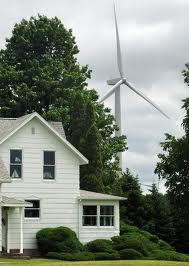
turbine2close2house

It’s been a problem for so long.  Minnesota needs respectful wind turbine siting standards, and a part of that is that Minnesota needs wind turbine noise rules.

Way back in 2009, the Minnesota Dept. of Health wrote a report entitled “The Public Health Impact of Wind Turbines” and the PUC opened a docket (PUC Docket 09-845).

In 2016, it’s still an issue, because it’s not been addressed in any meaningful way. Check the Bent Tree docket, starting at 58:36:

Watch video of 7/29/2016 meeting HERE!

So I sent this today, a Rulemaking Petition to the MPCA, and then notice to the PUC that it was sent and that Minn. R. Ch. 7854, the wind siting rules, need work:

Overland – MPCA_Petition for Rulemaking

Overland – PUC Coerespondence re: Petition for Rulemaking

cheeseheadFrom nearby Wisconsin, the Circuit Court ruling regarding Wisconsin election laws:

WI_vote_ruling_15-CV-00234

I’m still reading the NC one, but if you’re curious about the court’s ruling, check it out.  The bottom line:

WIOrder1WIOrder2


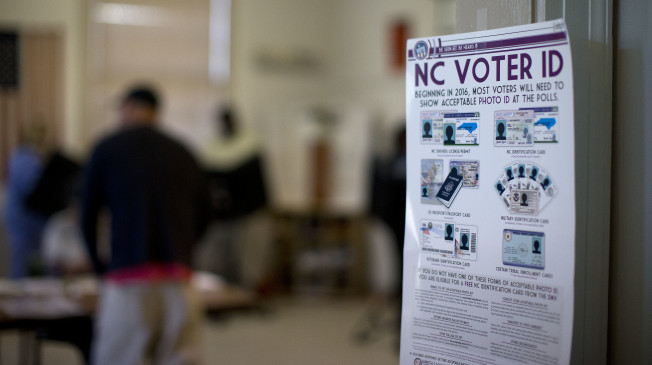
NC Voter ID rules are posted at the door of the voting station at the Alamance Fire Station, Tuesday, March 15, 2016, in Greensboro, N.C. The state's new voter identification law requires that voters show a photo identification before getting their ballot. Voters in North Carolina, as well as Missouri, Illinois, Ohio and Florida are casting their ballots in primary elections Tuesday. (Andrew Krech/News & Record via AP) MANDATORY CREDIT(PHOTO: Andrew Krech/News & Record via AP) MANDATORY CREDIT

(see also post above, where Wisconsin’s election law was also tossed)

For those concerned with voting rights, here’s Friday’s decision of the U.S. 4th Circuit Court of Appeals finding that North Carolina’s election law intentionally discriminated against African-American voters, and that it violated the Voting Rights Act and multiple provisions of the U.S. Constitution:

North Carolina – Voting Rights – Court Files 16-1486; 6-1469; 16-1474- 16-1529

Well worth a read to understand the lengths North Carolina legislators went to disenfranchise voters, African-American voters.  A few tidbits:

But, on the day after the Supreme Court issued Shelby County v. Holder, 133 S. Ct. 2612 (2013), eliminating preclearance obligations, a leader of the party that newly dominated the legislature (and the party that rarely enjoyed African American support) announced an intention to enact what he characterized as an “omnibus” election law. Before enacting that law, the legislature requested data on the use, by race, of a number of voting practices. Upon receipt of the race data, the General Assembly enacted legislation that restricted voting and registration in five different ways, all of which disproportionately affected African Americans. (p. 10)

… In addition to this general statutory prohibition on racial discrimination, Congress identified particular jurisdictions “covered” by § 5 of the Voting Rights Act. Shelby Cty., 133 S. Ct. at 2619. Covered jurisdictions were those that, as of 1972, had maintained suspect prerequisites to voting, like literacy tests, and had less than 50% voter registration or turnout. Id. at 2619-20. Forty North Carolina jurisdictions were covered under the Act. 28 C.F.R. pt. 51 app. (2016). (p. 12)

After Shelby County, with race data in hand, the legislature amended the bill to exclude many of the alternative photo IDs used by African Americans. Id. at *142; J.A. 2291-92. As amended, the bill retained only the kinds of IDs that white North Carolinians were more likely to possess. Id.; J.A. 3653, 2115, 2292. (p. 15).

While the Supreme Court has expressed hope that “racially polarized voting is waning,” it has at the same time recognized that “racial discrimination and racially polarized voting are not ancient history.” Bartlett v. Strickland, 556 U.S. 1, 25 (2009). In fact, recent scholarship suggests that, in the years following President Obama’s election in 2008, areas of the country formerly subject to § 5 preclearance have seen an increase in racially polarized voting. See Stephen Ansolabehere, Nathaniel Persily & Charles Stewart III, Regional Differences in Racial Polarization in the 2012 Presidential Election: Implications for the Constitutionality of Section 5 of the Voting Rights Act, 126 Harv. L. Rev. F. 205, 206 (2013). Further, “[t]his gap is not the result of mere partisanship, for even when controlling for partisan identification, race is a statistically significant predictor of vote choice, especially in the covered jurisdictions.” Id. (p. 28).

While it is of course true that “history did not end in 1965,” id., it is equally true that SL 2013-381 imposes the first meaningful restrictions on voting access since that date — and a comprehensive set of restrictions at that. Due to this fact, and because the legislation came into being literally within days of North Carolina’s release from the preclearance requirements of the Voting Rights Act, that long-ago history bears more heavily here than it might otherwise. Failure to so recognize would risk allowing that troubled history to “pick[] up where it left off in 1965” to the detriment of African American voters in North Carolina. LWV, 769 F.3d at 242. (p. 32).