Where’s Mitch?
July 12th, 2026

Lindsey says, “Hold my beer…”
Lindsey Graham, longtime GOP senator and Trump ally, dies at 71 after sudden illness
DOE’s Xmsn Needs Study
July 11th, 2026

Here it is, the latest “transmission needs study” from the DOE:
The 60-day Public Comment and Consultation Period closes on September 7, 2026.
Send comments on the Needs Study to NeedsStudy.Comments@hq.doe.gov.
“SUFFICIENT INFORMATION” at this time?
July 10th, 2026
Yesterday’s Public Utilities Commission meeting was a cluster. At issue were Objections to the Commission’s Environmental Report Scoping Decision:
Alternatives analysis is crucial, because system alternatives may only get into the record in a Certificate of Need proceeding, and not routing. Turned out that yesterday’s debate was about alternatives, and a requirement that an alternative have support of “sufficient information” and that meets Applicants’ “stated need” at the Environmental review stage? How does that work?
FYI, “stated need” is used 4 times in this Scoping Decision, four times: three times on p. 6, and twice on that page referring to alternatives, “whether alternatives meet stated need” and regarding generation, whether it would “meet, reduce, defer stated transmission need.”
The Objections:
And those Staff Briefing Papers — here ya go – and what’s weird, I don’t recall an email of this, and I’m not the only one:
HERE’S THE LINK TO THE MEETING, AGENDA #2 STARTS ABOUT 7 MINUTES IN!
Oh my… here’s the main issue, adding this to the scope from Applicants’ last minute filing:

Issues? Oh yeah… there are issues… this is so perverse (Characterized by or resulting from willful opposition or resistance to what is right, expected, or reasonable.)
- “unsupported by sufficient information” — explain how “sufficient information” gets in the record at this stage, the Environmental Report stage?? That doesn’t happen until “informing the record” in the contested case.
- “would not meet the stated need for the project” – STATED need? The Applicants’ STATED need is the threshold? That assumes that what they’re saying is the need IS the need. How does the record reflect need at the Environmental Report stage? It’s not been proven, the applicant has the burden of proof, yet simply STATING a need is sufficient to assume as a threshold for an alternative?
On objecting to this language, specifically these two phrases, because that’s limiting alternatives in the ER right NOW, with their order, Commissioner Tuma says, “You’ll have the opportunity to make those points in front of the ALJ, they have the burden of proof…” “You’ll get your chance in the Contested Case” at least twice.

As if I don’t know procedure, don’t know that we’re intervenors, don’t know that we’re dealing now, July 9, with the SCOPE of the ENVIRONMENTAL REPORT at this meeting, the Scope which will determine what alternatives will be considered, if and how, that the Environmental Report is due out September 23, and that the public and evidentiary hearings are in November, and the environmental review, limited as it is in a Certificate of Need proceeding, is based on the Order of the Commission TODAY!

And where did that language come from? It’s a cut and paste of the Applicants’ filing the day before, but the Applicants “only” wanted a change of “may” to “must” as taken from the source, the Staff Briefing Papers.

The rest of that language, other than the change of “may” to “must,” the origin of the “unsupported by sufficient information” and “stated need for the project? in Order Point 2? Looks like it’s EIP Staff.
It’s quite simple. “Opportunity” in the Contested Case is too late if alternatives are eliminated by the Scoping Decision, even before the Environmental Report! The Commission isn’t about to approve anything that’s not been through even the nominal “Environmental Report” in a Certificate of Need docket.

Was City of Faribault given notice??
July 8th, 2026

Remember when so many potentially affected landowners did not get notice of the Mankato-Mississippi River Transmission Project?
Public Hearings & NO NOTICE to 1,341 newly affected landowners May 11th, 2025
More on the 1,341 Landowners May 14th, 2025

Earlier today, a post came over the interwebs, TODAY, of a letter written by the Mayor of Faribault on June 3, 2026, “RECEIVED June 24, 2026” and posted in eDockets today, JULY 8, 2026:
The City of Faribault didn’t weigh in during the Hearings or Comment Periods, weren’t an Intervenor. But… NO NOTICE to 1,341 newly affected landowners. Did Faribault get notice? And if no official notice though, I do wonder how “the City” would not know of meetings and hearings in Faribault. I know I went to at least one at the American Legion, a VERY hot day, and I think it was… IT WAS! It was TWO YEARS AGO tomorrow, July 9, 2024!

And this letter filed in eDockets today? Well, the ORDER ADOPTING ADMINISTRATIVE LAW JUDGE REPORT AS MODIFIED, FINDING ENVIRONMENTAL IMPACT STATEMENT ADEQUATE, GRANTING CERTIFICATE OF NEED, AND ISSUING ROUTE PERMIT was issued April 14, 2026:
Inquiring minds want to know. Failure of Notice, Failure to Notice, or ????
Another “It’s all connected” xmsn line
July 3rd, 2026
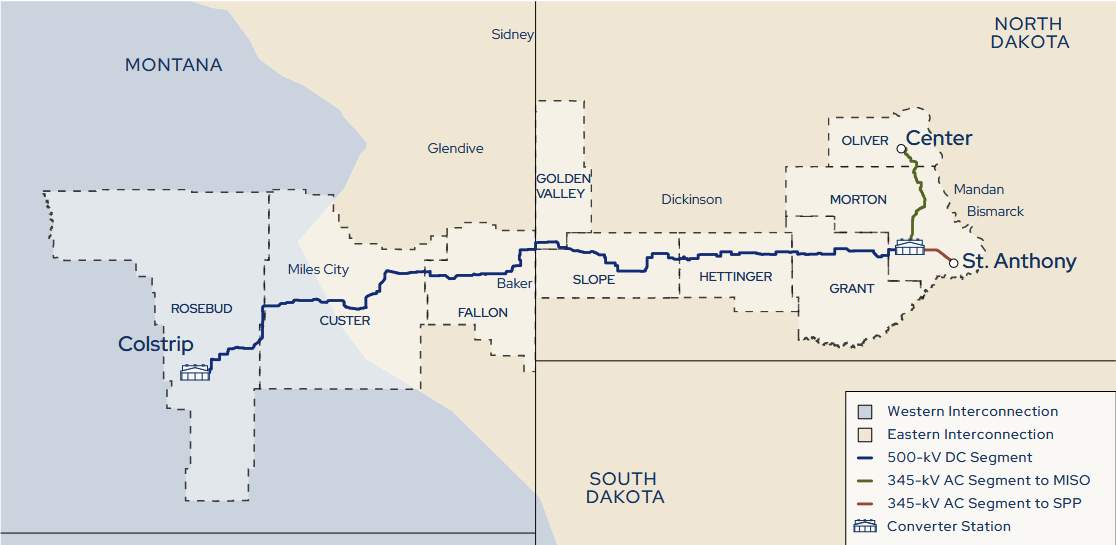
It’s the North Plains Connector! This has been sitting in “Drafts” for so long that I almost forgot about it. Good thing “need” comments are due soon for the Iron Range-St. Louis Co.-Arrowhead line next week!
Here we have another transmission line, a DC line running from Colstrip (yes, a coal plant) in Montana across over to a converter station and running AC up to Center (another coal plant, Milton Young) and southeast to St. Anthony (why?).
DRAFT EIS for North Plains Connector (comment period ended in February, Final EIS due in “summer 2026)
DOE/EIS-0568: North Plains Connector; Multiple Locations
Here’s what’s there already (openinframap.org – the greatest thing since sliced bread!):
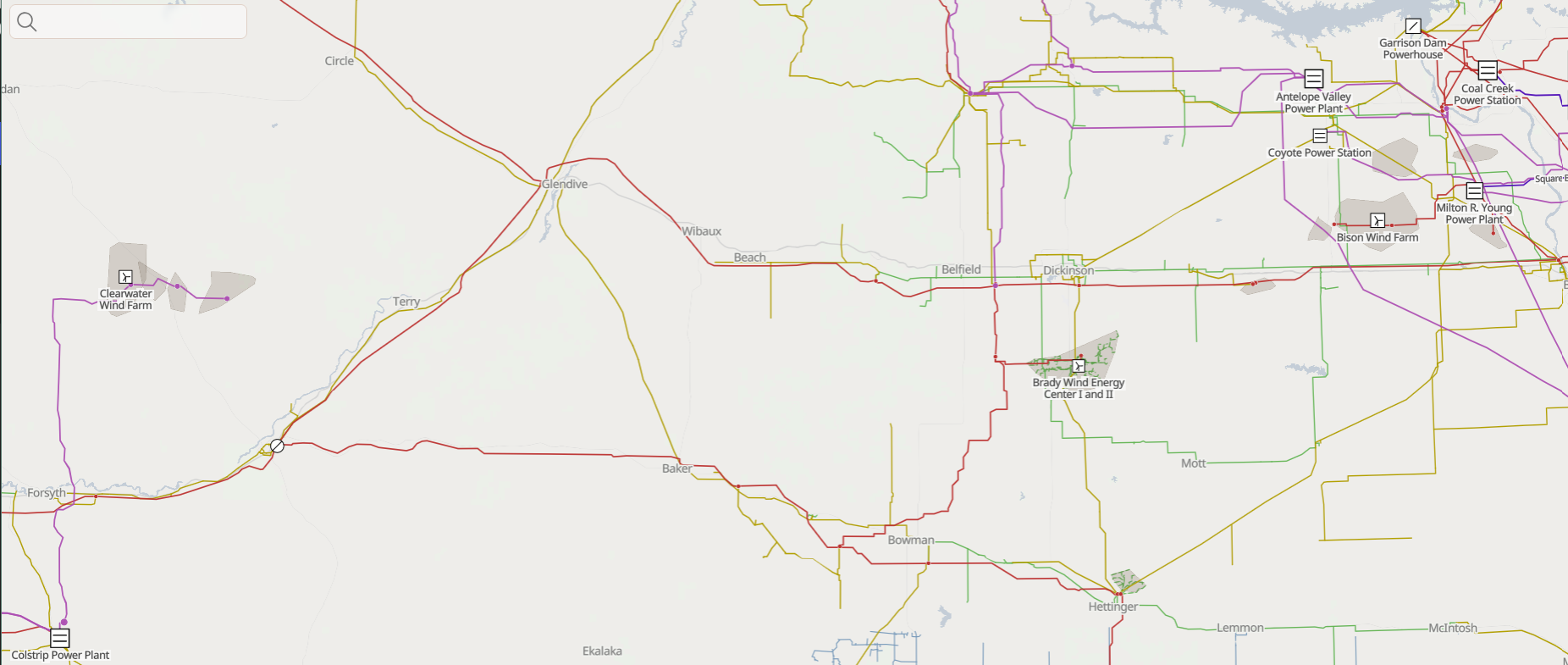
And a closer view of the eastern end, because Leland Olds doesn’t show and also the Square Butte 250MW DC line headed to Arrowhead substation doesn’t show:
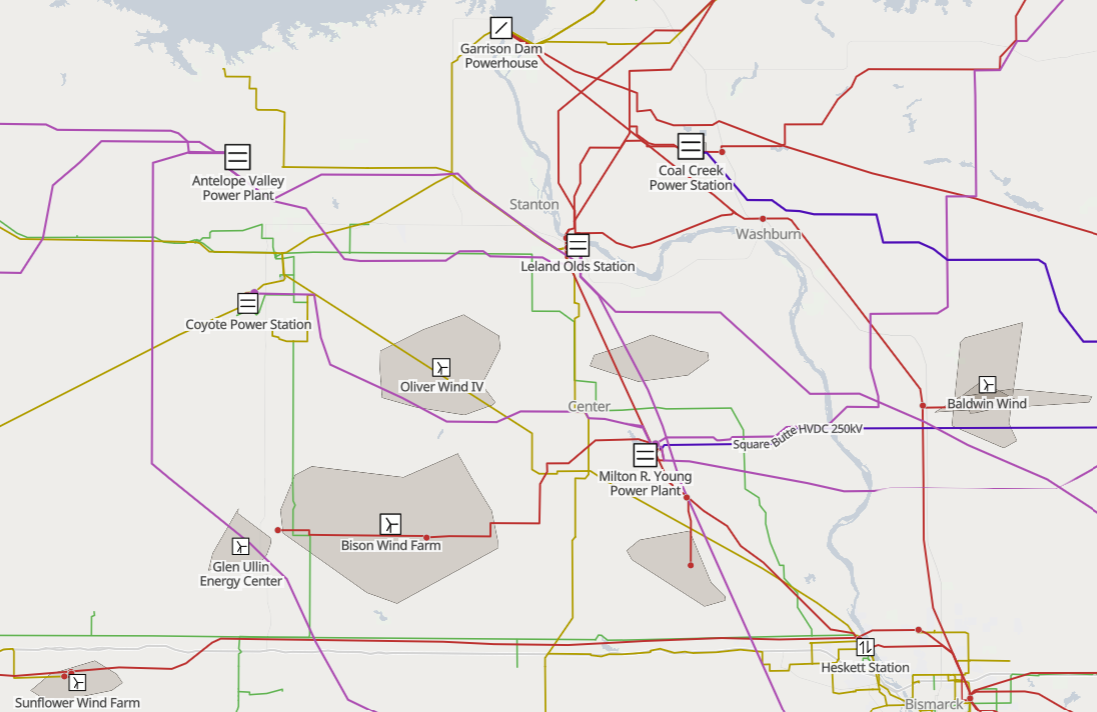
The Square Butte 250MW DC line is being upgraded.
In that eastern end of that transmission line, here’s what’s nearby — 4,009.6 MW of COAL:
- Antelope Valley 954MW
- Coal Creek 1,215.6 MW
- Coyote 450 MW
- Leland Olds 656 MW
- Milton Young 734 MW (Center converter station)
Yes, that’s 4,009.6 MW of coal. Which of these coal plants have shut down?
And yes, there are wind projects now in the area,1,008.7 MW:
- Baldwin 102.4 MW
- Bison 496.8 MW
- Glen Ullin 106.7 MW
- Oliver 198.8
- Sunflower 104 MW
1,008.7 MW of wind
Plus there’s the Heskett gas plant, 176.4 MW (don’t know if that’s peaking, intermediate, or what).
How much transmission is needed if they’re really shutting down coal plants, 4,000MW of coal in that one area with transmission already crossing the border into Minnesota?
How many of the 4,009.6 MWs of coal need to be shut down for transmission to accommodate 1,008.7 MW of coal? If the 4000 MW of coal are shut down, logically, there’s room for another 3,000 MW of wind. So why transmission?
Spend some time on openinframap.org and get acquainted with this “IT’S ALL CONNECTED” transmission system!
Here are specifics of the North Dakota termini, taken from the Application Appendix G at the North Dakota PSC Docket PUC-26-082 (which seems to be stuck in molasses, or crud oil, in February)
First, heading east, the DC line comes into this “Morton Converter Station” in the middle of nowhere:
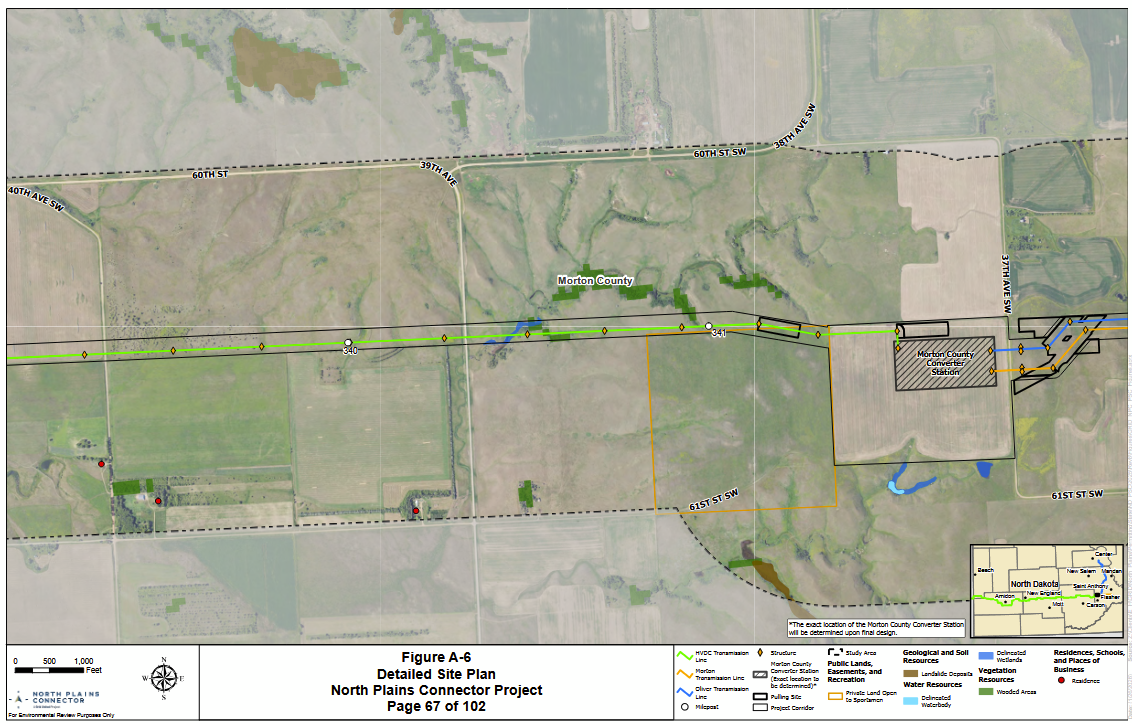
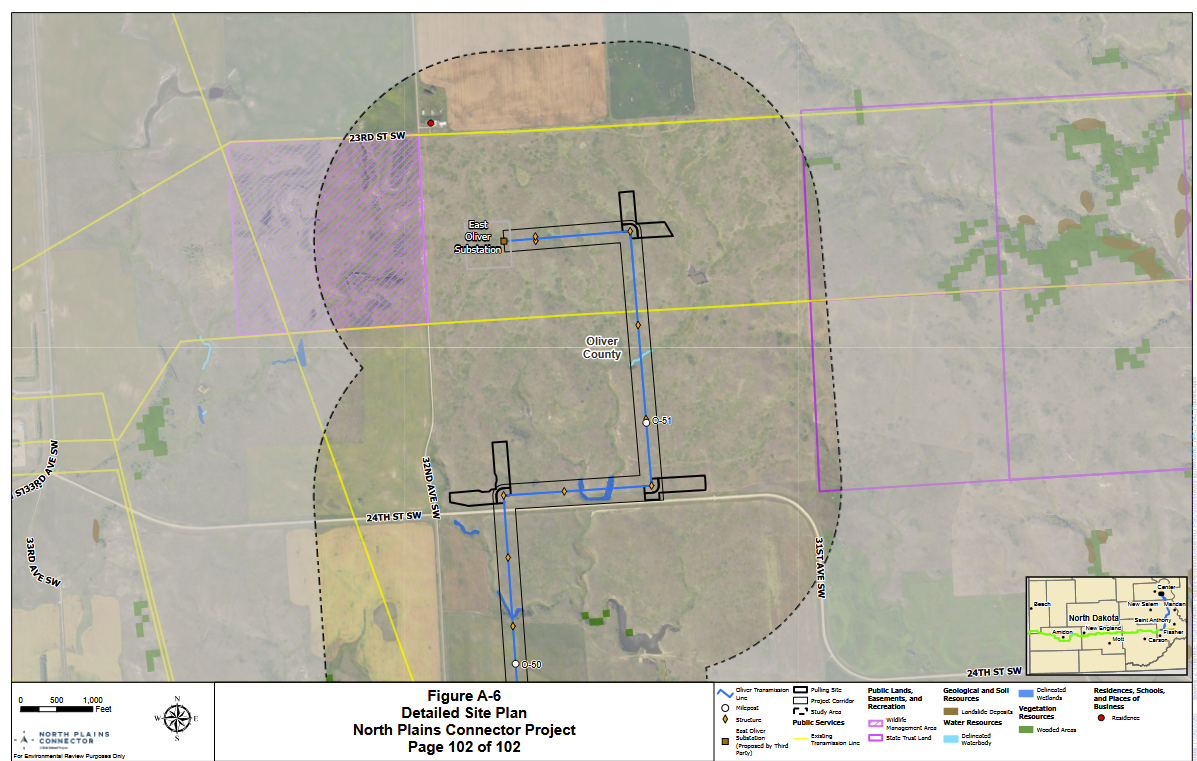
At the converter station, it forks off into two transmission lines, the Blue Oliver transmission Line heading to
And the other of the 2 lines, the Orange “Morton Transmission Line” headed to a substation in Morton County:
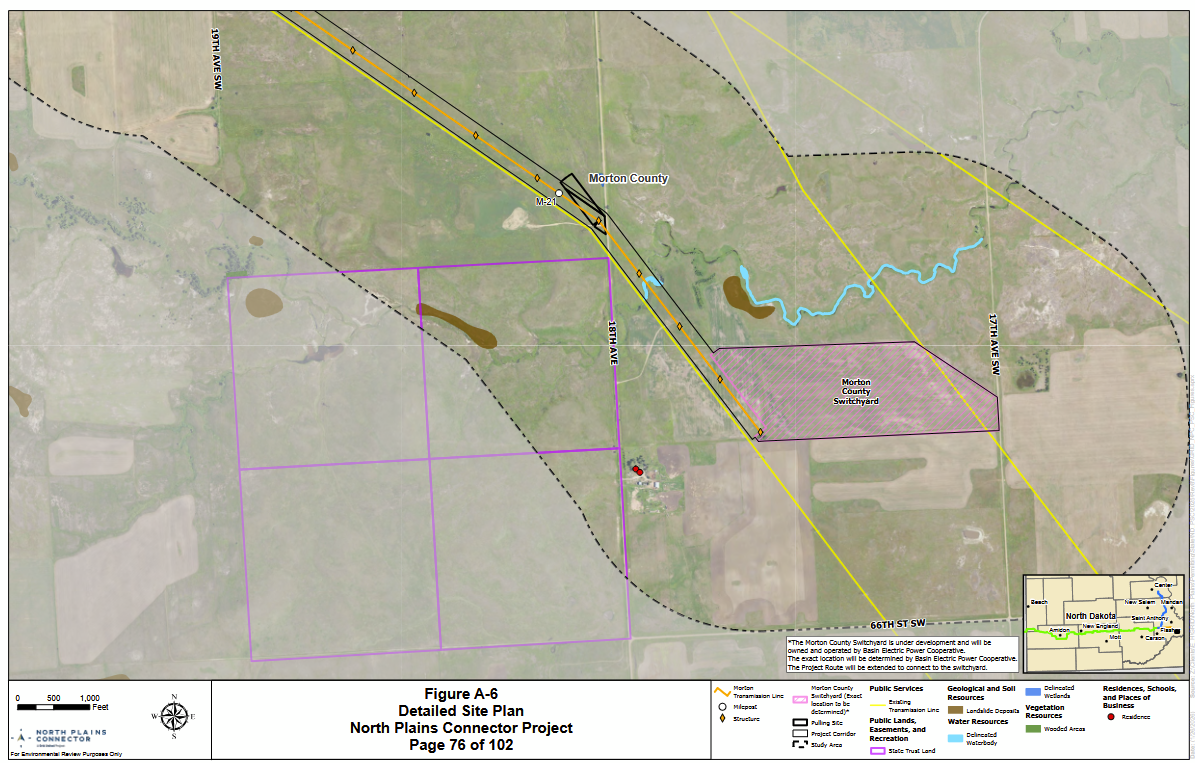
Because it’s all connected, what’s the plan? I’m getting bleary-eyed trying to figure that out…