“More heat, less sag”
March 4th, 2007
Yup, more heat, less sag, that’s something we all need, the industry fix for “50’s vintage conductors” and maybe it’s better than bag balm! With Capx2020 coming up, and with the Chisago line underway, I’ve got transmission on the brain, and you know they can’t build coal without transmission.
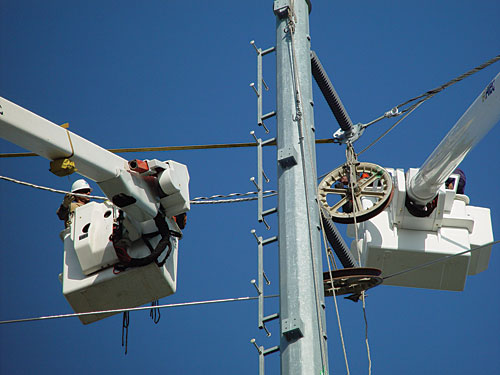
Back in the SW MN 345kV case, the “it’s for wind” NOT line, I’d subpoeaned 3M about its new conductor, probably spring of 2002, because Xcel was planning a high capacity line and I knew this ACCR composite conductor was coming down the pike. Both 3M and Xcel said they weren’t going to use it, and Xcel entered exhibits and testified about it — nope, they were NOT going to use it. Instead, they were going to use a high capacity ACSS:
ACSS – 345kV bundled 954 = 2085MVA
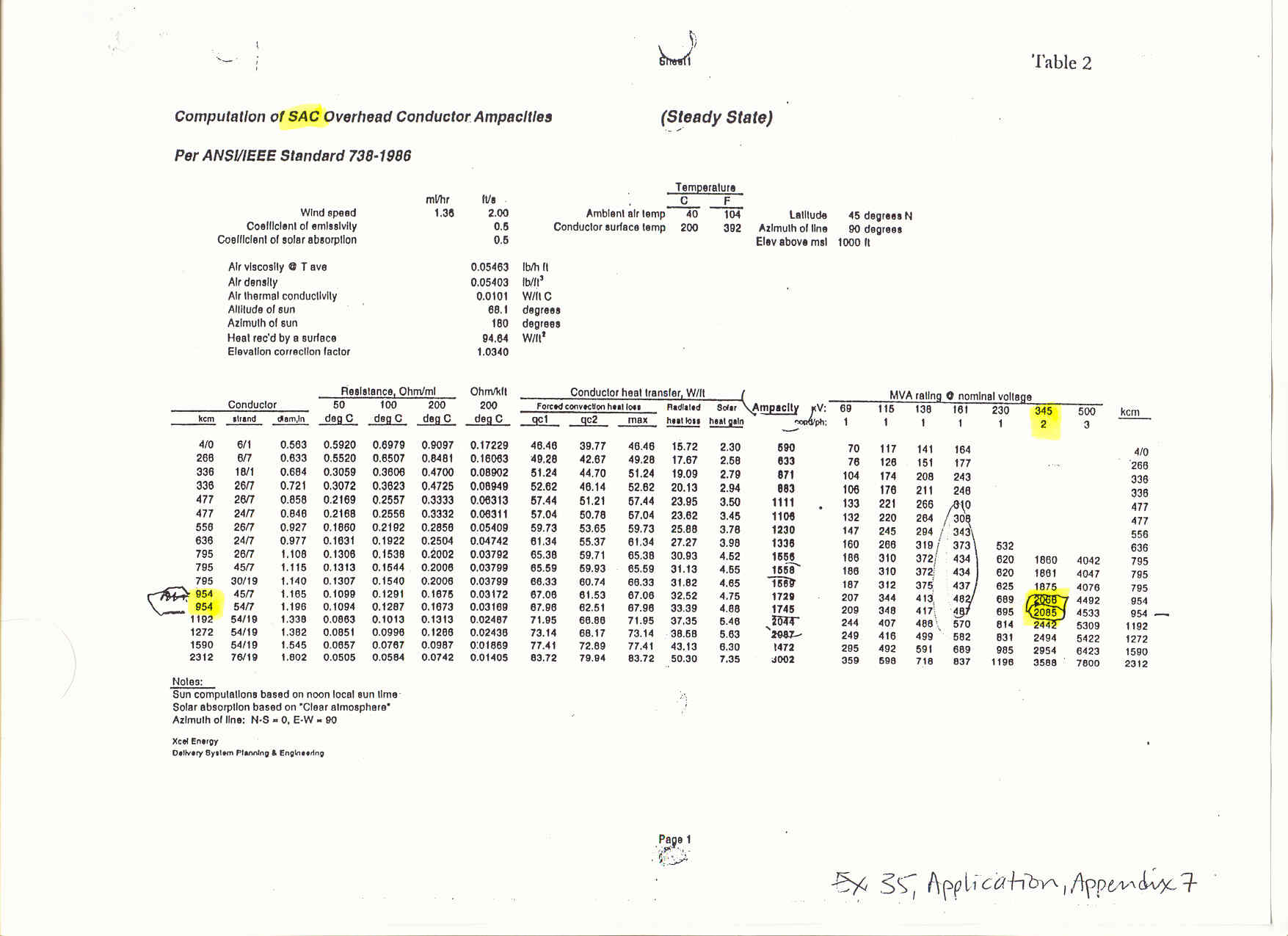
So now how about these CzpX2020 lines “from the coal fields” through Minnesota to Wicsonsin and points east?

Will the 2085MVA ACSS be enough or do they want even more to put even more coal on the wires? And there’s the cost to consider, so probably not — they haven’t got a market… but then again, there’s always the Minnesota ratepayers to pay for their bulk power wholesale transactions!
South Dakota has been looking at this market issue, because they’re realizing that they want to build all this coal and they want to build all this transmission, that pesky Minnesota is in the way, but more importantly, they get that there is no market and that they have to look at creating a market. They get that there’s plenty of electricity and I hope they’re getting that it’s not realistic to think that Wisconsin or Illinois would buy their electricity when there’s plenty right at home and without all that added transmission service and construction cost:
South Dakota Energy Infrastructure Authority – Energy Study 2007
SDEIA Electric Industry Interviews Report December 2006
So they get it — there’s a bit of a market problem. Hence the COALition – there’s Wind on the Wires and AWEA and their unsavory promotion of National Transmission Corridor through Minnesota, there’s RE-AMP and they’re working on “finding a way forward for coal.” Check p. 11 of this Executive Summary:
Good idea… let’s bail out the coal industry… real good idea…
But they cannot do it without transmission. And we all know that CapX2020 really isn’t needed, but for this coal for export scheme — and that’s why they want to be excepted from providing the typical need data with their application:
Comments on their outrageous “the rules don’t apply to US” assertions are due March 19, 2007 .
The Comment period has been extended because Xcel/CapX2020 refuses to use the service list and serve parties on it and they were caught. Again. How dare they!!! How many times do I have to remind them? And what’s next, sue them about it — yeah, real effective use of time. But somebody with additional clout gave them what for and, WHEW, it’s extended.
Now about these high-capacity conductors…

Chisago Transmission Redux
February 27th, 2007
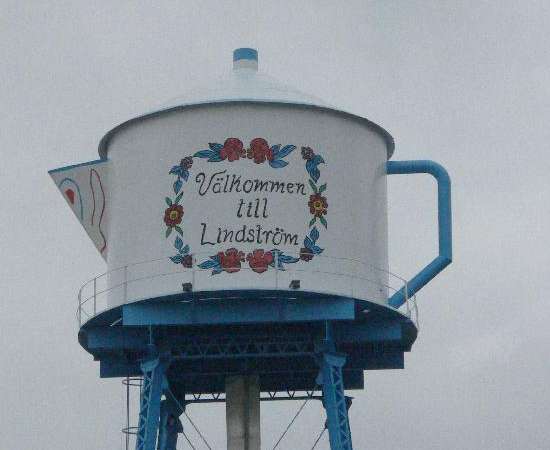
Once more with feeling, folks, here we go again. It’s the Chisago Transmission Project, and tonight we had the first public meeting in a long while. Why? I don’t know, maybe Xcel thinks we all just need a reunion to remember what a strong community can do!
This time around, I’m representing the City of Lindstrom, and the meeting was a bit of “old home week.” And each time we’ve gone through this, we learn more, so let’s see if we can get it right this time! Our goal is clear, so let’s get to work!
Here’s the Certificate of Need Scheduling Order that came out yesterday:
Purpose of tonight’s meeting? To receive comments on the scope of the Environmental Assessment. Comments on the EA scope were open until 3/13, but now that’s been extended to 3/30/07!!! Why? Haven’t a clue.
Here’s the meeting notice:
An Environmental Assessment (EA) is from the short, abbreviated and too “streamlined” “Alternative Process” that wasn’t designed for a hotly contested project like this. And it’s confusing just how it works (or doesn’t).
So does that make sense? They did a full-blown EIS last time (where’s that ME3 site when we need it?). Now they’re only doing a nominal inquiry.
For Certificate of Need application, go to www. puc.state.mn.us and then to eDockets and then to “Search Documents” and then to 04-1176.
OK, now that you’ve got all that down, here’s the form to let them know what the EA should include, “Scoping Comments” as we say in the biz:
It’s easy, just download the form and comment on the areas you think should be included in the Environmental Assesment, bringing up any specific information that you may have. Then end it in to Sharon Ferguson of Dept. of Commerce, her mail and email addresses are on the form. It’s that simple, really!!!!
More soon!
More on MISO cost/benefit study
February 18th, 2007

The other day I posted on a new MISO cost/benefit study that showed the impact of market transactions. Here’s that post. In their press release, there was a number, so I called it to get a copy of the study. Turns out it’s not going to be released until the end of the month, but here’s what I got today:
Hold on to your hats until the end of the month!
CapX2020 – why not build?
February 16th, 2007
What’s the point of CapX 2020 and all the transmission expansion? Why, look at the map — they want to move electricity from the coal fields of the Dakots to Wisconsin (dig those dotted lines east and west). Why? Duh, well duh, to make money in the bulk power market, making bulk power transactions. So why are they trying to say they need it, that WE need it if we’re going to institute a Renewable Energy Standard? Because then we’ll pay for it. And they’re worried maybe we won’t.
Do you know that they’ve asked the PUC for an exemption to the meat of the “need” rules.
Why exempt it from filing requirements? Because they think we’re chumps enough to pay for it. But “need†is different than “we want it for bulk market transactions†and “we want it for profit.†And if it’s for their profit, and we’re not getting benefit, explain why we should pay for it? If they’re not exempt, they have to justify the lines, and if they’re exempt, they don’t have to answer those difficult questions!
They rush to build because there’s money in them thar lines! Here’s the poop from MISO:
Results Show Midwest ISO Energy Markets Bring Tangible Benefits to Nation’s Largest Power Grid ; Midwest ISO also advances two initiatives — a transmission expansion plan and an ancillary services market — to support markets in the future.
Feb 15, 2007 – PR NewswireCARMEL, Ind., Feb. 15 /PRNewswire/ — Results of a cost/benefit analysis show that two components of the Midwest ISO’s energy market brought $58 million in financial benefits – or an annualized figure of almost $70 million – to market participants during a 10-month study period. Summary results of the study, conducted by Virginia-based ICF International, were released to stakeholders today.
“These results show that we’re accomplishing one of our goals: bringing financial benefits to the region. This is in addition to our goals of improving reliability and promoting infrastructure growth, despite the challenges of creating the nation’s largest geographic ISO,” said T. Graham Edwards, President and CEO of the Midwest ISO. “The Midwest ISO is still a young organization and benefits will continue to grow as we mature and add services.”
The ICF study highlights the differences between realized and potential benefits, focusing on a subset of operational benefits: regional unit commitment and utilization of transmission assets. If Midwest ISO’s proposed Ancillary Services Market had been operational, the total potential benefits would increase by $189 million to a total of $460 million over the 10-month period, the study said. The Midwest ISO hopes to launch its Ancillary Services Market in the spring of 2008.
The study analyzed market information from more than 100 Midwest Market participants for the period of June 2005 through March 2006. Midwest ISO has asked ICF International to analyze an additional five months (April through August 2006) to provide more data on the cost/benefit of Midwest ISO’s impact and to analyze a second summer season.
ICF International is expected to release the study’s methodologies and assumptions at the end of February 2007.
Financial Benefits Will Grow As Midwest ISO Adds Services
Also today, the Midwest ISO Board of Directors approved the Midwest ISO Transmission Expansion Plan 2006 (MTEP 06), a far-reaching, long- term transmission expansion plan that recommends $3.6 billion in additional transmission infrastructure and improvements in the Midwest. This initiative is expected to reduce congestion costs by $2 billion annually.
MTEP 06 provides a comprehensive, top-down reliability evaluation of the expected performance of the region’s transmission system through 2011. Highlights include:
* $2.1 billion in committed projects by participating Transmission Owners
through the year 2011 and forecast of an additional $1.5 billion for
the same period;* Elimination of 22 of the top 30 constraints to market operations;
* Five recommended expansion plans specifically addressing constraints in
the newly identified Narrowly Constrained Area in Eastern Iowa and
Minnesota;* Facilitation of new generation entry by providing expansions to
accommodate 14,400 MW of new generation supply, including 2,810 MW of
renewable resources; and* Provision for footprint-wide expansions at all transmission voltage
levels including commitments for four new 345 kV and two 230 kV lines
for service by 2011.The $3.6 billion in expansion plans are in addition to the $13 billion in existing transmission investment within the Midwest ISO, and represent a $700 million increase in identified investment since the prior plan was issued in June 2005.
Since the Midwest ISO began regional planning, nearly $1 billion in new infrastructure and infrastructure improvements have been brought on- line within the Midwest ISO’s footprint. These include more than 460 miles of new transmission lines, nearly 2,400 miles of upgraded transmission lines, and numerous improvements to substations and other transmission facilities.
Finally, the Midwest ISO is filing with the Federal Energy Regulatory Commission (FERC) for the establishment of its Ancillary Services Market by close of business today, February 15. This filing represents a significant step in the evolution of the Midwest ISO markets as the Midwest ISO continues to enhance the efficiency of the markets while maintaining the same high degree of reliability with which the Midwest ISO has operated since its formation. The Midwest ISO believes that these proposed tariff changes, which are the result of over two years of analysis and evaluation and also encompass the best design elements of other ISO/RTO markets, will:
* Increase the efficiency of the existing Midwest ISO Day-Ahead and Real- Time Markets while minimizing total costs;
* Incorporate changes to accommodate the transfer of certain Balancing Authority functions to the Midwest ISO;
* Provide for efficient acquisition of the pricing of Operating Reserves;
* Present the mechanism for increased competition through additional available resources (including Demand Response Resources); and
* Complement the short-term markets price signals by encouraging resources to provide additional flexibility.
About the Midwest ISO
The Midwest ISO ensures reliable operation of, and equal access to, 93,600 miles of interconnected, high-voltage power lines in 15 U.S. states and the Canadian province of Manitoba. The Midwest ISO manages one of the world’s largest energy markets, clearing more than $2 billion in energy transactions monthly. The Midwest ISO was approved as the nation’s first regional transmission organization (RTO) in 2001. The non-profit 501(C)(4) organization is governed by an independent Board of Directors, and is headquartered in Carmel, Indiana with operations centers in Carmel and St. Paul, Minnesota. Membership in the organization is voluntary.
For more information, visit www.midwestmarket.org.
Xcel screws up service again
February 9th, 2007

… there they go again, sending out their “Request for Exemption from Certain Certificate of Need Application Content Requirements,” and of course they didn’t serve one on moi. They didn’t serve anyone from Prairie Island either.

Here’s the Request they don’t want me to have:
I think it’s about time to have this docket thrown out for process errors. I’ve asked for the Comment period to be set back 10 days, because by the time they get around to getting me served… and I note they didn’t serve Prairie Island either. Maybe I can bring my grrrrrrls and Lori Michel can bring her SIX chihuahuas…
