It’s MAPP NM-SPG time
April 3rd, 2007
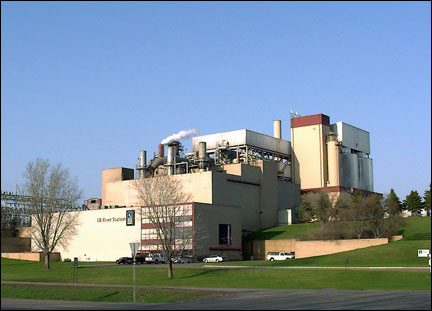
Here’s the GRE HQ, stolen from GRE’s site. It’s the former home of Minnesota’s first nuclear plant, the little bitty one that my father helped design the conventional side, the steam stuff, not the nuclear, though I do remember playing with a geiger counter as a kid.
Today it’s time for the NM-SPG meeting up in Elk River, transmission planning for the area. And so hot off the press, here’s the abbreviated report with presentations below:
TRANSMISSION PLANNING
The first issue was one that I care about — the 2007 Transmission Plan (Minn. Stat. 216B.2425). There’s a problem because “nobody’s showing up” and so their thought is to eliminate the zonal meetings. Ummmmm, no… They will hold them this next round, but then what?
Here’s the Minnesota Transmission Owners site.Here’s the CapX 2020 site.
CAPX 2020 – Jared GRE
Phase I projects and Brookings to Twin Cities
Slides they’ve been giving to County and Township routes
Projected Population Growth 1.3 million by 2050
Job growth 500,00 new jobs
Projected Electric Demand growth 4,500=
CapX Group 1 –
Four lines work together to ensure reliability for the region
Lines meet most urgent need
Lines will serve as out let for whatever generation resources are built
CapX Brookings
250 miles of 345kV, “access to new generationCoN – Based on SW MN-Twin Cities EHV completed Nov 2005
Additional studies – Generation Alternative for load serving
MISO queue additions, Lake Marion xfmr overload – overloaded before they put it in
Combined CapX Groupe I loss analysis
Load serving, Marshall, Franklin, Lake Marion, New Ethanol loads
Underlying system study to see impact on lower levelsCost allocation – MISO RCEB Analysis
BISO Baseline Reliability Study – MTEP
CapX Notice Plan – in 30 days or so.
EOM – PUC meeting on Exemptions
Brookings project – Randy Fordice 763-241-2463 rfordice@grenergy.comReliability project or generation project – MTEP process, studying now, some results on Fargo project
Load use more like 2004 load and not 2016
MTEP 06 – will be in MTEP 07 if determined to be reliability projectsFargo CapX line
Corrects loss of bulk lines – Center-Jamestown-Maple River
Dorsey Forbes
Local load serving benefits – Alexandria, St. Cloud
Loss Reduction of 100MW real-time
Fargo need – not until 2018
Alexandria – big problem is loss of Grant County-Elbow Lake Lind
St Cloud – this is the primary local problem – loss of Benton County – Granite City 115kV, St. Regis load drop, cannot Reconfigure GraniteCity without new source
So, seems to me that CapX is doing a good job of proving it’s NOT needed.
Here are a few of the juicier presentations:
Big Stone II Transmission Update – Phase 6
And here’s a presentation using RES as justification for more unnecessary transmission:
Click HERE for RES Language
Now doesn’t that make you wonder just what they were thinking when they passed an RES with transmission language in there???
Lindstrom requests Task Force extension
March 23rd, 2007
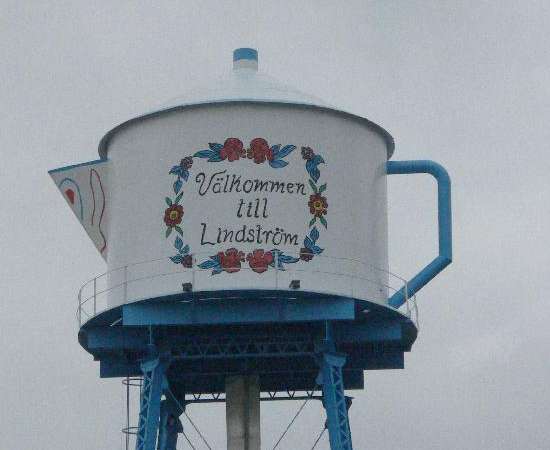
Xcel’s application for the Chisago transmission line is at the PUC, wtih the Certificate of Need and Siting dockets mixed into one. They’re trying to ram it through unexamined, setting up a Advisory Task Force with virtually no notice and having three meetings crammed into an eight day period — that’s not sufficient time for anyone to get the application, review it, and comment coherently. So we’ve filed a Motion for an extension to have a reasonable amount of time, rather than this farce they’ve instituted. Sure, they don’t want an effective Task Force like the last time, heaven forbid that local governments and the public should have an opportunity to participate in a meaningful way.
Lindstrom Motion for Extension
And with that report and appendices, you can see how it should be done.
CLICK HERE for Xcel’s Chisago transmission site.
For the dockets, go to www.puc.state.mn.us and then “eDockets” and then “Search Documents” and then search for dockets 04-1176 and 06-1667 .
Hey, Jeremy! Are you keeping an eye on Chisago Project?
March 6th, 2007

The Chisago Transmission Project is going forward with vigor, and with not a heck of a lot of notice. For example, the Public Comment session on scoping of the Environmental Assessments was last Tuesday, and Comments are open until the 29th of March.
PUBLIC MEETING NOTICE WITH COMMENT INFO
DEPT OF COMMERCE – CHISAGO SITING DOCKET
 XCEL – CHISAGO TRANSMISSION PROJECT APPLICATIONS
They’re in such a hurry that they’re appointing the Citizens Task Force tomorrow, notifying them by the 9th, and week of the 12th they’re starting the Task Force meetings. There’s no way that public entities, i.e., cities, can properly nominate and approve a Task Force member by that time. NO WAY!!! That’s “streamlining” in the extreme!
Freshman lawmaker Jeremy Kalin of Lindstrom exhibits high energy, working on series of initiatives
Monday, 05 March 2007
by T.W. Budig
ECM capitol reporterThere’s a pair of baby shoes in Rep. Jeremy Kalin, DFL-Lindstrom, office at the Capitol.
They’re a gift from a family member, a memento of the drive candidate Kalin exhibited in wearing out five pairs of shoes campaigning in District 17B.
Now the high-energy candidate has made the transition to high-energy lawmaker.
“First of all, I’m having a blast,†said Kalin recently of life in St. Paul.
“If I’m going to be effective, I have to take advantage of every second I’m here,†he said.
Events move quickly at Capitol
Although only two months on the job, one thing that has impressed Kalin is how quickly events move at the Capitol.
And he’s noticed, too, that it’s not when lawmakers are making speeches or otherwise posturing that the work gets done. Deals are struck over coffee, walking to committee, he explained.
Indeed, Kalin wanders about during House floor sessions, not aimlessly nor sightseeing but to buttonhole colleagues, extract information.
In rapid fire Kalin can list a series of initiatives he’s working on. Some have been planned, others developed when he saw an opening and thought “Why not?â€
An example of the latter is a proposed East Central pilot project for growing prairie grass for the ethanol industry.
Kalin — who is carrying a portion of Gov. Tim Pawlenty’s energy bill — thought growing grasses for ethanol production could be a good use of the sandy soils found in the district.
Jumped in with a proposalSo he saw an opening in some legislation and jumped in with the proposal. “I believe my folks sent me done here to get things done for them,†he said.
Another energy-related idea Kalin, 32, designer and draftsman by profession, has is to rate the energy efficiency of public buildings on a state Web site.
The idea, he explained, is to activate the public — to provide information.
When they learn their city is losing thousands of dollars through poor energy use, taxpayers will let their council members know about it, he explained.
Kalin serves in a political place and already has had to make political decisions.
Recently, the House debated an increase in their per diem or daily allowance.
DFL leaders didn’t want a floor debate but rather send Republican amendments on the increase to committee.
Breaks with the leadership
Kalin broke with leadership, voting with Republicans. “I can tell you that wasn’t easy to do,†he said. Yet Kalin argues that per diem is being used as a salary supplement. “I think we should have the guts to stand up and say, ‘Yes, we should raise pay,’ or ‘No, you shouldn’t,’†said Kalin.
While not ruling out a pay increase in the future, Kalin argues now is the wrong time.
In recent days, DFL leaders at the Capitol have indicated that some big issues, such as health care, cannot be fully addressed this session.
That some must be put off for future sessions.
Kalin argues that’s acceptable.
“They don’t want us to do everything at once,†said Kalin of the public.
You don’t want the right ideas with the wrong details, he warned.
In discussing other issues, Kalin said the transportation finance committee only now is figuring out the budget — the issue of a possible gas tax increase hasn’t been decided yet, he explained.
Kalin believes most constituents in his district would accept a gas tax hike — district transportation needs are so pressing, he explained.
“Of course there’ll be some (political) grief,†he said, smiling.
“There’s a little grief waking up and keeping my title ‘politician,’†he said, laughing.
Kalin’s first bill
Kalin’s first bill, a bill dealing with veterans applying for hunting licenses, is expected to come up on the House floor for a vote.
It’s a compromise, Kalin explained. And it’s better for it, he opined. “I think it’s a big success,†he said.
On one recent day, Kalin — the bright sun outside his office window beautifully lighting the Capitol entrance across the street — spoke of rapidly approaching committee deadlines.
He spoke of the need to move faster. Of getting more done. “There’s so much more to do,†he said.
Kalin and his fiance, a physician, are planning to marry in August.
(Photo by T.W. Budig, ECM Capitol Reporter)Â

MISO Transmission Benefits Analysis is here!!!
March 4th, 2007
I know you’ve been sitting on the edge of your chair waiting for this — well, wait no more!
Why care about the MISO Transmission Benefits Analysis? Because it tells us just what they’re going to get if they build the CapX2020 transmission megaboondoggle!  Well, not specifics, but enough so that it’s obvious to somebody that doesn’t know the difference between AC$R, AC$$, and ACCR!

STrib – “wind transmission” NOT
March 4th, 2007
Here I just got that post done, and what comes in but the STrib article with more whining about transmission. Note he’s quoting Mark Ahlstrom, WindLogics, but hey, WindLogics is a contractor that put together the Minnesota Wind Integration Study, which shows that through distributed and dispersed generation we can site 5,000-6,000MW around the state without a significant infrastructure investment — WE DON’T NEED TRANSMISSION TO BUILD WIND, WE DON’T NEED TRANSMISSION TO FULFILL THE RES!
So next time they say we need transmission — you know better!!! It’s not for wind — the CapX2020 transmission is for coal from the Dakotas.
Here’s the STrib article:
Last update: March 03, 2007 – 10:16 PM
Green dreams of wind energy face a fickle future
The state is empowering the wind-turbine industry to crank up its efforts. But creating the electricity may prove to beeasier than distributing it.
By Mike Meyers, Star Tribune
FENTON TOWNSHIP, MINN — When Gov. Tim Pawlenty signed a landmark “green energy” bill 10 days ago, the crews here on Buffalo Ridge, their eyebrows glazed with ice, were being battered by some of the wildest winds in the Midwest.
Their work on the prairie erecting a sprawling forest of wind turbines, each soaring 26 stories, is one of the simpler feats needed to make Pawlenty’s vision for the state’s energy future come true: drawing 25 percent of Minnesota’s electricity from renewable sources by 2025.
Reaching that benchmark would cement the state’s position as a national leader in wind power. But getting there will be anything but a breeze.
Raising money, negotiating land rights, gaining permits and doing the construction can take years. And before wind parks are built, investors must know that transmission lines will deliver the power to buyers.
Transmission line operators, meanwhile, must learn how to accept a volatile source of power without destabilizing the electrical grid.
It’s not impossible,” said Dale Osborn, transmission technical director for the Midwest Independent Transmission System Operator (MISO), which orchestrates distribution of power among 15 states and one Canadian province. “But there are going to be challenges that are very formidable, and they have to be resolved.”
Only three states — California, Texas and Iowa — produce more wind-generated electricity than Minnesota. The stroke of Pawlenty’s pen will lend more momentum to what already was a rush of investment on wind and other green power projects.
To reach a U.S. goal of 20 percent of electricity coming from wind power, nationwide investment will have to total $30 billion a year this decade and next, by the estimate of the Wind Energy Association.
Consider the harsh realities
The latest project in southwest Minnesota is owned by EnXco, based in North Palm Springs, Calif. A visit to the $300-million wind park under construction shows some of the cold realities Minnesota faces in its energy future.
“Climbing a ladder [260 feet] to tighten bolts, that’s hard work. It’s physical torture,” said Warren Grieves, director of the construction project. Grieves, 64, has scaled those hundreds of rungs himself several times, and he starts every day with leg-stamina exercises, in case today’s the day he has to make another climb.
Spanning a stretch of farm fields 7 miles long and 7 miles wide, the wind park will add 200 megawatts of wind-power capacity by year’s end.
To reach that goal, crews will have to pour 25 trucks of concrete, lift a tower that weighs 125,000 pounds, a turbine that weighs as much as the tower; a hub, 38,000 pounds, and a rotor, 79,000 pounds.
Then repeat the whole process, 137 times.
Over the next 18 years, crews working for a host of companies will brave the elements to deliver 25 times that additional power, maybe more.
Just negotiating with farmers to plant wind turbines in their fields of corn, soybean and alfalfa can take years. About 160 people had to sign deals before EnXco could break ground on its latest project.
Simply coordinating the delivery of parts also is a tough task, as suppliers strain to keep up with new demand. Some of the rotor blades on the turbines going up in southwest Minnesota were shipped from Brazil.
Sitting in his warm St. Paul office, 250 miles from the wind-swept construction site, Osborn is one of a small army of engineers who soon will have to juggle the distribution of energy from the new wind park and scores of others springing up across the Midwest.
About 1,000 megawatts of wind power are produced in Minnesota today, enough energy for about 400,000 homes.
Asked to size up the task of adding up to 6,000 megawatts of wind-powered electricity to the Minnesota grid over the next 18 years, Osborn makes it clear that heavy lifting is ahead.
“It probably takes seven years or more to build a line that will carry that power,” he said. “Currently, a lot of areas don’t have any capacity left.”
The volatile, unpredictable nature of wind is another problem. A recent study showed that in the summer, when winds tend to blow slower than in the other three seasons, 86 percent of the potential electrical capacity of wind turbines will be idle.
“Wind is like having a car that’s out of fuel when you need it the most,” Osborn said.
Engineers will have to figure out ways to integrate wind power into the electrical grid without counting on it to meet peak demand in summer.
“You’ve got to get to market somehow, don’t you?” said Jim Alders, Xcel Energy manager of regulatory projects. He noted that the last major transmission projects in Minnesota date from the 1970s.
Permit process a challenge
Mark Ahlstrom, chief executive of St. Paul-based WindLogics, said untangling electrical power bottlenecks will overshadow the challenge of building wind parks.
“We can build a wind plant in two years,” he said. “It can take seven years or more to get a transmission line permitted and built, even in the best of cases.”
The control center, which operates around the clock, not only monitors EnXco’s Minnesota operations, but 23 other power parks, scattered from California to New Jersey.
Windmills can operate at 30 degrees below zero, but ice can rob their rotors of efficiency. No matter when a turbine fails, it must be fixed immediately. “When the machines got to be over $1 million, it doesn’t pay to let them be down at night,” said Randy Grayson, EnXco’s area operations manager.
Maintenance crews work at all hours in all weather, sometimes to the chagrin of their families. The workers have a nickname for a wind turbine: “We call it, ‘The other woman,’ ” Grayson said.
Will EnXco’s power find its way into the grid?
Xcel’s short-term solution to the transmission issue is a $300 million project, already underway, to add high-power lines around southwest Minnesota.
Longer-term, the utility plans to spend $700 million stringing 600 miles of transmission lines across various parts of the state.
Finishing the job will take the rest of this decade and most of the next, because the sprawling wind park in Fenton township likely will have to be duplicated two dozen more times.
“We don’t have all the answers now,” Alders said.
Mike Meyers • 612-673-1746 • meyers@startribune.com