Rep. Tschumper takes on ethanol
February 9th, 2008
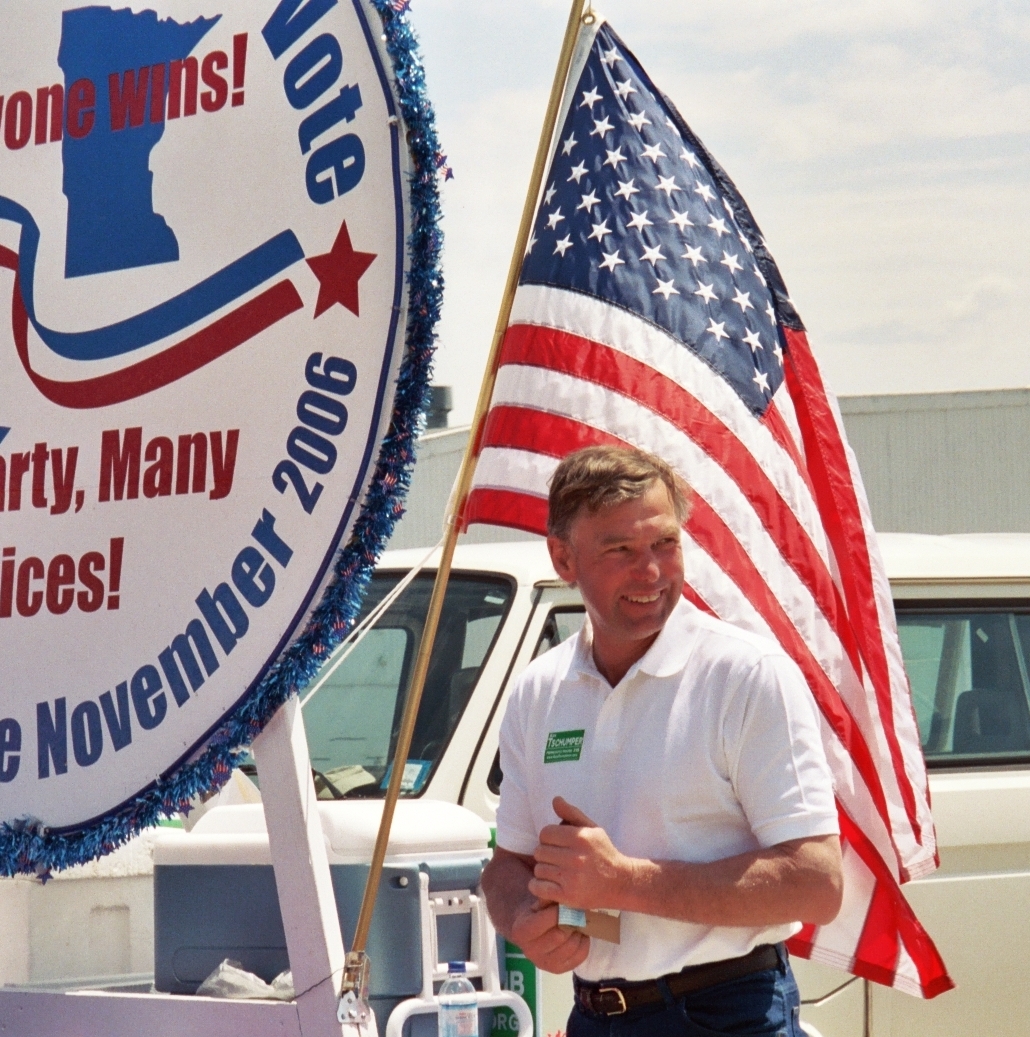
Today’s StPPP reports that Rep. Ken Tschumper is taking on ethanol, demanding environmental review. THANK YOU, KEN! Here’s the article:
Lawmaker proposes environmental review of new ethanol plants
BY DENNIS LIEN
Pioneer Press
Article Last Updated: 02/08/2008 04:03:42 PM CSTA southern Minnesota lawmaker said today he plans to introduce a bill in the state House next week that would require mandatory environmental reviews of all new ethanol plants.
State Rep. Ken Tschumper, DFL-LaCrescent, said such plants have environmental impacts, and should face the same types of scientific study that many other large ventures undergo. Besides using substantial quantities of groundwater and polluting the air, corn-based ethanol plants have led to increases in soil erosion, fertilizer runoff, and herbicide use, according to Tschumper.
This will go to the House Environment Committee.
CLICK HERE for House Environment Committee members & contact info.
Here’s his own press release with a little more detail:
TSCHUMPER PROPOSES ENVIRONMENTAL IMPACT STATEMENTS FOR ETHANOL PLANTS
ROCHESTER, MN – State Representative Ken Tschumper (DFL – Houston and Fillmore counties) announced new legislation today that would require mandatory Environmental Impact Statements (EIS) for all new ethanol plants in Minnesota. Facilities that produce ethanol in Minnesota are currently exempt from having to do an EIS in most cases.“Congress and various state legislatures have passed generous subsidies to promote the development and expansion of ethanol plants and mandated various levels of ethanol content in gasoline,” Tschumper commented. “Some states, including Minnesota, have gone even farther by exempting ethanol production facilities from the normal environmental review and regulation that such projects of similar size would undergo in other sectors of the economy.”
However in the last several years existing ethanol facilities have expanded and new plants are proposed that are much larger than in the past.
“The environmental impacts of this expanding ethanol production are causing great concern,” Tschumper emphasized. “Huge demands on groundwater, increased air pollution, heavy demands for rail transportation, increased soil erosion and fertilizer runoff, negative impacts on livestock prices and the increased use of atrazine, (a pesticide known to cause prostrate and uterine cancer in humans) are impacting our lives, our financial stability, and our environment.”
This is especially true for Minnesota. Many of the rural areas where ethanol plants exist or are proposed also have important livestock farming, especially in southern Minnesota.
“As we all know, the most important resource we have in southern Minnesota is our abundant, high quality supply of groundwater. Our livestock industry is very dependent on this critical resource, ” Tschumper, a dairy farmer himself, added.
Since the Groundwater Protection Act was passed in 1989, the State of Minnesota, working with county governments, has engaged in many initiatives to monitor and protect our precious groundwater resources.
“Unfortunately our groundwater resources on which our livestock industry is so dependent, is now being threatened by this new generation of ethanol plants. I plan on doing everything I can to protect our groundwater and our livestock industry,” Tschumper promised.
Ethanol production uses 5-6 gallons of high quality groundwater for every gallon of ethanol produced. An ethanol plant capable of producing 100 million gallons of ethanol annually will draw 500 million to 600 million gallons of water from an aquifer annually. This tremendous draw down in such a short period of time will challenge the ability of many aquifers to recharge themselves and will expose cleaner, higher quality aquifers to more pollution from pesticides and fertilizers. This has long-term implications for not only our livestock farming but also our small towns and other rural businesses.
Environmental Impact Statements are a complete scientific study of all the environmental, economic and health impacts of a proposed project.
“It is important to understand that Environmental Impact Statements do not halt projects,” said Rep. Tschumper. “They simply provide more science-based information as to the long-term consequences of these projects for our environment, our economy, and our health. Requiring an EIS for all future ethanol production facilities is reasonable, responsible and necessary.”
The EIS process that ethanol facilities will do under this legislation is similar to the standard environmental review required for projects of similar size in other sectors of the economy.
“Many large industrial and commercial projects in Minnesota are required to complete an Environmental Impact Statement before they can be built,” said Rep. Tschumper. “Prior to 2004, ethanol plants of a certain size were required to do the same, but they were exempted from this requirement that same year. Clearly that was a mistake given the growing environmental concerns surrounding current ethanol production practices.”
Rep. Tschumper will introduce his bill when the legislative session resumes February 12, 2008.
Gov’s plan looks scary to me…
February 1st, 2008
Mikey Bull’s been busy… he was promoting this last night, though earlier he’d said it would be a while before something came out in writing. Well, wait no longer…

Here it is, warm off the press:
Here’s what jumps out at me that sucks (yes, Mikey, to critique is to live, it is my job):
Remove the barriers to and encourage development of Combined Heat and Power (CHP) projects.
Repeal the state’s moratorium on new nuclear energy facilities.
Reduce regulatory barriers by eliminating the Certificate of Need requirement for generation and transmission facilities needed to meet the renewable energy standard.
Create renewable energy “zones” and “corridors” to streamline the regulatory, environmental and siting review process for new renewable energy generation facilities and transmission lines.
Support the creation of incentives aimed at bioenergy facilities that use biomass as an energy feedstock to lower their carbon footprint.
Define wastwater sludge and byproducts as biomass and define wastewater sludge and the organic portion of solid waste and organic byproducts of each as renewable fuels.
Cap and Trade Implementation – SHOULD BE CAP AND TAX!
Advance Coal and Carbon Capture and Storage — the Midwest Regional Commitment on coal use for electricity generation is that by 2020, all new coal gasification and coal combustion plants will capture and store CO2 emissions.
And the best thing, I guess the only thing that excites me about this plan, is recycling increase, although I’d previously heard it was 75%, not 50%:
• Expand waste reduction, recycling, composting and management efforts:
- Increase further recycling and source reduction rates in Minnesota. Minnesota has reduced GHG emissions from the solid waste sector by 14% since 1990 by having the second highest recycling rates in the country and landfill gas emissions controls.
- Support increased source reduction and the interim goal of achieving a 50% statewiderecycling rate by January 2011, through efforts including:
– Recycle More Minnesota Campaign
– Office paper and junk mail reduction
– Waste reduction in the grocery sector
– Electronics recycling
– Telephone book reductions
– Increased beverage container recycling
OK, folks, comments???
MN Solid Waste Policy SUCKS!
January 4th, 2008

That MPCA logo… looks like it’s got the whole world in its hands (things appear unbidden on my tape loop, sorry!)
MPCA is here on Legalectric today, with help from Alan Muller, because they issued a “2007-08 Solid Waste Policy: Draft for Public Comment” which is open for Comment. Yes, it’s open for Comment, but it was issued on December 21, 2007, just prior to the world shutting down for two weeks, and the Comment period is open for only three weeks.
Quick, email the MPCA’s Jim Chiles, and Commissioner Brad Moore and ask that the Comment period be extended another 30 days!
Jim Chiles: jim.chiles@state.mn.us
Commissioner Moore: brad.moore@pca.state.mn.us
Now read carefully on that home page, because this is going to be a report to the legislature — and that legislative hearing will present another opportunity to let them know what you think! Here’s “Solid Waste Policy Lite,” the presentation for “stakeholders” which of course doesn’t include you and me or those working and commenting on certain incineration issues… and just who was included? Have they held any meetings in the communities where incinerators are proposed? Has the MPCA announced this Solid Waste Policy at any of the recent meetings where Solid Waste Policy as an issue? Have “stakeholders” been spreading the word about this Solid Waste Policy? Inquiring minds want to know. They call this a “Roadmap” which harkens back to the misguided push for coal gasification by Joyce Foundation, GPISD, RE-AMP and others, and it’s clearly a way of setting policy…
And here’s the full MPCA Solid Waste Policy page:
… so here’s the MPCA, setting Solid Waste Policy as directed, not by Minnesota and federal law, but as directed by their boss, The Green-Chameleon, Tim Pawlenty:

Solid Waste Policy has been a recurring issue at the MPCA, and here we are, doing a similar policy dance that went down twenty years ago, at the time the MPCA recognized its environmental leadership role inherent in the agency’s legislative charge, and recognized the necessity of those on the front lines dealing with permitting and analysis of project proposals to weigh in:
MPCA Memo – Stand up and DO YOUR JOB!
MPCA staff critical of heavy reliance on incineration – STrib Nov 4 1988
And now, the 2007-08 Solid Waste Policy is promoting a sharp increase in incineration. The MPCA!!! Does Commissioner Moore know of and endorese this policy? Is this a reasonable position for the state agency charged with, NAMED AS, the Pollution Control Agency? Is this just a classic case, like air permitting, of inability to control it so what the hell, let’s do more, let’s waive the restrictions, up the limits so that “we’re in compliance.” Oh, great… yes, this is one green idea…
Comments anyone? There may be an extension, I’ve requested it, others probably have as well, and from Jim Chiles, who says “we plan to send out an email today on the comment-period question.” Oh, OK, and what does that mean? I’ve asked and will keep y’all posted. In the meantime, start those comments, and send by close of business on January 11, to:
* By e-mail (preferred): jim.chiles@state.mn.us
* Postal mail:
Jim Chiles
Minnesota Pollution Control Agency
520 Lafayette Road N
St. Paul, MN 55155-4194
* Fax: 651-297-8676
Now get to work!
CCX – a lot of hot CO2
November 24th, 2007

Kurt, the polar bear
There’s a movement afoot to wake up the world about the problems with the Chicago Climate Exchange. CCX is a good idea gone bad if I’ve ever seen one, and I’ve been ranting against it for a while. Finally some groups have come out against it, and here are their reasons:
- CCX rules have loopholes that do not warrant government support
- Offset rules offer too many outs
- Governments should not participate inprograms developed through a closed, non-transparent process
- Participation in CCX may limit the options for participation in other programs
- States and cities can achieve their climate goals without joining CCX
- Voluntary programs are not the solution
I’d add one of my own:
- Privatization of market is improper/wrong – who pays and who benefits?
Here’s their report:
As you know, or should know, CCX, a private CO2 market developed by the Joyce Foundation. Yes, that same Joyce Foundation that has given enviro groups such as Clean Wisconsin, RE-AMP, Great Plains Institute, Clean Air Task Force, and National Resource Defense Council bucks to support IGCC, and of course these groups and programs also support CCX, not cap and tax. Who stands to make $$$$ from this market? How do you stop generation of CO2 when a cap & trade scheme allows new CO2 to be generated?
Here’s the Joyce Foundation’s.. errr… Energy Foundation’s… er… the Midwest Climate Change Project 1 & 2:
And why not? Once more with feeling — here’s why!
R-T “Advisory Group” hears from NAB
October 23rd, 2007

At long last, Neighbors Against the Burner made a presentation to the “Rock-Tenn Advisory Group.” The “Rock-Tenn Advisory Group” is District Energy’s vehicle to gain public acceptance for a garbage burner at the Rock-Tenn facility in St. Paul, by 280 and Cretin-VanDalia, and I put it in “quotes” because it’s as much an “Advisory” Committee as the NSP one put together over a decade ago to “decide where to put nuclear waste” in Goodhue County — predetermined result — but like that “Advisory” committee, it may not work out just quite like the want! They’ve been trying to stifle public input, and that’s not working…
Here’s the Neighbors’ presentation:
Get your calendars out:
Dr. Paul Connett
November 14, 2007 @ 7:00 p.m.
Davis Lecture Hall, Lower Level
Macalester in St. Paul
From the Neighbors Against the Burner site:
Internationally-acknowledged authority on the health dangers of incineration, Dr. Paul Connett, will be appearing on the Macalester College campus on Wednesday, November 14, 2007 at 7:00 pm. This NAB public meeting will be an opportunity to learn more about the hazards of building an RDF (refuse-derived-fuel) incinerator to generate energy for the Rock-Tenn paper recycling plant at Hwy. 94 & Cretin. The meeting will be held in the Davis Lecture Hall, Macalester College Campus Center, Lower Level at 1600 Grand Ave. (SW corner of Grand & Snelling Avenues, St. Paul). Bring your friends and neighbors; this will be a forum you won’t want to miss!