Comments – FERC docket on Green Power Express
February 28th, 2009

A little birdie told me that the Comment period on the Green Power Express rate docket at FERC has been extended to March 6, a week from now.
To find the FERC docket (maybe there’s a quicker way, but this is all I know so far…), CLICK HERE and search for docket ER09-681.
The filing is just too big to upload, but you can see the redacted version here:
What they’re wanting to do is stick their Construction Work In Progress (CWIP) into the rate base… they want to be able to charge us for this, for putting this together!?!?! “Who” is the rate base in this, what are the costs, at what point could they be assessed?
I’m struggling to wrap my pea brain around this, but I’m wondering what the difference is between this and what Xcel got in the 2005 Transmission Omnibus Bill from Hell, other than a much wider rate base:
The rate base that ITC Holdings could spread this over is immense, as opposed to Minnesota’s utilities’ rate base, and the idea of paying for development of this phenomenally stupid idea just galls me… but I’ve got some reading and thinking to do here. Intervenors are lining up to weigh in and fight about it.
And then there’s that 7,000MW of wind in the MISO queue in Illinois, and it’s the Chicago transfer numbers they want to keep secret. Shouldn’t someone tell them that there’s all that wind in Illinois?
I’m printing out this sucker for a winter night’s read…
Check it out — what do you think?
Breakfast with Gary Schiff – Xcel’s Hiawatha Project
February 26th, 2009

Tomorrow a.m., at too early o’clock, there’s a “Breakfast with Gary” panel discussion on Xcel’s Hiawatha Project. Gary Schiff is the 9th ward council rep, here’s the map. Xcel’s proposed Hiawatha Project runs right through the heart of the district — their preferred route is the Midtown Greenway — great, wonderful idea — whatever are they thinking?!?!?!
Moi is on the agenda, so I’ll be up at “even more too early o’clock” to get there, and from the looks of it outside, Ken and Krie might get hitched to a sled. Snow is letting up, and the guy across the street in Wadley’s old house is blowing snow.
Breakfast with Gary Schiff
Panel discussion of Xcel Energy’s Hiawatha Project
Friday, February 27
7:30 to 9 a.m.
Mercado Central
1515 East Lake Street
Bloomington and Lake in Minneapolis
(remember Antiques Minnesota?)
Be there or be square!!
“What’s wrong with the electric grid?”
February 21st, 2009

Ever wonder what’s wrong with this electric grid that too many are spending too much time to fix? As in, “If it’s not broke, don’t fix it!” Here’s an article sent by Ann Rasmussen, of Dorchester Citizens for Safe Energy, fighting the Mid-Atlantic Power Pathway, that gives the best and most concise statement of the problem that I’ve found. Grappling with this will give you a solid context for understanding all the transmission proposals criss-crossing the US that we’ve seen lately.

Denial is NOT withholding… Piedmont v. FERC
February 18th, 2009
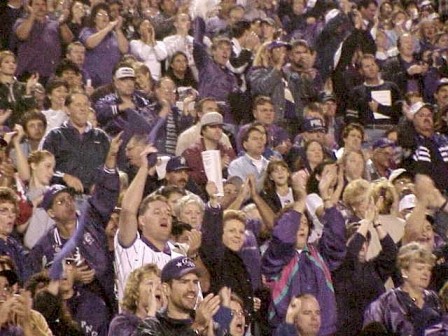
EEEEEEEEEEE-HA!
OH HAPPY DAY!!!!
A victory for states’ rights, for state decision-making authority and jurisdiction over transmission lines. The National Interest Electric Transmission Corridor designation has been horrifying to many of us because the talk on the street was that the rules allowed transfer to FERC where a state was “withholding” granting a permit. That was being interpreted as broadly as a state denial — that if a state reasonably denied a permit for transmission, the applicant could then take it to FERC and get it rammed through. So it went to court…
AND THE COURT SAID NO!
NO!
Like wow…
It’s printing now, and I’ll find some choice snippets. This is such a relief, but I doubt the utilities will let this go unchallenged — onward and upward!
JCSP & UMTDI in the news
February 16th, 2009
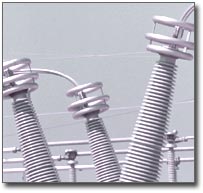
More transmission – again in the Wall Street Journal.
Hard to tell which of the alphabet soups this article is about, and I’d say both, it’s about the Joint Coordinated System Plan and the Upper Midwest Transmission Development Initiative — UMDTI! But we know it’s all one and the same.
The article doesn’t really specifically name either “group” and it leaves us wondering just who or what is behind it. This is a good thing — yes, it really is as amorphous as it sounds! What disturbs me, of course, is the “It’s for wind,” because we know better!
At least the WSJ noticed the NYISO and ISO-NE’s objections — here it is again, it’s one of those letters I just can’t get enough of:
The UMDTI is insidious, a cheerleading effort to push transmission through. The way the thing is structured, is, as I said in my comments at the February 11, 2009, meeting, is ABSOLUTELY ASS-BACKWARDS. It’s market driven backwards engineering a transmission solution to support nonexistent need.
Upper Midwest Transmission Development Initiative – HOME PAGE
UMTDI Stakeholder Letter 10-28-08
Stakeholder Responses – LINK – look who the stakeholders are – DUH!
Wind on the Wires Comments … sigh…
UMDTI Stakeholder Letter 12-31-08 (Ed Garvey – MISO)
Dec 30 Draft – Cost Allocation Work Group (Marya White – Commerce)
December 30 Draft – Transmission Planning Work Group (Randy Pilo – PSC-WI)
Wind on the Wires cites many studies:
MISO’s Regional Generation Outlet Study (RGOS)
Transmission planning initiatives by” CapX 2020, ATC, Mid-American and others”
Minnesota RES transmission study
MISO’s MTEP-08 and MTEP-09
Joint Coordinated System Planning Stuey
Eastern Wind Integration Transmission Study
None of these studies are linked — and they’re not on the UMTDI site — let’s see how long it takes to find them.
Now for the more difficult ones… one moment please…