EQB hosts EPA rule listening session
June 17th, 2014
Where to start… in addition to just one day’s notice, look at the presenters, skewed towards “Coal on the Wires” where they can explain how it’s all about wind, an important concept as we consider what these EPA regulations mean. From this vantage point, it’s my understanding that with the new regulations, it might have an impact of maybe 7% decrease in use of coal for electrical generation. Bears more review.
Here are the EPA regs they’ll be talking about, and it’s open for Comment until some time n September:
Proposed power plant regulations
Clean Power Plan Proposed Rule – June 2, 2014
Proposed Carbon Pollution Standards for Modified and Reconstructed Power Plants – June 2, 2014
TOMORROW, at the EQB (click for larger version):
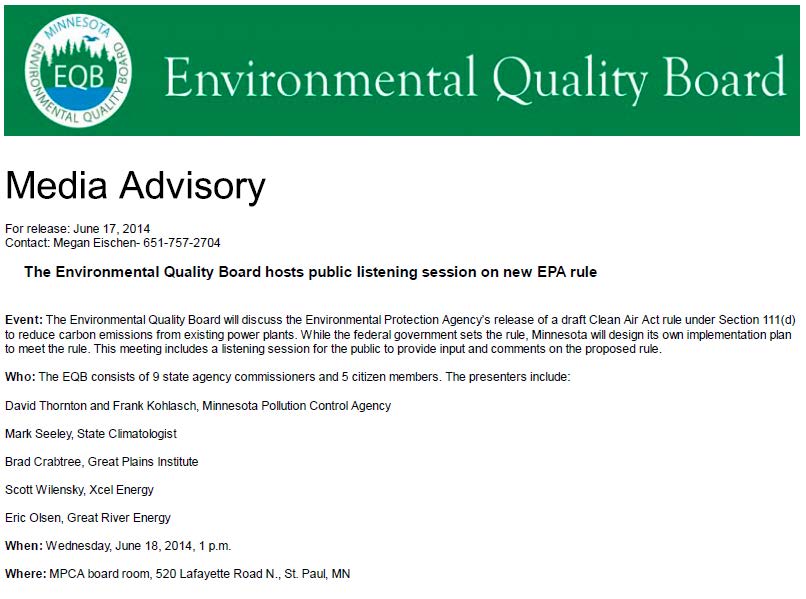 From the looks of it, it sure looks like more of a “talking session” to me. And note those last three!
Brad Crabtree, Great Plains Institute
Scott Wilensky, Xcel Energy
Eric Olsen, Great River Energy
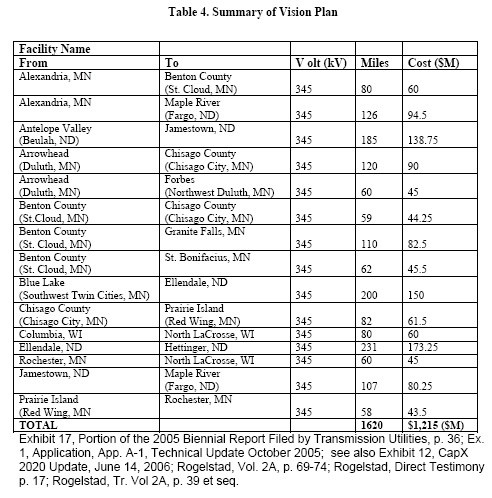
All promoters of transmission, “Coal on the Wires,” otherwise known as CapX 2020 plus. Here’s CapX 2020, look at those North Dakota references:
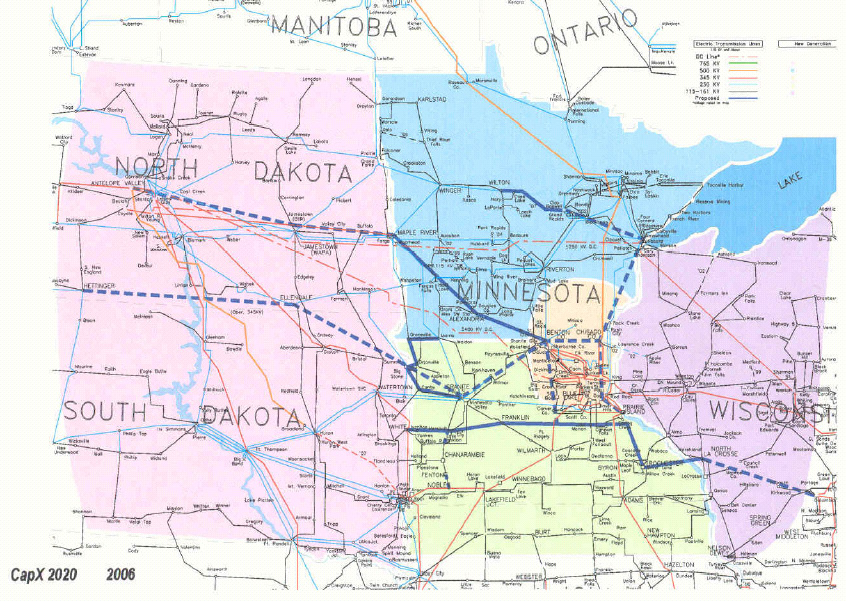
 And the map, again, look where it starts:
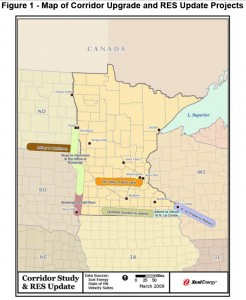
 Add this:
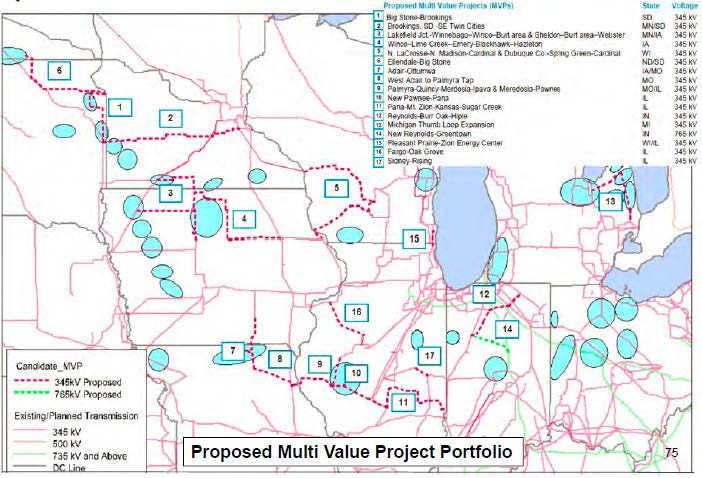
 And the MISO Multi-Value Project list of 17 transmission projects:
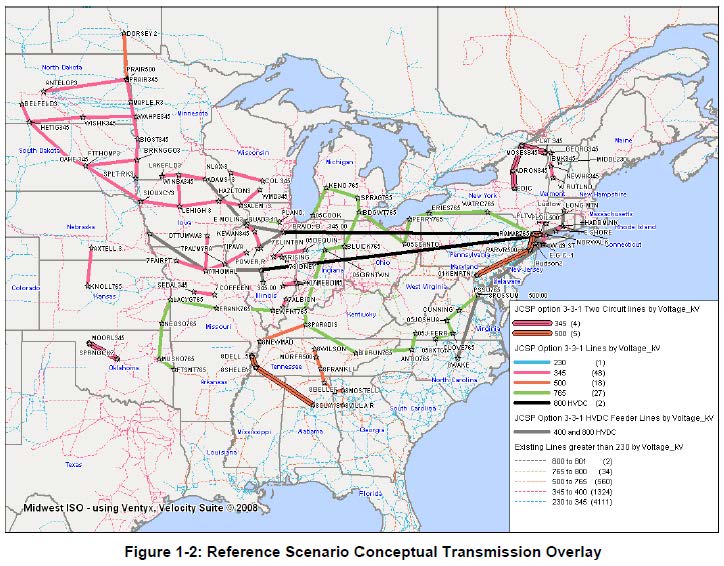
 And folks, with all that transmission, here in the Midwest, we’re most of the way to JSCP:
 As Xcel’s Tim Carlsgaard argued the other day, there are no plans for new coal… Well, when CapX 2020 was at the PUC for the Certificate of Need, MISO’s Jeff Webb testified that there was 3,441 of new coal in ND, SD, IA and MN in the MISO queue (and over 7,000 MW of wind in the Illinois queue). And we know that transmission for coal pays, and oh, how it pays:
But that’s different now… OH? How so? Because it’s not different. It’s “Coal on the Wires.”
First, there’s no talk of closing the coal plants in the area where CapX 2020 transmission starts. Minnesota Power did buy a transmission line and will convert it to wind, but what will happen to the coal on that line:

Oh, right, CapX 2020 will be up and running by then. And after all, additional transmission for coal has been in the works for a long, long time, well over the 15 years that I know of:
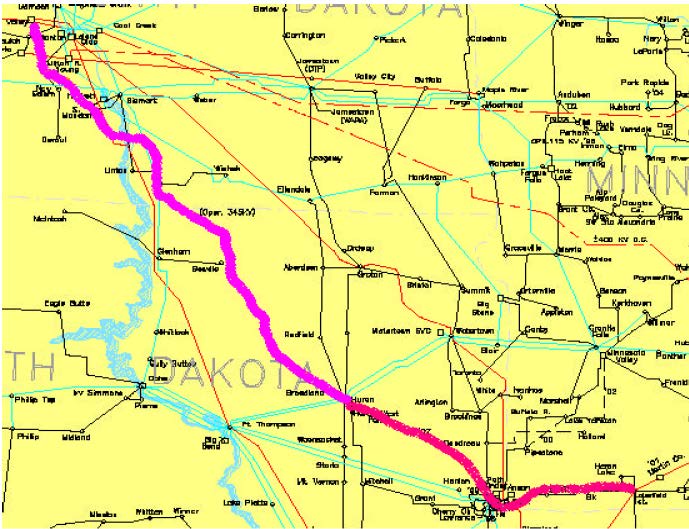
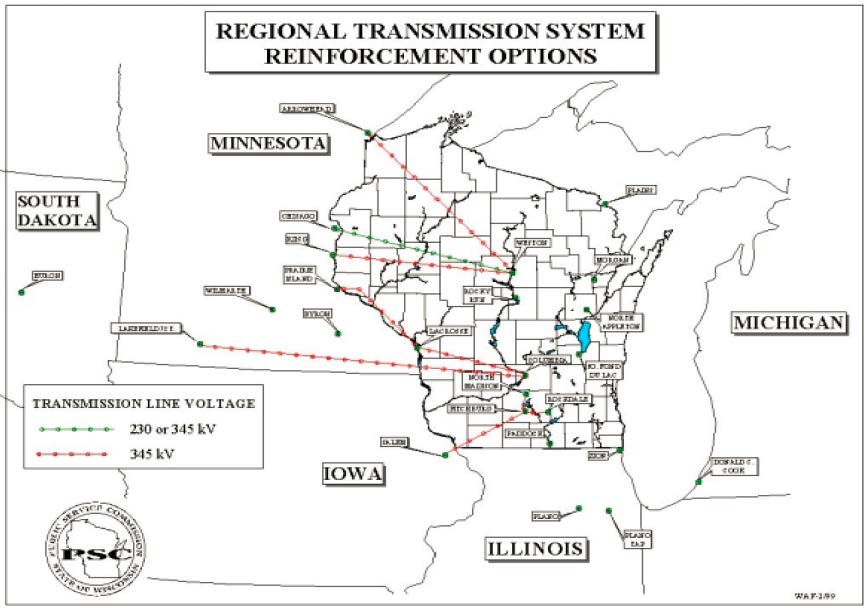 You can see how the “new” CapX 2020, JCSP, and MISO MVP plans have built on the foundation of Lignite Vision 21 and WRAO/WIREs. Yea, but that’s still old news. Sure, but there’s a lot to be said about learning from history. And then there’s this matter of trajectory, we can see where this is going.
As I noted on No CapX2020 not long ago, here’s what’s up with coal right now:
- Not one North Dakota coal plant has been shut down.
- Minnesota Power has purchased the “coal line” coming from North Dakota into Northern Minnesota, and once CapX 2020 is up and running at the western end, they’ll put that coal generation on CapX.
- Read the federal judge’s decision on the Next Generation Energy Act, declaring it unconstitutional. First, the decision notes that the Dry Fork coal plant has been moved from the West into the Eastern Interconnect (it’s “new coal” now on transmission heading our way that wasn’t coming here before).
- Also in that decision, it discusses plans for a new coal fired plant in South Dakota.
- And also the potential for an additional unit at Dry Fork, which is now in Eastern Interconnect (coming our way).
- AND it discusses the surplus at Milton Young, which would be exacerbated by transmission prohibitions of the Next Generation Energy Act.
What else is planned? Let’s all start looking, particularly since the federal judge’s decision on the Next Generation Energy Act.
Don’t forget that there is not one single Renewable Energy Standard/Mandate that requires any coal be shut down. It only requires addition of “renewable” generation. Think about that. If we shut down the coal, for instance the North Dakota coal where CapX starts, there would be plenty of transmission capacity for wind and the back up gas or hydro to firm it up. DOH! So if the enviros and those supporting RES across the country are serious about stopping coal, why aren’t they including requirements to shut down coal, and why are they promoting transmission? It doesn’t reduce emissions, doesn’t reduce CO2 or anything else, it just adds wind generation on top of an admitted surplus. Why support and promote transmission, and not require shut down of coal? Well, they are getting paid to support and promote transmission.
And speaking of Great Plains Institute…. GPI has long been trying, as Bill Grant did, to “find a way forward for coal” (Walton’s Bill Grant and “low carbon coal”). Remember Great Plains and all they did for money on coal gasification? Here’s just a bit of it:
Great Plains Institute for Sustainable Development
To support the efforts of its Coal Gasification Working Group.
Minneapolis, MN $437,500
21 mos. 2006Great Plains Institute for Sustainable Development Inc.
To brief Midwest lawmakers and regulators about how advanced coal technologies are currently deployed in Europe and encourage their support for similar adoption here.
Minneapolis, MN $99,400
1 yr. 2007
Here’s more:
IGCC toadies in Pierre, SD
And speaking of the EPA, here’s a settlement where they caved in exclusion of coal gasification as BACT (DOH, how could it be when it’s not happening? The EPA was right, and the IGCC toadies pushed for inclusion of coal gasification and got this settlement, and how much money was attached to that? Furthering the IGCC: Pipedreams of Clean and Green is not in anyone’s interest.):
We must remember history and hopefully not repeat it. There’s the established history of transmission planning for coal, and there’s the established history of “environmental” NGOs supporting coal gasification and transmission for money. As they discuss these new EPA regulations and the potential impact, remember that they put their mouth where their money is.
Meanwhile, about those Comments to the EPA? Again, here’s what’s at issue:
Proposed power plant regulations
Clean Power Plan Proposed Rule – June 2, 2014
Proposed Carbon Pollution Standards for Modified and Reconstructed Power Plants – June 2, 2014
And read Charlie Komanoff’s views:
How to file Comments? From the fed website, the pre-publication version I have doesn’t state the deadline, but it’s September sometime:
Submit your comments, identified by DocketID No. EPA-HQ-OAR-2013-0602, by one of the following methods:
- Federal eRulemaking portal: http://www.regulations.gov
- Email: A-and-R-Docket@epa.gov. Include docket ID No. EPA-HQ-OAR-2013-0602 in the subject line of the message.
- Facsimile: (202) 566-9744. Include docket ID No. EPA-HQ-OAR-2013-0602 on the cover page.
- Mail: Environmental Protection Agency, EPA Docket Center (EPA/DC), Mail code 28221T, Attn: Docket ID No. EPA-HQ-OAR-2013-0602, 1200 Pennsylvania Ave., NW, Washington, DC 20460. In addition, please mail a copy of your comments on the information collection provisions to the Office of Information and Regulatory Affairs, OMB, Attn: Desk Officer for the EPA, 725 17th St. NW, Washington, DC 20503.
Hollydale Order – Withdrawn with conditions
May 12th, 2014

The PUC’s Order granting withdrawal of Xcel’s Hollydale Transmission Project application, WITH CONDITIONS, just came in:


Here’s the interesting part:
The Commission requires parties seeking to withdraw filings without prejudice to demonstrate that withdrawal would not contravene the public interest, would not prejudice any party, and would not raise issues requiring Commission action.5
5 See, e.g., In the Matter of CenterPoint Energy’s Petition for Approval of a Miscellaneous Tariff Change, Docket No. G-008/M-13-333, Order Permitting Withdrawal of Filing (Nov. 13, 2013) (articulating standard).
Oh really? That’s good to know, but it’s a little different than briefing papers and initial resistance to conditions would indicate. Here’s that Order, and you can see how the “standard” was articulated:
The articulation of the standard?
The Commission finds that the proposed withdrawal does not contravene the public interest, does not prejudice any party, and does not raise issues requiring Commission action. The Commission will therefore permit withdrawal.
That’s it — no discussion in the order, just this statement!
DEIS Meetings for ITC Midwest’s MN/IA line
April 21st, 2014
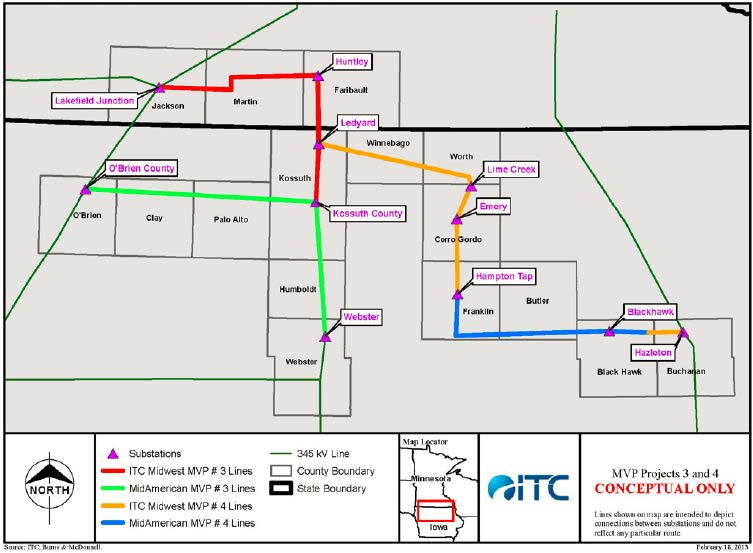
This week we have three days of DEIS meetings, that’s Draft Environmental Impact Statement for the uninitiated. The schedule:
Fairmont Tuesday, April 22, 2014 1:00 p.m. and 6:00 p.m. Knights of Columbus Hall 920 East 10th Street Fairmont, MN 56031 Jackson Wednesday, April 23, 2014 1:00 p.m. and 6:00 p.m. National Guard Armory 108 County Road 51 Jackson, MN 56143 Blue Earth Thursday, April 24, 2014 1:00 p.m. and 6:00 p.m. Hamilton Hall 209 South Main Street Blue Earth, MN 56013
This project is important because, well, look at the red line in the map above that represents this project. It connects on the west to the Split Rock-Lakefield Jct. line from a decade ago, and then goes east, and drops down into Iowa, to become part of a web headed toward Chicago. The red and green on that map constitute MISO designated MVP3, and to the east, the orange and blue are MVP 4, and further to the east, 1/2 of which is Badger Coulee, is MVP 5. Important to note that there are 17 MVP projects, and all 17 must be built to offer the benefits touted, the modeling included all 17. Not only that, but cost apportionment also included costs to states beyond just the percentage of the one project under review, i.e., there are claims of benefits of MVP 3, but those benefits require MVP 4 and MVP 5, and in fact, ALL the 17 MVP projects. Costs to Minnesota ratepayers are “just” a portion of MVP 3, but there are also costs to Minnesota of MVP 4, MVP 5, and I think ALL of the 17 MVP projects. So the benefits that are reliant on all the 17 projects being built must be balanced against the costs attributable to Minnesota for all 17 projects! See, that wasn’t so hard, was it!
Here’s the DEIS from the Commerce ITC MN/IA DEIS page, it’s easier to cut and paste, though it’s a good idea to download because you never know when links will be changed or disappear:
Draft Environmental Impact Statement Text
- Abstract
- Table of Contents
- Summary
- Section 1 – Introduction
- Section 2 – Regulatory Framework
- Section 3 – Overview of Project and Alternative Routes and Sites
- Section 4 – Alternatives to the Proposed Project
- Section 5 – Affected Environment, Potential Impacts and Mitigation Measures
- Section 6 – Impacts and Mitigation Measures for Specific Regions / Segments
- Part 1 – Lakefield to Huntley Segment
- Part 2 – Resource Maps (9.2 MB)
- Part 3 – Resource Maps (7.3 MB)
- Part 4 – Resource Maps (8.3 MB)
- Part 5 – Huntley to Iowa Border Segment
- Part 6 – Resource Maps (6.2 MB)
- Part 1 – Lakefield to Huntley Segment
- Section 7 – Relative Merits of Routing Options
- Section 8 – References
Appendices
- Appendix A – Scoping Decision (5.7 MB)
- Appendix B – Generic Route Permit Template and Example Route Permit
- Appendix C – Transmission Line Structures
- Appendix D – Photo Simulations
- Appendix E – Example Agricultural Impact Mitigation Plan
- Appendix F – Noise Supplement
- Appendix G – Property Values Supplement
- Appendix H – EMF Supplement
- Appendix I – Archaeological and Historic Resources Data
- Appendix J – Route Analysis Data Tables
- Appendix K – Rare Resources and Rare Species
- Appendix L – Map Book
- Overview Map
- Part 1, Map Sheets LH1 to LH19 (7.3 MB)
- Part 2, Map Sheets LH20 to LH44 (8.6 MB)
- Part 3, Map Sheets LH45 to LH57; HI1 to HI12 (7.7 MB)
Minnesota’s Next Gen Energy Act unconstitutional
April 19th, 2014

Judge Susan Richard Nelson issued an order yesterday declaring Minnesota’s Next Generation Energy Act unconstitutional because it “constitutes impermissible extraterritorial legislation and is a per se violation of the dormant Commerce Clause.”
I finally found a copy of the decision, I was looking in all the wrong places. Here’s the Order (thanks to the STrib for posting it):
April 18 2014 Order – Next Generation Energy Act Suit Minn. Stat. 216H.03
It’ll likely be appealed, but I wouldn’t bet on any success. The impact of this decision will be what I’ve been expecting — dreadful — the doors are open for even more coal plants (note the discussion of surplus capacity in the decision) and with CapX mostly built, we’ve got the infrastructure for 50+ years of coal generated electricity exports across Minnesota to market, and 50+ years of mercury for our fish, and all those emissions for us to breathe. Great, just great.
Hollydale yesterday… interesting…
April 11th, 2014

This is the Hollydale Project proposed route, the one that Xcel Energy couldn’t demonstrate need for if their Certificate of Need depended on it, and it did, and they didn’t. Hence their petition to the Minnesota Public Utilities Commission for withdrawal of Applications for both their Certificate of Need (12-113) and their Routing Permit (11-152). I love it when that happens…
This was a great victory to get Xcel to acknowledge that this project was in trouble, that they couldn’t demonstrate need, not that they admitted it outright, but close enough. The down side is that they are persistent, and when they want something, they keep trying, sometimes the same thing, sometimes something different. What will they do here? Who knows, but I doubt they’ll disappear.
There was a surprise filing letter and proposed decision option sent by Paula Maccabee on behalf of WPNA at 8:37 a.m., less than an hour before the meeting began, and half an hour after we’d already left for St. Paul, first I learned of it was when it was passed out at the meeting.
Here are the changes that were requested:
D. Future Filing Requirements
2. Require the company to file
a discussion on their public outreach efforts andan update on improvements made to theload serving capacity of thedistribution system serving the area six months from the date of the order granting withdrawal and quarterly thereafter.
I don’t get it… why? And no, that doesn’t work. Where Xcel is saying they’ll be back, after developing a more palatable option through discussions with stakeholders, why eliminate the disclosure of its “public outreach efforts? Thankfully, this was not adopted.
From Xcel’s filings, it’s clear that the Hollydale Project is “desired,” strongly desired, despite that it’s not “needed” in any criteria-based sense. Xcel wants this project so badly that it has stated that if permitted to withdraw this application, it is coming back, and that:
The residents of Plymouth and Medina, as well as other key stakeholders, have expressed serious concerns about the potential impacts of this Project…
… that “it may take some time to collaborate with stakeholders on developing a new solution…”
… and that it “intends to work with the community and stakeholders on developing a more widely supported electrical solution…”
Those words get me more than a little concerned, particularly where at a meeting organized by Commerce at Plymouth City Hall, after we’d gone around the room in introductions, Sen. Bonhoff said, very pointedly to me, “Who are you?” “Why are you here?” “Who is the Barry Family?” I got the idea that she though I shouldn’t be there, that it was to be a more private party, and I shouldn’t have been invited. And yesterday, a woman present in support of WPNA asked the same questions. Hmmmm… Oh well. We’re parties to this party!
This Hollydale Project was an odd project, in ways that weren’t fully addressed in the proceeding:
- First is the inherent legal definition of transmission – this project, as proposed, would change this line from a relatively unregulated 69 kV line to a highly regulated “High Voltage Transmission Line” as defined in statute.
- The project as proposed represents a significant physical and electrical change, from an inactive 69 kV line to a high capacity HTVL that is an operating part of the grid.
- This project would require a change in ownership – Xcel is requesting to buy the easement, gain the powers that ownership of easement interests represents, and planned to use the easement to build a line of a very different character than what was built under the original easement.
- This project would change the purpose of the line through Plymouth and Medina, from a purpose of rare emergency backup for the local distribution system, to a high capacity grid support for the 345 kV system.
Now the application has been withdrawn. Xcel says it’s going to work collaboratively to come up with a “new solution.” Let’s see what happens next!