Muller: Time to think about…

August 23rd, 2015
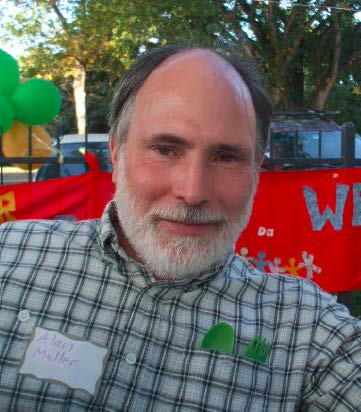
Muller3

Commentary by Alan Muller, Green Delaware, in today’s Delaware State News:

Commentary: Time to think about Delaware’s Peterson, Coastal Zone Act

Delaware’s a mess. The water is rising. We are a major destination for bomb trains. One of the most leaky and dangerous nuke power complexes threatens and pollutes the state and is trying to expand with new reactors. The air and water are polluted. The economy is stagnant and the political system corrupt. The public schools are under attack. The court system is openly dedicated to protecting corporate crime. A tale of woe, to be sure.

Some of it is self-inflicted, like the reopening of the mega-toxic Delaware City Refinery and the resulting routing of bomb trains to Delaware.  Some, like global climate change and sea level rise, is mostly beyond the ability of Delaware to do much about. On the other hand, it could well be argued that little three-county Delaware has done way-out-of-proportion damage to the world, has been a damaging leader in the “race to the bottom.”

What is the cumulative damage to individuals and families done by out-of-control credit card “banks?” Would that have happened anyway, with or without Delaware’s shameful Financial Center Development Act?  Would so many electric ratepayers been screwed over so much without the hundreds of Enron subsidiaries incorporated in Delaware? Maybe they would have just been set up somewhere else.  Would there have been so many bogus bankruptcies and stolen pension plans?  Would the US, or the world, be in better shape without Delaware?  Alternative history can’t be much more than speculative, but there is a case to be made.

Is it possible to imagine a better Delaware? A place to be proud of rather than ashamed of? A Delaware, for example, where John  Kowalko is Speaker of the House rather than Pete Schwartzkopf?  A place where the University of  Delaware symbolizes intellectual freedom rather than civil liberties violations and the worship of capital at the expense of labor?

Well, yes, actually.  There  have been better leadership and better political times in Delaware, within my memory.

Russ Peterson died in 2011.  (Here’s his obit in the New York Times.) Peterson was a significant figure in environmental matters in Delaware, nationally, and sometimes globally.  But it seemed to me that most of what was being written about Russ was the same old stuff, regurgitated for the umpteenth time and not giving us much new or insightful to think about.

Now, three years have gone by, and Delaware’s rulers are pursuing another major attack on the Delaware Coastal Zone Act, the centerpiece, the masterpiece, of  Peterson’s public policy work in Delaware.   So, this seems an appropriate time to think about Russ Peterson.

Peterson was likely the most significant person ever to operate out of little Delaware.  But he didn’t walk on water and he wasn’t God.  He was both more flawed and more interesting than one might see from most writings about him. He deserves more thoughtful commentary than he’s so far received.

Peterson, first of all, not a “Delaware Native.”  He was born, raised, and educated in Wisconsin, and was a product of the relatively progressive atmosphere, at least at that time, of the Upper Midwest.  (For factual information on Russ Peterson see this Wikipedia article.)

If Peterson had grown up in the plantation culture of Delaware, and learned his chemistry at the University of Delaware, would he have made the same contributions?  Maybe, but it’s doubtful.  In general, the human intellect does not seem to blossom in Delaware.

Russ was educated as a chemist and was recruited by E.I. du Pont de Nemours and Company as a research chemist.  He rose to be director of Central Research and Development.  This would be considered, at least at the time, high in the pecking order of the technical world, or at least its industrial side.  Peterson was a smart man.

Peterson’s interests eventually shifted out of DuPont.  My favorite story of Peterson and DuPont:  At one time he was in charge of a suburban office/lab site known as Chestnut Run Plaza.  At the time, in DuPont, black people could generally have only menial, broom-pushing jobs.  Peterson set up a program to enable and encourage black workers to move up. DuPont’s response was to schedule Peterson for an interview with “the company psychiatrist.”  Mental illness was suspected.

In any case, Peterson got involved in reform efforts in Delaware, notably prison reform. Being of an analytical turn of mind, he figured out how to organize such efforts: a committee in every Representative district, and so on.   Some years of this work gave him good, if imperfect, insight into the workings of Delaware politics.

He wasn’t without his critics.  Tom Colgan, long time campaigner against housing discrimination, used to say “Russ always showed up when the fighting was over.”  Perhaps so.  But Delaware is a place with a narrow intellectual and political space, where perceptions of non-mainstream views generally relegate people to a gadfly role.  In a sense, Russ Peterson’s achievement was to keep close enough to the political mainstream to achieve, at least briefly, real power, yet he was not co-opted from the neck up.

In 1968, Peterson resigned from DuPont and ran for Governor as a Republican.  At the time, the DuPont Company was behind him.  I recall, as the teenage son of a DuPont manager, being turned out to flyer for Russ Peterson.  He won.

But, after the enactment of the Coastal Zone Act in his first term, DuPont turned on him, and told its 25,000 Delaware employees–there are way fewer now, or course–to vote for Democrat Sherman W. Tribbitt, a hardware store owner in the small town of Odessa.  Peterson was out of office after one term.

There were other factors in his defeat, including budgetary miscalculations that required the state to “claw back” spending.  Whether this was a genuine screwup or a trap set for Peterson has never been entirely clear to me.  The budget shortfall was five million dollars.

Peterson also pushed a transition from Delaware’s “commission” form of government to a “cabinet” system.  Traditionally, many governmental functions had been run by citizen commissions.  Some still are, such as utility regulation by the “Public Service Commission.”  The members of these commissions were mostly appointed by the governor but were not, afterwards, directly under his control.  On the other hand, departments of the Executive Branch were. and are, headed by officials reporting to the Governor.  This increased the power of the governor; it made for a more centralized decision-making process.  Like most change, it was resented.

This centralization of power continues:  a disturbing example is the shift of power over schools from elected district school boards to a state Department of Education controlled by the governor.  Many people these days feel that Governor Jack Markell is using this power to attack the fundamental features of public schools and public education, and to implement privatization of the public schools to the benefit of for-profit “education” companies.

After Tribbitt’s one term, hard right winger and special interest servant Pierre S. du Pont IV was installed as Governor for two terms.  DuPont shut down the state planning office and, in general, tried to reverse many of the Peterson reforms.  Many people see his two terms as the time during which Delaware abandoned real representative government and adopted the “Delaware Way” of governance.  The “Delaware Way” could better be called the “Dirty Deals Behind Closed Doors” approach.

So what about this Coastal Zone Act?  What makes it special and worth preserving.

It was based on an understanding that coastal areas, that is, where the water meets the land and the air, are crucial from an ecological perspective and need special protections.  The wording of it is pretty clear:

Purpose.

It is hereby determined that the coastal areas of Delaware are the most critical areas for the future of the State in terms of the quality of life in the State. It is, therefore, the declared public policy of the State to control the location, extent and type of industrial development in Delaware’s coastal areas. In so doing, the State can better protect the natural environment of its bay and coastal areas and safeguard their use primarily for recreation and tourism. Specifically, this chapter seeks to prohibit entirely the construction of new heavy industry in its coastal areas, which industry is determined to be incompatible with the protection of that natural environment in those areas. While it is the declared public policy of the State to encourage the introduction of new industry into Delaware, the protection of the environment, natural beauty and recreation potential of the State is also of great concern. In order to strike the correct balance between these 2 policies, careful planning based on a thorough understanding of Delaware’s potential and the State’s needs is required. Therefore, control of industrial development other than that of heavy industry in the coastal zone of Delaware through a permit system at the state level is called for. It is further determined that offshore bulk product transfer facilities represent a significant danger of pollution to the coastal zone and generate pressure for the construction of industrial plants in the coastal zone, which construction is declared to be against public policy. For these reasons, prohibition against bulk product transfer facilities in the coastal zone is deemed imperative.

The immediate tactical driver for the bill was an attempt to build a second oil refinery in Delaware.  Shell had bought the land, designed the refinery, and survey monuments were in the ground.  The threat was immediate.  The damage being done by the existing Delaware City Refinery, one of the dirtiest in the world, was obvious.

It’s worth noting that Peterson and the leaders of the General Assembly were Republicans.  The President of the US was Richard Nixon.  The Nixon administration wanted to increase oil imports and wanted a lot of it to come up the Delaware River and be refined alongside it. So, in effect, Peterson was not only defying Delaware’s fat-cat industrial establishment, and many labor leaders, he was defying the US federal government and his fellow Republicans.

“U. S. Secretary of Commerce Maurice Stans accused Peterson of being disloyal to his country.  Peterson famously replied, ‘Hell no, I’m being loyal to future generations of Americans.’” (Man and Nature in Delaware.  Williams, 2008)

There were, however, flaws in the Coastal Zone Act, like most legislation a product of compromise.  A key weakness is that the Act covers “industry” but not residential and commercial activities.  Over the years, as coastal industry has tended to contract and sprawl development expand, the CZA has increasingly failed to control many of the greatest threats to the Coastal Zone including runoff and sewage.  It has been obvious for many years that the scope of the Act needs to be expanded, but the vision and leadership to accomplish that has been lacking.

Another weakness is that regulations implementing the act we not adopted for many years, and when they were adopted they were inconsistent with the purposes of the act and tended to weaken it.  Thus, interpretation of the Act has mostly been left to Delaware’s courts, with unpredictable and increasingly bad results, as the quality of Delaware’s judiciary has declined.

But, despite these issues, the Delaware Coastal Zone Act was groundbreaking, whether one regards it as primarily a “land use” law or an “environmental” law.  It came about because a visionary governor was supported by a generation of reform-minded legislators and a relatively-active “environmental community.”  Where are the visionary governors and the generation of reform-minded legislators when we need them now??  Gov. Jack Markell is certainly not cast in that mold.

Peterson went on to serve as President of the National Audubon Society, Chaired the federal Council on Environmental Quality, and worked with various commissions, environmental organizations and projects.  He never again held elective office or a high position in the business or scientific worlds.

Peterson stayed, at least episodically, involved in environmental politics in Delaware, until his death in 2011 at the age of about 95.  He was, for example, a supporter of the Bluewater Wind project, which eventually collapsed but potentially could have been the first large offshore wind project in North America.  He usually popped up when the Coastal Zone Act was being attacked.

But in the end Russ Peterson was diminished by two things:

Advancing age.  Anyone remaining active into his mid-90s is likely to be remembered for things he or she did when no longer at the peak of their powers, and

His love-hate relationship with the chemical industry.  Perhaps Peterson never got over being pushed out of his job as Governor by DuPont.  It seemed to me that he carried deep and legitimate grievances, and of course he knew intellectually that the policies pursued by big corporate interests were destroying the planet.  On the other hand, Peterson had money, identified socially with the powers-that-be, and seemed to crave forgiveness and acceptance from the leaders of DuPont, etc.  Thus, he could and did alternate between sucking up and lashing out.  He wasn’t always reliable or predictable.  He could and did make serious mistakes and publish stupid things, such as an endorsement of a bad waste incineration company.

Russ’ key mistake was to be politically seduced by “Toxic Tom” Carper.  Carper was elected Governor in 1992, with the naive support of some Delaware enviros.  At that time, a long Coastal Zone Act negotiation between enviro types and Chamber of Commerce types had been in progress under Gov. Mike Castle and was coming to conclusion.  Carper came in with a pure “Chamber of Commerce” agenda and one of his first actions was to call in the enviros and tell them to yield to the Chamber on Coastal Zone issues.  Initially, they resisted.  So Carper went after Peterson, knowing that if Russ yielded, inevitably the mainstream enviros would go along.  Peterson fell for it.  I remember him yelling at me that Tom Carper and Chris Tolou, then Secretary of DNREC, were “great environmentalists.”  He hired a bogus “neutral facilitator” shop called the “Consensus Building Institute” to give the enviros cover for their sellout.  In the sad end, the enviros–many controlled by DuPont–wimped out and rolled over.  They signed an agreement essentially abandoning the clear language of the Coastal Zone Act in favor of “environmental indicators,” “offsets,” and other excuses for abandoning the plain meaning of the Act.  It’s been mostly downhill since.

There have been some high moments.  John Hughes, as Secretary of DNREC, denied a permit for a Liquified Natural Gas (LNG) terminal in Logan Township, NJ.  This he could do because at that point Delaware owns the Delaware River all the way across.  The case went to the US Supreme Court and Delaware prevailed.  At the time, the oil and gas people were saying that more gas imports were essential.  Now, of course, they are saying that gas exports are essential…..

So what’s the relevance of this to 2015?  Delaware faces more severe threats now than when Peterson was governor.  The land is sinking, the sea is rising, and much of Delaware is subject to flooding.  How is the state reacting to this? So far, with nothing but words.  Decades of pandering to business interests, without foresight or planning, have left Delaware’s economy in bad shape and our quality of life degraded.  Compare Peterson’s visionary Coastal Zone Act, which kept a Shell refinery out of Delaware, with Jack Markell’s dirty backdoor deal to reopen the Delaware City Refinery, and bring bomb trains into the state.  Delaware is the big loser.

How do we (re)open Delaware’s political system to visionary leaders?  Or at least people of intelligence and good will?  Who will step up, or be pushed forward, to run for Governor?

Alan Muller is Executive Director of Green Delaware.

Photos say it all…

20150706_203429_resized

Yes, it’s really this bad.  That’s the sun on a “clear” day.  Air quality is baddest of the bad, “Unhealthy” per the MPCA which isn’t exactly fond of negative declarations like that.  Got a 200 reading at St. Michael, that’s as high as the scale goes, so I’m sure that somewhere it’s off the charts.  It was 193 this afternoon in Prestigious East Phillips, and… well… note how few monitors there are around the state.  We don’t have one in Red Wing.  There probably isn’t one in yours either.

See “current conditions” here.

Keep in mind this is biomass we’re breathing, and the emissions from trees are pretty awful.  Ask Alan Muller about that.

AirMap

This is the result of all the fires in Canada added to the baseline pollution of the ND and MN coal plants, the turkey shit burner in Benson, all the garbage burners around the state including here in Red Wing.  We have a microclimate here in the Mississippi River valley, but it’s not just here where it gathers, it’s bad everywhere, the whole state, well, almost.

Don’t deep breathe, don’t do any outside exertion, don’t breathe the air if you can help it.  If you’re like me, you’re probably hacking and wheezing a bit.

20150706_203417_resized

20150420_184552_resized

There’s the Garbage Queen Victoria Reinhardt, Ramsey County Commissioner, promoting the Joint Powers of Ramsey and Washington County’s dream of buying a RDF processing facility in Newport, one that’s now a private entity that they’re contracted with to handle their garbage!  Why buy it?  Why lock the counties into decades of grinding up garbage?  They couldn’t answer that.

And it’s a bit of a conflict, as after they grind it up and turn garbage into RDF, they send it down here to burn it.  Thanks Ramsey & Washington Counties.  Let’s be clear here — you need to deal with YOUR garbage problem, and not send it to us, and not put it in our lungs.

They talked some about “what ifs,” like dreams/nightmares of anaerobic digestion and garbage gasification, but that is not dealing with their problem.  It’s an issue of REDUCTION, REUSE, RECYCLING.  How difficult is that?

More Value Less Trash_Open Houses Powerpoint

Here’s their site and read between the lines for the plan:

More Value Less Trash

Last night’s meeting was at Century College, which was 916 Area Vo-Tech when I went there and emerged in 1983 with a Truck Driver Certificate and the first of a few jobs of over the road driving that got me through a BA at Metro State!  It’s changed a lot, big expansion, and the trucks are no longer there up against 694.

The next “Talkin’ Trash” garbage open houses will be 6:30 to 7:30 p.m.:

• Tuesday, April 21, in the Marsden Room of the Ramsey County Department of Public Works building, 1425 Paul Kirkwold Drive in Arden Hills.
• Thursday, April 23, in lower level conference room 14 at the Washington County Government Center, 14949 62nd St.t N., Stillwater.
• Monday, April 27, in at the Newport City Hall, 596 Seventh Ave., Newport.
• Tuesday, April 28, in Auditorium A of the Wilder Foundation, 451 Lexington Parkway N. in St. Paul.

Here are the latest reports that they’ve generated…  they lose it by only looking at burning or landfilling — there’s a much wider range of options.  And the Foth Report (first up) should make you froth:

Foth Analysis of Mixed Waste Processing
This study examines the potential of adding Mixed Waste Processing Technology at Newport and the costs associated with adding the technology.
Report

Ownership Analysis
This analysis includes looking at the current Municipal Solid Waste (MSW) processing facility and also looking at other technologies that may be used to process MSW.
Analysis

Governance Report
This policy study investigates the governance options available to the counties, describes the process to implement and consequences associated with each.
Report

Waste Delivery Assurance Analysis and Options
This document provides an overview of options for assuring delivery of mixed municipal solid waste, and potentially other solid wastes, to the Newport Refuse Derived Fuel (RDF) Facility or another resource recovery facility involving Ramsey and Washington Counties.
Report

Technology Comparative Analysis
This report compares the three options analyzed in the Preliminary Resource Recovery Feasibility Report to the current RDF System and to landfilling.
Report

Preliminary Resource Recovery Feasibility Report
This report addresses the technologies selected for continued evaluation by the Ramsey/Washington Counties Resource Recovery Project as part of the future of waste processing decision process.
Report

michael-brown

“A hallucination of your worst fears” : Legal scholar Patricia Williams on what Darren Wilson’s testimony reveals about racism in America

One of the functions of a prosecutor is to prioritize, to make a case that there is reasonable cause. McCulloch didn’t do that. He chose to present a mess with no attempt to persuade. That’s what prosecutors are supposed to do, and he didn’t do that. He emptied several bales of hay and told the jury to go sort through it. Relevance and focus is absolutely what you need to create a case. He didn’t try to create a case.

If you don’t understand why people are really pissed off, take a look in the mirror and at society and confront white privilege, privilege of race and privilege of class — think honestly and deeply.  Then do something about it in your world — within your family, at work, at church, in your community, take steps toward justice and equality.  If you do understand and are working toward change, keep at it with perseverance and patience.  The struggle won’t be over soon.

outrage

Yeah, I’m an attorney, sworn to uphold the Constitution.  What a concept!  I spend my time helping regular people exercise their freedom of speech, association, and protecting their property in their efforts to participate in a legal and administrative system that’s stacked against them, daring them to stand up for themselves.  The legal training I have, and the rudimentary experience and knowledge of criminal law and police procedure has me tied up in knots, sick at the Grand Jury decision… but I’d not expected Wilson to be charged.  Everything leading up to the start of Grand Jury deliberations pointed up to last night’s release of their decision.  But this is not about the law, it is not about justice, it is not about police procedure, it is not about appropriate or legal use of deadly force.

Ferguson’s Trial – Sarah Kendzior

12 things white people can do now because of Ferguson

Why It’s Impossible to Indict a Cop

If we presume the facts are as stated by McCulloch, and note what facts were not stated…

McCulloch

McCulloch said that Wilson knew about the reported theft at the store, and yet in the transcripts it’s said that he repeatedly stated he did not know, he was not responding to that call.  McCulloch said he had called for assistance, but the transcripts say he did not until after the shooting.  In his statements, he said he got out of the car and chased Brown.  In what world is it police procedure for an officer to, without backup, get out of his car and run after and shoot at someone who is running away after an altercation and where two shots were already fired from inside a police car?  How far away was Wilson when Brown stopped and turned around?  Reports and transcripts say about 20 feet… a couple of car lengths.  Why didn’t Wilson carry a taser?  How far away was Wilson when he fired the final shot?  How many shots should be fired at an unarmed man?  When shooting an unarmed man, what’s your target?  When his immediate supervisor questioned him after the incident, why wasn’t that recorded, why were there no notes taken?  When is use of deadly force acceptable?  Justified?

Here are the GRAND JURY TESTIMONY & DOCUMENTS.

A chart from PBS (Click for LINK), click image for larger version:

Brown_GrandJuryTestimony

A transcript that jumps out – other officers and Darren Wilson’s testimony.

_77023573_hi023547938

The federal investigation is ongoing about civil rights violations, and there’s the civil suit, but neither will do much, if anything, to alter the systemic mindset in Ferguson, or in this country (look no further than the police killings in Minneapolis).

Will this provide an opportunity for whites to examine the meaning and impact of white privilege and racism?  Will we look at class stratification in our society?  Is this a teaching moment?  Hardly.  It’s necessary, but I’m not holding my breath.  From what I’ve observed, so far it’s “circle the wagons” in the onslaught of virulent protests.  What will it take to reach an understanding of why people are so pissed off and do something about it, do something different?  We have made some progress in the last 50 years, what I’ve seen in my lifetime, but there is so much further to go.  I so distinctly remember that day in 4th grade when saying the Pledge of Allegiance in school on a cold winter morning, red stretch pants and a multi-colored red based shirt, when I realized that we don’t have “liberty and justice for all.”   Now it’s ~50 years later.  We’re not even close.  Change of the magnitude necessary is never easy, particularly where so many people believe that equality means less for those with privilege.  Change of the magnitude necessary is never easy, particularly where spewing racial hatred has become recreational sport.

I feel very fortunate to have been a near-suburban white teenager who transferred into the Magnet program at Minneapolis Central H.S., when the public school system was trying to avoid a segregation lawsuit. This was a time where part of my education was exposure to race and racism first hand.  After high school, I lived in Prestigious East Phillips for 20 years.  It was impossible to ignore the impact of race-skewed education funding, racism and death threats in Harry Davis’s Mayoral campaign, the gutting of Minneapolis neighborhoods with a freeway, housing segregation and covenants, and awareness of white privilege.  That awareness shifts my perspective, but it doesn’t wash me clean, nope, we all carry those biases.  We are all racists, and we each need to look at that.  Over the last 50 years, the balance has shifted some, but white privilege remains.

People tend to be innately afraid of “other,” which often manifests in anger and hate.  How do we deal with this other than systemic changes from birth — little kids playing together, going to school together — so it’s “us” and not “other.”  How do we move away from parental and societal lessons of racism when it’s so deeply instilled?  When it’s everywhere we look?  When it fills the airwaves and internet?

This is not the world as I want it to be…

Speaking of trains… BOOM!

April 30th, 2014

Flames and a large plume of black smoke are shown after a train derailment in this handout photo provided by the City of Lynchburg, Virginia April 30, 2014. REUTERS/City of Lynchburg, Virginia/Handout via Reuters

Photo provided by the City of Lynchburg, Virginia April 30, 2014.

+++++++++++++++++++++++++

Platts confirms it was Bakken BOOM! crude oil:
CSX says 15 cars derailed from train in Virginia

From Bloomberg:

The Bad Oil Boom: Crude Train Explodes in Lynchburg, Virginia, While Regulators Chug Along

This time it’s Lynchburg, Virginia. Don’t know where the train originated, what type of oil, but there is indeed a trend!

Video from News8000.com

Bakken BOOM crude oil MUST be DEGASIFIED before it is shipped, shipped by rail, shipped by pipeline, it must be DEGASIFIED before it goes anywhere, because the high gas content is what makes it dangerous.  DEGASIFY now.  How many more towns must burn before they DEGASIFY?

Here’s the DOT letter regarding degasifying:

1_2_14 DOT Rail_Safety_Alert

And here’s the part that addresses degasifying the crude before transport:

Come on, DOT, how hard is that to understand?  Bakken crude must be degasified before it goes rolling down the track.

From Common Dreams:

Black Smoke, Flames Spew from Train Derailment

From Reuters:

CSX train carrying oil derails in Virginia in fiery blast

From desmogblog:

Breaking: CSX Railroad “Bomb Train” Carrying Crude Oil Explodes in Lynchburg, Virginia

From the STrib:

Tanker cars carrying crude oil derail, catch fire in Lynchburg, Va.; buildings evacuated

LYNCHBURG, Va. — Several CSX train cars carrying crude oil derailed and caught fire Wednesday along the James River in Lynchburg, Va., with three black tankers ending up in the water and leaking some oil, becoming the most recent crash involving oil trains that has safety efforts pushing for better oversight.

Nearby buildings were evacuated for a time, but officials said there were no injuries and the city on its website and Twitter said firefighters on the scene made the decision to let the fire burn out. Three or four of the tankers were breached on the 15-car train that CSX said was on its way from Chicago to unspecified destination. Most of the cars were knocked off the tracks.

Photos and videos posted online showed large flames and thick, black smoke right after the crash. But in later photos it seemed the fire was mostly out.

Read the rest of this entry »