Today – train derailment north of Alma, WI
November 7th, 2015
 Photo from news8000.com
And the good news is that it’s NOT Bakken BOOM! oil, only denatured alcohol and some empty car cars. The evacuation has been lifted and people are returning. The other good news is that this means they won’t be shipping on the Wisconsin side of the Mississippi anytime soon, with the associated bad news that then they’ll be shipping through Red Wing more often.
Some good photos here:
NOTE: There’s a Minneapolis CARS message below regarding the November 10th Mpls. City Council meeting.
From News8000:
Emergency crews on scene of 32-car train derailment north of Alma
From KSTP 5:
++++++++++++++++++++++++++++++
Here’s the Minneapolis CARS (Citizens Acting for Rail Safety) message:
Nov 10th -- Attention Minneapolis residents: Support
a Strong Rail Safety Resolution!

Hello CARS network, as we reported last month, the
City of Minneapolis is preparing a rail safety
resolution that will come before the Transportation
and Public Works committee on November 10th. We are
encouraged from conversations with City Council
members that the resolution will be a great first
step forward and that the resolution is likely to
pass the committee and the City Council. There is
also understanding that this will be a living
document that will need updating as more information
is available. It is important that the City Council
hear from us to know that the community is supportive
of this important work.

There are two ways you can do this:

1) Mark your calendars to attend the Minneapolis City
Council Transportation & Public Works Committee meeting
next Tuesday, November 10, 2015 at 9:30 am in the Council
Chamber, Room 317 of City Hall. If you are able to
attend, please let us know by replying to this email.
Comments will not be allowed, but your presence will be
important. Please also plan to stay for a brief press
conference that is being organized for approximately
11:30 am. As the media reports this important success,
it is important that we have as many people in attendance
as possible showing community support.

2) Contact your Minneapolis City Council member to
thank them for supporting a strong rail safety
resolution. Call or Email them with some version of
the following message, sharing your own personal
story of living near the rails if you are willing.

I am concerned about the risks that freight trains
carrying crude oil, ethanol and other hazardous
materials pose to my neighborhood. I thank the City
for its leadership in supporting a strong Rail Safety
Resolution that will protect Minneapolis.

MINNEAPOLIS CITY COUNCIL CONTACT INFORMATION
Ward 1 - kevin.reich@minneapolismn.gov - (612)673-2201
Ward 2 - cam.gordon@minneapolismn.gov - (612)673-2202
Ward 3 - jacob.frey@minneapolismn.gov - (612)673-2203
Ward 4 - barbara.johnson@minneapolismn.gov - (612)673-2204
Ward 5 - blong.yang@minneapolismn.gov - (612)673-2205
Ward 6 - abdi.warsame@minneapolismn.gov - (612)673-2206
Ward 7 - lisa.goodman@minneapolismn.gov - (612)673-2207
Ward 8 - elizabeth.glidden@minneapolismn.gov - (612)673-2208
Ward 9 - alondra.cano@minneapolismn.gov - (612)673-2209
Ward 10 - lisa.bender@minneapolismn.gov - (612)673-2210
Ward 11 - john.quincy@minneapolismn.gov - (612)673-2211
Ward 12 - andrew.johnson@minneapolismn.gov - (612)673-2212
Ward 13 - linea.palmisano@minneapolismn.gov - (612)673-2213

Cars Contact Info:

Cathy Velasquez Eberhart
Citizens Acting for Rail Safety - Twin Cities
saferailstwincities@gmail.com
651-587-5356

on Facebook at: facebook.com/saferailstwincities
Xcel’s new rate increase request
November 2nd, 2015
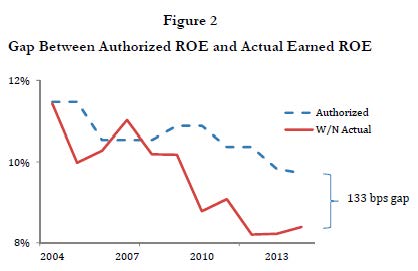
Xcel’s cost of electricity is down. Yet they want more money from us, 9.8% over the next 3 years, with the average residential customer’s 675 kW/hr bill to go up $11 a month. WHAT?
Meanwhile, last year at the legislature, the biggest of the big customers got a special rate category and special lower rates. WHAT?
The above graph is from Chuck Burdick’s testimony — after dealing with him in the Goodhue Wind case, I couldn’t resist checking out his testimony (Application, 2A2 – MYRP).
So if Xcel Energy was authorized a certain ROE, and only earned a much lesser ROE, does that mean we should make up the difference? Also from Burdick’s testimony:
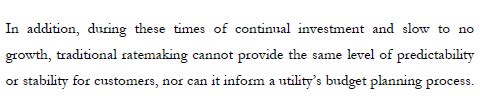 Were this “free market” the response would be that the company should contract, that there are too many cooks in that kitchen, that the capital expenses not for our use, such as this big transmission build-out, should not occur, and we should not have to pay for them.
Let’s take a look at the drivers, where they’re running short — do we want to pay for this? From the Application 1:
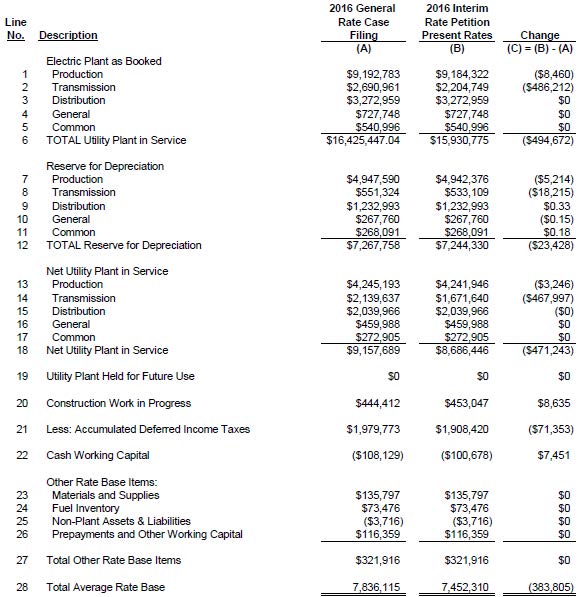
The initial filing in this new rate case is there for the reading, dig in, I’m sure there’s something you’ll enjoy.
Just go HERE TO PUC’S SEARCH DOCKETS PAGE and search for PUC docket 15-826, opened today.
In the STrib today:
Xcel seeks 9.8 percent rate hike in Minnesota over three years
Sandpiper-NDPC’s Whale-Eye Inducing Petition
September 21st, 2015

WHAT!?!?! Yes… Really… after the delightful decision from the Appellate Court requiring an Environmental Impact Statement, telling the Public Utilities Commission that an EIS must be completed before a Certificate of Need can be issue, the Applicants dropped Petition. Read this whale-eye inducing filing from North Dakota Pipeline Company, LLC (a/k/a Enbridge) hot off the press:
North Dakota Pipeline Company _ Petition for Rejoinder and Comment Period 20159-114150-03
Here’s the short version:

Once more with feeling, here’s the Appellate Court’s decision:
And the bottom line:
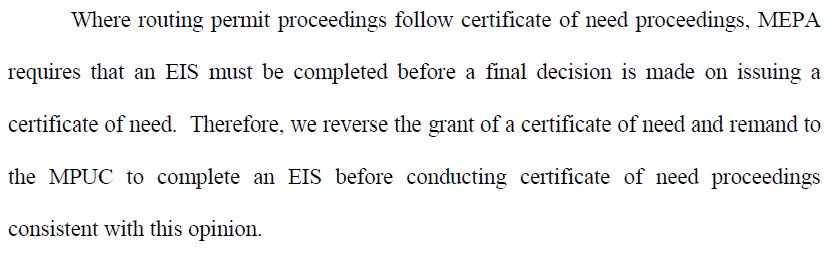
So from this order of the Appellate Court “to complete an EIS” the Applicant now asks for the “need” docket and “routing” docket to be brought back together and to use the “Comparative Environmental Analysis” that the Appellate Court says isn’t sufficient. Yes, that what they’re saying:
What planet is North Dakota Pipeline Company living on? Earth to Mars!!!!! A “CEA” is not sufficient. MEPA requires an EIS. The court told the Public Utilities Commission to complete an EIS. The Court did NOT say to go ahead with a “CEA.”
Not too long ago, Lisa Agrimonti sent around notice that she had moved over to Fredrickson & Byron. $50 says that she’ll be filing Notice of Appearance for this docket!
It’s fall… and almost time for BaronFest
September 21st, 2015
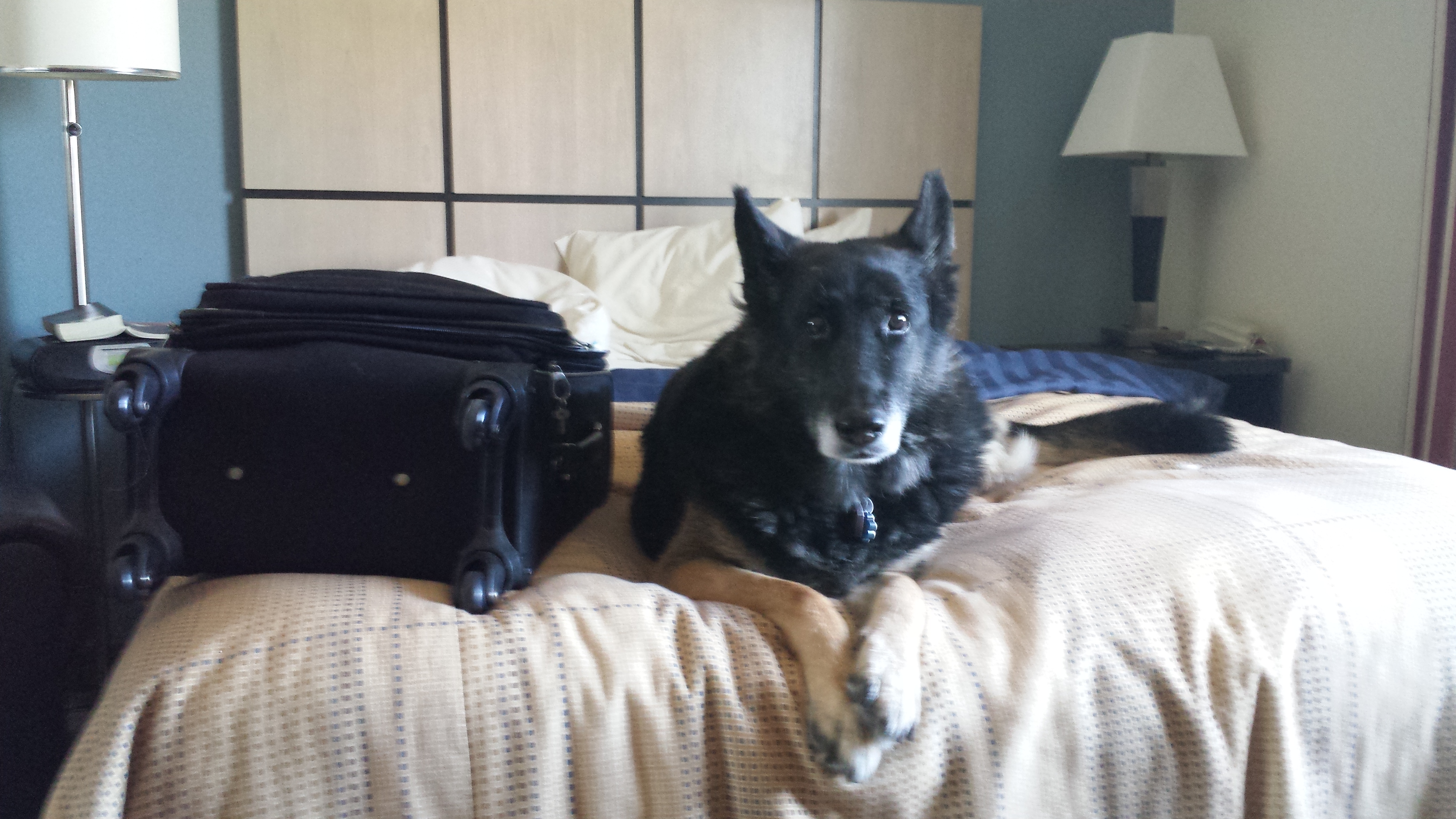
It’s fall, the sun is rising on the other side of the house and bluff now, and I’m not ready! Getting out to enjoy fall as much as possible, and then Little Sadie and I are heading to St. Louis soon for BaronFest III (didn’t have one last year). Maybe down to Arkansas to catch fall later! This is the first BaronFest where I don’t have a German Shepherd, and I’m not sure how Little Sadie will fare.
It’s hard to feel motivated to work with all this transmission going up here in Minnesota. Earlier in the summer, we went down through Wabasha, and south of Wabasha where CapX Hampton – La Crosse cuts across the Mississippi River to Alma, through La Crosse and checked out the Briggs Road substation, host to CapX and Badger Coulee transmission, to Cassville and Dubuque and back up further west, a tour of electric infrastructure.
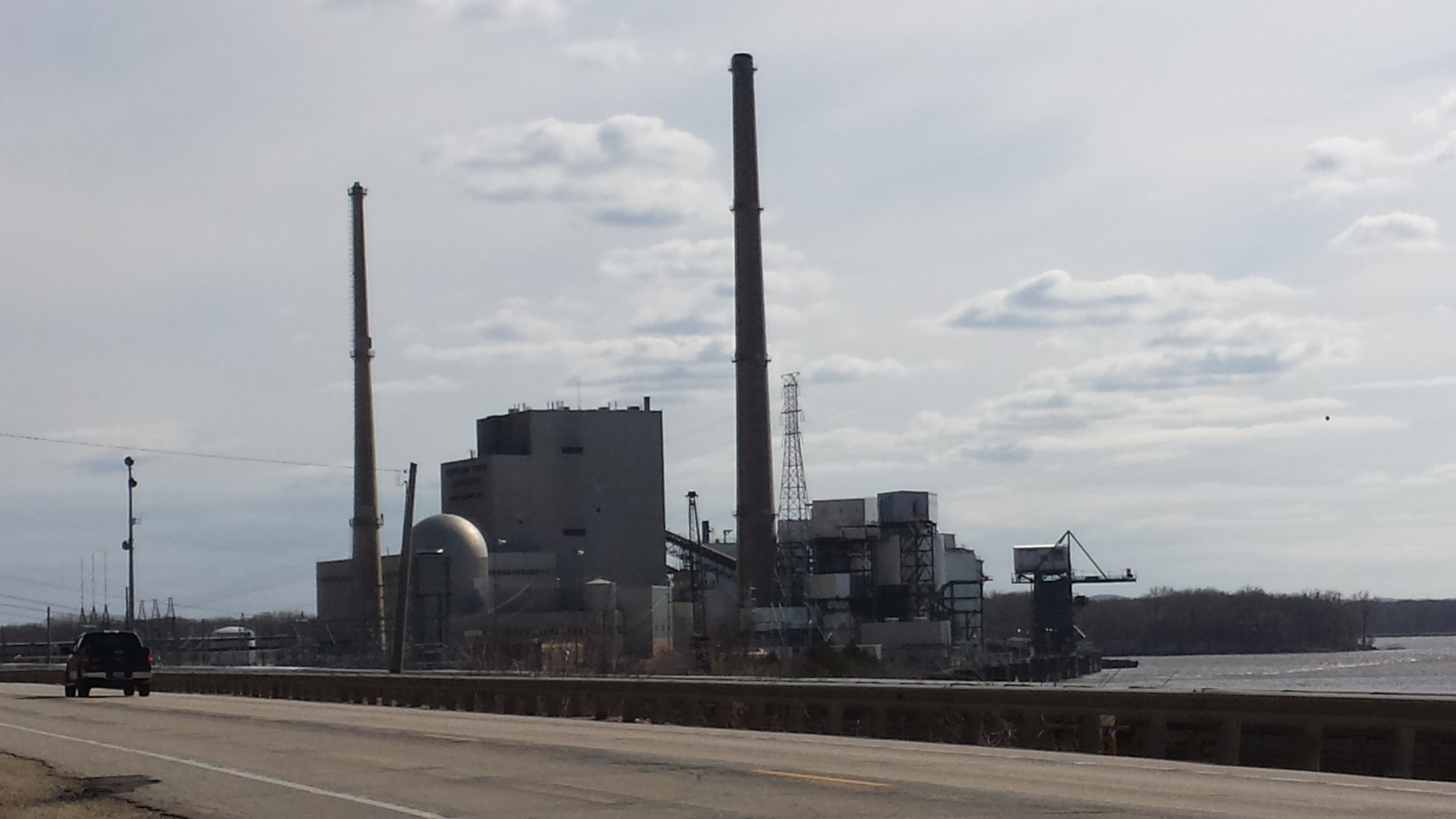
Don’t they have enough? If they’re shutting down this coal plant, why would they need transmission? How about using that capacity… oh, right, they get that 12.38% or thereabouts for building transmission, that’s their primary revenue source these days!
Time for a break…

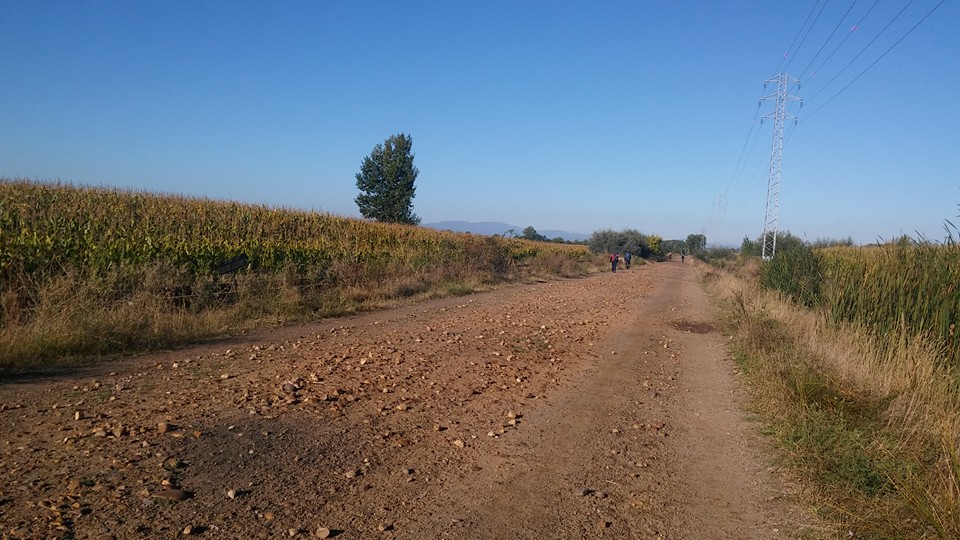
Until then, I can vicariously enjoy my SiL’s trek along El Camino, and transmission lines too, in Spain. Go, Jeanne, go!!!

The rulemaking process — nothing changes…
September 13th, 2015

Many thanks to the “little birdie” who brought this decades old report to my attention:
Yes, this is a report from the Minnesota Legislative Auditor from 1993, and if you read it, you’ll see little has changed is so many years… The issues raised are issues we’ve been raising in the Public Utilities Commission rulemaking for Minn. R. Ch. 7849 and 7850 (Certificate of Need and Siting/Routing). AAAAAAAAAAAACK!
For example, from the Summary:
For example, in the PUC Rulemaking for 7849 and 7850 (PUC Docket 12-1246), it’s been an over two-year-long process, and few are showing up anymore. We weigh in, some things are taken into account in the drafts, and then that disappears from the next draft. How can it feel like anything but a colossal waste of time? Yet if we weren’t there, the utilities would get everything they want. And as with the utility Certificate of Need and Siting/Routing processes, rulemaking has the same notice and public participation problems. It’s all the same, deja vu all over again.
… and also from the report …
Does this sound familiar?

So what is the bottom line of this report?
Also, we recommend the following additional changes to the Administrative Procedure Act:
… and …
In addition to changing the APA and other statutes that govern agency rulemaking, we recommend that: