Grant Merritt weighs in on nuclear
April 14th, 2022
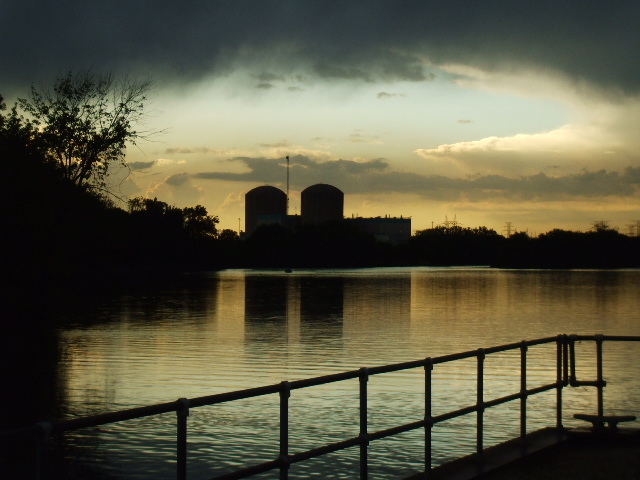
Grant Merritt in the STrib:
Counterpoint: Case still powerful against nuclear energy
It would be unsafe and costly for Minnesota to reverse the moratorium.
By Grant J. Merritt April 13, 2022
In response to “Times change. Minnesota nuclear moratorium must end” (Opinion Exchange, April 11), there are five reasons to retain Minnesota’s moratorium on building any more fission nuclear power plants.
The first is that ever since the Atomic Energy Commission began promoting them back in the post-World War II days, and over the ensuing 75 years, no acceptable storage locations have been found for the radioactive wastes.
The second reason is that these plants are prone to accidents, such as we had at the Monticello NSP nuclear plant on Nov. 19, 1971, when 50,000 gallons of radioactive water flowed into the Mississippi River. This caused the commissioner of the Minnesota Health Department to close the water intakes in the metro due to the threat to human health. That catapulted the accident into national news. Serious accidents occurred at the Three Mile Island nuclear plant followed by the Chernobyl and Fukushima nuclear plants.
The third reason to oppose any more of these plants here or elsewhere in the U.S. is the threat of terrorism, now being experienced at the Chernobyl nuclear power plant in Ukraine.
The fourth reason is that licensing nukes is difficult due to opposition by many people, even though the U.S. government has preempted state regulation of potential exposure to water discharges. Thanks to action by former Gov. Wendell Anderson when he was a U.S. senator, air emissions are not preempted, so the state can hold hearings on air emission permits, which would no doubt be hotly opposed.
The final reason for continuing the moratorium is that building nuclear power plants is so excessively costly that the nuclear plant that was well underway to being built on the Savannah River in South Carolina was abandoned by voters.
For these reasons the Minnesota Legislature should not reverse the nuclear moratorium.
Grant J. Merritt, of New Hope, is a retired attorney. He was executive director of the Minnesota Pollution Control Agency, 1971-75.
Wisconsin SB 1086 – Solar on sand mines
April 11th, 2022

Wisconsin folks, call your legislators! Support this bill!
https://legis.wisconsin.gov/
Why? Wisconsin has a “brownfield” bill, but Public Service Commissioners IGNORE the requirement that energy infrastructure be built on brownfields:
(d) Except as provided under par. (e), the commission shall approve an application filed under par. (a) 1. for a certificate of public convenience and necessity only if the commission determines all of the following:
8. For a large electric generating facility, brownfields, as defined in s. 238.13 (1) (a), are used to the extent practicable.
Despite this clear requirement, they acknowledge it, laugh about it, and dismiss it without consideration, and instead site on prime and protected agricultural land.
So YES! This, something I’ve been advocating for, for YEARS!


NextEra subsidiary “convicted” after eagle deaths
April 7th, 2022

A wind energy company has pleaded guilty after killing at least 150 eagles
What’s really odd about this is that most of the projects that I’ve been dealing with in permitting have secured eagle take permits — I thought. In this case, NextEra seems as a policy not to have take permits. HUH?
I am remembering resistance to developers answering questions about eagle take permits, and I think that it comes down to whether USFWS requires them to get one.
Here’s USFWS info on eagle permits here in the Midwest – it appears that there are only three eagle take permits issued for Minnesota wind projects, Red Pine, Getty/Black Oak, and Pleasant Valley/Grand Meadow:
Midwest Region- NEPA Documents for Eagle Permits
This seems to say that there are only FIVE eagle take permits? Here’s the application for one project that I’d worked on:
Black Oak/Getty Wind Farm Eagle Take Permit Application
For the Freeborn Wind project, we entered information about locations of nests and photos of eagles foraging, nests and foraging territory being, supposedly, two criteria examined in siting of wind projects and consideration of need for take permits:

See Freeborn Wind ALJ Recommendation, and search for “eagle” in the Recommendation.
Methinks this will have significant impact, but sentencing a company to probation — but how does that work?
2021 PJM State of Market Report
March 10th, 2022
Here it is:
PJM 2021 State of the Market Report
Note that where NERC does not project a significant decrease in coal production, PJM’s coal generation increased from 2020 to 2021 (now we do need to keep in mind that 2020 was a very low demand year):
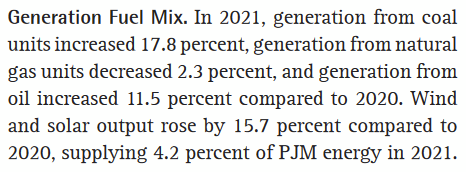
Here’s an overall summary:

The big takeaway is that demand has increased over 2020, which is no surprise. Note the “Average Hourly Load” and “Average Hourly Generation” and compare with “Installed Capacity.” Capacity is essentially twice Average Hourly Load and Average Hourly generation (and note exports and imports are included).
And just for shits and giggles, here’s the PJM LOCATIONAL MARGINAL PRICING MAP!
And here’s MISO’s too:
MISO LMP Map
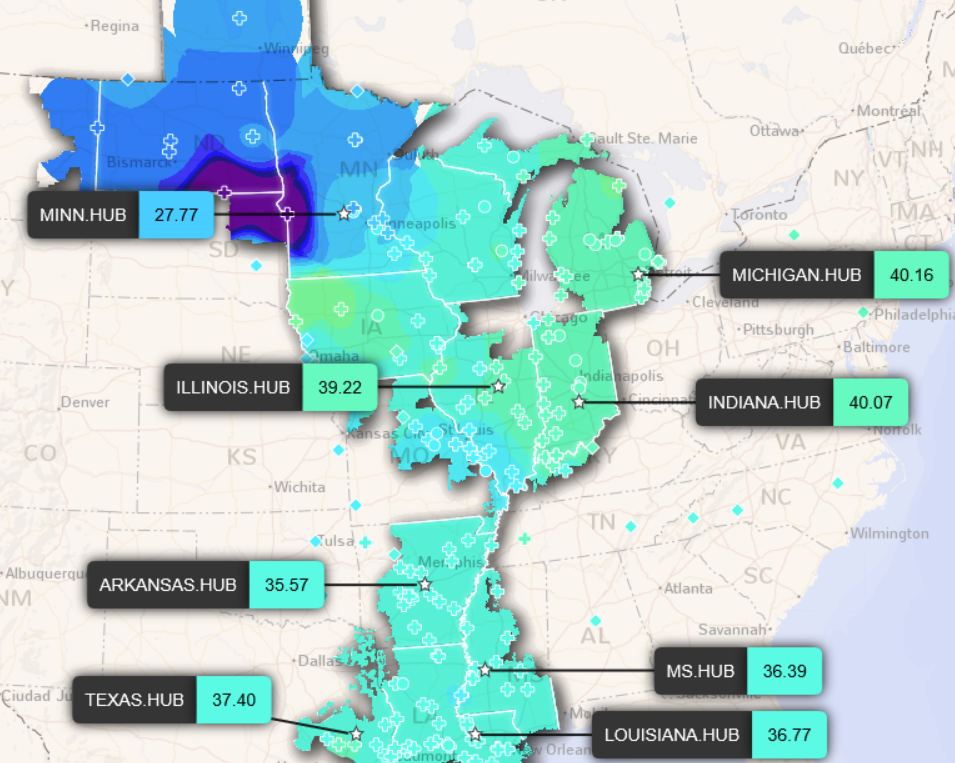
What it looks like right now in MISO:
Minn. R. ch 7849 & 7850 Rulemaking? DEAD!
March 1st, 2022
Over nine years, and how many of those years going to St. Paul for meetings, how many hours of editing and commenting, of group meetings to go over changes, proposed suggestions, meaningful public participation…

Well, here’s the Minnesota Public FUtilities Commission in action:

