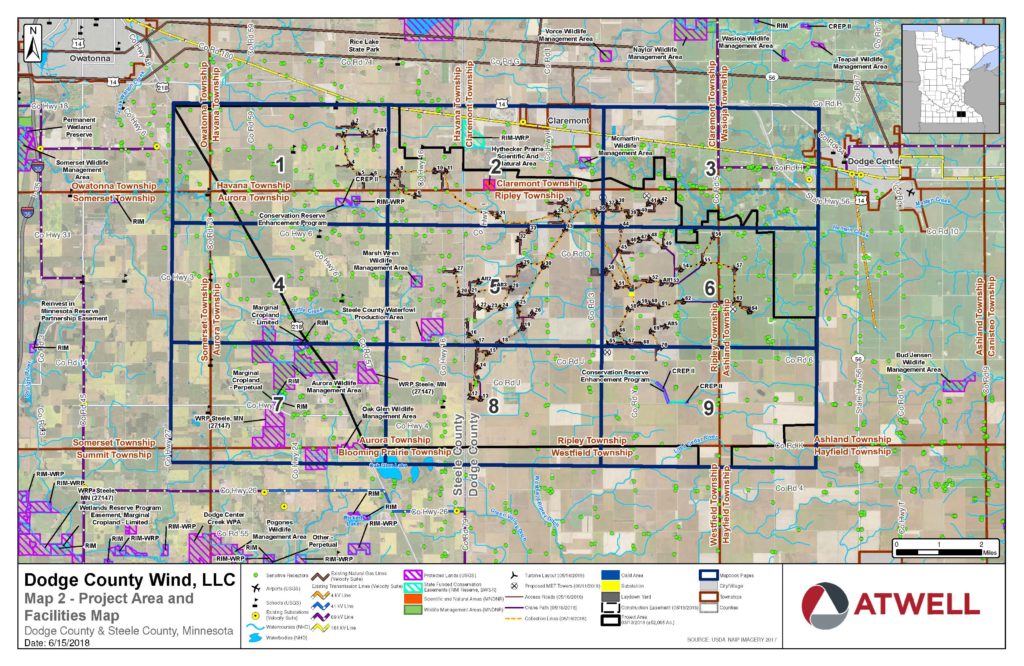
Oh my… just in, a request to suspend the permitting schedule for Dodge County Wind, the Certificate of Need, the wind site permit, and to WITHDRAW the transmission route permit!
There are 3 Dodge County Wind dockets, a Certificate of Need (17-306), wind siting (17-307), and transmission (17-308). Process wise, it goes to PUC for approval, and the PUC will probably announce a comment period in all 3 dockets. Then Commission will meet, and approve the withdrawal of the transmission without prejudice, so they can refile when they have a workable plan. That withdrawal process will take some time.
That time is an issue, because I don’t see any way they can come up with a transmission plan and get it through the MISO transmission studies to get a permit and start construction by year end. Tax credit implications — they have a problem.
As to the suspension of Certificate of Need and wind siting application proceedings, I’d like to see them dismissed without prejudice also, not suspended, gumming up the works at the Commission. We shall see.
This transmission was absurd from the get-go, a 345kV line with what, a 2,200MVA capacity, for a 170 MW project? They said it was part of a regional interconnection, from the application:
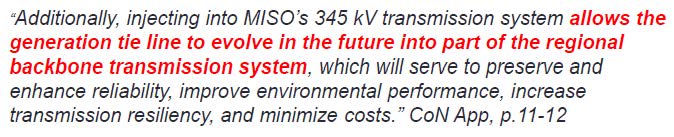
Oh, really? Don’t see it in the MISO MTEP. It’s not… and it’s a radial line, and you just don’t build short radial 345kV lines!
Here are Dodge County Wind’s requests for suspension and withdrawal:
“On August 9, 2019, DCW withdrew its MISO interconnection queue position no. J441, because of the significant interconnection costs associated with that queue position.”
Oh my… what does the MISO DPP Report have to say about that? Just search this report, issued July 25, 2019, for “J441.”
I figured the PUC should have that MISO report in the record:
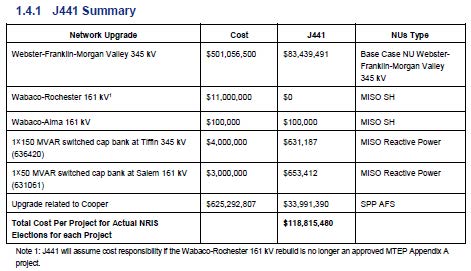

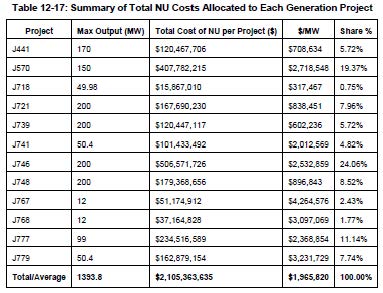
And check out the summary page on p. 149 of the 150 page pdf.
After getting the 345kV route alternatives “C” and “D” ejected, not to be considered in the FEIS, this is just the icing on the cake!!
Dodge Center Xmsn – Mission Accomplished!
Here’s some background info from just over a year ago:
Dodge County Wind info presentation
July 29th, 2018
From the very beginning, with Dodge County Concerned Citizens working hard to inform people of the project, all three dockets, and Dodge Center’s Tom Applegate going door to door and encouraging people to write comments and send photos showing how the transmission line would affect their neighborhood in Dodge Center, this public input helped call the entire project into question. With the DEIS rejecting transmission alternative routes C and D, and with the MISO interconnection study showing so many network upgrades needed at a very high cost, this project is no longer viable. The people affected by this project have had a tremendous impact.
What MISO says about low wind generation in extreme cold
February 9th, 2019

There’s been a lot of speculation about the low wind production during the low-low temps at the end of January. Turns out there’s an issue not anticipated by MISO that they’re going to have to deal with. I heard it first from a little birdie who heard it while in a flock…

And now from a bigger birdie with primary info from the horse itself: Turbines apparently have a -22F degree or so automatic shutoff, so when it was way cold, they shut off.
Unidentified temperature cutoff thresholds challenged
wind forecasting in morning of Jan 30. Unexpected
shutoffs led to a large deviation from planned output.
Ummmmm, that’s a problem. Here’s the MISO update on that:
And from my “good friends” at Center of the American Experiment, who got it twisted again:
Twisted? What’s wrong with that? Well, their focus is that it was an intermittency issue, which it was not. As above, it was that shut-off at -22! And note the part in their post about “unforeseen.” And THAT is the problem, because the -22 cut-off was not integrated into the MISO modeling, plans, and that was a surprise, and they’re going to have to figure that one out. It’s possible, probable, and now apparently likely that we will have another -22 degree spell in the foreseeable future. So get with it, MISO!
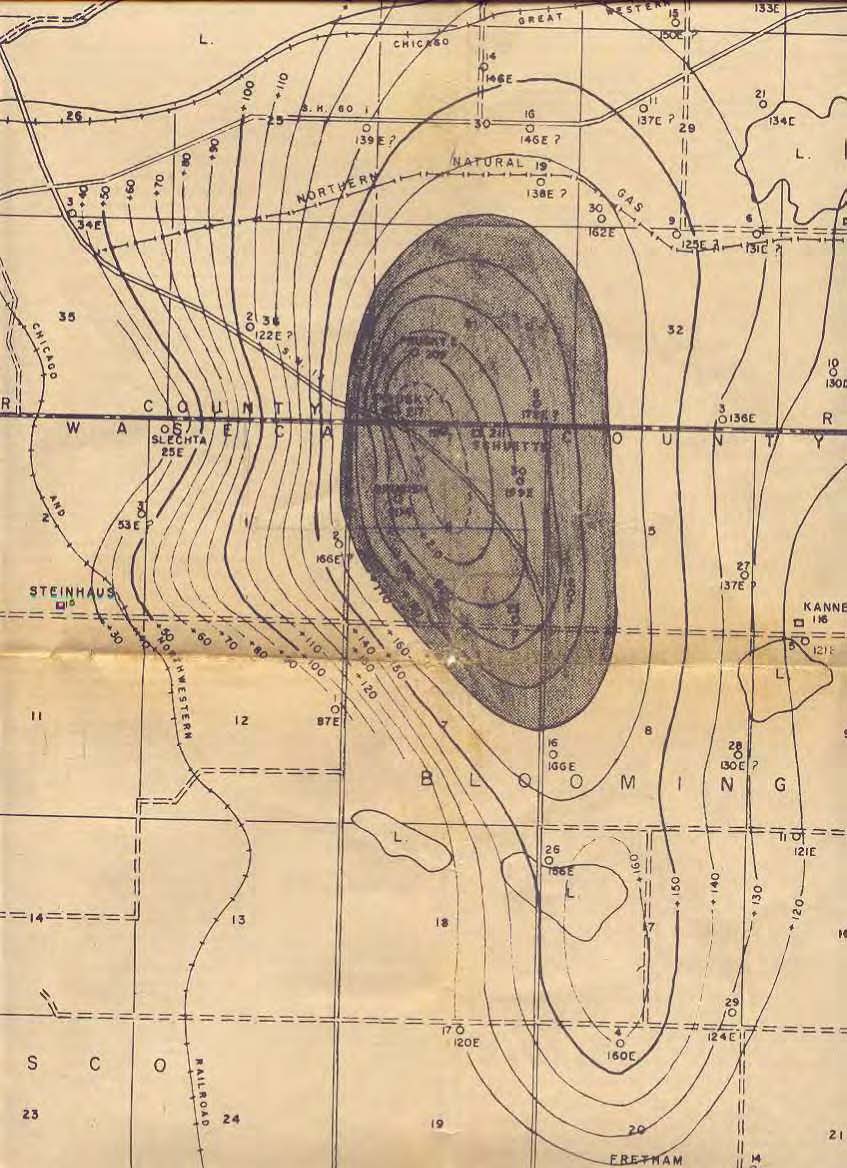
And natural gas. I keep thinking about that CenterPoint natural gas underground storage dome. 7 billion cubic feet at least. There’s a lot of gas in storage. Are they relying on pipelines, and does that reliance take into account the many newer natural gas plants? Does Xcel share/buy from CenterPoint, take advantage of the storage? What is the impact of so many electric generators fueled by natural gas? They did recently do a lot of natural gas pipeline work on that primary north/south line running north from Waseca, was that a capacity expansion… upgrades or maintenance ??
2018 MISO forecast released, under 1% for our area… DOH!
December 18th, 2018

Hot off the press… MISO‘s forecast, much like my all-time favorite industry report, the NERC Reliability Assessment! Because each region sends its forecasts to NERC, odds are that this is the basis for the MISO part of the next NERC Reliability Assessment. The NERC reports have showed for a long time that reserve margins are way higher than needed, sometimes 2-3 times higher than needed, and that demand is not at all what has been predicted. DOH!
HERE IT IS — READ IT:
2018 MISO Energy and Peak Demand Forecasting for System Planning302799
Bottom line? And remember, this is the industry “forecast” which consistently overstates:

Remember CapX 2020 “forecast” of 2.49% used to justify that transmission build-out? And all that’s happened since, is happening now, like the MISO MVP 17 project portfolio?
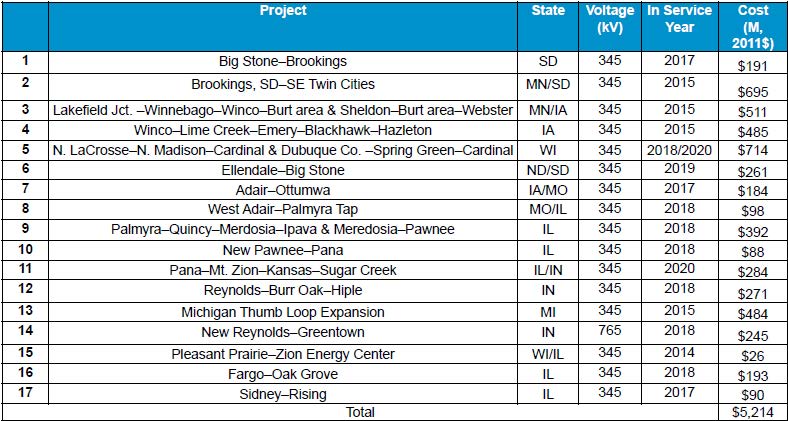
Or more correctly, all that HASN’T happened since, like increase in demand?
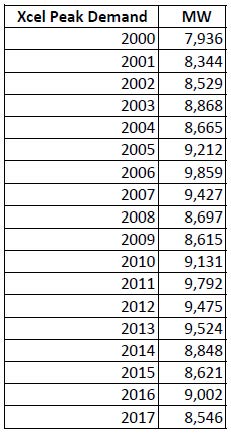
This has been an historical, systematic misrepresentation, Xcel’s “business plan” is based on these lies. From Xcel’s IRP (Docket 15-21), p. 45 of 102:
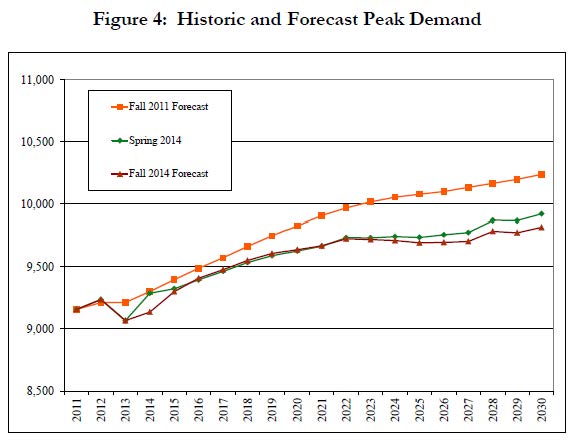 That Xcel IRP docket continues, and compare peak demand with their bogus chart… what can we expect?

Freeborn’s MISO info for J407
December 15th, 2017

Here’s what I’ve been able to find about MISO J407, the number provided by Xcel Energy in their 16-777 Resource Acquisition docket that included the Freeborn Wind project:
And from Xcel’s Petition on interconnection (click for larger version):
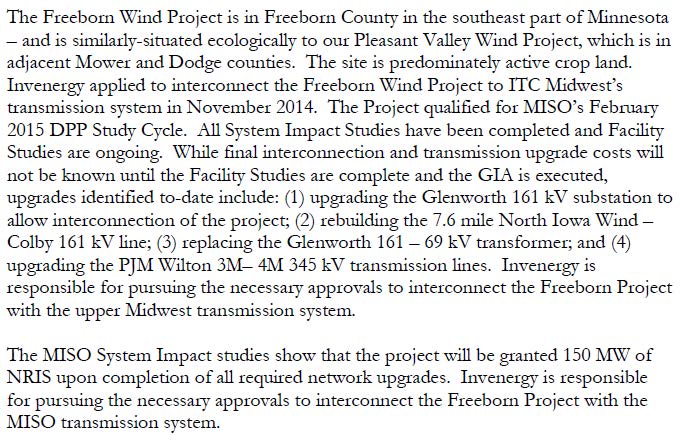
And here’s what I could find from MISO:
miso-february-2015-initial-posting
20170117 IPTF Item 01f DPP Updates
There ya have it!
MISO’s MTEP 17 Draft!
August 8th, 2017

No, wait, that’s not right…
Yeah, that’s it… Midcontinent Independent System Operator, MISO, has released the draft MISO Transmission Expansion Planning report, or MTEP 17. From the MISO MTEP17 page, here are the live links:
MTEP17 Reports
Full Report
Executive Summary
Book 1 – Transmission Studies
Book 2 – Resource Adequacy
Book 3 – Policy Landscape
Book 4 – Regional Energy Information
Appendix AB
Appendix D1 Central
Appendix D1 East
Appendix D1 South
Appendix D1 West
Appendix D2 Projects In models Documentation
E1 Reliability Planning Methodology
Appendix E2 EGEAS Assumptions
MTEP17 Appendix A1 A2 A3
MTEP17 Appendix F Substantive Comments
Also from MISO’s MTEP page:
Transmission Planning Status Reports
Generation Retirement Sensitivity Analysis – Scope
Generation Retirement Sensitivity Analysis – Scope Appendix 1
And the most important one that shows what they’re up to in transmission planning, the link, and just in case it disappears, the spreadsheet:
MTEP17 Active Project List
And supposedly they’re taking comments from “stakeholders,” so says the MISO email announcement:
Please send any feedback on this report to David Lucian (dlucian@misoenergy.org) by August 25, 2017. Stakeholders will have an additional opportunity to provide feedback when the second draft of MTEP17 is posted on September 18, 2017. A list of report milestones is provided below.
| Item | MTEP17 Schedule |
| MISO posts first draft for external review | August 10 |
| Stakeholder review and comments | August 25 |
| MISO posts 2nd draft | Sept 18 |
| MISO System Planning Committee | Sept 19 |
| PAC – Report Review | Sept 27 |
| Substantive Comments Deadline | Oct 2 |
| PAC – Report update | Oct 18 |
| PAC motion | Oct 18 |
| MISO System Planning Committee – November | Nov 16 |
| MISO Board of Directors meeting | Dec 7 |