
We had a “win” at the PUC on Thursday, but it’s the kind of a win that is such a “DUH!” that it’s hard to celebrate, it’s too much of a reminder of the ways that the public is being treated these days, shut out of process, harassed, quashed, and in this case, as attorney for City of Lindstrom, it’s astounding me the lengths Commerce on the Siting and Routing side will go to to keep a local government from having input. Unbelievable!
While I’m clear that Xcel is not “our friend,” they are not the ones putting up the roadblocks, and we have to be ever vigilant about ALL the players in this. Pawlenty’s state agencies particularly!
I’m having a hard time getting this posting done because the actions and position of the Dept. of Commerce have been so egregious… so I guess I’ll just let them speak for themselves, the pattern will show through:
When it became clear that the Task Force process was being perverted by Dept. of Commerce into a “no notice” and “too little time” fiasco, we filed a Motion to Extend Task Force:
Which was followed by the Commerce position, in a “letter” and not a responsive pleading, that it was not necessary to extend Task Force, that what had transpired was just fine, and arguing that the Siting/Routing docket was not a contested case:
OK, fine, so then we filed a Petition for a Contested Case with the PUC:
Our Motion was referred to the PUC, and was put on agenda for Thursday, April 19, 2007. And here are the Staff Briefing Papers for Thursday’s meeting:
And here’s where it gets interesting. Xcel was not the “bad guy” here, the “bad guy” is the Dept. of Commerce Siting and Routing staff! Xcel came in with no objections to a contested case, an interest in assuring that “at the end of the day” the City of Lindstrom couldn’t say “we were shut out,” and “we had no opportunity to participate!” AND, best of all, they brought in this great chart showing just how it could be handled, where the rules for this “Alternate Review Process” can be integrated into the pre-existing Contested Case for the Certificate of Need! Minn. R. 4400.2850 folded into Minn. R. Ch. 1400 (and noting in places that “Ch 1405 provides helpful analogy.” And yes, I made sure Mike Krikava new that I appreciated Xcel’s attitude in this. Another interesting point — Commerce staff, in presenting their off the wall arguments, were there on their own, no Asst. A.G. to be seen!
Here’s Xcel’s chart, that shows how the processes can be combined:
The meeting was “spirited” and the bottom line was that because (I believe) Xcel had no objection with combining the two forks, Siting/Routing and Certificate of Need, into one contested case, that’s how it’s going to go! Will post the Order when it comes out.
Cart before north end of horse headed south
April 24th, 2007
Oh my… look what I found… seems I hit “save” and not “publish” and so here it is, a bit later…

“We’re connected to you by more than power lines”Â
Today is the meeting where Delmarva addresses its plan — will the public be part of this process or will the public be shut out?
The PSC is scheduled to meet at 1 p.m. Tuesday in the Cannon Building hearing room, 861 Silver Lake Blvd., Dover. … Another session is set for the same time and location on May 8 to review staff recommendations on the power plant issue.
===================================
State utility regulators poised to recommend new power plant to meet long-term needs
By JEFF MONTGOMERY, The News Journal
Posted Sunday, April 22, 2007
A year-long power plant sweepstakes turns into the home stretch this week, with the Delaware Public Service Commission slated to receive a briefing Tuesday in Dover on Delmarva Power’s long-range plan and need for new electricity supplies.
Two weeks later, PSC members and representatives of three other state agencies are scheduled to tentatively decide whether to refer any of three power plant bids to Delmarva for a long-term power-purchase contract potentially worth billions of dollars.
State lawmakers ordered the bidding for a new Delaware plant last year, in reform legislation prompted by public complaints about a 59 percent jump in Delmarva’s rates after a six-year freeze and deregulation.
Three companies submitted offers, ranging from a small, conventional natural gas turbine for peak power needs to a 200-turbine offshore wind farm and 600-megawatt plant fueled by a clean-burning gas extracted from processed coal.
Delmarva estimated that the new plants could add from $100 million to $5.2 billion to customer costs through the year 2038, and the company opposed any of the three as unnecessary obligations.
“The intent of the legislation was to try to get alternative power that was going to save consumers money,” said Rep. Gerald W. Hocker, R-Ocean View, who chairs the House Energy and Natural Resources Committee. “From what I’ve seen, none of these are going to save money.”
But the PSC staff and consultants recently asked Delmarva to re-examine some assumptions used to judge the bids, moves that could change rankings or results. A separate report released this month recommended a bidding that would include energy sources outside the state.
“A lot of people think it’s going to fall back to the Legislature,” said Sen. George H. Bunting Jr., D-Bethany Beach. “If that does happen, you’re going to have a whole different dynamic.”
The bidding ignited sometimes-passionate debates over energy costs, the state’s economy, air quality, renewable energy supplies and global warming. Weighing in were labor, citizen, environmental and business and health interests.
The Medical Society of Delaware urged officials last month to develop comprehensive energy conservation programs and improved efficiency standards, with “least-polluting” options favored for any new supplies.
“We believe that the three proposals under this RFP [process] would not benefit our customers as far as savings in energy costs,” said Merrie Street, a spokeswoman for Delmarva Power. She added that the company believes the PSC should reject all three even if officials conduct a wider search for supplies.
Still to come is a package of legislation developed by the state’s Sustainable Energy Utility Task Force that would encourage and subsidize consumer conservation, use of energy efficient appliances and development of small-scale renewable electricity supplies such as solar and wind power.
Hocker said he expects to meet with the chairman of that task force, Sen. Harris B. McDowell III, D-Wilmington North, as early as next week.
The PSC is scheduled to meet at 1 p.m. Tuesday in the Cannon Building hearing room, 861 Silver Lake Blvd., Dover. Several other utility issues, including water, wastewater and telephone services, are up for consideration. Another session is set for the same time and location on May 8 to review staff recommendations on the power plant issue.
Copyright ©2007, The News Journal.
IGCC is dead, dead, dead
April 21st, 2007
In the Sunday STrib (good stuff in the paper lately, they must be working hard to counter the recent axeing of so many class A people):
  “Dead, dead, dead,” said Carol Overland, lawyer for a group of northern Minnesota landowners opposed to the Excelsior project.
“It was on life support before,” she said. “The plug has been pulled and we’re waiting for the inevitable.”

======================================================
By Mike Meyers, Star Tribune
It’s become do or die by July for one of the largest economic projects ever proposed for the Iron Range.
Between now and then, the Minnesota Public Utilities Commission will collect one last round of arguments from proponents and opponents of a $2 billion-plus coal-gasification plant near the city of Taconite. The plant would also be the first large-scale power plant built in the state since the 1970s.
The plan recently received a stinging rejection from two administrative law judges who are key advisers to the PUC on the plan.
“It’s fair to say the commission gives a great deal of weight to an administrative law judge decision? Yes,” PUC spokesman Burl Haar said. “Do they always follow it? No.”
The husband-and-wife team leading Excelsior Energy aren’t planning any revisions to win over the state regulators. No changes in design. No cutting what they would charge for power. No alterations in the way they will deal with greenhouse gases.
“We’re not going to redraw the blueprints,” said Julie Jorgensen, who shares the titles of Excelsior chief executive and president with her husband, Tom Micheletti.
The price Excelsior is asking Xcel Energy to pay for power is the price needed to make the plant viable, Jorgensen said.
“There’s no fudge factor here,” she said.
Opponents of the Excelsior plant, who argue that it’s not needed, is too costly and offers a sketchy plan for disposing of greenhouse gases, see the judges’ decision as fatal to the project.
“Dead, dead, dead,” said Carol Overland, lawyer for a group of northern Minnesota landowners opposed to the Excelsior project.
“It was on life support before,” she said. “The plug has been pulled and we’re waiting for the inevitable.”
Among the judges’ conclusions: The plant is not as new or innovative as promised, its power would cost more than alternative sources of electricity and its plans to keep some plant-generated carbon dioxide out of the atmosphere would cost more than $1 billion.
Jorgensen and Micheletti argue that the judges were mistaken.
Xcel also argues that the power is not needed.
In 2003, however, the state Legislature said Xcel will have to buy the power from the plant if the PUC finds the plant in the public interest.
The coal-gasification technology, which Excelsior described as innovative, transforms pulverized coal into a cleaner-burning gas. But in testimony before the law judges, critics said the Excelsior design was not environment-friendly and would generate as much greenhouse gas as any other coal plant. The law judges agreed.
“The record was closed when an independent group said the Excelsior plan is innovative,” Micheletti said.
He cited a trade group announcement last month by the Electric Power Research Institute certifying the Excelsior plant as the first coal-gasification project in the nation to issue “pre-design” specifications that can be used as a template for other projects.
State law gives regulators leeway on approving power plants, even if they’re not the lowest-cost way to get electricity, if they’re innovative and offer environmental and other benefits.
Jorgensen and Micheletti also will argue to the PUC that regulators should not compare the cost of energy from Excelsior with conventional coal plants — which are less expensive but produce more pollution and which Xcel has vowed not to build in the future.
“We find ourselves shadow boxing,” Jorgensen said of his project being compared with older technology that has no future in Minnesota.
She also said Excelsior is plans to divert 30 percent of the carbon dioxide produced at its plant to pipelines headed for North Dakota and Canada. Oil producers would buy the CO2, a greenhouse gas associated with global warming, to build up pressure in oil fields to help pump out petroleum, she said.
The net cost of the pipeline, after subtracting revenue from CO2 sales, would be far less than $1 billion estimate cited by the judges, Excelsior officials said. They offered no alternative number.
Opponents aren’t impressed by those arguments, however.
Overland said Excelsior has made no clear commitment to building a CO2 pipeline and, even if it did, 70 percent of the greenhouse gases produced by the plant still would escape into the atmosphere. In that event, the plant would be almost as great a contributor to global warming as a coal plant, she said.
Janette Brimmer, legal director for the Minnesota Center for Environmental Advocacy, said Excelsior developers are offering no binding assurances for dealing with greenhouse gases.
“When they flip that switch on, there’s no CO2 being eliminated. It’s just another coal plant,” she said.
Mike Meyers • 612-673-1746 • meyers@startribune.comÂ
Getting screwed by electric deregulation!
April 21st, 2007
.

“Instead of competition producing lower rates, the choices are between high or higher prices.”
It doesn’t take a rocket scientist to know that deregulation of the electric market is a bad thing, we even had a report to that effect written eons ago here in Minnesota, in part by none other than NRG’s Steve Corneli!
And just for yucks, let’s not forget his great stranded ASSETS argument when NSP was demanding deregulation and payment for “stranded costs” which were nonexistent:
Anyway, the utter rip-off of “deregulation” has become impossible to ignore and today appeared in detail in the STrib:
Power bills soar as electric deregulation fails to live up to its promises
By Ryan Keith, Associated Press
BENTON, Ill. — This wasn’t supposed to happen with deregulation. Electric bills were supposed to go down. Instead, Ellie Dorchincez can almost see the dollars evaporating every time she turns on the lights or opens the freezer at her small Farm Fresh grocery store.
Her electric bill, which used to be about $800 a month, has jumped to $1,800. She’s shut down a large freezer of frozen treats and now closes the store an hour early to cut costs but fears she still may have to raise prices and lay off some workers.
“I’m just trying to figure any way that I can right now to keep my business afloat,” Dorchincez said. “My life is at stake here.”
The cause of her distress is a common problem: the failure of deregulation to deliver its promise of lower electricity prices. In many states, it’s had the opposite effect with sharply higher rates — 72 percent in Maryland, up to 50 percent in Illinois.
Not one of the 16 states — plus the District of Columbia — that have pushed forward with deregulation since the late 1990s can call it a success. In fact, consumers in those states fared worse than residents in states that stuck with a policy of regulating their power industries.
An Associated Press analysis of federal data shows consumers in the 17 deregulated areas paid an average of 30 percent more for power in 2006 than their counterparts in regulated states. That’s up from a 22 percent gap in 1990.
The idea was to move from a monopoly situation to robust competition for electric customers, with backers promising potentially lower rates in state after state.
“We are good at taking money out of people’s pockets, but seldom can somebody rise on the floor and say we are going to save people billions over a specific course of time,” Illinois state Sen. William Mahar, a lead proponent of electric deregulation, said when his chamber passed a deregulation bill in 1997.
But competition, especially for residential and small business customers, rarely emerged.
Utilities say markets are still adjusting to many years of artificially low rates that drove potential competitors away. They point to states like Illinois, where rate caps just recently were lifted and where there already is talk of reinstating them.
Consumer groups, however, say deregulation has had a chance to prove itself. In Texas, for example, competition did develop after rate caps ended — but the energy prices remained higher.
The AP analysis was based on the average electric rate that residential consumers paid each year from 1990 to 2006, according to numbers provided by the U.S. Department of Energy. Numerical and percentage changes in utility rates of both deregulated and regulated states were compared.
The analysis found more than a widening price discrepancy. Consumers in deregulated states also have suffered from bigger price swings, as rate caps in place when deregulation began in the late 1990s were lifted in the last couple of years.
Now those states’ lawmakers are scrambling to figure out how to provide short-term relief for consumers while coming up with a long-term approach to get lower and more stabilized prices. Ideas range from continued rate freezes — vehemently fought by utilities — to re-regulation of the industry.
“We said back then it was a raw deal for consumers. We now know it was a raw deal for consumers,” said Johanna Neumann of Maryland Public Interest Research Group.
But an industry official argues that such comparisons don’t adequately show the peaks and valleys in rates during that time, and among individual states. And utility executives say that over the last decade, rates in deregulated and regulated states have generally increased at similar levels, thanks largely to sharp spikes in fuel costs — not deregulation.
John Shelk, president of the Electrical Power Supply Association trade group based in Washington, D.C., says all states have seen large rate increases in the last decade, largely because of the increased price of natural gas and building power plants. The average U.S. price for natural gas used by the electric power sector tripled from $2.76 per million Btus in 1997 to $8.21 per thousand cubic feet in 2005, a peak year for natural gas prices, according to federal energy statistics. Prices dropped slightly in 2006 but are projected to rise again over the next two years.
Utility officials say natural gas prices, environmental regulations, property taxes, the cost of building nuclear plants and other expenses in states that deregulated had already driven prices higher than in other states.
But years after many states deregulated, the rate gap between those states and regulated states had widened even more, experts and consumers advocates say, because consumers in deregulated states were left paying market prices — even though in many cases no competitive market existed.
“Now they’re trying to come to grips with the reality that the market isn’t working as well as they thought it would,” Ken Rose, a senior fellow with the Institute of Public Utilities at Michigan State University, says of decision-makers in deregulated states.
Shelk says consumers in states like Illinois are seeing “sticker shock” because their rates were artificially low for years, and that forced a large increase to get back to market prices when rate caps were lifted.
“It’s kind of like pulling the Band-Aid off,” Shelk said. “I think you can fault the design that said you can roll these rates back and freeze them.”
He predicts that the rate gap between deregulated and regulated states will shrink in the next few years when regulated states in the Southeast that rely heavily on coal-fueled power see prices soar under heavier environmental restrictions.
“It’s so easy to focus only on the here and now … and draw the wrong conclusions, which is ‘Oh, gee, we’re going to be better off regulating,’ because we’re not,” Shelk said.
Shelk also contends that deregulation has been successful in states like Texas because, despite price jumps there, the competition has kept rates lower than they would have been under monopoly conditions, and still has produced a more predictable market for utilities and customers.
Exelon executive vice president Betsy Moler said rates in all states, regardless of their regulatory structure, have soared about 34 percent since 1996, mirroring fuel cost increases. That should overshadow critics’ blame of deregulation, she argues.
“It’s really not about deregulation,” Moler said. “It’s all about the cost of fuel.”
Yet the last decade saw extended rate freezes in many states, and more recent data shows a returning gap between regulated and deregulated states once those freezes end.
Illinois’ deregulation plan froze rates for 10 years. The freeze ended in January and rates immediately soared 30 percent to 50 percent for millions of people. Some have seen their bills double and even triple.
In Carterville in southern Illinois, Dorothy Petersen is looking for a second job to supplement her $1,000-a-month income after seeing her electric bill more than double, to $450. A single mother with four kids — all with health or development problems — Petersen is heating only the kids’ rooms and turning off lights.
“If it was just me, it wouldn’t matter. There’s things I could do,” Petersen said. “But I have these kids.”
Maryland faced a 72 percent rate increase last summer, until lawmakers stepped in and cut the initial jump to 15 percent to 25 percent. Now consumers must pay the remainder this summer, and advocates fear problems for the most vulnerable citizens — seniors, low-income households, working families.
Texas residents like recent retiree Bill Sebenoler of Arlington have more utility choices under deregulation, but that hasn’t kept prices down. Sebenoler said his bill reached nearly $500 in September 2006, up 82 percent from a year earlier.
“It’s irritating as hell, and that money would go somewhere else,” Sebenoler said. “Something ain’t working right.”
Consumers in Delaware, Rhode Island and Connecticut have seen rate spikes in recent years, putting their rates among the nation’s highest. That led to more than 25,000 electricity shutoffs in Rhode Island last year, a new state record, said Henry Shelton of the George Wiley Center advocacy group.
In Montana, Ed Eaton says he and other consumers have seen a 40 percent increase since rate caps were lifted in 2001. Eaton said he’s cut expenses by eating more canned tuna for meals.
“I probably could have turned this into a weight loss program and benefited,” said Eaton, a former state employee.
Deregulation was sold to state decision-makers as a boon for everyone. The thinking was that by separating electricity generators from distributors and letting the market determine prices, competition would thrive and customers would benefit from better choices and lower rates.
Experts and advocates acknowledge that some consumers have seen those benefits.
In some states, large industrial and business users have seen increased competition, giving them the ability to switch to other utilities. Residential users in states such as Texas also have a few more options.
But besides a small group of commercial users, consumers in deregulated states have seen a disappointing result.
Instead of competition producing lower rates, the choices are between high or higher prices. In some states such as Illinois, residents have no choice but to get their power from one or two mega-utilities, who are passing on soaring costs for the power they’re buying.
ComEd, for example, has about 3.3 million residential customers in and around Chicago, while Ameren covers 1.2 million customers in central and southern Illinois. Combined, they control about 98 percent of Illinois’ investor-owned market, according to the Illinois Commerce Commission.
“In terms of price, you can’t see the customers benefiting,” said Rose, the Michigan utility expert.
Utilities say they’re not to blame for consumers’ higher costs.
Since they no longer produce their own power, the utilities in Illinois, for example, say they’ve simply passed on their higher purchasing costs to consumers, resulting in the higher rates. While some of the generation companies have ownership ties to the retail utilities like ComEd and Ameren, Illinois regulators note they have strict rules to ensure affiliates do not trade information or conspire on pricing.
The utilities also note that they warned consumers last year about the pending increases and offered assistance through some financial aid and a phase-in plan.
“I think we’ve done all the things we know how to do as a utility to soften the transition into the new rates,” ComEd CEO Frank Clark said in February.
The poster child of deregulation failure is California, which saw a combination of skyrocketing rates and service problems before scrapping the experiment. Some other states such as Virginia tried deregulation but rejected it after it didn’t provide lower rates.
States that did embrace deregulation now are trying to figure out what to do next.
In Illinois, lawmakers are debating rolling back rates to 2006 levels and freezing them for up to three years. They’re also negotiating with the utilities for millions of dollars in rate rebates for consumers hit hardest by the increases.
Re-regulating the market is a popular idea. State-owned utilities are another possibility.
Utilities and their advocates are urging caution for states considering dumping deregulation. They say competition couldn’t thrive under rate caps but should now that many of those caps have been lifted and the market is determining rates.
The utilities also warn that any further rate rollbacks and caps could create financial disaster, sending them quickly into bankruptcy if they’re forced to buy power at higher costs than they can recoup from customers.
Even so, consumers like Dorchincez are looking for relief now.
In addition to the problems at her grocery store, Dorchincez got hit at home, where her bill jumped from $230 to $700. She’s looking to cut back wherever she can — turning down the store’s thermostat, shutting off other freezers and soda machines, turning off lights in the parking lot.
Consumer advocates say states should be able to see the folly that deregulation created and should act soon to prevent more consumer suffering.
“It’s never going to work. There’s never going to be robust competition created,” said David Hughes of Citizen Power, an advocacy group covering Pennsylvania and Ohio. “It just doesn’t lend itself to the volatility of the marketplace.”
©. All rights reserved.
Mesaba – “one unfavorable ruling away from ruin”
April 18th, 2007
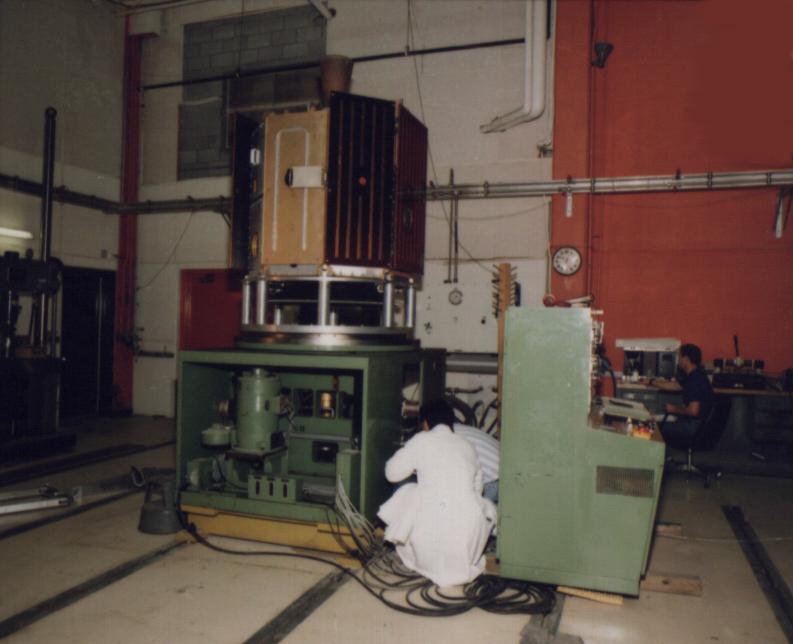
(Navy spin test facility)
The spin of this Mesaba ALJs recommendation of denial of the PPA is dizzying:
“The reaction (we received) is that we’ve introduced the most obnoxious kind of project you could ever imagine, rather than introducing the cleanest coal plant in the world,†[Micheletti] said.
Ummmm… this is a surprise? It IS the most obnoxious kind of project you could ever imagine!
From the Grand Rapids Herald Review:
Than Tibbetts
Herald-Review
Monday, April 16th, 2007 08:14:30 AMThe Mesaba Energy Project could be one unfavorable ruling away from ruin.
Two administrative law judges overseeing Excelsior Energy’s case for a 600-megawatt, coal-fired power plant north of Taconite ruled that the Minnesota Public Utilities Commission should not approve the company’s plans.
The commission, which has the final authority in the matter, is expected to hear the case early this summer.
Judges Steven Mihalchick and Bruce Johnson wrote in their decision that the project is not an “innovative energy project,†language crafted in a 2003 law meant to kick-start development of an integrated gasification combined-cycle, or IGCC, power plant in Minnesota.
The project’s proposed $2 billion price tag meant it would need plenty of public money as well a guaranteed buyer for the plant’s electricity. Mihalchick and Johnson also recommended that the commission scrap the proposed power purchase agreement between Excelsior and St. Paul-based Xcel Energy.
The judges’ ruling — which included stating that the project is not likely to be a least-cost resource — took both proponents and opponents of the project by surprise.
Excelsior CEO Tom Micheletti said it seemed like the judges ignored most of Excelsior’s testimony.
“It flies in the face of everything that’s being discussed about the need to do something about global warming,†he said. “Either they totally ignored our evidence or they just didn’t read it.â€
Excelsior officials have touted the power plant as an economic windfall for the area which would create more than 100 permanent, high-paying jobs.
Charlotte Neigh, co-chair of Citizens Against the Mesaba Project, said the ruling was vindication for CAMP members and the hard work they put in to defeating the proposed power plant.
“It demonstrates that some of the reasons that motivated CAMP were valid,†she said of the ruling. “They did an excellent job in that report…and I don’t see how the (public utilities) commissioners could vote any differently.â€
If the Mesaba Project has any hopes of getting built, the public utilities commission will have to side with Excelsior and grant a power purchase agreement, Micheletti said, or construction cannot begin.
Carol Overland, an attorney for Mesaba project’s opponents, said the judges made a very strong statement.
“I was really struck by the way they started out by directly saying it’s not an innovative energy project,†she said. “That carries so much weight.â€
Excelsior has about three weeks to file exceptions to the judges’ ruling.
Overland said the public utilities commission typically follows administrative law judges’ decisions except for politically charged issues or, in many cases, for Xcel Energy. With many area legislators backing the Mesaba Energy Project, the PUC’s hearing could be interesting, she said.
Peter McDermott, president of the Itasca Economic Development Corp., said the ruling is a disappointment, but still saw a window of possibility.
“I think (Excelsior has) seen stumbling blocks before and gotten around them,†he said. “Whether they can get around this, I don’t know.â€
Itasca County Board of Commissioners Chairman Catherine McLynn was at a meeting of the Western Mesaba Planning Board Thursday evening when the news was announced of the judges’ ruling. McLynn said there were representatives from both Excelsior Energy and CAMP at the meeting and all were taken aback by the announcement. But McLynn stated that all, including the county, understand that this decision does not stop the project.
McLynn explained that the board remains “on record as passed by resolution†to be in support of the project should it pass the environmental permitting process. She emphasized the fact that the final decision on whether the project moves forward is not a decision of the county. However, McLynn explained that the county has been active in supporting the construction of infrastructure needed for the Minnesota Steel mill project which would also service the Mesaba Project.
“We will continue to work with Excelsior on terms and agreements that are mutually acceptable,†said McLynn in an interview with the Herald-Review Friday morning.
“We are still in the middle of the fact-finding phase,†McLynn added. “The draft Environmental Impact Statement (EIS) will be released soon and we’re waiting for that piece of information.â€
Representative Loren Solberg (DFL-Grand Rapids) said he has always been in support of the states strong review system, “Companies have to respond to the review process.â€
Both Overland and Micheletti noted that the ruling could have far-reaching effects. Several IGCC power plants are in the works around the county, and Minnesota was seen as the first large-scale project to test the public’s palate for new coal plants.
Micheletti said Excelsior will continue to work to bring a power plant to Taconite, adding he hopes the public utilities commission has “more experience†with energy issues.
“The reaction (we received) is that we’ve introduced the most obnoxious kind of project you could ever imagine, rather than introducing the cleanest coal plant in the world,†he said.
And a note of congratulations from Stephanie with this original:

I’ll keep it with the line drawing of me falling out of my broken chair, and the very moving photo of her with her assassinated ducks laid out on a board…