bigstoneartistrend.jpg

Coal is a risky business… So now it’s not just Wall Street saying that coal plants are not a good investment, it’s not just the DOE’s IGCC program saying that IGCC is too risky for private development, now the federal Rural Utilities Service is saying that funding for coal plants will be STOPPED. Yes, that’s right, STOPPED! They’ve suspended RUS coal plant loans, “saying the uncertainties of climate change and rising construction costs make the loans too risky.”

The program’s suspension marks a dramatic reversal of a once-reliable source of new coal plant financing. It follows the announcement last month that several major banks will require plant developers to factor in climate change when seeking private funding.

“This is a big decision. It says new coal plants can’t go to the federal government for money at least for the next couple years, and these are critical times for companies to get these plants built,” said Abigail Dillen with the environmental law group Earthjustice. The group filed a federal lawsuit last year seeking to block the loan program.

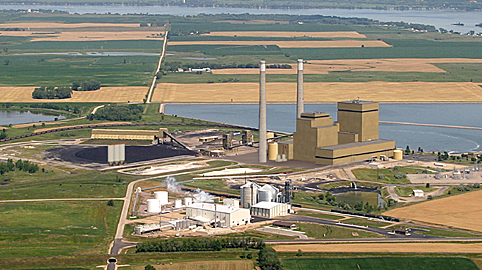
This is big news for those of us who want to see Big Stone II added to the list of 59-61 or so plants going down… Big Stone had RUS finding. If RUS funding is over, is Big Stone going the way of the brontosaurus?  Which of the entities in Big Stone II were in line for RUS funding, and for what?  Power plant funding or transmission funding or ???  The RUS Notice says MRES, and it’s not clear how it’s set up:

RUS Notice of EIS for Big Stone II

Can we expect the end of Big Stone II??? I sure hope so, but… Let’s keep an eye on the Big Stone II site, not that they’d be eager to issue a press release… SNORT!

Loans program for coal plants suspended

By MATTHEW BROWN
MORE FROM BUSINESSWEEK

BILLINGS, Mont.

The federal government is suspending a major loan program for coal-fired power plants in rural communities, saying the uncertainties of climate change and rising construction costs make the loans too risky.

After issuing $1.3 billion in loans for new plant construction since 2001, none will be issued this year and likely none in 2009, James Newby, assistant administrator for the Rural Utilities Service, a branch of the Department of Agriculture, said Tuesday.

The program’s suspension marks a dramatic reversal of a once-reliable source of new coal plant financing. It follows the announcement last month that several major banks will require plant developers to factor in climate change when seeking private funding.

“This is a big decision. It says new coal plants can’t go to the federal government for money at least for the next couple years, and these are critical times for companies to get these plants built,” said Abigail Dillen with the environmental law group Earthjustice. The group filed a federal lawsuit last year seeking to block the loan program.

At the time of the suspension, at least four utilities had been lined up for loans totaling $1.3 billion — for projects in Kentucky, Illinois, Arkansas and Missouri. A project in Montana was denied funding last month. Two more were recently withdrawn: last October in Wyoming and earlier this week in Missouri.

Newby said material and labor costs for new coal plants have been rising 30 percent a year, even as utilities struggle to pinpoint future costs of controlling greenhouse gas emissions. The 2 billion tons of those gases produced annually by coal-fired plants in the United States exceed the emissions of any other source.

Newby said those uncertainties prompted the White House’s Office of Management and Budget to ask that new loans be put on hold until risks can be better quantified.

Rural utilities provide power to about 40 million customers across the nation. More than 60 percent of that electricity comes from coal.

Whether the plants that were awaiting federal loans can find alternative financing remains to be seen.

Associated Electric Cooperative Inc. announced this week it was “delaying indefinitely” its proposed plant in Norborne, Mo., after receiving word of the loan program suspension.

At least one developer, the East Kentucky Power Cooperative, is hoping to wait out the suspension of the loan program rather than seek more expensive loans on the open market, spokesman Nick Comer said.

Two more projects — Southern Montana Electric’s Highwood Generating Station and Basin Electric Power Cooperative’s Dry Fork plant in Wyoming — already are seeking private funding.

A representative of the East Texas Power Cooperative, which has proposed a plant in Plum Point, Ark., also said his utility would seek private financing if the loans are not resumed.

“We’ll have to look elsewhere for funding, which will increase the interest expense, which will increase the electric bill for the consumers at the end of the line,” said the cooperative’s Ryan Thomas.

Newby, with the Rural Utilities Service, said his agency is considering imposing upfront fees on coal plant developers as a way to mitigate taxpayer exposure through the loan program. Initial discussions have centered on a 0.2 percent fee — equivalent to $2 million on every $1 billion in loans.

Newby added he was confident the government would work through the concerns over risk and resume issuing loans possibly as soon as 2010.

Glenn English, chief executive of the National Rural Electric Cooperative Association, said the program’s suspension was a sign of “nervousness” among lenders anxious over the potential ramifications of climate change legislation now before Congress.

Depending on what policies are adopted, retail electricity prices could increase sharply once the costs of reducing greenhouse gases are factored in, he said. Utilities that drop coal-fired power proposals will be forced to shop for more expensive electricity on the open market.

“What you’re seeing (with the Rural Utilities Service) is a general reflection of the attitude we find in the financial community, mainly this apprehension about what the future holds and what can be expected out of government,” English said.

Coal Conference in Houston

February 28th, 2008

Today is day two of a coal, or NO coal, conference in Houston. The weather is BEA-UUU-TI-FUL, but internet connection is sketchy, so before I lose it, here’s the presentation from this a.m. from moi, Nancy LaPlaca and Alan Muller:

IGCC – Pipedreams of Green and Clean

More later…

pawlenty-and-gopher.jpg

Is there a “Tim Pawlenty” in the House?  Message for a “Tim Pawlenty,” is “Tim Pawlenty” here?

As a friend said, “Maybe this is the beginning of the end?”  We can hope…

Pawlenty thinks he can veto the Transportation Bill?!?!?! Long overdue to put the state’s interests first, the Minnesota Legislature just gave the “Green Chameleon” a strong message smack upside the head.

Senate, House override Governor’s transportation veto

Special thanks to:

Rep. Jim Abeler

Rep. Rod Hamilton

Rep. Kathy Tinglestad

Rep. Bud Heidgerken

Rep. Ron Erhardt

Rep. Neil Peterson

Please take a few minutes and send them all an email of thanks – it’s easy, send to:

rep.(first name).(last name)@house.mn

It’s good to know that sometimes people can be counted on to think about and vote for the public interest, the state’s interest, all of our interests, and buck party line to do it. THANKS!!!

I mean really… how many bridges have to collapse, how many people have to die, before he’ll admit that we need to spend money on the roads in Minnesota?

Look at Excelsior Energy ad, about its doomed and bloated IGCC coal gasification disaster called the Mesaba Project, printed in the Mesabi Daily News on February 22, 2008. Why is Excelsior Energy naming Range projects “PolyMet, Minnesota Steel, Franconia, US Steel and many others…” Excelsior doesn’t have a power purchase agreement with anyone, not a one of these companies listed… EH??? What’s upwith this? What’s Tom Micheletti trying to gain by association here? Some sense of legitimacy and need for the project? HA! “… the kind of energy our Mesaba Energy Project will produce.” Oh puh-leeeeeze, what a crock…

…and yes, I know, I know it’s sideways:

eead022508_05.jpg

Here’s the pdf version so you can turn it around and see it in all its glory — I just can’t get the damn thing to save “landscape.” Hmmmm… what does that mean… well, it is Excelsior Energy’s Mesaba Project, after all, so of course it won’t save “landscape.”

Excelsior Energy ad – Mesabi DN Feb 22, 2008

So what gives? Why are they blathering this nonsense?

WHO PAID FOR THIS?  MINNESOTA TAXPAYERS?

Border Girl Reporting

February 24th, 2008
minnesota-sodakotaborder.jpg
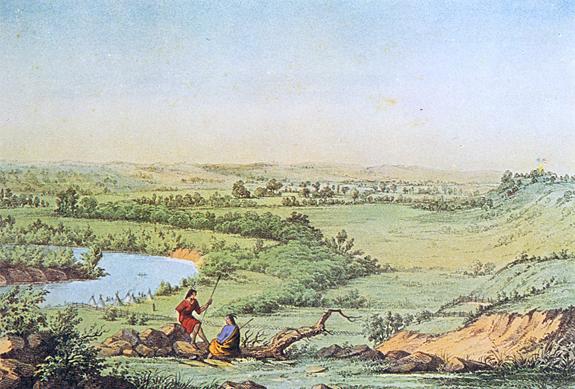
The Minnesota River at the Minnesota-South Dakota border, by Henry Lewis. 

Border Girl Reporting — a new blog from the Minnesota – South Dakota border… what’s going on there and perspectives of one “border girl” looking out into the world, looking out for us!

bordergirl.jpg

GO Border Girl, GO!!!  Welcome to the cybercrew!