Surprise Drop in Power Use? DUH!
November 22nd, 2008

Surprise Drop in Power Use Delivers Jolt to Utilities
Numbers are trickling in from several large utilities that show shrinking power use by households and businesses in pockets across the country. Utilities have long counted on sales growth of 1% to 2% annually in the U.S., and they created complex operating and expansion plans to meet the needs of a growing population.
“We’re in a period where growth is going to be challenged,” says Jim Rogers, chief executive of Duke Energy Corp. in Charlotte, N.C.
The data are early and incomplete, but if the trend persists, it could ripple through companies’ earnings and compel major changes in the way utilities run their businesses. Utilities are expected to invest $1.5 trillion to $2 trillion by 2030 to modernize their electric systems and meet future needs, according to an industry-funded study by the Brattle Group. However, if electricity demand is flat or even declining, utilities must either make significant adjustments to their investment plans or run the risk of building too much capacity. That could end up burdening customers and shareholders with needless expenses.
To be sure, electricity use fluctuates with the economy and population trends. But what has executives stumped is that recent shifts appear larger than others seen previously, and they can’t easily be explained by weather fluctuations. They have also penetrated the most stable group of consumers — households.
Dick Kelly, chief executive of Xcel Energy Inc., Minneapolis, says his company, which has utilities in Colorado and Minnesota, saw home-energy use drop 3% in the period from August through September, “the first time in 40 years I’ve seen a decline in sales” to homes. He doesn’t think foreclosures are responsible for the trend.
Duke Energy Corp.’s third-quarter electricity sales were down 5.9% in the Midwest from the year earlier, including a 9% drop among residential customers. At its utilities operating in the Carolinas, sales were down 4.3% for the three-month period ending Sept. 30 from a year earlier.
American Electric Power Co., which owns utilities operating in 11 states, saw total electricity consumption drop 3.3% in the same period from the prior year. Among residential customers, the drop was 7.2%. However, milder weather played a role.
Utility executives question whether the recent declines are primarily a function of the broader economic downturn. If that’s the case, says Xcel’s Mr. Kelly, then utilities should continue to build power plants, “because when we come out of the recession, demand could pick up sharply” as consumers begin to splurge again on items like big-screen televisions and other gadgets.
Some feel that the drop heralds a broader change for the industry. Mr. Rogers of Duke Energy says that even in places “where prices were flat to declining,” his company still saw lower consumption. “Something fundamental is going on,” he says.
Michael Morris, the chief executive of AEP, one of the country’s largest utilities, says he thinks the industry should to be wary about breaking ground on expensive new projects. “The message is: be cautious about what you build because you may not have the demand” to justify the expense, he says.
Utilities are taking steps to get a better understanding of the cause. Some are asking customers who reduced usage to explain what is influencing them. Xcel and other utilities, for example, have been running environmentally focused campaigns to urge consumers to use less energy recently, a message that might be taking hold.
Power companies are also questioning the reliability of the weather-adjustment models they use to harmonize fluctuating sales from quarter to quarter. “It’s more art than science,” says Bill Johnson, Chief Executive of Progress Energy Inc., Raleigh, N.C.
If the sector is entering a period of lower demand — which could accelerate further if the automotive sector collapses — many utilities will have to change the way they cover their costs.
Utilities are taking a hard look at the way they set rates and generate profits. Many companies are embracing a new rate design based on “decoupling,” in which they set prices aimed at covering the basic costs of delivery, with sales above that level being gravy. Regulators have resisted the change in some places, because it typically means that consumers using little energy pay somewhat higher rates.
Write to Rebecca Smith at rebecca.smith@wsj.com
Otter Tail’s stock sinking… sinking…
November 19th, 2008

… utterly rational “correction” I presume?
Otter Tail Corporation’s stock has had major dive. It was slowly rising over the year, in July it was over 40, a peak of 46.15, but then, waaaaaaay, down, now it’s at 16.38. Yes, we know, we’re in a depression, but Otter Tail’s dive is significantly worse than, say, Xcel’s.
CLICK HEREL Otter Tail stock chart over last year
Contrast with Xcel, lower all along but not so drastic, high of 23.50 and now 17.87.
CLICK HERE: Xcel Energy stock chart over last year
And there’s at least one of Otter Tail’s major investors with egg on his face:
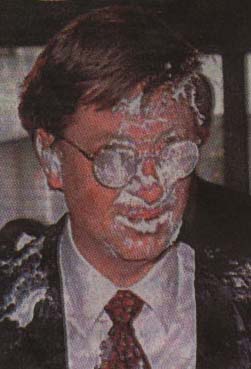
Meringue, that is…
Who’s else has gotten carried away investing in coal a la Otter Tail?

CO2 concerns prevail in amazing EPA appeal
November 13th, 2008

In a Sierra Club air permit challenge, the Environmental Appeals Board has ruled that the EPA must address CO2, and it remanded “the permit to the Region for it to reconsider whether to impose a CO2 BACT limit and to develop an adequate record for its decision.” This decision should apply to air permits for facilities discharging CO2, pretty much everything, eh?
Here’s a snippet about alternatives, because this is what the EPA Comments are very concerned about in the Mesaba case:
The statutory section Sierra Club relies upon, CAA section 165(a)(2), does not require the permit issuer to independently raise and consider alternatives that the public did not identify during the public comment period. Here, Sierra Club did not identify during the public comment period the alternatives it raises in its petition.
So Sierra’s alternatives argument got 86’d (p. 6). But here’s some good stuff:
Although the Supreme Court determined that greenhouse gases, 2 such as CO , are “air pollutants” under the CAA, the Massachusetts 2 decision did not address whether CO is a pollutant “subject to regulation” under the Clean Air Act. Massachusetts v. EPA, 549 U.S. 497, slip op. at 29-30 (2007); In re Christian County Generation, LLC, PSD Appeal No. 07-01, slip op. at 7 n.12 (EAB Jan. 28, 2008), 13 E.A.D. at ___. The Region maintains that it does not now have the authority to impose a CO BACT limit because “EPA has historically interpreted the term ‘subject to regulation under the Act’ to describe pollutants that are presently subject to a statutory or regulatory provision that requires actual control of emissions of that pollutant.” U.S. EPA Region 8, Response to Public Comments (Permit No. PSD-OU-0002-04.00) at 5-6 (Aug. 30, 2007) (“Resp. to Comments”). We hold that this conclusion is clearly erroneous because the Region’s permitting authority is not constrained in this manner by an authoritative historical Agency interpretation.
But then they wiggle a bit and then clarify that they’re just sending it back:
By our holding today, we do not conclude that the CAA (or an 2 historical Agency interpretation) requires the Region to impose a CO BACT limit. Instead, we conclude that the record does not support the 2 Region’s proffered reason for not imposing a CO BACT limit – that 2 although EPA initially could have interpreted the CAA to require a CO BACT limit, the Region no longer can do so because of an historical Agency interpretation. Accordingly, we remand the Permit to the Region 2 for it to reconsider whether or not to impose a CO BACT limit and to develop an adequate record for its decision.
The timing is good, with Pres. Obama about to walk in the door. But what will Bush do in the remaining time?
AAAAAAAAAAAAAAAAAAAAAAAGH!

Kandiyohi burner moves to Rockford?
November 10th, 2008
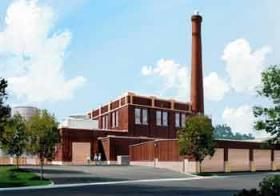
Kandiyohi burner rears its ugly head again, this time in Rockford, Minnesota. Their Midtown burner project went down in flames not even a year ago, and here they are again.
From a blurb on Current Issues on the City of Rockford site:
Proposed Industry – Biomass Plant
Here’s the minutes from the meeting:
Workshop Meeting of Rockford City Council and Planning Commission
Here’s their powerpoint:
… which makes me wonder…
They say that they’ll burn waste wood.
Did they tell the City of Rockford that waste wood produces emissions of formaldehyde, NOx and fine particulates?
Did they tell the City of Rockford that their failed Midtown Eco-burner project would spew nearly 1 million pounds of pollutants in the air?
Did they tell the City of Rockford that there’s enough wood to power the project? (see next section)
They say that Minnesota is one of the best places for biomass, and have a map showing biomass resources.
Did they tell the City of Rockford that there’s enough wood to power the project?
Did they tell the City of Rockford that the Green Institute’s study showed that there is not enough biomass to power a similar burner proposed for St. Paul’s Rock-Tenn facility, that there’s not sufficient wood to go around?
Did they explain what’s changed since the Green Institute report?
They say it employs established technology.
Did they tell the City of Rockford that the MPCA has only issued one woody biomass permit, for Laurentian (Hibbing and Virginia) and that that permit was violated, so extremely that the MPCA issued fines and reworked the permit?
LEGALECTRIC POST: Laurentian “biomass” Air Permit Draft (second time around)
LEGALECTRIC POST: “Biomass” violates air permit – fines likely
They say that it will replace fossil fuel and nuclear.
Did they tell the City of Rockford what fossil fuel or nuclear power plants would be shut down if theirs is built?
Does the power purchase agreement provide for shutdown of any fossil fuel or nuclear generation?
They say it will expand the City of Rockford’s tax base.
Did they tell the City of Rockford that for the Midtown burner they lobbied for and received an exemption from utility personal property tax?
Minn. Stat. 272.02, Subd. 82.
Biomass electric generation facility; personal property.(1) be designed to utilize a minimum 90 percent waste biomass as a fuel;
(2) not be owned by a public utility as defined in section 216B.02, subdivision 4;
(4) be designed to have capability to provide baseload energy and district heating.
Did they tell the City of Rockford that their failed Midtown project would not have paid utility personal property tax to the county, city and school district because of this exemption?
Did they tell the City of Rockford that they would NOT seek an exemption from utility personal property tax for this project?
Did they commit to paying utility personal property tax to the county, city and school district?
They tout process steam and district heat potential.
Did they tell the City of Rockford of the infrastructure expense necessary to utilize this steam?
Did they tell the City of Rockford that the St. Paul District Heat plant had steam heat infrastructure in place for much of its St. Paul customer base?
They say there will be no odors.
Did they tell the City of Rockford the basis for that statement?
Did they tell the City of Rockford how many pounds of emissions are expected?
They say regarding the failed Midtown burner project that some in the neighborhood were anti-business and anti-growth.
Did they tell the City of Rockford the basis of the neighborhood’s objections?
LINK: Neighbors Against the Burner
They say regarding the failed Midtown burner project that NIMBY caused some local politicians to flip-flop.
Did they tell the City of Rockford the factors upon which local politicians rejected the project?
They say regarding the failed Midtown burner project that Xcel Energy was difficult to negotiate with?
Did they tell the City of Rockford the material terms of their power purchase agreement proposal that Xcel rejected?
They say regarding the failed Midtown burner project that activists exaggerated emissions.
Did they tell the City of Rockford the specific emissions levels projected?
For Midtown Eco-Burner, per air permit application:
NOx 160 tons (320,000 lbs)
SO2 40 tons (80,000 lbs)
Ozone (O3) (not emitted directly)
CO 160 tons (320,000 lbs)
Lead 150 tons (also a “HAP”)
Particles 36 tons (72,000 lbs)
– PM 10 – 65 tons (130,000 lbs)
– PM 2.5
They say regarding the failed Midtown burner project that cumulative impacts were claimed even though the project had low emissions.
Did they tell the City of Rockford of the existing arsenic contamination and other impacts of prior industry suffered by the Phillips community?
Did the tell the City of Rockford of the efforts that led to legislation passed requiring that cumulative impacts be considered?
They say that emissions for this project would be much lower than for District Energy or Hibbing.
Did they tell the City of Rockford the basis for this claim?
Did they provide the City of Rockford the emissions modeling to back up this claim?
They claim multiple options for water use and discharge.
Did they tell the City of Rockford what their plans are?
Do they have plans for water use, cooling and treatment?
Did they disclose the cost of water and treatment if they use the city’s system?
Did they disclose impacts of on-site water intake and discharge?
They claim their project will reduce emissions that may cause climate change.
Did they explain to the City of Rockford how a new power plant with new emissions without a linked closing of any other facility would reduce emissions?
They say they have $75 million in private capital.
Did they explain to the City of Rockford why they have this capital now but did not have it for the Midtown project and relied on public grants and financing?
They say they have a financing package prepared by Piper Jaffray.
Did they provide a pro forma to the City of Rockford?
Did they provide any documentation of this financing package?
They claim “project team experience” on a number of projects.
Did they tell the City of Rockford what project partners have what experience?
Did they tell the City of Rockford that Kandiyohi has no experience in successful development, construction or operation of a power plant?
Did they tell the City of Rockford that Kandiyohi has experience only in its failed Midtown burner project?
This project is yet another pig in a poke…
Here’s some information from the last time around, so that the City of Rockford can compare with what they receive:
Midtown Air Permit application – note it took them 3 submissions to get one that the MPCA would accept
MPCA Documents
Neighbors Against the Burner & Other Org’s Documents
Petition for Environmental Assessment Worksheet
EAW – Affidavit of Muller in Support of Petition
Green Institute Comments in Support of EAW
David Morris – ILSR – Position on Kandiyohi Midtown & Timeline of Events
Jeff Cook Coyle (formerly Green Institute) letter to Legislators
Alan Muller Presentation
Muller – Saying NO! to permits for Kandiyohi\’s Midtown Burner
(Air emissions info on slide 22)
Another utility under FERC investigation
November 9th, 2008

Shame on you, you naughty utilities! FERC is investigating yet another utility for scheduling transmission reservations for local load and instead using them for wholesale sales, or put another way, using network transmission service instead of point-to-point service to import power to facilitate off-system sales. Remember when Otter Tail Power got nailed for that recently?
It’s not like this is anything new, but I think it’s a lot more widespread, and given the market basis for electricity sales, it’s “incented” in the systemic structure, and FERC’s power to act on these violations is relatively new. Here are some more examples:
And I’ll spend a little time digging up some more…
Anyway, now Westar Energy in Kansas is under investigation, and reported this in a recent SEC filing. Here’s the story that popped up on that:
Westar’s power line use probed
At issue is whether Westar deliberately scheduled more capacity than it needed, Burns said.
Reporter Duane Schrag can be reached at 822-1422 or by e-mail at dschrag@salina.com.
Also noteworthy is that Westar Energy had, like many utilities, a DECREASE in sales, in the case of Westar, 2% decrease admitted in a November 7, 2008 press release.
How many other utilities out there are under investigation, and how many are NOT under investigation when they should be? Something tells me this is a common practice.