Krie, doggie with the winglet ears, died today
January 2nd, 2010


Today Krie died, utterly unexpectedly. She was the happiest most irrepressible dog I’ve ever known. For the last couple of months, she’s been slowing down, tiring more easily, but nothing unusual for a 12 y.o. pup. A week ago, though, she had a UTI, and we started treatment for that, but she couldn’t keep meds down, and then we got some other drugs to calm her stomach, but her urine was looking really bad, and she wasn’t eating or drinking. Had her blood chemistry checked and her liver was shot. Then yesterday she pretty much stopped eating, and wasn’t drinking much either. Yesterday, she gave me a look, THAT look. She wasn’t whining or anything, but she was done. She’d had enough. The vet was closed… This morning, she couldn’t/wouldn’t get up, we got her up with a towel supporting her and then she hobbled outside on her own, and her pee looked just awful. She peed and came back in on her own, but collapsed in the hallway and wouldn’t go any further. We stuffed her with her drugs and she drank half a little bowl of water. Wouldn’t touch special chicken with broth. Then an hour later, while we were waiting for the vet to call, she got up and hobbled over to the door and lay down. I made a better towel sling, because there’s a lot of stairs down to the car, and we got her there, Alan pretty much carried her, she couldn’t do more than paddle a little bit and we had to pick her up to lay her in the van, she couldn’t help at all. She just laid there, head down, eyes ad ears responding, but that’s it. On the way to the vet, about 40 miles away, I said to Alan, “I wouldn’t be surprised if she started having seizures,” and about 30 seconds later passing by Wanamingo, she started. We were still 10 minutes from the vet and she had petit mal siezures all the way, and we carried her in, and as they were trying to find a vein, which proved very difficult, she started grand mal siezures. And thankfully we were there, and she wasn’t in too much discomfort for too long.

Krie was a dog who had a rough beginning, stuck for seven years in a pen, popping out pups as often as she could. But the last five, almost, years of her life she made up for it, living like the bitch queen that she was. She was the happiest dog, always smiling, except when she was chasing or holding down a poodle, enjoyed life from nose to tail, loved to just sit on the couch butt to butt with me when I worked, and was a good sister to Kenya, helping her get over some of her fears. She loved dock diving, swimming, and chasing anything, stick were good, small animals even better. She loved her ‘lambhearts” and grew to like veggies too, and begged quietly at the kitchen door in the most endearing way. She had the best smile, tounge hanging out, ears pointed down, and eyes sparkling. We’re missing you already, Krie!

Mesaba Siting Recommendation?!?!?!
December 30th, 2009

WTF?
The ALJ’s recommendation has come out in the Excelsior Energy Mesaba Project docket and he’s recommended that a permit be issued. Really…
This is the judge who tossed out my client, Public Intervenors – Mesaba, Xcel Energy and Minnesota Power because we didn’t file testimony. Show me in the rules where filing testimony is required…
THERE WERE NO PARTIES IN THIS DOCKET, JUST EXCELSIOR ENERGY.
Read it for yourself:
I’m at a loss about what to say…

PATH transmission withdraws application
December 23rd, 2009
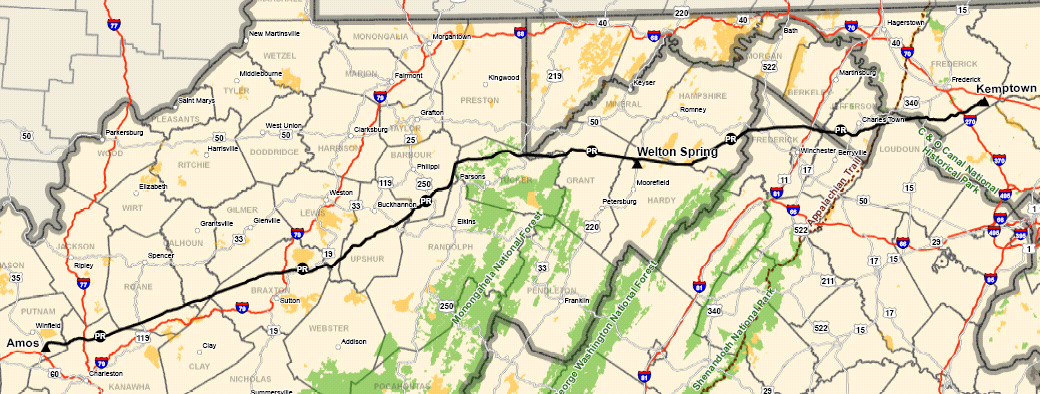
That’s the PATH path…
They’re withdrawing their application, saying they want them timed together — if so, why withdraw, and not just ask for suspension? “It keeps the blood flowing” they say, but I’d say it keeps the blood boiling. Why not just admit it — it’s not needed, and there’s no way they can prove, and now they tacitly admit they can’t even CLAIM it’s needed.
A decent article from the Leesburg Journal:
PATH Seeks To Withdraw, Suspend Richmond Hearings
By Margaret Morton
(Created: Tuesday, December 22, 2009 7:48 PM EST)
I guess we’re not allowed to have fun anymore…
December 21st, 2009
… it’s way too subversive!
Let it snow… squeals of delight, lots of fun happening…
… and then…
jeeeeez, get a life…
Let Mesaba go…
December 19th, 2009

Jorgensen’s got to get over it — Mesaba is done, ain’t happening, dead, dead dead, yet she’s spinning those tales and hype about Excelsior Energy’s Mesaba IGCC Project. From the first words in the title, it’s lies, lies and more lies, oh, and misrepresentations and falsehoods and exaggerations and utter bullshit too! Why does the St. Paul Pioneer Press give her space forthis advertising of the nonsensical kind?
Here’s what Citizens Against the Mesaba Projet’s Charlotte Neigh had to say about it:
Julie Jorgensen is using the opportune hook of the Copenhagen conference to repeat Excelsior Energy’s same old, self-serving promotional claims about the “clean coal” technology of its Mesaba Energy Project. One must wonder why the Press unquestioningly allots opinion space to the promoter of a precarious for-profit venture, financed almost exclusively by $40 million in public funds, which have been benefiting the author and her co-founder husband, Tom Micheletti.
What Jorgensen didn’t say:
• The U.N. negotiators in Copenhagen decided to leave carbon capture and storage, the prime objective of the IGCC technology touted by Excelsior Energy, off the list of clean-energy projects eligible for the Clean Development Mechanism; the 12/17/09 Wall Street Journal reported that “clean coal seems to be getting the cold shoulder at the climate summit”, and “. . . clean coal is anything but viable right now”.
• Mesaba’s Unit I would emit 5 million tons of carbon dioxide per year and the Department of Energy has acknowledged that capturing and sequestering the CO2 from the proposed Taconite plant is not feasible.
• The claimed economic benefit has been rejected by the Minnesota Public Utilities Commission, which found the project too expensive and risky and not in the public interest.
• The need for this Project has never been proven; no utility is willing to buy its output; Xcel Energy successfully resisted efforts to force it into a power purchase agreement; and the MPUC has declined to require other utilities in the state to include Mesaba’s output in their resource plans.
• The environmental claims are yet to be adjudicated as the MPUC considers the route and siting permits and other government agencies pursue their concerns related to air, water and waste permits.
Is Jorgensen’s piece really that bad? See for yourself:
Julie Jorgensen: We need baseload power. Coal’s plentiful. Let’s clean it up
By Julie Jorgensen
Updated: 12/17/2009 05:54:25 PM CSTI’m the co-founder of Excelsior Energy, which is developing the Mesaba Energy Project, an IGCC power plant near the town of Taconite on Minnesota’s Iron Range. From my point of view, IGCC offers economic and environmental benefits to Minnesota. The Midwest is poised be a leader in the delivery of this technology. Gov. Tim Pawlenty and the Minnesota Legislature have supported the development of Minnesota’s IGCC plant, the Mesaba Energy Project, since 2003, and the project has been exempted from a statewide prohibition against new coal plants. Eleven Midwest governors established a collective goal to spur construction of at least five commercial-scale IGCC plants by 2015, and President Obama announced a goal to build five such “first-of-a-kind” clean coal plants. The U.S. Department of Energy (DOE) has provided significant funding and incentives to the Mesaba Project to offset the costs of needed innovation.
Adoption of IGCC technology is essential to cleaning up coal and mitigating climate change.
As fears mount about global warming, environmental advocates like the Clean Air Task Force and the Natural Resources Defense Council support the timely and widespread commercialization of IGCC technology. From a global perspective, the importance of commercializing a cleaner way to use coal cannot be understated: both India and China have vast coal reserves, which they will inevitably use in the cheapest and easiest possible ways to fuel their growing economies.
Additionally, the costs of new nuclear facilities may put them out of reach.
Julie Jorgensen is the former CEO of CogenAmerica, a publicly traded independent power company, and a former executive of NRG Energy, a global energy development company. She’s a co-founder of Excelsior Energy Inc., which is developing a coal gasification plant near Taconite on Minnesota’s Iron Range. Her e-mail address is JulieJorgensen@ExcelsiorEnergy.com.