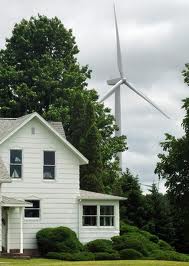
turbine2close2house

The importance of siting properly — maybe the message is getting through?  Just like a nuclear plant, you can’t be putting generators in the ground without a lot of respectful planning and consideration for neighbors, be they the people living next door or the migratory birds making their way through, or in their foraging, roosting and nesting territory.

Eagles are as much an issue here as with the CapX 2020 Brookings transmission line crossing of the Minnesota River, and will be an issue with any of the proposed crossings for the CapX 2020 transmission line across the Mississippi River, which is North America’s major migratory flight path.  Eagles in the proximity of transmission lines was the reason (arguably, because the real reason was that they couldn’t use the Myrick Road route, but that’s a whole ‘nother post, see www.nocapx2020.info and search for “Myrick”).

When you’re planning utility infrastructure, and permitting it, you’ve got to have concerns for impacts, but when it’s no
longer the “Environmental Quality Board” handling it, and it’s the Dept. of COMMERCE with their COMMERCE charge, humans and eagles don’t have a chance against the corporate promoters of these projects. It’s time to transfer review back to the Environmental Quality Board and develop standards for siting (do you know there are NO standards for
siting wind projects over 25MW? They just do it on a case by case basis, with no scientific basis whatsoever), and eliminate the Dept. of Commerce and their corporate shills from any oversight of utility projects, unless they want to intervene as a party.

Yesterday there were two articles on this, in the STrib and the LA Times:

Bald eagles could thwart Red Wing wind farm

Wind farms multiply, fueling clashes with nearby residents

Here are the full articles so they’ll be around once archived.  First from the STrib:

Bald eagles could thwart Red Wing wind farm


* Article by: JOSEPHINE MARCOTTY , Star Tribune
* Updated: July 25, 2011 – 1:57 AM

In battle against a Red Wing project, citizens turn to a national symbol.

After a fierce, two-year fight against a proposed $179 million wind farm near Red Wing, Minn., local opponents have only one trump card left — the bald eagle.

Just before the government shutdown on July 1, the 12,000-acre project cleared a major hurdle when the state Public Utilities Commission (PUC) voted to move it forward. But in recent months, a citizens group that has opposed the project discovered that the 50 turbines will be built smack in the middle of prime nesting territory for that beloved American symbol of freedom.

Federal wildlife officials say that the developer could face civil or even criminal action under federal laws if a bald eagle or an even more rare golden eagle is felled by one of the massive blades.

“It comes down to whether they want to take on the risk or not,” said Richard Davis, a biologist with the U.S. Fish and Wildlife Service who has monitored the project for two years. “I do think there is a higher likelihood of a strike in that area than any other wind project I’ve looked at in the state.”

Chuck Burdick, project director for the developer, AWA Goodhue Wind, said the company has been diligent in responding to the concerns raised by both federal and state wildlife officials. It’s done everything possible, he said, to site turbines where they will cause the least harm to flying wildlife, from long-eared bats to loggerhead shrikes to eagles. But all projects entail risks, he said, and the company plans to start construction this fall.

“I don’t know that a wind farm has ever been built that didn’t result in some bird or bat mortality,” he said.

Wind farms vs. wildlife?

The conflict between these two opposing environmental goals — clean energy and protecting wildlife — is occurring increasingly as wind farms sprout across the nation. There is a growing realization that the massive towers with blades that travel hundreds of miles per hour are killing millions of wandering birds and bats.

The concerns are having an effect. In April, a wind development in North Dakota halted when Xcel Energy, which had agreed to buy the electricity, abruptly pulled out of the deal because of risks to two endangered birds — the piping plover and the whooping crane. The developer, EnXco, still doesn’t have a buyer for the electricity.

Just this week, the federal Department of the Interior proposed new voluntary wildlife protection guidelines for wind projects, but they were denounced by environmental and bird-loving organizations as grossly inadequate. At minimum, such rules should be mandatory, the American Bird Conservancy said.

In Minnesota, the drive for wind energy comes in part from a state law that requires utilities to derive 25 percent of their energy from wind by 2020. Now, the pressure to build has been intensified by industry fears that the federal Production Tax Credit, which greatly reduces the costs of the projects, will expire this year.

Wind energy proponents argue that the risks are worth it. After all, they say, mountain-top coal mining and air pollution from fossil fuels are far more destructive to wildlife than wind turbines. But critics say that doesn’t justify the harm, noting that 55 to 94 golden eagles die every year at Altamont Pass in California — one of the oldest and, many say, most poorly designed wind farms in the country.

Dispute over eagle nests

The eagle problem in Goodhue County surfaced only this past winter, thanks largely to the Coalition for Sensible Siting, a citizens group that opposed the wind project from the beginning. Mostly, they don’t want the turbines close to their homes because of concerns about the effect of stray electrical voltage and the annoying strobe-like shadows cast by the moving blades.

But when the company issued the results of a wildlife survey it conducted on the site last summer, opponents realized they might have more leverage. Company biologists said they found three eagles’ nests within a 2-mile radius of the project, but concluded that the birds were not at risk because they didn’t hunt near the turbine sites.

Mary Hartman, a member the citizens group, was skeptical. Only three nests? “This place is loaded,” she said. Members of her group went out and found eight nests.

Ron Peterson, the company biologist, disputed that number. He said that only two additional nests were documented, and that they were there because the eagles were feeding on “improperly disposed” livestock carcasses. If farmers stop leaving carcasses out, he said, the eagles would move on.

Davis, of the Fish and Wildlife Service, said there are at least four or five nests in all, and he criticized the company’s initial survey as “not extremely substantial.”

But at this point, all Davis and state wildlife officials can do is make recommendations on how to best site the turbines to protect the birds. The ultimate decision on the future of the wind farm is up to the PUC. The citizens groups and Goodhue County, which also opposes it, can ask the commission to reconsider its approval, but a major change is unlikely, participants said.

Still, the commissioners’ concern about vulnerable species was evident. The permit will be one of the first in Minnesota to require a bird- and bat-protection plan, which the company must develop with the Minnesota Department of Natural Resources and the federal Fish and Wildlife Service.

Plan to ‘promote wildlife’

But there is no certainty such a plan will succeed in protecting eagles or other endangered species.

Burdick said the company’s biologists are tracking the flight paths and hunting territories of eagles and other vulnerable species at the site. He said he expects the company will also “promote wildlife in the general area” and work with the state and federal agencies on turbine locations.

“We are doing everything possible to avoid the most sensitive and intensely used areas for wildlife,” Burdick said.

The federal government can step in only after the project is up and running, if something happens to a protected bird, Davis said. The options in that case might range from shutting down problem turbines, for example, to legal action.

If eagles start dying, he said, the federal government is less likely to forgive an operator that knew the risks earlier.

But that’s only if the deaths are discovered.

“If there are 50 birds hit, are they going to tell anyone?” he said. “We hope they would.”

And in the L.A. Times:

Wind farms multiply, fueling clashes with nearby residents


Demand for clean energy has led to a wind turbine building boom. But many living in their shadow decry the electricity generating projects as pesky eyesores.

By Tiffany Hsu, Los Angeles Times

July 24, 2011

Reporting from Tehachapi, Calif.—

Donna and Bob Moran moved to the wind-whipped foothills here four years ago looking for solitude and serenity amid the pinyon pines and towering Joshua trees.

But lately their view of the valley is being marred by a growing swarm of whirring wind turbines — many taller than the Statue of Liberty — sweeping ever closer to their home.

“Once, you could see stars like you wouldn’t believe,” Donna Moran said. “Now, with the lights from the turbines, you can’t even see the night sky.”

It’s about to get worse.

Turbines are multiplying at blistering speeds as wind developers, drawn by the area’s powerful gusts, attempt to meet an insatiable demand for clean energy.

Helo Energy plans to scatter 450-foot machines across hundreds of acres in nearby Sand Canyon. A few miles away, near the Old West Ranch enclave, Terra-Gen Power is building the nation’s largest wind farm with hundreds of turbines, if not more. The project, Alta Wind Energy Center, is backed by hundreds of millions of dollars from Google Inc. and Citibank.

Federal and local officials hail the Tehachapi Valley, a harsh desert expanse about 100 miles north of Los Angeles, as an alternative energy mecca that will help wean Americans off fossil fuel. Kern County, home to the nation’s largest concentration of wind farms, is looking forward to millions of dollars in much-needed tax revenue and has approved most proposed installations.

But wind projects aren’t only proliferating in the region’s outskirts. Nearly 3,000 turbines, many of them bigger than Ferris wheels, were installed across the country last year.

The growth is being propelled by federal incentives and state clean-energy mandates. In April, Gov. Jerry Brown signed a law that requires California utilities to get 33% of the state’s electricity from renewable sources by 2020. As of the first quarter of 2011, they’re at 17.9%.

But with thousands more wind projects on the drawing board, they’re increasingly generating opposition among local residents. Less than 100 miles from Tehachapi in the Antelope Valley, proposed turbine developments are facing similar resistance. Across the country, Cape Cod, Mass., residents and political heavyweights such as Sen. John Kerry waged war against what could be the country’s first offshore wind farm.

And the issue isn’t just with wind turbines, said Tom Soto, an environmental activist and managing partner of Craton Equity Partners.

“These large projects enter at their own peril without involving the community,” Soto said. “Just because they’re renewables instead of landfills doesn’t mean they’re off the hook.”

Residents of Blythe, Calif., near the border with Arizona, showed up at the recent groundbreaking of Solar Millennium’s massive solar plant there to protest its proximity to sacred Native American sites. Gleaming mirrors will blanket nearly 6,000 acres, helping to generate electricity for Southern California Edison.

In San Diego County, critics have spent the better part of a decade trying to block the Sunrise Powerlink transmission network, which would bring electricity from far-flung solar and wind farms.

Activists there and elsewhere say that the fight is more than a classic case of “not in my backyard” resistance. Large, remote projects aren’t the only solution to the nation’s energy woes, they say.

City-dwellers could produce just as much clean electricity without the transmission hassles, they said, using rooftop solar panels, small wind turbines, fuel cells and other adaptable forms of renewable energy generation.

“We’re going to need to find space to place these projects,” Soto said. “A successful portfolio will be balanced, with some utility-scale projects and some urban projects.”

Tehachapi activist Terry Warsaw said he’s worried his community will soon be surrounded by turbines.

“Alternative energy has lulled us into a sense of complacency,” he said. “The potential is here to take over every ridge and every mountainside if the community isn’t careful.”

Veterinarian Beverly Billingsley has been hosting anti-turbine community meetings in her new Sand Canyon barn, just up the slope from where the cluster of 450-foot machines is slated for construction.

“They are not benign things,” she said. “We’ve seen turbines go berserk.”

The machines get no more sympathy from Mother Mary Augustine, who lives cloistered at the Norbertine Sisters Monastery in a cradle of hills recently eyed for wind development.

“Monstrous insects,” she calls them. “I look at the propellers for a moment and my head gets dizzy.”

It’s not that they dislike alternative energy, residents say. Many employ solar panels and smaller turbines to power their homes.

Lately, though, locals say that farm animals have begun cowering as construction vehicles rumble across lawns and surveyor helicopters roar overhead. There are worries about turbine oil leaking into water wells and turbines obstructing landing maneuvers at the local airport.

“Avian cuisinarts,” said Sand Canyon resident April Biglay. She worries that more turbines could slaughter birds or cause ground vibrations that could decimate native species.

“We are resembling hundreds of towns around the country,” she said.

Last year, an older machine began spinning uncontrollably, forcing authorities to shut down a main freeway for hours. The resulting traffic was an anomaly in a community where most jams are caused by high school football games and meandering sheep.

Fire is also a concern, with turbines’ finicky electrical wiring, long fire department response times and limited roads on which to flee.

And the turbines could topple in an earthquake, since they’re situated in sedentary soil directly on the Garlock fault line, residents say.

Some suggest that removing trees to make way for the machines could lead to erosion and flooding.

They also argue that the projects aren’t helping the local economy. Local residents say pickup trucks driven by construction workers often have out-of-state license plates. Each new project causes nearby property values to plunge as much as 40%, city officials say.

And because companies aren’t required to dismantle the turbines when they stop functioning, many will join the hordes of “mechanical dinosaurs” that already crowd the area, critics say.

Other residents say they’re tired of making sacrifices for electricity that will go to other counties.

“It’s a question of what you’re willing to give up to be green,” said local lawyer Kassandra McQuillen of some recent project plans. “It’s like proposing clear-cutting Griffith Observatory or the cliffs of Malibu.”

Residents say they’ve won some victories. Developer Terra-Gen yanked its 7,000-acre Pahnamid project last month after opponents slammed plans to set up nearly 150 turbines on the Tehachapi crests.

“It is not unusual for projects to fall by the wayside early in the development process,” Terra-Gen said in a statement. “The decision to pull back in an early stage on the Pahnamid project was a result of several important development concerns, including local opposition.”

By the end of the year, the developer said it will have invested $2.2 billion in Kern County, become the county’s third largest taxpayer with $30 million a year and made more progress building its 1,100-megawatt Alta project.

But with so many projects on the plate for the region, Tehachapi city officials are urging Kern County to impose a temporary moratorium on wind projects near homes. And the city that has long been associated with the fields of propellers is now trying to draw tourists by talking up its chili cook-offs, historic downtown and pristine mountains.

“We’ve coexisted with the turbines for a long time,” City Council member Susan Wiggins said. “But we don’t want to look like one big wind park.”

pressurecooker

First, the bad news – the Commonwealth Court of Pennsylvania has affirmed the Order of the Pennsylvania Public Utilities Commission approving the Susquehanna-Roseland transmission project:

Commonwealth Court of Pennsylvania – Affirms Pennsylvania’s S-R Order

And now, on to the pressure… The National Park Service is working to do it’s job as steward of our national park land, in this case, the federally declared Wild and Scenic Delaware River and the Delaware Water Gap.
delawarewatergap

Seems that some don’t think they should be allowed to do that job, and are pressuring them to “hurry up” so the Susquehanna-Roseland transmission line can steamroll on through.  Well, BACK OFF!

Today the pressure on NPS was overt in two venues.  First, U.S. Rep. Charlie Dent (R-PA) amends a bill to push the NPS to complete its environmental review one year ahead of schedule.  Say what?!?!?!

charliedent

Then in my inbox a sour grapes press release from FERC Commissioner Phillip Moeller whining because the newly adopted rule won’t do what he wants, it won’t address “problems” like NPS doing its proper review of transmission projects:

July 21, 2011 Press Release – Phillip Moeller Whines

Here’s the Susquehanna-Roseland specific part:

“While I offer substantial praise for today’s final rule, the Commission should have taken a different approach to several important issues.  We must recognize that all of the nation’s difficulties in building needed transmission will not be resolved by this rule.  Rather, this rule largely addresses planning for long-distance transmission lines, which is only a subset of the critical issues that are inhibiting needed investment.

This rule cannot address issues like the delays caused by other federal agencies in the siting of important projects, as this Commission lacks the legal authority to require other federal agencies to act.  For example, see the comments of PJM in this proceeding at p. 17, which state that:

[t]he PJM Board approved the Susquehanna-Roseland 500 kV line in 2007.  The Susquehanna-Roseland line was approved by the state regulatory commissions in Pennsylvania and New Jersey for 2012.  The line is currently delayed by the National Parks Service [sic] and is not expected to be in service until 2014 at the earliest.

Ohhhhhhhh, isn’t it too bad.  He’s just one Commissioner, and he’s got to put his dissent out there as an extensive and extended rulemaking proceeding closes… Why is he pushing, why does he care, and why does his care rise to the level that he sends out a dissenting press release?  Lighten up, the National Park Service has a job to do.  As the testimony in the Susquehanna-Roseland proceeding before the New Jersey Board of Public Utilities reflects, we are NOT going to freeze in the dark in an incubator without a job…

And here’s Pre. Charlie Dent’s whine:

Charlie Dent pushes expedited federal review of Susquehanna-Roseland power line proposal

Published: Thursday, July 21, 2011, 4:30 AM
By Tom Rowan Jr. | The Express-Times

U.S. Rep. Charlie Dent is pushing for the National Park Service to complete its review of the controversial Susquehanna-Roseland power line proposal sooner than planned.

And the New Jersey Sierra Club wants Dent, R-Lehigh Valley, to back off.

Dent amended a bill approved July 12 by the House Appropriations Committee to call on the park service to finish its environmental impact statement on the project by 2012 rather than 2013.

“The committee is concerned about delays,” reads Dent’s amendment to the Fiscal Year 2012 Interior and Environment Bill.

The Sierra Club this week issued a release claiming Dent added the amendment in an attempt to “handcuff the park service from doing their job in complete violation of the public trust” and “undercut the National Park Service and push an environmentally destructive and unnecessary project.”

First pitched in 2008, the Susquehanna-Roseland line has been described by the two power companies behind the plan — PPL Electric Utilities Corp. in Pennsylvania and Public Service Electric & Gas in New Jersey — as necessary to bolster the region’s power grid. The 130-mile power line is proposed to link the Berwick, Pa., area to Roseland, Essex County.

The 500-kilovolt line is being evaluated by the park service because the route, as approved by New Jersey and Pennsylvania utility regulators, crosses the Delaware Water Gap National Recreation Area and other federal lands.

“The timely completion of the impact statement is of great importance to the reliability of the regional grid and is critical to the supply of electricity to 58 million consumers in 13 states and Washington, D.C.,” the bill reads.

The National Park Service earlier this year pushed its goal to finish the impact statement back from fall 2012 to January 2013, after the utility companies asked the agency to include another alternative in their review.

“Instead of standing up for our open spaces, Dent is working for PSE&G and PPL,” Jeff Tittel, director of the New Jersey Sierra Club, is quoted as saying in the statement.

Collin Long, spokesman for Dent, responded Tuesday in an e-mail, “The congressman’s amendment does not show favor toward any of the alternatives being considered and respects the integrity of the environmental impact statement.

“It simply requires the National Park Service to follow their own timeline for completion of the review process, which already includes a six-month extension of their original deadline to October 2012.”

The appropriations bill awaits consideration by the full House of Representatives. When considered on the House floor, it will be open for modification through the amendment process.

If it passes through the House, it would be referred to the Senate.

liar

Read the STrib today?  Xcel has 9,500 record peak.

Xcel, how dare you… the 9,500MW peak you report is exaggerated… naughty, naughty.  You didn’t deduct for the interruptible service customers’ megawatts, and you’re including electricity you’ve generated and sold elsewhere, that the number represents the totals Xcel put on the grid, and not accounting for the demand that they’ve shed, not wholesale sales in other markets. THIS IS NOT PEAK DEMAND!!!  YOU’RE CHEATING, XCEL… sigh… what’s new…

Thanks for clearing that up, little birdie!

birdie-eveninggrosbeak

But even considering that sleight of hand, it’s no record, it’s not even up to the 2006 peak… and that was FIVE years ago.  Your CapX 2020 transmission is predicated on 2.43% (is that right, 2.4 something…) increase annually, but folks, we’re not even close to that.

Here’s the peak demand over the last 10 years:

demandchart

And here’s what the STrib said today, what they said that Xcel said, blah blah blah, 9,500 my ass:

Xcel set new power demand record Monday

Article by: DAVID SHAFFER , Star Tribune

Power outages struck thousands across the metropolitan area as the distribution system was burdened by the electrical load. High demand is expected today.
—————–


benttree0916windturbine

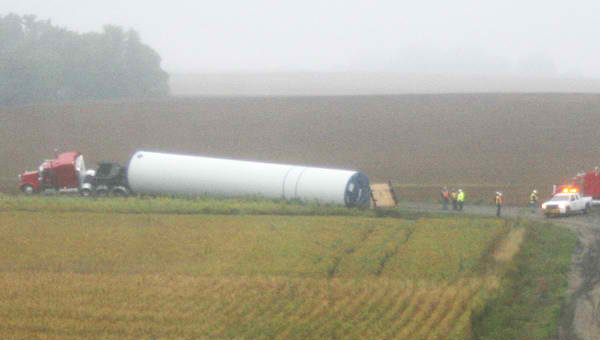
From Albert Lea Tribune, Fair Use, capturing one of those classic “oh shit…” moments in trucking… (see article below).

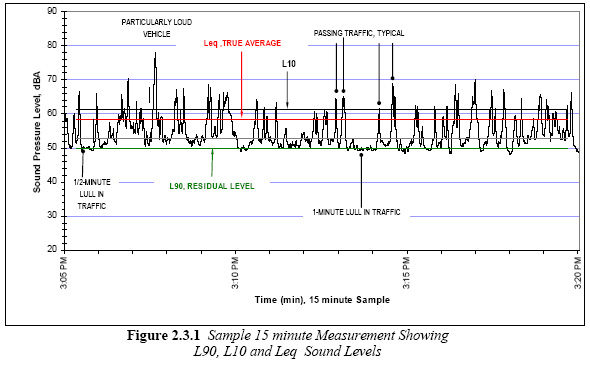
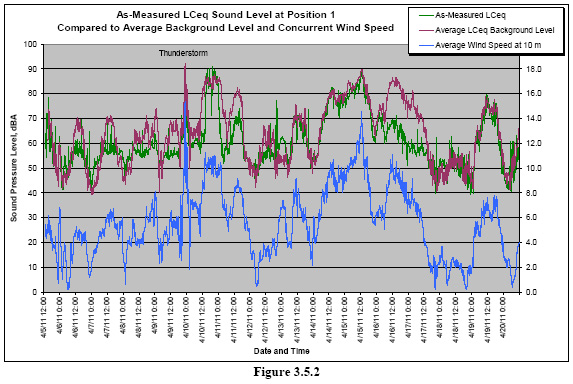
In another “oh shit” moment, the Bent Tree Wind Farm noise testing report is out, was released about a month ago, and I’m finally getting around to publishing it.

Bent Tree – Survey of Operational Sound Levels

Take a look at p. 19 and 20 for L10 and L50 levels, and look how frequently the levels are higher state noise limits! See Minn. Rule 7030.0040:

mpcarule

Here’s a summary chart from the Bent Tree noise report, p. 13:
sound
And what they’re trying to do is to remove background sound so that the numbers won’t be above what is allowed by the state’s rules.  Graphically, here’s what that comparison, with and without background noise, looks like, p. 43:
removingbkgnoise-1

The article that was the source of the photo at the top is from the Albert Lea Tribune, and it’s old news, from Sept. 2010, but for those inquiring minds that want to know:

Wind turbine tower falls off truck

Published 9:43am Thursday, September 16, 2010

MANCHESTER — A section of a Vestas wind turbine tower slipped off the semi that was hauling it early Thursday morning.

The truck was carrying the large tower section on gravel 695th Avenue north of Freeborn County Road 29 near West Freeborn Lutheran Church. It fell off near a turn in the road.

The gravel roads in southern Minnesota were saturated after heavy rains Wednesday night. Albert Lea received more than an inch on Wednesday.

Fortunately for the construction workers, the ditch along 695th Avenue was shallow compared to most. It is a minimal traffic road.

Trucks have been delivering these large pieces to each site in the Bent Tree Wind Farm since July.

The Freeborn County Sheriff’s Office responded to the incident. The call went out around 7 a.m. Sheriff Mark Harig said as far as he knew there were no injuries or damages reported.

“It’s just blocking the road,” Harig said.

He said as of 8 a.m. a deputy was still near the site performing traffic control.

“They’ll have to get a crane to pick it up and move it where it needs to go,” Harig said.

Calls to Bent Tree Wind Farm officials were not immediately returned before this story went to press Thursday morning.

summersmile

Not only can she open a babygate (in any configuration) faster than we can replace it,  shoulder open any door not firmly latched, sort through the garbage, and dump over the dog food container and lounge in the pile snarfing it all down as though she were eating bon-bons, our dear Summer has now learned to open the fridge.  Judging from the kitchen floor, she does not like potatoes.  Judging from the doggy bed in my office, she loves tortillas, whole wheat and white flour and corn too.

… sigh… that’s our Summer grrrrrrrrrrrl!