We have to destroy the eagle in order to save it…
July 9th, 2014

American Wind Energy Ass.’ John Anderson is spouting off in the DelmarvaNow Opinion section, and good thing it’s in the Opinion section because it’s a little skewed on facts and displays a disturbing outlook.
Anderson’s bio says:
I am the industry lead on national wildlife and non-wildlife siting issues for both land-based and offshore wind development. In this role, I get to work on critical issues related to the deployment and operations of U.S. wind energy facilities, which – once addressed – will aid in the advancement of a form of energy generation that is key to combating climate change.
Two things jump out at me:
- John Anderson is the industry lead, but I’m not seeing anything about development of wind siting that’s respectful of humans or wildlife, and in his opinion piece, it discounts documented issues of eagle kills and projected eagle kills and it minimizes the potential for eagle and other bird kills via wind turbines.
- John Anderson advances the fiction that “deployment and operations of U.S. wind energy facilities, which – once addressed – will aid in the advancement of a form of energy generation that is key to combating climate change.” Oh, pleeeeeeeaze… Building wind turbines does not reduce carbon emissions — shutting down coal plants does. Not one Renewable Energy Standard/Mandate links building and using renewable energy generation with shut down of any generation that produces CO2. PERIOD. There is no link. This is a problem that needs to be corrected, but as it stands, building all the wind in the world, adding to the existing surplus of generation, will not decrease carbon emissions. The economic depression actually did something for reducing CO2 emissions, but we’ve got a surplus. AWEA is a big fan of transmission, which rather than force shutdown of the CO2 emitters, adds to transmission capacity for regional marketing, and allows those coal plants to continue operating. If they were shut down, there’d be plenty of capacity for all the wind they could want on those wires, actually taking the place of the coal now on the wires. The massive transmission build-out is all about keeping “Coal on the Wires.” ICF – Midwest ISO Benefits Analysis explains it quite well, and succinctly, when it states that the benefits of the transmission build-out is best achieved where coal displaces natural gas. Great… just great policy…
I’m concerned about this both as an attorney who has worked for clients intervening in wind project dockets with significant eagle kill issues, modeling showing deaths of both Bald Eagles and Golden Eagles would occur (see record for the Goodhue Wind project here in Goodhue County, PUC Dockets 08-1233; 09-1176; 09-1349 and 09-1350), and as a former board member of the National Eagle Center, referenced with a quote from its site (though he’s misnaming it as “National Bald Eagle Center.” The name is a BIG deal to the National Eagle Center.) I’m also concerned about this because its appearing in Delmarvanow, as I have ties to Delaware and my partner Alan Muller is Executive Director of Green Delaware, instrumental in the Delaware Public Service Commission’s RFP selection of a wind/gas combo in a level playing field comparison between wind, natural gas, and IGCC (coal gasification).
It seems the lessons of the Goodhue Wind Project and its Avian and Bat Protection Plan, typical of wind projects and eagle take permits in Minnesota, need review:
U.S. Fish and Wildlife predicted the following eagle mortality would accompany the small 78MW Goodhue Wind Project a/k/a New Era Wind Farm, and yes, folks, it would require an eagle take permit:

USFWS Comment on Goodhue Avian & Bat Protection Plan January 16, 2013
Let’s be clear — an eagle take permit is a federal permit allowing the permit holder to kill eagles.
The National Eagle Center’s website states under “Do wind turbines need an eagle take permit” an incorrect answer:
This needs correction. Many wind projects do require take permits. Eagle take permits are on a project by project basis and they absolutely can and are required for wind projects, the project here in Goodhue a local example. FYI, it’s not just wind projects, it’s transmission that kill eagles too, and the AWEA folks are fond of promoting transmission “for wind” (NOT). The CapX 2020 transmission project required eagle take permits for its Belle Plaine Minnesota River crossing and for the Mississippi River crossing near Alma, Wisconsin.
Today at Delmarvanow.com:
Like people, eagles benefit from clean environment
I swear Xcel Energy is distracting on purpose
July 9th, 2014
Much as I love our friends at Xcel Energy, I’m really losing my patience. I’ve got a brief to write. Can’t concentrate with all that noise going on… Can’t go office at the St. James or Caribou without a pack mule for all the crap that constitutes the file. AAAAAAAAAAAAAGH!


Thanks, Xcel…
July 7th, 2014
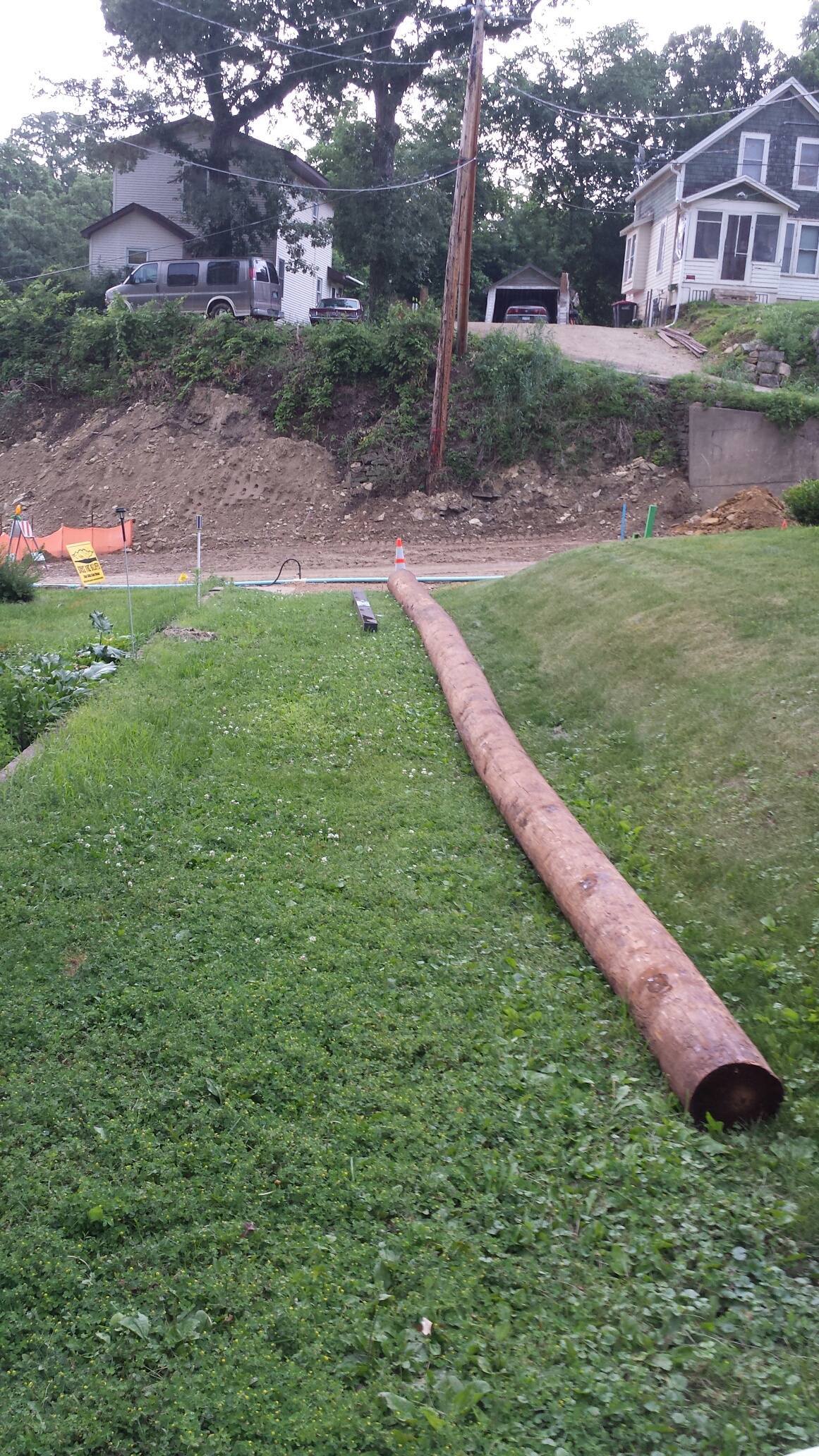
Look what they’re putting in at the end of our driveway… Thanks, Xcel Energy!
Issues with mining reclamation in SE Minnesota
July 5th, 2014
Last year, the legislature directed three agencies to get to work on rulemaking for silica sand mining. Minnesota’s DNR was tasked with the “reclamation” aspects of silica sand mining, and reclamation is nothing new for the DNR, it’s something over which they do indeed have regulatory jurisdiction.
The Silica Sand RulemakingAdvisory Committee has been meeting for months… and months… and months… but the DNR has not produced any reclamation draft rules (oops, first typed “daft”) for the committee to review.
Some suggestions and issues to be aware of were raised based on Wisconsin practice, and hopefully they’re taking that into account.
Now here’s some pertinent information. There’s an extensive article in today’s Rochester Post Bulletin, issues that should be taken into consideration when the Rulemaking Advisory Committee addresses mining reclamation… dare I say REVIEWS DRAFT RULES FOR RECLAMATION???
Mining slows progress on Cascade Lake Park
Posted: Friday, July 4, 2014 10:35 am | Updated: 10:35 am, Fri Jul 4, 2014.
Title bout: Overland v Vargas!
July 4th, 2014
David Overland gets hit with “Welcome to Los Vargas!” It’s Fernando, Jr.:
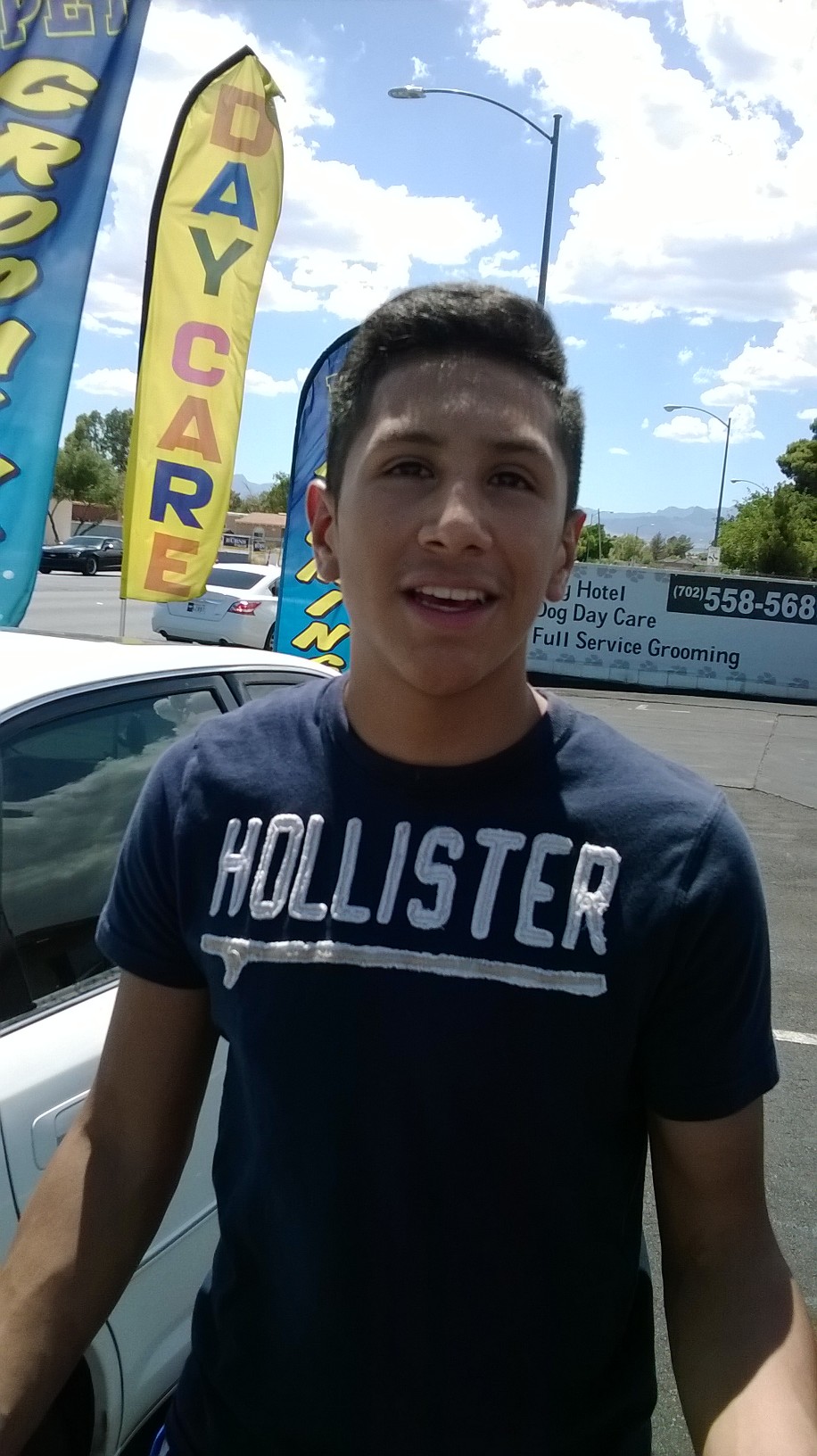
So there’s David, he’s minding his own business, toolin’ down the road, had to slow down… (it turns out there was a wreck further up on the other side of the street, a black Escalade had a wheel come off (!), and traffic on his side was backed up, learned from 911 dispatcher later), so he slowed down, stopped, waited to see what’s up, and then looked in the mirror, “OH SHIT!” and BAM!
Then he heard wheels squealing behind him, and the guy who rammed him was taking off! It’s nothing major, scrapes and scratches, lots of white paint on his new Nissan, but it’s a lease car, so he’s on the hook. He’ll need to get it fixed, so he couldn’t let the guy get away… He backs up and takes off in hot pursuit, and finally the guy pulls over.
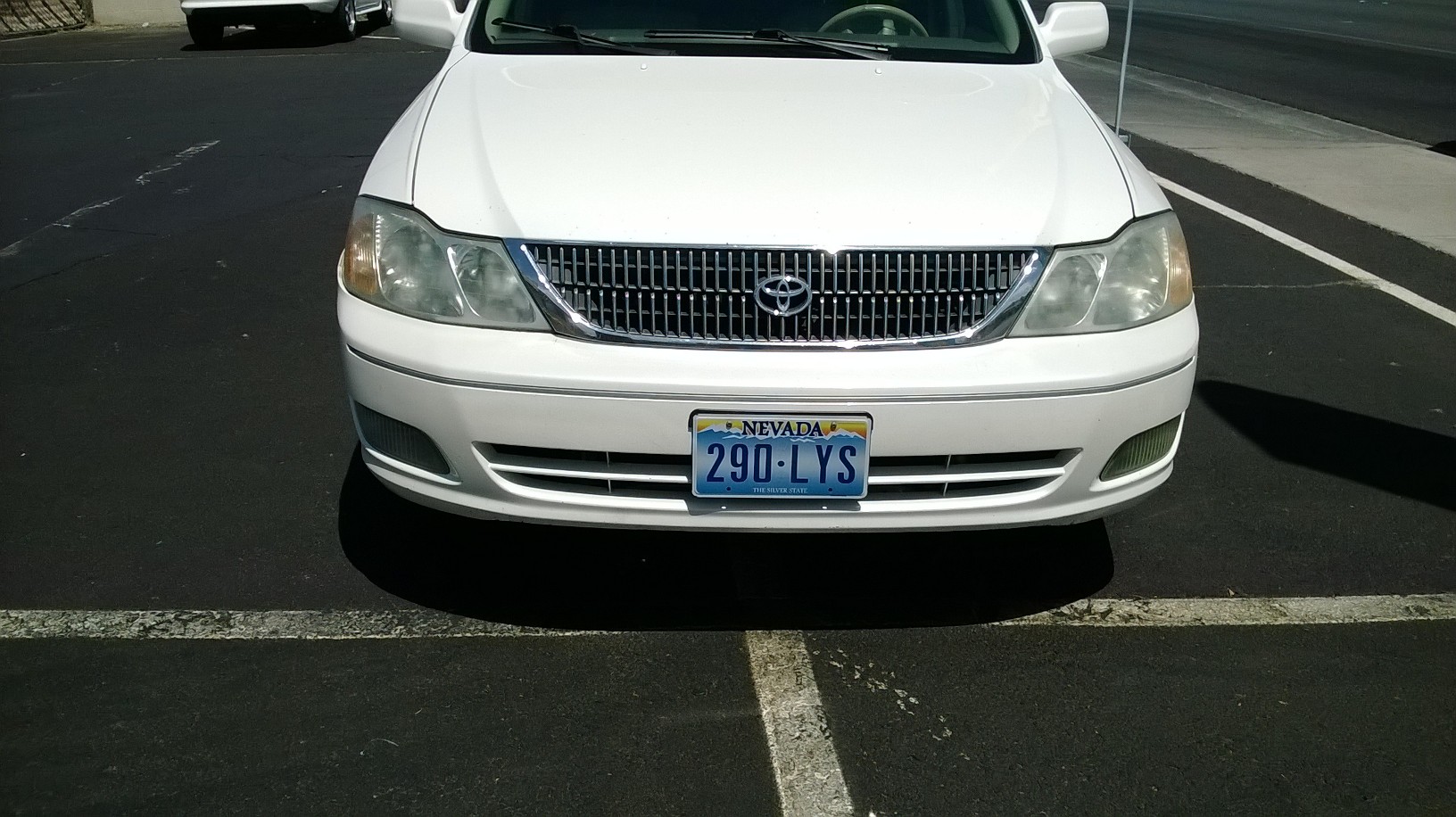
Nothing on his front end, the license plate did the damage. And he’s a kid with a learner’s permit, so no license to operate alone, and no insurance card. (David sent me all the stuff yesterday, bogged down my computer with photos: the cars, the front end and license plate of the car that hit him, the perp, his license, and the vehicle registration, AAAAAAAAAARGH, I just couldn’t have my computer tied up right then, GRRRRRRR.) He called the cops, they don’t come out to “no injury” wrecks… well, hit and run? Don’t seem to care.

So today I looked at what all he’d sent to figure out what he was going on about. GOOGLE to the rescue… It’s Fernando Vargas, Jr., and the car was just registered a few days prior!

Who? Yes… really… it’s Fernando, Jr. Still who? Ja, well… same here… but thanks to google, now I know:
Welcome to Los Vargas…
Oh my… Vegas version of Duck Dynasty?

Sure enough, when I check the names on the registration… yup, Fernando and Martha…

The good news is that mom Martha Vargas is on the case… as she told David, “I’m not happy now,” and of course he’s “not too happy either!” Jr. told mom that David cut him off… ummmm… at a dead stop? I don’t think so. It’s a well centered rear end, DOH! But it sounds like she’s sorted out the truth and is stepping up. Hope the kid gets a reality check, let’s watch next week to see!

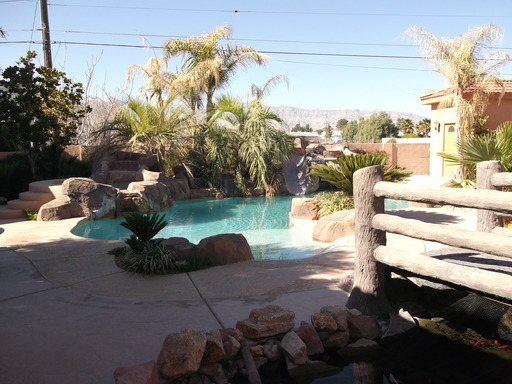
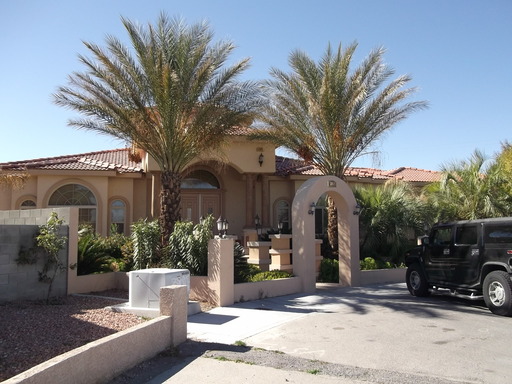
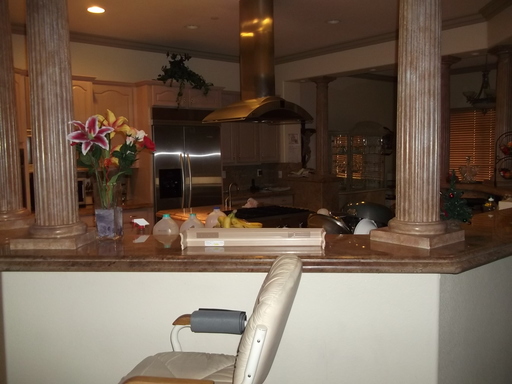
There was an address on the registration, so first I googled that and got a rental site for a gross expensive rental, $3,000/mo. “Not available.” That’s where they’re filming. The house across the cul du sac is for sale… Here’s the front of the rental:
I swear this pool is the mirror image of the viral one with the dogs running around and sliding in when the owners are away: