Wind turbine noise standards? Long overdue!
August 2nd, 2016
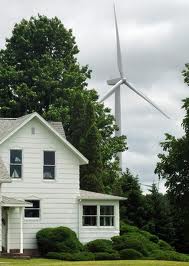
It’s been a problem for so long. Minnesota needs respectful wind turbine siting standards, and a part of that is that Minnesota needs wind turbine noise rules.
Way back in 2009, the Minnesota Dept. of Health wrote a report entitled “The Public Health Impact of Wind Turbines” and the PUC opened a docket (PUC Docket 09-845).
In 2016, it’s still an issue, because it’s not been addressed in any meaningful way. Check the Bent Tree docket, starting at 58:36:
So I sent this today, a Rulemaking Petition to the MPCA, and then notice to the PUC that it was sent and that Minn. R. Ch. 7854, the wind siting rules, need work:
Federal Court also tosses out parts of Wisconsin voter ID law
July 31st, 2016
 From nearby Wisconsin, the Circuit Court ruling regarding Wisconsin election laws:
I’m still reading the NC one, but if you’re curious about the court’s ruling, check it out. The bottom line:

Friday’s North Carolina Voting Rights Case
July 31st, 2016
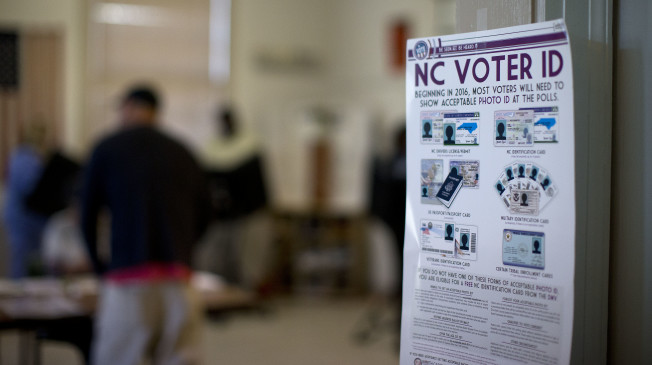 (PHOTO: Andrew Krech/News & Record via AP) MANDATORY CREDIT
(see also post above, where Wisconsin’s election law was also tossed)
For those concerned with voting rights, here’s Friday’s decision of the U.S. 4th Circuit Court of Appeals finding that North Carolina’s election law intentionally discriminated against African-American voters, and that it violated the Voting Rights Act and multiple provisions of the U.S. Constitution:
North Carolina – Voting Rights – Court Files 16-1486; 6-1469; 16-1474- 16-1529
Well worth a read to understand the lengths North Carolina legislators went to disenfranchise voters, African-American voters. A few tidbits:
But, on the day after the Supreme Court issued Shelby County v. Holder, 133 S. Ct. 2612 (2013), eliminating preclearance obligations, a leader of the party that newly dominated the legislature (and the party that rarely enjoyed African American support) announced an intention to enact what he characterized as an “omnibus” election law. Before enacting that law, the legislature requested data on the use, by race, of a number of voting practices. Upon receipt of the race data, the General Assembly enacted legislation that restricted voting and registration in five different ways, all of which disproportionately affected African Americans. (p. 10)
… In addition to this general statutory prohibition on racial discrimination, Congress identified particular jurisdictions “covered” by § 5 of the Voting Rights Act. Shelby Cty., 133 S. Ct. at 2619. Covered jurisdictions were those that, as of 1972, had maintained suspect prerequisites to voting, like literacy tests, and had less than 50% voter registration or turnout. Id. at 2619-20. Forty North Carolina jurisdictions were covered under the Act. 28 C.F.R. pt. 51 app. (2016). (p. 12)
After Shelby County, with race data in hand, the legislature amended the bill to exclude many of the alternative photo IDs used by African Americans. Id. at *142; J.A. 2291-92. As amended, the bill retained only the kinds of IDs that white North Carolinians were more likely to possess. Id.; J.A. 3653, 2115, 2292. (p. 15).
While the Supreme Court has expressed hope that “racially polarized voting is waning,” it has at the same time recognized that “racial discrimination and racially polarized voting are not ancient history.” Bartlett v. Strickland, 556 U.S. 1, 25 (2009). In fact, recent scholarship suggests that, in the years following President Obama’s election in 2008, areas of the country formerly subject to § 5 preclearance have seen an increase in racially polarized voting. See Stephen Ansolabehere, Nathaniel Persily & Charles Stewart III, Regional Differences in Racial Polarization in the 2012 Presidential Election: Implications for the Constitutionality of Section 5 of the Voting Rights Act, 126 Harv. L. Rev. F. 205, 206 (2013). Further, “[t]his gap is not the result of mere partisanship, for even when controlling for partisan identification, race is a statistically significant predictor of vote choice, especially in the covered jurisdictions.” Id. (p. 28).
While it is of course true that “history did not end in 1965,” id., it is equally true that SL 2013-381 imposes the first meaningful restrictions on voting access since that date — and a comprehensive set of restrictions at that. Due to this fact, and because the legislation came into being literally within days of North Carolina’s release from the preclearance requirements of the Voting Rights Act, that long-ago history bears more heavily here than it might otherwise. Failure to so recognize would risk allowing that troubled history to “pick[] up where it left off in 1965” to the detriment of African American voters in North Carolina. LWV, 769 F.3d at 242. (p. 32).
Last night, best rate case crowd ever!
July 28th, 2016
![20160727_190207[1]](https://legalectric.org/f/2016/07/20160727_1902071.jpg)
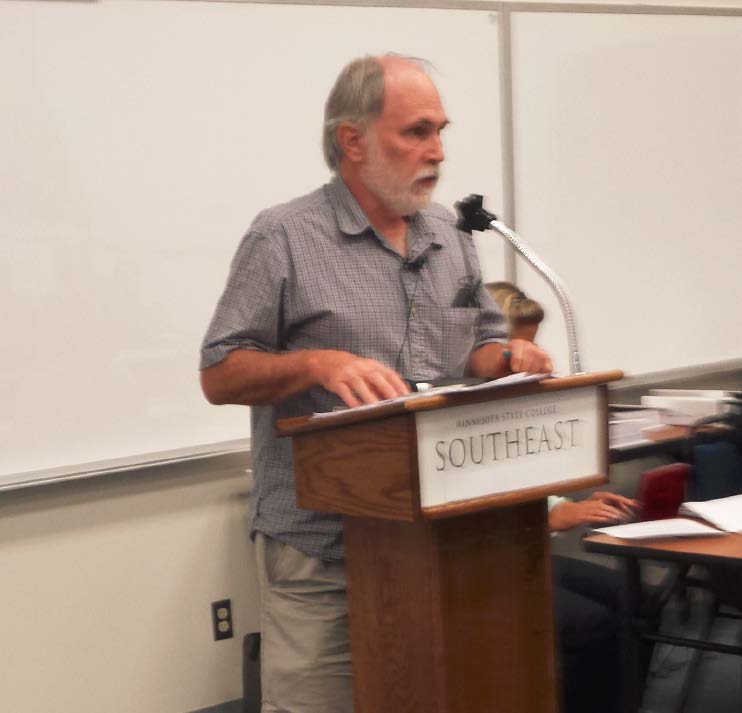
Last night’s Xcel Energy Rate Case public hearing was the largest crowd of the ones I attended. There were also more public comments than at any hearing I’d attended.
To look at the docket, which includes testimony, go HERE and search for PUC Docket 15-826. The testimony, particularly that of the OAG-RUD, Commerce DER, and AARP are worth a look.
Now, it’s time to get to writing comments. Probably the Rebuttal Testimony won’t be filed in time to read and comment on, grrrrrrrrrrrrr.
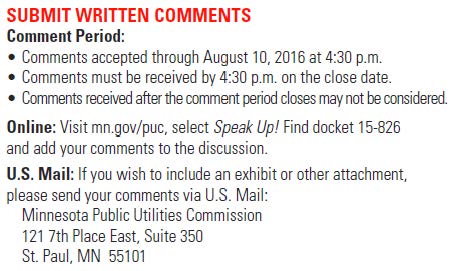 AARP work on notice and turnout seems to have helped, and a couple of folks commented that they’d read my Letter to the Editor in the Republican bEagle:
Letter: Speak up at Xcel rate case hearing
Xcel Rate Case Hearing TONIGHT in Red Wing
July 27th, 2016
7 P.M. TONIGHT IN RED WING
XCEL ENERGY RATE CASE PUBLIC HEARING
SE TECHNICAL COLLEGE
HWY. 58 & PIONEER ROAD
This is a transmission driven rate case, Xcel Energy claiming that the cost of the massive transmission build-out is reason to raise the rates. they also claim that sand mining has increased demand. But folks, the demand is down, down, down, and the transmission buildout is THROUGH Minnesota, bring Dakotas coal energy to points east, selling as much of their generation surplus on the market as they possibly can.
A couple of things you might find interesting, I did, are some of the Direct Testimony filings.
And the AG’s Office – RUD:
OAG_RUD_Initial Comments_201511-115670-01
OAG_RUD_Comments_11-20-2015_201511-115843-01
Here’s the AARP testimony, choosing narrow issues to challenge, particularly Xcel’s desire to raise the basic charge to have access to service, before one kWhr goes through your meter:
AARP Brockway Direct Testimony 20166-122233-01
And look what the Dept. of Commerce has discovered and revealed in testimony — XCEL HASN’T PAID TAXES SINCE 2008!
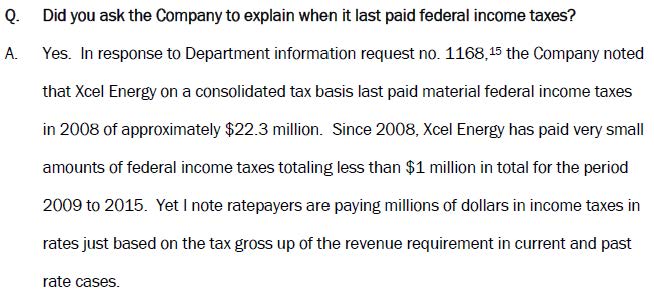 This income tax snippet is from the Direct Testimony of Nancy Campbell, Department of Commerce DER:
Here’s the Exhibit she refers to, scroll down to “NAC-20” at the very end, where you’ll find Xcel’s answer to IR 1171:
Really! Xcel Energy has paid less than $1 million in federal income taxes in the 7 years from 2009 through 2015! Meanwhile, CEO Ben Fowkes was paid $9.2 million in 2015, v. $12.4 million in 2014! (does that include stock options, deferred compensation, etc?)
Center of the American Experiment has been weighing in, but not even bothering to let people know when and where the hearings are or how to file a comment!!
 Center of the American Experiment is off track