Chickadees, ready for their new home!
August 6th, 2016
 Bird Clan
Chickadees, in Bird Clan, a print of oil by Daniel Milton HorseChief, are now framed and ready for its new home in my office, next to my inspirational Jerry Garcia “You can pursue that goal and feed the dog at the same time, it just takes a little extra effort” photo. I haven’t had a splurge like this in a while, and it feels good!
HorseChief is both a painter and sculptor, living on the Oklahoma end of the Plains & Eastern Clean Line transmission project.
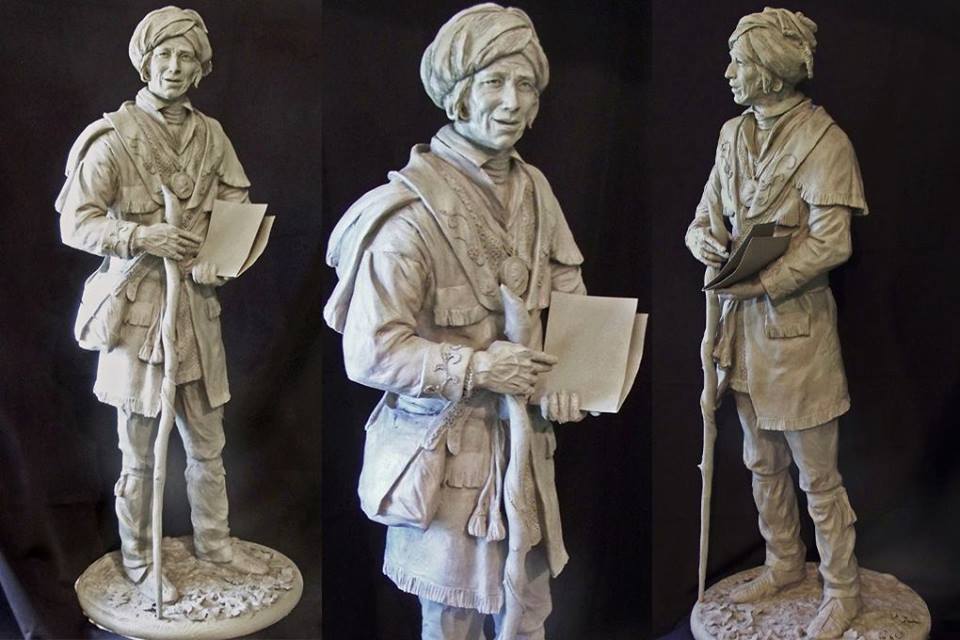
Prints are available of his work, and he can be reached via facebook.
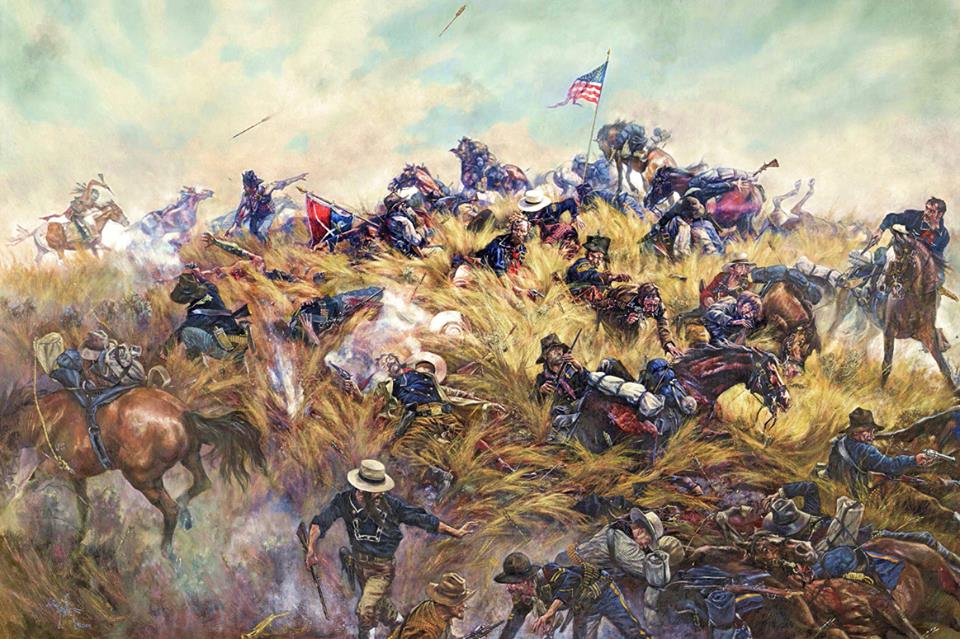 Custer’s Knoll, The Battle of the Little Bighorn 1976
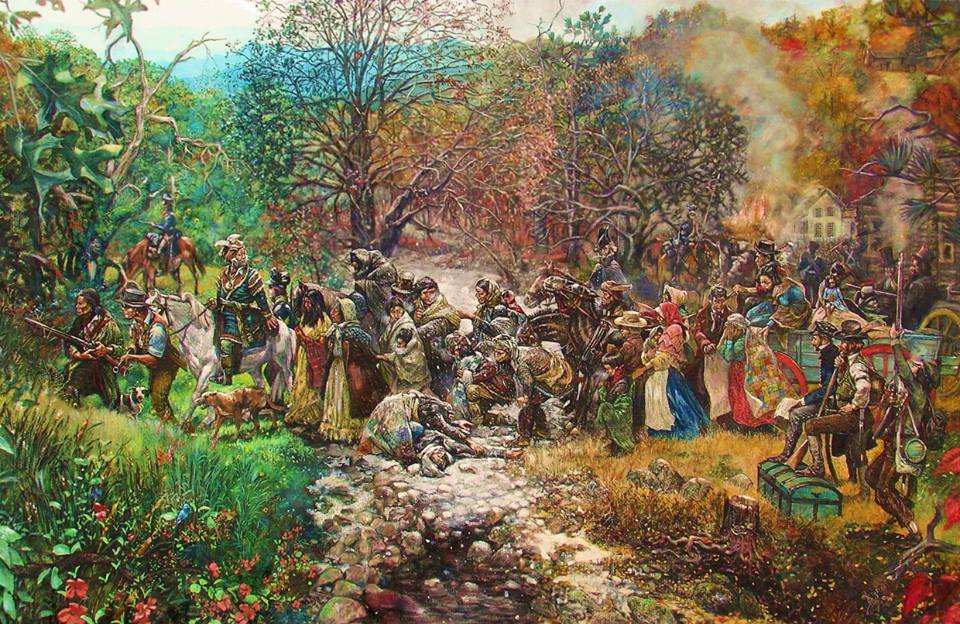 Going Snake’s Trail
 LonghairClan Mother
Is Enbridge going to pull plug on Sandpiper pipeline?
August 4th, 2016
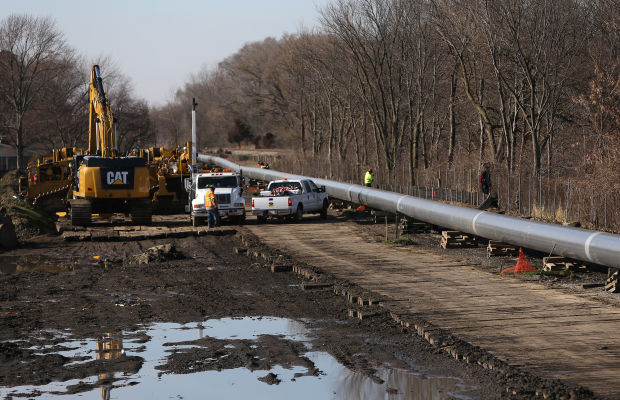
Word is out, confirming scuttlebutt, that Enbridge will pull the plug on the Sandpiper pipeline. It’s not official yet, nothing has happened beyond an announcement, but if Enbridge is saying it, IN WRITING, then that means it’s highly likely, eh?
Enbridge Energy Partners, L.P. and Enbridge Inc. Announce Agreement to Acquire Equity Interest in the Bakken Pipeline System Establishing New Path to the U.S. Gulf Coast
Here’s the important part:
Upon successful closing of the transaction, EEP and Marathon Petroleum plan to terminate their transportation services and joint venture agreements for the Sandpiper Pipeline Project. EEP continues to believe the Bakken region is a highly productive and attractive basin, which has significant crude oil supply growth potential that will require additional pipeline capacity in the future. The scope and timing of the Sandpiper Pipeline Project will be evaluated during the quarter to ensure that it is positioned to meet the growing need for pipeline capacity while offering customers competitive tolls and strong netbacks. Additionally, in conjunction with a termination of the Sandpiper joint venture agreements with Marathon Petroleum, EEP will retain 100 percent ownership in our legacy North Dakota system, which is one of the most competitive outlets available to producers in the State.
(what’s a “netback?”).
Reuters has it right with the “OVERBUILD” characterization:
Enbridge’s Sandpiper looks to be latest victim of pipeline overbuild
For this to be “official,” Enbridge will need to file a request to withdraw their application with the Public Utilities Commission, there will be a comment period, then the Commission will decide whether to approve the request to withdraw.
Suffice it to say, this will/would also mean that the transmission for the Sandpiper tank farm NW of Clearbrook is not necessary because the tank farm will not be built there (or in an alternate site)! And that’s good news for my clients next to that tank farm.
As happened with Hollydale, because the Sandpiper part is before OAH, Enbridge has to request a Withdrawal, which will be certified to the Commission for its blessing. Here’s the Hollydale request:
And for Clearbrook-Clearbrook West 115 kV transmission for Sandpiper’s Clearbrook tank farm, it’s time for Minnkota to withdraw their application!
So I fired off this missive to the PUC:
Iit’s time to make sure the PUC knows of this Enbridge plan and the impact of this pullout on the need for transmission support!
Wind turbine noise standards? Long overdue!
August 2nd, 2016
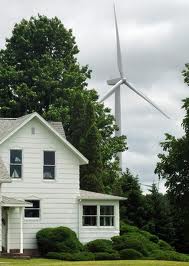
It’s been a problem for so long. Minnesota needs respectful wind turbine siting standards, and a part of that is that Minnesota needs wind turbine noise rules.
Way back in 2009, the Minnesota Dept. of Health wrote a report entitled “The Public Health Impact of Wind Turbines” and the PUC opened a docket (PUC Docket 09-845).
In 2016, it’s still an issue, because it’s not been addressed in any meaningful way. Check the Bent Tree docket, starting at 58:36:
So I sent this today, a Rulemaking Petition to the MPCA, and then notice to the PUC that it was sent and that Minn. R. Ch. 7854, the wind siting rules, need work:
Federal Court also tosses out parts of Wisconsin voter ID law
July 31st, 2016
 From nearby Wisconsin, the Circuit Court ruling regarding Wisconsin election laws:
I’m still reading the NC one, but if you’re curious about the court’s ruling, check it out. The bottom line:

Friday’s North Carolina Voting Rights Case
July 31st, 2016
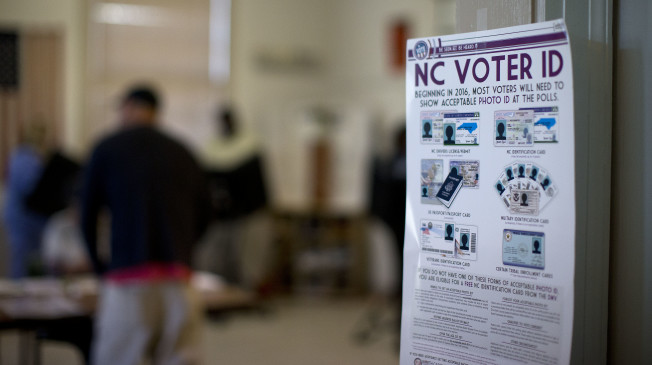 (PHOTO: Andrew Krech/News & Record via AP) MANDATORY CREDIT
(see also post above, where Wisconsin’s election law was also tossed)
For those concerned with voting rights, here’s Friday’s decision of the U.S. 4th Circuit Court of Appeals finding that North Carolina’s election law intentionally discriminated against African-American voters, and that it violated the Voting Rights Act and multiple provisions of the U.S. Constitution:
North Carolina – Voting Rights – Court Files 16-1486; 6-1469; 16-1474- 16-1529
Well worth a read to understand the lengths North Carolina legislators went to disenfranchise voters, African-American voters. A few tidbits:
But, on the day after the Supreme Court issued Shelby County v. Holder, 133 S. Ct. 2612 (2013), eliminating preclearance obligations, a leader of the party that newly dominated the legislature (and the party that rarely enjoyed African American support) announced an intention to enact what he characterized as an “omnibus” election law. Before enacting that law, the legislature requested data on the use, by race, of a number of voting practices. Upon receipt of the race data, the General Assembly enacted legislation that restricted voting and registration in five different ways, all of which disproportionately affected African Americans. (p. 10)
… In addition to this general statutory prohibition on racial discrimination, Congress identified particular jurisdictions “covered” by § 5 of the Voting Rights Act. Shelby Cty., 133 S. Ct. at 2619. Covered jurisdictions were those that, as of 1972, had maintained suspect prerequisites to voting, like literacy tests, and had less than 50% voter registration or turnout. Id. at 2619-20. Forty North Carolina jurisdictions were covered under the Act. 28 C.F.R. pt. 51 app. (2016). (p. 12)
After Shelby County, with race data in hand, the legislature amended the bill to exclude many of the alternative photo IDs used by African Americans. Id. at *142; J.A. 2291-92. As amended, the bill retained only the kinds of IDs that white North Carolinians were more likely to possess. Id.; J.A. 3653, 2115, 2292. (p. 15).
While the Supreme Court has expressed hope that “racially polarized voting is waning,” it has at the same time recognized that “racial discrimination and racially polarized voting are not ancient history.” Bartlett v. Strickland, 556 U.S. 1, 25 (2009). In fact, recent scholarship suggests that, in the years following President Obama’s election in 2008, areas of the country formerly subject to § 5 preclearance have seen an increase in racially polarized voting. See Stephen Ansolabehere, Nathaniel Persily & Charles Stewart III, Regional Differences in Racial Polarization in the 2012 Presidential Election: Implications for the Constitutionality of Section 5 of the Voting Rights Act, 126 Harv. L. Rev. F. 205, 206 (2013). Further, “[t]his gap is not the result of mere partisanship, for even when controlling for partisan identification, race is a statistically significant predictor of vote choice, especially in the covered jurisdictions.” Id. (p. 28).
While it is of course true that “history did not end in 1965,” id., it is equally true that SL 2013-381 imposes the first meaningful restrictions on voting access since that date — and a comprehensive set of restrictions at that. Due to this fact, and because the legislation came into being literally within days of North Carolina’s release from the preclearance requirements of the Voting Rights Act, that long-ago history bears more heavily here than it might otherwise. Failure to so recognize would risk allowing that troubled history to “pick[] up where it left off in 1965” to the detriment of African American voters in North Carolina. LWV, 769 F.3d at 242. (p. 32).