Presentation at Goodhue Co. Historical Society
March 19th, 2026
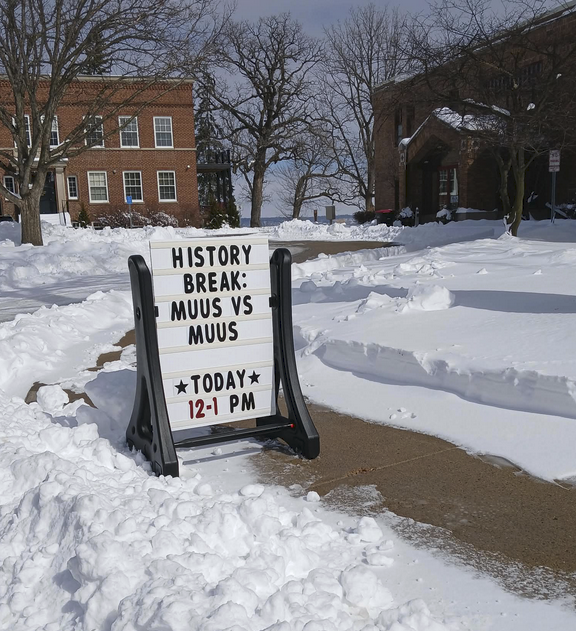
A great presentation yesterday at the Goodhue County Historical Society by Kari Lie Dorer (yes, THAT Dorer, of Richard J. Dorer Memorial Hardwood State Forest, she married into the family!) from St. Olaf, Professor of Norwegian; King Olav V Chair in Scandinavian-American Studies; Department Chair of Norwegian; Director of Nordic Studies. She has a really interesting and varied background, from years at Concordia language camp (which looks really interesting!), and even Sami studies.
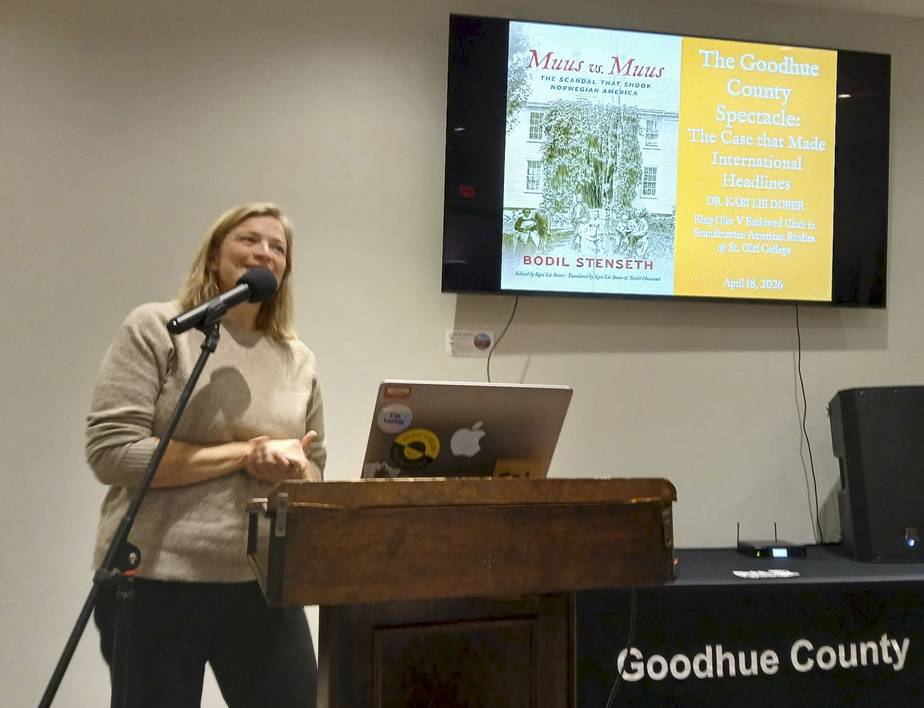
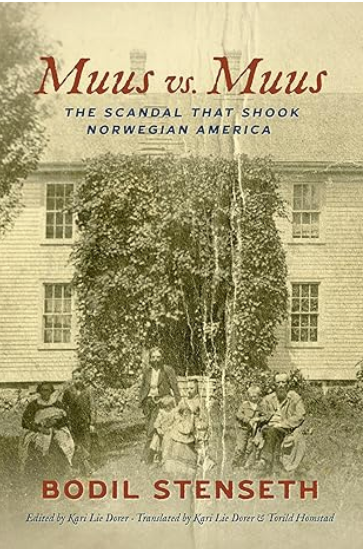
The topic was Muus vs. Muus: The Scandal that Shook Norwegian America (available from Minnesota Historical Society), written by Bodil Stenseth and edited by Kari Lie Dorer and translated by Dorer and Torild Homstad.
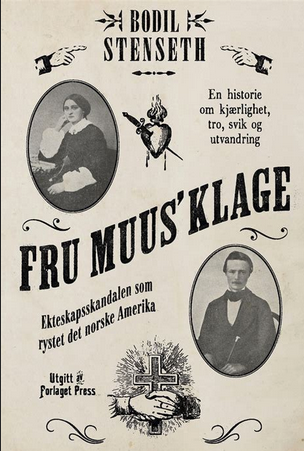
This book was first published in Norway, in Norwegian, by Bodil Stenseth as Fru Muus’ klage : Ekteskapsskandalen som rystet det norske Amerika. Kari Lie Dorer did extensive research here on this side of the Atlantic in the heart of Norwegian Synod land, many first hand accounts in letters, and so many newspaper articles, she’s also spoken with some Muus relatives, and she added a lot of material to the book. It’s published only in Norwegian, and it’s available online:
I’d learned of this Muus vs. Muus book when it came out not that long ago, showed up on my feed (!) so I got a copy, and had read about the Muus mess decades ago in Orm Overland’s “The Western Home,” with millions of details of Norwegian immigrants to our region (Overland? I believe he’s no relation, but ??):

Oline Muus seemed a gutsy, patient, persistent, and driven woman who stood up for herself in a time when that just wasn’t done — in the preface, writer Bodil Stenseth characterizes it as “rebellion against her husband” which for me skews my view of her perception. She filed in court to gain access to an inheritance from her father, which BJ Muus had appropriated, after trying to resolve it through the church with zero success (that’s how traditionally things were done then). It took a long, long time, with many church meetings as the court case(s) were ongoing. In church meetings, women were typically not allowed, and for sure not allowed to speak. She prevailed, at significant cost to her reputation, BJ’s too, their standing in the community, both were outcasts in the community. Ultimately, she got a divorce, and custody of their children still at home was granted to BJ, although they went to live with another relative.
I cannot imagine living in that time and going through such abject social dismissal and fighting so hard for basic recognition of her rights, which in Norwegian and U.S. culture were not rights then. The tension between Norwegian synod “law” and U.S. law was a major factor in the rancor, and news of their literal trials and tribulations was covered not just in Norwegian papers in the U.S. but in Norway too.
This was well worth the price of admission — SNORT! Thanks, Goodhue County Historical Society!
Annual PPSA Hearing, or is it EIP?
March 17th, 2026

We had a hearing, and here’s the Report:
2024 Summary Report_– Docket 24-18
What does it mean that the Power Plant Siting Act no longer exists???
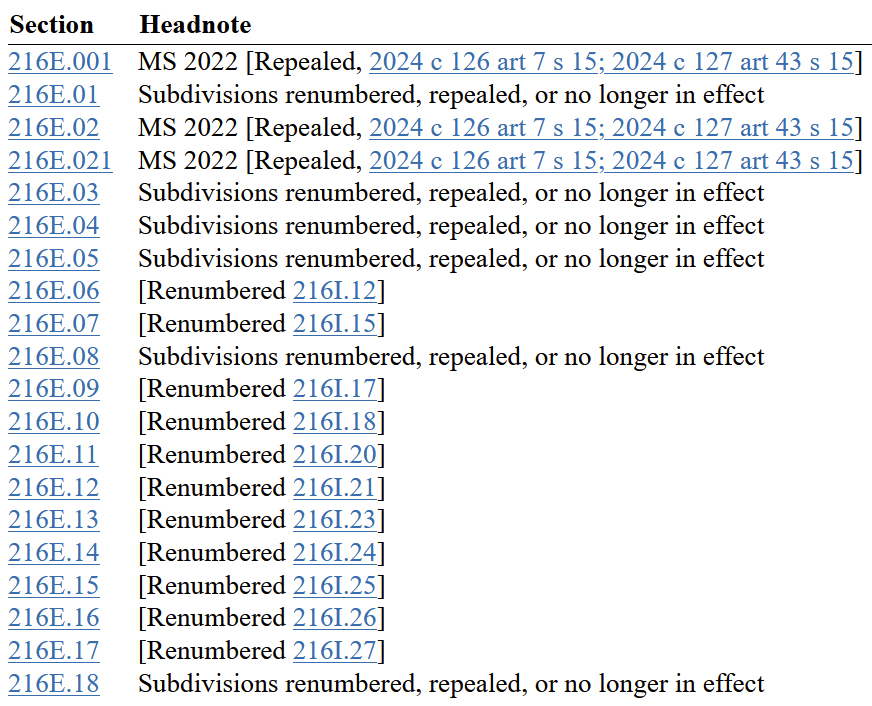
Whatever… we had a hearing, and here’s the report, just filed (note the part that there are no rules for siting and routing, the rules of Minn. R. 7850 were repealed, all but THREE RULES!!!
Here are the reports from the last 26 years — often they hold it on my birthday, but not this year. You can see that year after year, it’s the same issues — Public Participation, Notice, Intervenor Compensation, etc., ad nauseum…
2006 Report to PUC – Docket 06-1733
2007 Report to PUC – Docket 07-1579
2008 Report to PUC – Docket 08-1426
2009 Report to PUC – Docket 09-1351
2010 Report to PUC – Docket 10-222
2011 Report to PUC – Docket 11-324
2012 Report to PUC – Docket 12-360
2013 Report to PUC – Docket 13-965
2014 Summary Report– Docket 14-887
2015 Summary Report – Docket 15-785
2017 Summary Report – Docket 17-18
2018 Summary Report – Docket 18-18
2019 Summary Report_Docket 19-18
2020 Summary Report – Docket 20-18
2021 Summary Report – Docket 21-18
PJM’s 2025 State of the Market released
March 12th, 2026

PJM’s State of the Market report for 2025 is out. MISO’s didn’t come out until JUNE last year! The approach in MISO‘s MTEP2024 regarding data centers is markedly, MARKETedly, different!
MISO did put out a “2026 RELIABILITY IMPERATIVE REPORT” with at least one point worth noting:
Approximately 130 GW of projects — nearly half of the queue — have been withdrawn, in part due to changes to tax credits under One Big Beautiful Bill Act.
2026 RELIABILITY IMPERATIVE REPORT, p. 11.
Anyway, back to PJM’s State of the Market report for 2025, starting with Volume 1:
PJM has some interesting statements on data centers. I hear a lot of folks saying the skyrocketing electric rates are due to data centers, but in the Midwest that’s not happening yet. We’re paying for the BILLIONS in transmission, but data centers are lurking. Here’s what PJM has to say:
Here’s the PJM proposal: Monitoring Analytics, LLC, Reliability Backstop Auction Design Proposal – V2 . In short, “the data centers must bear their own costs and risks and not shift them to other customers, and that the data centers must bring their own new generation in any one of a number of forms or be fully curtailable.” Intro, p. 3.
Oh, and about those “benefit/cost” or “cost-benefit” analysis in MISO that I’ve been going on about because likely costs have risen sufficiently to throw the “benefit/cost” analysis completely out of whack and how many MISO transmission projects would no longer be economically sound… MISO isn’t the only one concerned about cost increases! All transmission projects should require a MISO Tariff FF Variance Analysis, which looking at Northland Reliability Project’s public releases thus far, the MISO Variance Analysis Information Letter – 2026 03 06 process isn’t stringent enough, well, anyway, here’s the PJM 2025 State of the Market released
March 12th, 2026 take, from page 94 of the State of the Market report for 2025:


Yet in response to Comments I’d submitted as an individual in the Tranche 2.1 Power on Midwest docket, CN-25-117, the applicants state:

Once more with feeling, “When actual costs exceed estimated costs, the benefit/cost analysis is effectively meaningless…” eh, PJM??? All the MISO Tranche 2.1 projects rely on the MISO benefit/cost analysis for MISO approval and Commission approval. They don’t do an independent analysis to determine whether the project makes any sense. This is not rocket science, but it is so very clear why they don’t want to look at those cost increases!
Here’s the rest of the PJM State of the Market report, and it’s a LOT:
Volume II
Volume II (22MB PDF) contains detailed analysis and results.
Preface (45KB PDF)
Table of Contents (84KB PDF)
Section 1 – Introduction (2MB PDF)
Section 2 – Recommendations (332KB PDF)
Section 3 – Energy Market (5MB PDF)
Section 4 – Energy Uplift (268KB PDF)
Section 5 – Capacity Market (3MB PDF)
Section 6 – Demand Response (1MB PDF)
Section 7 – Net Revenue (1MB PDF)
Section 8 – Environmental and Renewable Energy Regulations (1MB PDF)
Section 9 – Interchange Transactions (1MB PDF)
Section 10 – Ancillary Service Markets (3MB PDF)
Section 11 – Congestion and Marginal Losses (4MB PDF)
Section 12 – Generation and Transmission Planning (2MB PDF)
Section 13 – Financial Transmission and Auction Revenue Rights (1MB PDF)
Onward with ANOTHER xmsn line
March 12th, 2026

The Iron Range – St. Louis County – Arrowhead 345kV transmission project is back into gear after a month long pause. This one is PUC Dockets CN-25-111 and TL-25-112, both running together in a joint proceeding (more on that later). Iron Range – St. Louis County – Arrowhead is the fourth BIG project I’m dealing with, and I’m really grateful for this delay!! I guess I’ll have to revert to my “Overload” moniker!

There’s also a webex meeting on Thursday, April 9, for more details on how to participate, see the full notice below:

Comments are due Tuesday, April 23, so there’s some time, but don’t forget!

Here’s the full notice:
You can find the application on Legalectric here:
Iron Range to Arrowhead Xmsn App Filed
Here’s a utility presentation from county meetings:
ISA TRANSMISSION PROJECT APPLICATION
Minnesota PUC Process?!?!
March 11th, 2026
Minnesota Public Utilities Commission process for Certificate of Need and Routing? Good luck with that.
Ja, it’s a little fuzzy, and that’s how PUC process is! I’m drawing up a flowchart for my peeps all over Minnesota in these transmission dockets, and gotta love the internet — this turned up:
What do they have to say about “informal process” for Certificate of Need? Well, from our friends at Taft, the Modern Law Firm, nothing new, but here’s what they’re telling their clients (says “Attorney-Client Privilege” but here it is in the interwebs):

MEMORANDUM 2025-Permitting-Book, p. 20-21. And here’s what Xcel Energy has to say:
And we know all about that pesky Minn. R. 7829.1200 — that is THE rule about “informal process,” with its three points to determine whether it’s appropriate — there is no other:

And Minn. R. 7829.2500 — The Commission must make a decision to utilize the informal process, the informal process governed by Minn. R. 7829.2500, mindful that it must meet the criteria in that rule.

On to the Public Utilities Commission — what does the PUC have to say about “informal process?” MOST?!?! STREAMLINES?!?!? For the first long string of 765kV transmission from South Dakota into the middle of Wisconsin… INFORMAL PROCESS? In what world is this reasonable? Over my dead polar bear…

And Contested Case?


So either way it takes a year. Sounds to me like they don’t want to do the work of a contested case, and/or don’t want the “more rigorous and detailed examination.”
Here’s the “Gopher to Badger” notion of process:

Here’s the utility version of process from the Maple River-Cuyuna transmission project, PUC Docket CN-25-109 (filed yesterday: Supplemental Comments – Maple River to Cuyuna 345kV)

Notice how it goes from “Commission reviews application for completeness” to “Commission issues Certificate of Need decision” in that flowchart and nothing in between? Hmmmm… what’s missing?
THE PUBLIC!!!
For example, missing are these opportunities for the public to weigh in – insert these points in their perception of process:
- Public Comments on Notice Plan
- Public Comments on Completeness
- Public Hearing and Comments on Project
- Intervention
- Evidentiary Hearing
- Briefing
- ALJ Recommendation
- Exceptions to ALJ Recommendaiton
- Staff Briefing Papers
- Commission Agenda Mtg
- Oral Argument if requested and granted
- Commission Decision and written Order after Agenda Mtg
- Motion for Reconsideration
- Agenda Mtg on Reconsideration (usually denied)
- Appeal direct to Minnesota Court of Appeals
- Briefing, maybe Oral Argument
- Decision – usually dismissed/denied/tossed out
The Power on Midwest is a little better — they even mention “INTERVENTION!”

But I’m still looking for that PUC flowchart.
“Informal process” for these big transmission projects? I don’t think so. Particularly when you’ve got toadies lining up pushing for “informal process.” Again, if it’s the same length of time, no “delay,” why? It’s got to be that they don’t want that “more rigorous and detailed examination.” Ja, so?!?!?!
Right… once more with feeling… REMEMBER THE PUC’S PUBLIC PARTICIPATION MANDATE:
MINN. STAT. 216I.16
THE PUBLIC!!!
… AAAAARGH… they’ll have to pry my computer out of my cold dead hands!