Deja vu! Electricity: Winners and Losers
August 1st, 2005
You may remember reading about this on the Bly Blog, and here it is again, Electricity: Winners and Losers, but this time the gathering was in Lindstrom, Minnesota.
Jamie Anderson, our hostess with the mostess, runs Many Voices Bookseller and Coffeeshop, and it’s “info central” in the area, hosting events like this, the Wild River Audubon Society, and trying to fill those needs in a small rural/exurban community, well, you have to be out here to understand…
We were there to see Green Green Water and talk about energy. Now’s the time to check it out, right HERE! It’s the story of the impacts of our energy choices, and an urgent call to take responsibility for electrical generation — we can do it differently.
This “Electricity: Winners and Losers” was put together by Just Energy and was sponsored by Women’s Environmental Institute, Many Voices Bookseller and Coffeehouse, and Minnesotans for an Energy-Efficient Economy, and Ken Bradley of Just Energy at ME3 presented their film clip of Green Green River.
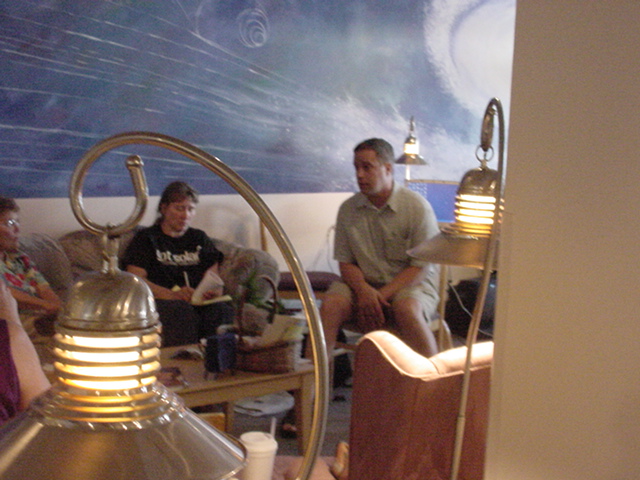
Also present were Women’s Environmental Institute staff members Rep. Karen Clark and Jacqueline Zita, and a room full of area folks, real people who are affected by the changes this legislative session.

Yes, I went there on a mission — first, to make sure everyone in that room knew there was no electricity crisis. For that, just look at the CapX2020 report (the 6,000MW claimed need in the chart on p. 5, and the 16,712MW in line for generation interconnection shown on p. 7, do the math, we’re fine). The more complicated part was about the Chisago line, which is going to go right through downtown Lindstrom. Years back, the locals had tanked the NSP Chisago Transmission Line by showing that it wasn’t needed to serve Minnesota load, that was back in the days where it was “Minnesota” need that mattered. Now, as of the last legislative session’s Transmission Omnibus Bill from Hell, it’s REGIONAL need, and it’s going to be pert near impossible to disprove that need, it’s just too broad. Shellene Johnson, President of Concerned River Valley Citizens, did a great briefing of the status of the project and some of the problems she anticipates, and she knows that the changes this session will hurt her community, those living under the line.
All of you at home, get out your pens and Thank You Notes — We have Bill Grant of the Izaak Walton League, Midwest Office, and George Crocker of North American Water Office to thank for their work as the primary ones who trotted this “good deal” around and sold it to legislators. That’s what made this change happen.
Everyone in that room in Many Voices in Lindstrom needed to know that Xcel regularly promises to submit its application, and has already obtained approval from the PUC of its Notice Plan. This legislative change will have an impact on them all personally. So, get ready, roll up your sleeves — we’ll have a lot of work to do.
Here are the specific legislative additions that make “regional” need the criteria — from the Transmission Omnibus Bill from Hell SF1368:
6.35 or, in the case of a high-voltage transmission line, the
6.36 relationship of the proposed line to regional energy needs, as
7.1 presented in the transmission plan submitted under section
7.2 216B.2425;
and
7.19 (9) with respect to a high-voltage transmission line, the
7.20 benefits of enhanced regional reliability, access, or
7.21 deliverability to the extent these factors improve the
7.22 robustness of the transmission system or lower costs for
7.23 electric consumers in Minnesota;
and
12.28 Subdivision 1. [TARIFF ESTABLISHMENT.] A tariff shall be
12.29 established to optimize local, regional, and state benefits from
12.30 wind energy development, and to facilitate widespread
12.31 development of community-based wind energy projects throughout
12.32 Minnesota.
Regional need. Great. Thanks George… Thanks Bill…
Arrowhead Eminent Domain — Transmission Happens!
July 11th, 2005
Eminent Domain has been in the news thanks to the Supremes decision in Kelo, et al. v. City of New London. Compare that with the Minnesota Supreme Court’s Walser case, about public purpose. Now I’m not done wading through Kelo yet, but it seems to me that Kelo plays out no differently than eminent domain as currently operating in Minnesota, that where there’s an umbrella of a deliberate plan by a governmental unit that is “essentially” public purpose, distinct from public use, they can take land and hand it over to a private developer for a private use. The burden is on those whose land is being condemned to prove up an illegitimate purpose, or that it benefits “a particular class of identifiable individuals” (like Mesaba’s Tom Micheletti and wife??).
The only defining clue I see in the decision is the court’s emphasis on this quote from Hawaii Housing Authority v. Midkiff, 467 U.S. 229, 242 (1984):
When the legislature’s purpose is legitimate and its means are not irrational, our cases make clear that empirical debates over the wisdom of takings — no less than debates over the wisdom of other knds of socioeconomic legislation — are not to be carried out in the federal courts.
So in a case, oh, … say, like Mesaba, where it’s an illegitimate purpose and the means are irrational, sounds like the door is wide open!
Another important decision in Minnesota is the Siegel case, holding that Plaintiffs had a valid claim (which they’d have to prove up) and could proceed and enter their evidence that governmental actions that diminished the value and limited their use of their property constitutes a taking:
Although the pleadings state no claim of total worthlessness, the pleadings permit proof that the city’s and the MCDA’s actions left appellants without economically viable rental and development uses for their property and, therefore, that appellants have a right to recovery under the Takings Clause.
On the subject of eminent domain, this last week, I got a big box of exhibits from Minnesota Power. It’s the documentation requested in the Arrowhead PUC case where Minnesota Power wants to transfer ownership to ATC, and a large part of it was the easement agreements and the Condemnation Orders. It was the Condemnation Orders that were hard to take, because they revealed that the landowners did not avail themselves of the challenges open to them.
There are only a few valid challenges to a condemnation proceeding, which is governed by Minn. Stat. ch. 117, and they focus on the authority of the party taking, and a very narrow look at the “need” and public purpose for the taking. A Certificate of Need is per se “need” for the line, but there was no Certificate of Need for the Arrowhead line because the line fell just under the threshold where one is required. As a part of the EQB proceeding, Intervenors tried to raise the need issue, but after the Chisago project, the EQB stayed far away. There has been no governmental need determination in Minnesota for the Arrowhead Transmission Line. “Need” for the line is in question.
In this case, there was another opening for review, a constitutional challenge that landowners did not receive notice that the Arrowhead Exemption from the Power Plant Siting Act would eliminate their rights under the “Buy the Farm” provision — that because the landowners were not notified of the meaning and effect of the exemption, their waiver of participation was not valid. I’d raised this at the Appellate Court in the Arrowhead appeal, C4-01-1022, and had submitted the transcripts to show this WAS raised before the Board! None of the landowners knew about “Buy the Farm” or that if the project were exempted, “Buy the Farm” would not apply. But during the oral argument, the panel noted a couple of times that this argument had to be raised in the condemnation court.
As we can see in the eminent domain cases above, constructive takings happen when insufficient notice is given and when property value and land rights disappear when governments take action, a need determination must be made and there must be a public purpose for the taking, and landowners must receive proper notice of their rights and whether rights may be lost as a consequence of governmental action. None of these legitimate challenges to condemnation were made in the Arrowhead condemnation proceedings. Instead, the court notes that those defending against condemnation just wanted the condemnation decision delayed until PUC decided on the NAWO and SOUL Complaint to revoke the EQB’s exemption.
Here’s what the court thought of that — the incredulous “look over the top of its glasses” is audible — below is an example of the Arrowhead Orders, one of many, but they’re all identical, it’s broken down into Parts I and II because it’s “too large” to upload, and Part II Memo is the one with the court’s reasoning:
Part I Download filePart II Memo Download file
Here’s the short version of what the District Court said:
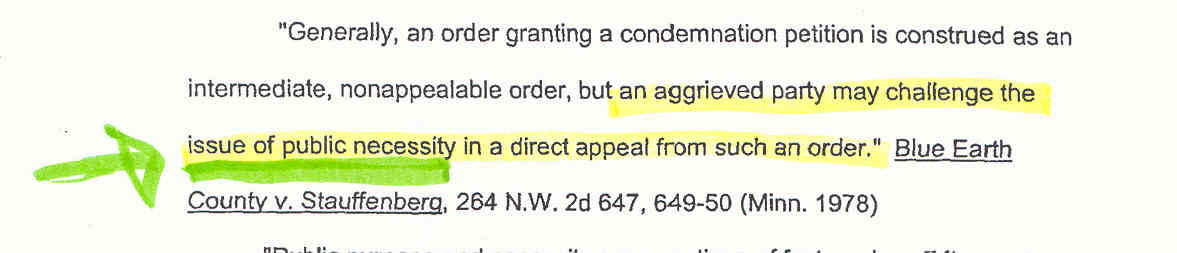
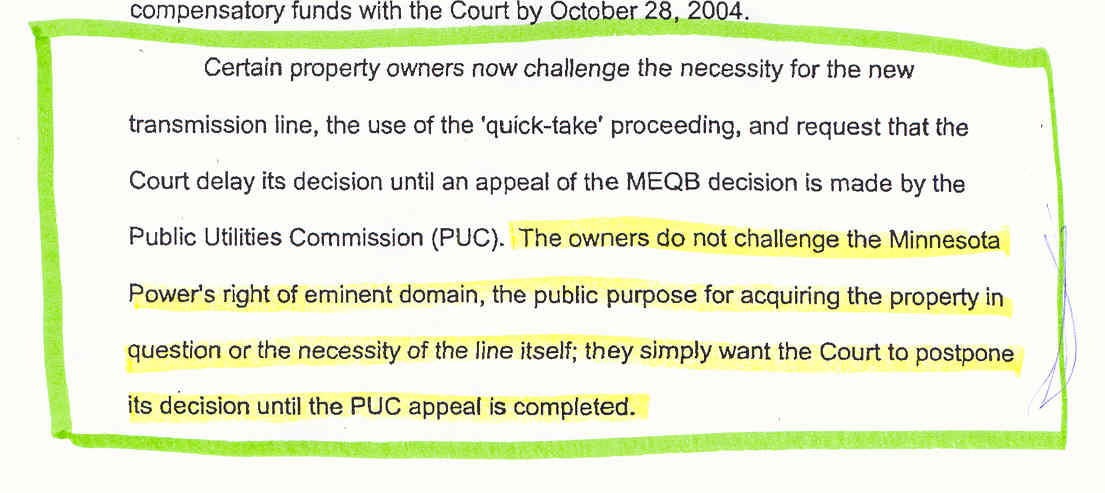
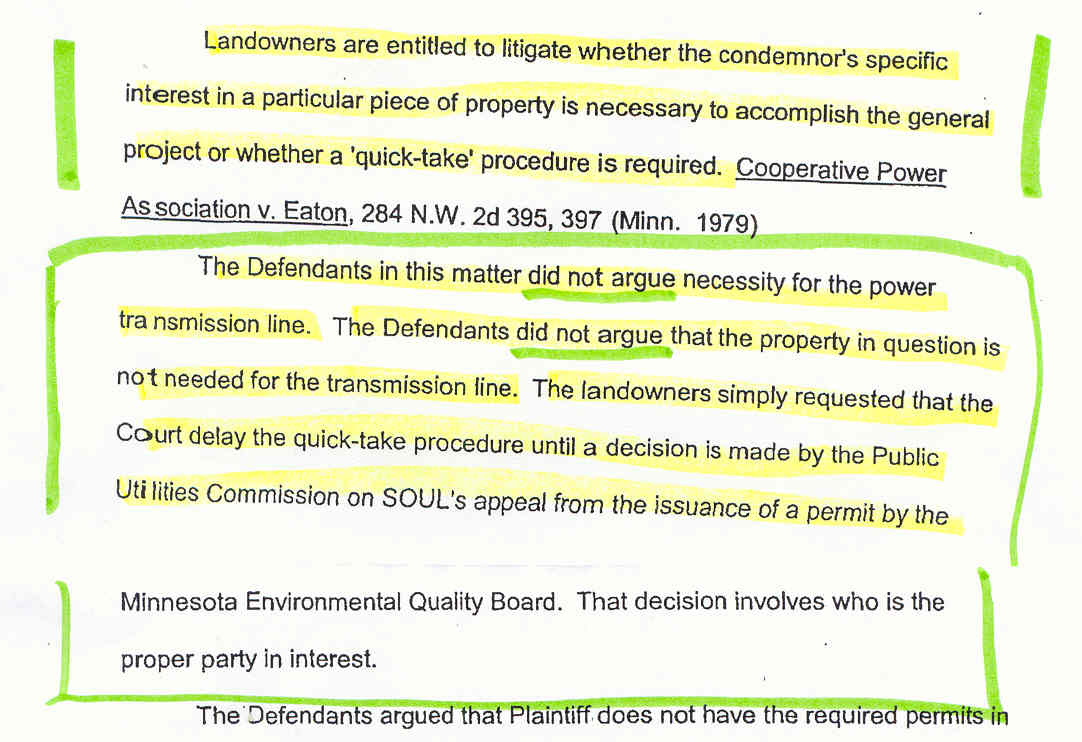
NAWO and SOUL filed a Complaint with the PUC to revoke the EQB’s exemption — asked one agency to overturn the decision of another! Here’s a copy of the PUC Order dismissing that Complaint and telling NAWO and SOUL to bring the request to revoke the EQB decision to the EQB.
They Arrowhead landowners were at the horse track, but ignored the ponies and bet all they had on a rescue greyhound that wasn’t even in the gate! The quick-take condemnation goes forward.
Sigh… Transmission happens!
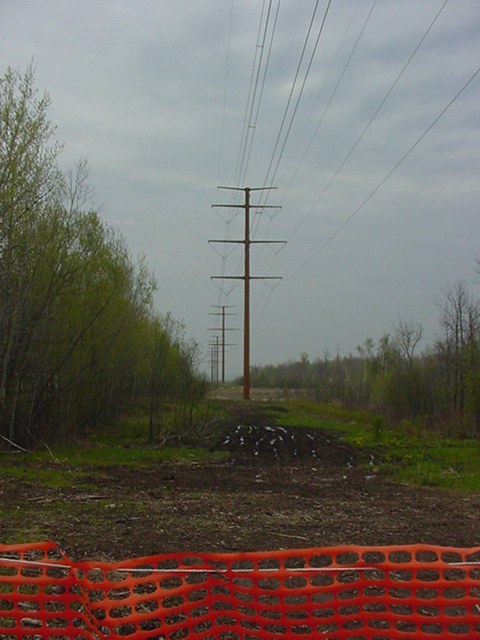
TRANSMISSION FOR DUMMIES #2: IT’S NOT FOR WIND!
June 25th, 2005

New coal is being built
Transmission ?for wind? from Buffalo Ridge on the 345kV line is at best only 11% of its capacity
Wind energy from Buff Ridge to the metro takes the scenic route through Manitoba and much gets lost along the way!
Remember Michael Noble’s dream as set out in the Sierra Club newsletter?
Instead of planning transmission to serve new coal plants, let’s begin discussing a project that combines the following: renewable energy from wind farms and bio-gas plants, a new high-capacity border-to-border powerline across southern Minnesota and northern Iowa, and as many locally owned energy projects as can be organized along the route. Let’s dub this project Next Generation, a $5 billion project completed within five years. What if this Next Generation project offset the need for two or more coal plants? What if this Next Generation project brought wealth and opportunity to 20+ communities? The stage is already being set.
The stage is indeed set, with great acting, scripted lines on cue. Who does a new high-capacity border-to-border powerline across southern Minnesota and northern Iowa serve? It’s not binary, as we say in transmission, it isn’t either coal or wind, it’s whatever generation is there in the MISO queue waiting for interconnection and can connect. Wind can’t connect to the 354kV line, it’s cost prohibitive and a technical nightmare, and that’s why a web of 34.5kV collector lines is being woven into the lower voltage lines. What type of generation is in large volumes to utilize 345kV lines and is waiting for interconnection to transmission? COAL! And lots of it!
NEW COAL IS BEING BUILT
Here’s the list of proposed coal plants and wind projects listed in the Xcel?s 2001 SW Minnesota study, p. 29, the ones in bold are ones on the way, moving forward to construction:
Entity Approx. MW
GRE (ND Lignite) 500
MDU/Westmoreland (ND Lignite) 500
WAPA Wind (North Dakota) 300
WAPA Wind (South Dakota) 300
WAPA Dakotas wind/Thermal not yet determined, likely thousands of MW
OTP Big Stone (coal) 600 (federal EIS hearing last week)
Unidentified IPP/Study by MidAmerican (SW Iowa) 700-875
SMMPA/Redwood Falls Municipal (diesel) 7
MidAmerican (coal?Council Bluffs, Iowa) 790 (under construction)
MidAmerican (gas?Desmoines) 540
MRES (gas?Watertown, SD) 150
WAPA/Basin Electric NDEX increase 100
Unidentified IPP/study by Alliant (Nobles Co) 340
And don’t forget about that coal plant just south of Adams on the Iowa side of the border that I hear is on again, off again, on again…
According to Xcel’s study, there’s 2,390 MW in the area specifically identified as coal that Xcel anticipates, 1,390MW in the permitting process, 790MW Mid-American plant of that under construction right now. From Xcel’s list, what’s being built and coming on line is coal.
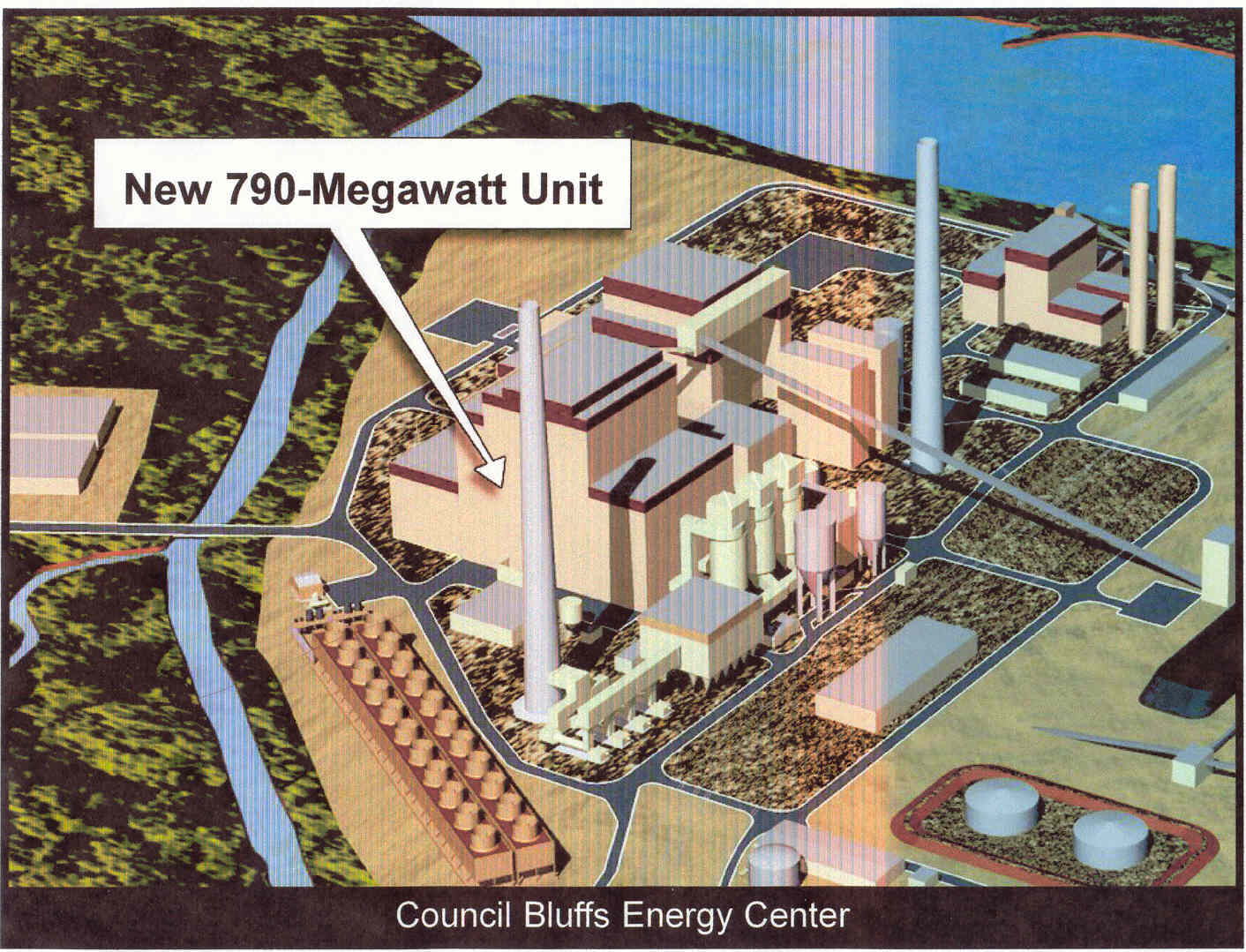
Yet the resulting major transmission line from this SW Minnesota study was the 345kV line, from Sioux Falls (Split Rock Substation) to Lakefield Junction, and a 161kV line extending east from Lakefield Junction to Fox Lake. It’s now permitted by the PUC and EQB and ready to build, look at the maps to see the eastward creep of transmission…
Split Rock to Lakefield Junction 345kv transmission line
— Map – western half
— Map – eastern halfLakefield Jct. to Fox Lake 161kV transmission line
— Map
TRANSMISSION “FOR WIND” FROM BUFFALO RIDGE ON THE 345kV LINE IS AT BEST ONLY 11% OF ITS CAPACITY
Let?s look at the easier part, what this line doesn?t do. Although some say the line is necessary for wind, it doesn?t serve wind. That is demonstrated in the powerflows, Xcel?s Rick Gonzalez testified about this under my cross-examination during the SW Minnesota 345kV proceeding. The 345kV line goes from Sioux Falls (Split Rock substation) to Lakefield Junction, and there is only one entry point in between where wind energy can get on the 345kV line, at the Nobles substation.
The capacity of the line is 2068-2085MVA. Here’s the chart showing the maximum capacity of a bundled 345kV 954kcmil ACSS line. View image
Xcel?s powerflows show the 345kV line, the Split Rock, Nobles and Lakefield Junction substations, and the power going into the 345kV line at the Nobles Substation. Here they are, see for yourself.
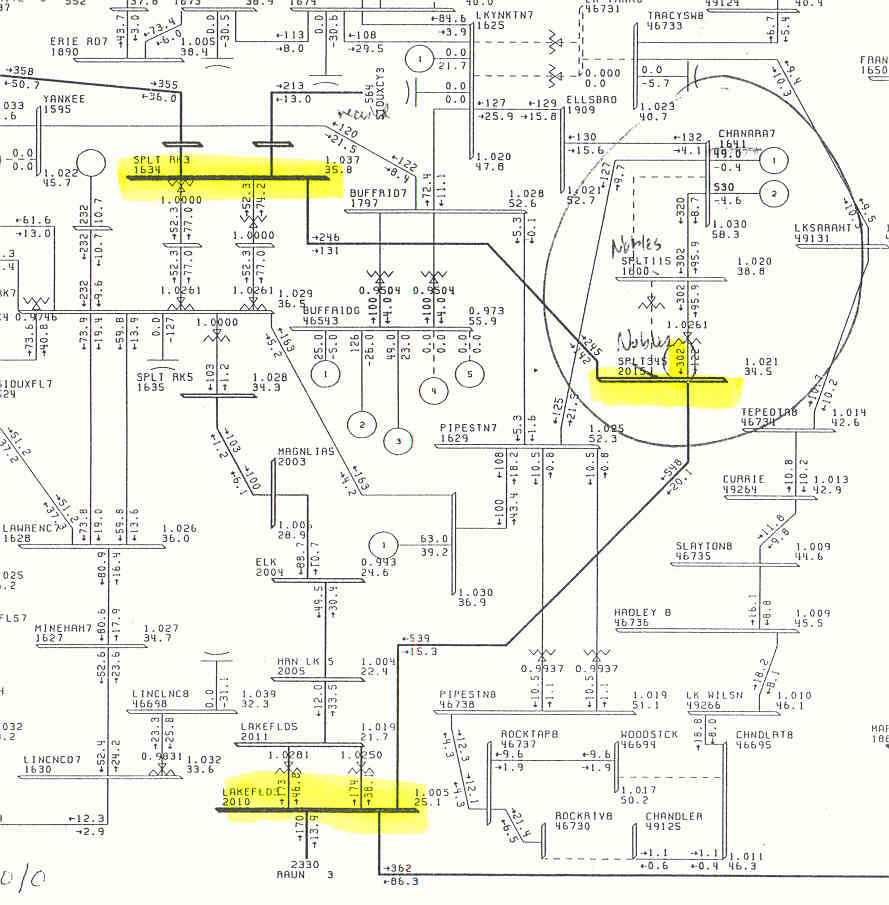
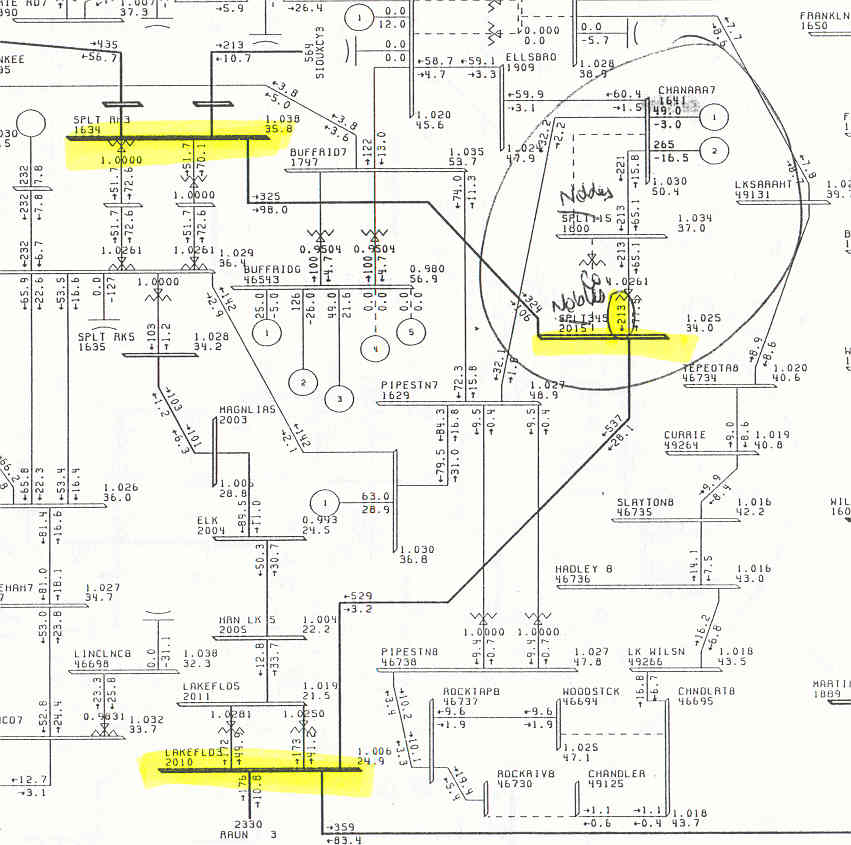
First, there are two powerflow charts, because it was uncertain whether the wind development would be primarily in the south part of Buffalo Ridge or in both south and north. Xcel looked at both, the 100/0 representing all development in the south, and the 50/50 representing a split between south and north. What you will see in these powerflows is that in either the 100/0 scenario (100% of wind to south, none in north) or in the 50/50 scenario (development split between south and north), no more than 15% of the capacity of that line is used by wind off of Buffalo Ridge. In the 100/0 scenario, the rosiest of pictures, 302MW of energy comes off of Buffalo Ridge into the 345kV line. (upload powerflow 100/0). That?s 302 of the 2085 capacity. But the generation development is split between north and south, the 50/50 scenario is reality, so it’s a 213 to 2085 ratio of energy from Buffalo Ridge to the capacity of the line, 213/2085.
Here?s the 100/0 powerflow, below, the scenario that provides more wind energy outlet onto the 345kV line, but that is not representative of the location of wind development, therefore not valid. The substations are highlighted, and the one in the middle is Nobles. The ?302? at Nobles represents the MW coming off of Buffalo Ridge into the 345kV line that has a capacity of 2085MVA. Click here for a full size 100/0 that’s below.View image”
In the 50/50 scenario, below, only 213MW of energy comes off of Buffalo Ridge into the 345kV line, 213 out of 2085MVA. Click here for the full size version of chart below. View image
The 345kV line recently granted a site certificate by the EQB is not even remotely for “Buffalo Ridge wind” ? Buffalo Ridge wind is only a very small part. Then what?s it for? Well, we know there?s plenty of coal coming on line. Transmission capacity goes to those who are up and running with reservations for its use.
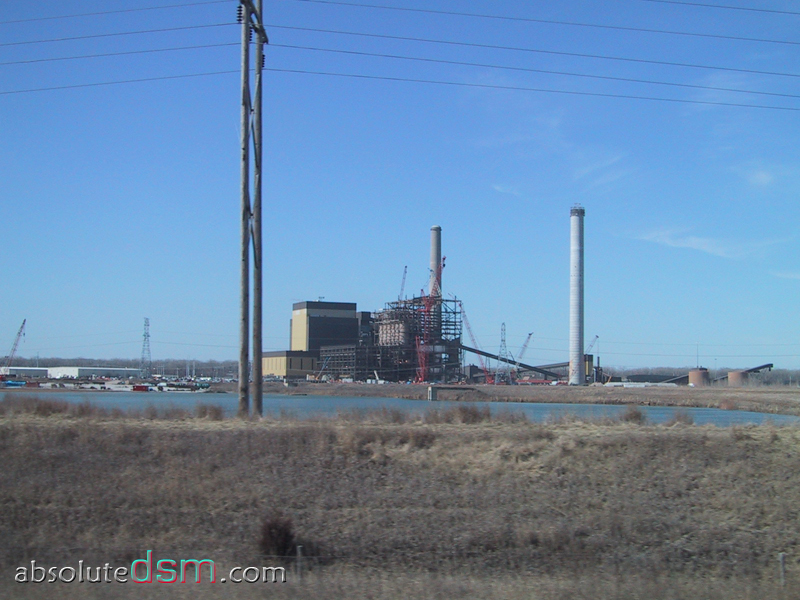
Deadline for public comments on EIS scoping for the Big Stone power plant is midnight, July 27. Send input to NEPA Document Manager, Big Stone II EIS (A7400), Western Area Power Administration, P.O. Box 281213, Lakewood, CO 80228-8213.
The Big Stone II is expected to be on line in 2011.
WIND ENERGY FROM BUFF RIDGE TO THE METRO TAKES THE SCENIC ROUTE THROUGH MANITOBA AND MUCH GETS LOST ALONG THE WAY!
*** A discovery in the ongoing Buffalo Ridge Ongoing Incremental Outlet Study, reflected in the modeling, is that the Buffalo Ridge wind energy, because there is not sufficient outlet capacity from Buffalo Ridge, is taking the scenic route to the metro area via Dorsey, Manitoba, then the Forbes substation in Minnesota, down the 500kV line to the Chisago County substation and then, after a circuitous 800 or so mile trip, to the metro area. Here’s a piece of the MAPP map, which shows only transmission lines 115kV and above and substations:
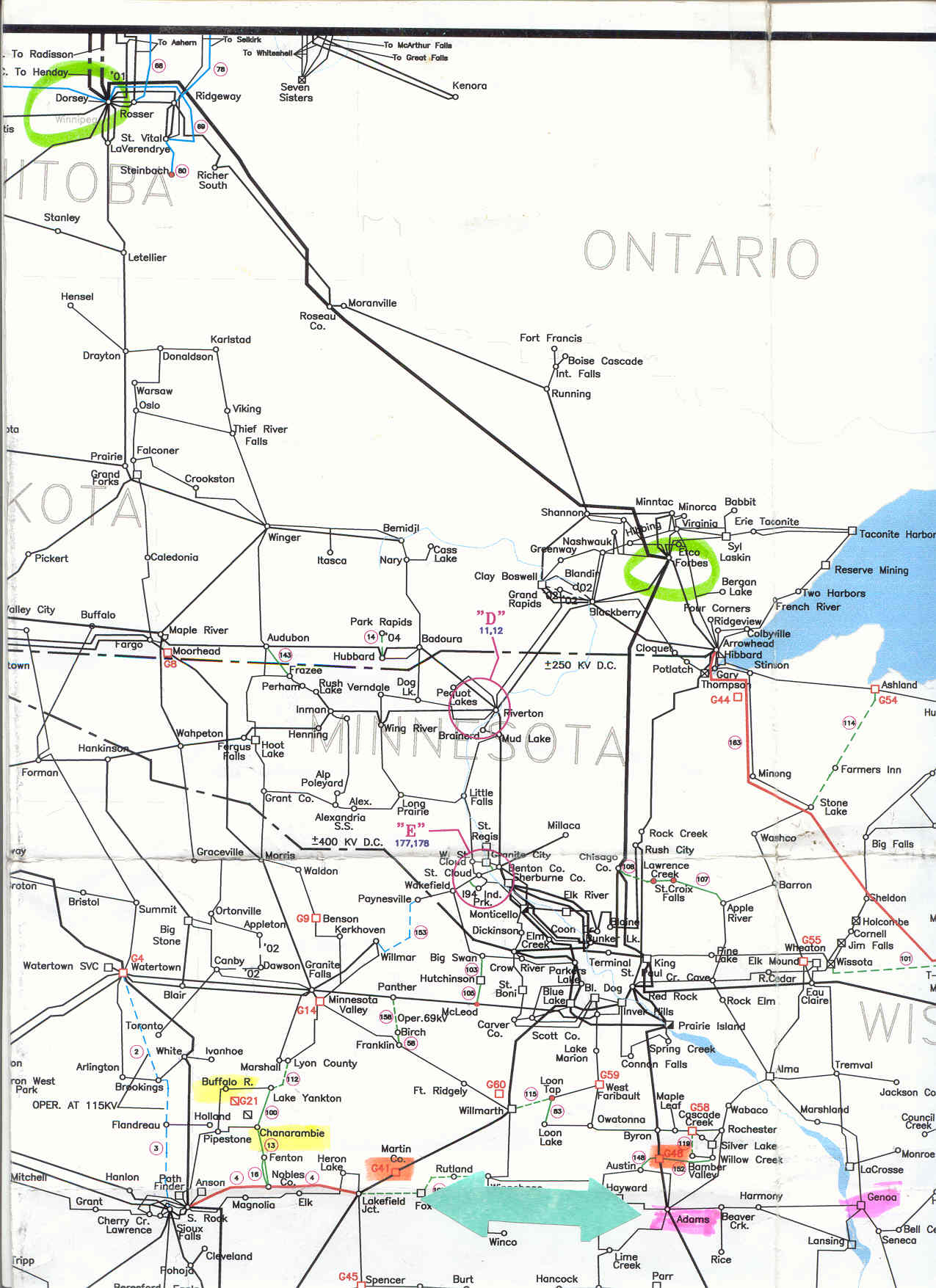
This is the scenic route that some Buffalo Ridge wind energy is taking. It goes from the yellow highlighted substations in the lower left, that’s the Buffalo Ridge and Chanarambie subs on Buffalo Ridge, from there up to the green circle in the far upper left, the Dorsey sub, then down to the right to the other green circle, the Forbes sub, and then down to the metro. How’s that for the long way around?
Potential ways of dealing with this including adding capacitors in Manitoba, increasing the limits on the line so that the increase won’t put it in the danger zone, or, lastly, adding/extending the 345kV line eastward from Buffalo Ridge.
Keep in mind that all of these scenarios and numbers are computer modeling, which is dependent on the base case, what assumptions are made, and this study is more public that the 345kV information, and I think it would be easier to get the specific modeling assumptions than it was in the earlier proceeding.
Line Losses – more on this in a future TRANSMISSION FOR DUMMIES, but in a nutshell, line losses are the energy that is lost by transmitting electricity over lines over long distances, really, over any distance, but the longer the distance, the greater the line loss. For the purposes of the SW Minnesota proceeding, a 30% line loss was assumed (p. 20). Here’s the question. If line losses from Buffalo Ridge to load were presumed to be 30%, what are the line losses associated with a scenic trip through Manitoba, over to Forbes, about 3 times the distance anticipated?
Let’s do some abstract thinking here. The Renewable Energy Standard (HF35) was a mandated stepped increase to 20% generation by renewable sources by 2020. A commonly held conservation goal is 20%. Line loss for Buffalo Ridge wind generation is presumed to be 30%. Wind generation has an inherently low capacity factor because the wind is varialbe, and Waverly Light & Power’s NEG Micon wind turbine, a relatively high producer, has a 36% capacity factor.
Thought for the day: Couldn’t we integrate wind energy, which has low capacity factor, into the mix more effectively by conserving renewable energy by siting it close to load to eliminate or reduce line losses? 30% line losses of a 36% capacity factor generating source doesn’t leave much for use.
FYI, here’s the prefiled testimony, much of it about calculation of line losses, of my expert witness, Dr. Art Hughes, Ph.D.
Xcel SW Minnesota transmission proceedings documents
Here’s the EQB Docket for the 345kV line from Sioux Falls (Split Rock)to Lakefield Jct. and a 115kV line in Xcel’s SW Minnesota plan.
Here’s the EQB Docket for the 161kV line from Lakefield Jct. to Fox Lake in Xcel’s SW Minnesota Plan.
Here’s the PUC docket on Xcel’s SW Minnesota transmission lines. This is the ME3 website for SW Transmission, so scroll down to the PUC section.
Next up – TRANSMISSION FOR DUMMIES #3, which will include the history of this 345kV line across southern Minnesota, from the WRAO study in 1998, the Lignite Vision 21 study in 2001, ATC’s 2004 (and earlier versions too) 10 Year Plan, MTEP 03, and CapX2020, all working toward the same goal. And after that, everything you ever wanted to know about line losses.
Transmission, Transmission, and … and… golf???
May 7th, 2005
Power and Energy is the theme of the week.
MAPP NM-SPG
Yesterday was the MAPP NM-SPG meeting, which is the Mid-America Power Pool Northern MAPP – Subregional Planning Group! MAPP is the transmission industry regional group that was formed a few years after the New York blackout to help share power between the utilities. The NM-SPG, like the other planning groups, determines need for transmission from a transmission engineering perspective, does the necessary electrical studies to evaluate load serving needs, voltage stability and reactive power problems, and generally insuring reliability of the transmission system. The MAPP site has some good resources, for example, if you really want to know how much power is ?needed? you can find that in MAPP?s Load and Capability Report.
Meetings are held at Great River Energy in Elk River. The main office is built next to their 250MW municipal waste burning plant. Years ago, this was the site of the state?s first nuclear plant, which my father helped design, a decade before he desiged the solar at the Minnesota Zoo!
Though some have called it ?watching paint dry,? I really get a charge out of these meetings. Maybe that?s because I miss the first half?caught the close of the discussion about the Transmission Planning meetings starting next week. Check the CapX2020 report for their rough plans/dreams. (see ROUGH transmission map, p. 28). Here?re the meeting dates:
Southeast Zone
May 12, 2005 7 p.m.
Rochester Public Utilities Community Room
4000 East River Road NE
Rochester, MN 55906
Last year at the SE Zone meeting, when I wanted to raise issues about interconnection of the Mesaba Project, was told to go to Duluth! (yes, Duluth is hell, but my friend Sadie lives there!). At the NE Zone meeting, there was no one from the Mesaba Project presenting, and the presenters who were there did not want to deal with Mesaba! I?m warning Michael Wadley that I expect the real poop from them that evening!
Here’s the EQB Transmission Map!
Back to the MAPP meeting — there were updates on the ?SW Wind Projects? from Xcel?s Pam Rasmussen; Air Lake-Empire from GRE?s Mike Steckelberg MSteckel@GREnergy.com and Plymouth-Maple Grove 115kV and Eastwood & Faribault 115kV lines.
I asked if they had any info about the Blooming Grove 325MW gas plant and they knew nothing about it. Randy Porter of Dahlen-Berg, which handles management of MMPA, and who worked on the Faribault plant, knew about the earlier plans for a 46MW. Although the line to the north along Hwy. 60 had recently been upgraded, there just isn?t 325MW of spare capacity, and the tap from Hwy. 60 down to Waseca that would connect the plant couldn?t handle that power without upgrades. Rick Free, the Transmission guy for Simon Industries, will have his hands full! It?s important for the Independent Power Producers (IPP?s) to show up at MAPP to keep the planners apprised of their pending projects.
Need a job? GRE is looking for a President and CEO!!!
PUC – Minnesota Power petition to allow ATC to own Arrowhead Line
From there, on to the PUC, for Oral Argument about the Minnesota Power petition to let American Transmission Company take over the Arrowhead Project, leaving MP as only ?construction management.? Right? The issue has been bouncing around between agencies after being raised by various parties for a while, and has settled in the PUC now that MP has filed this request.
PUC staff did a good job of analysis in the Staff Briefing Paper, calling MP lying sacks of.. er… ah… ?disingenuous,? yeah, that’s it. It?s impossible to tell from MP?s statements in the various venues who is doing what, who owns what, and what their relationship really is, and it’s been that way for years. ATC emphatically said it is not a party, and until Thursday?s meeting, had not participated in any way!
The argument was spirited with 12 seated at the table, five participants plus PUC staff and MP/ATC, continuing along the lines of the positions outlined in the Staff Briefing Paper. George Crocker, NAWO, has yet to explain his conflict of interest — on one hand this opposition to ATC, and on the other, a deal and promotion of the Transmission Omnibus Bill from Hell as ?a good deal.? This bill will change the law to allow ATC and TRANSLink companies to operate in Minnesota, just what he advocates against at the PUC. I asked him on the record to disclose his interest in that deal and explain his position, but he did not. The Attorney General’s RUD opposes this bill — I’m glad I’m not the only one who finds it problematic that we’re giving away state authority. May Crocker and Bill Grant of the Izaak Walton League have SF1368 and HF1344 tattooed on their foreheads to forever remind themselves and the world of their legacy…
World Organization for Landowner Freedom, the organization I represent, was the only party to raise ATC ownership at the Arrowhead EQB hearing in August of 2000, but the ALJ ruled it irrelevant. Then Judge Nickolai is now PUC Commissioner Nickolai, and I think now he finally gets it! What?s interesting is that he was ALJ for Arrowhead, he replaced Judge Reha, now Commissioner Reha, and she was ousted as ALJ in Arrowhead for her connection via mediation of the Chisago Project (the one with the side deals for Taylors Falls and St. Croix Falls). It?s possible those two will have to recuse themselves, and if that happens, then we lose the two Commissioners with hands on knowledge of transmission.
Bottom line ? it looks like the PUC will order a contested case. The Briefing Papers present options, and I prefer Option II(B), that orders specific issues to be addressed. It?s about time.
Commissioner Johnson had a good question for ATC: WHY DO YOU WANT THIS? It’s simple: Arrowhead makes no sense electrically or economically. It’s planned as a 600MVA line with an 800MVA limitation, which won’t generate enough revenue to justify the $450+ million cost. It makes a lot of sense if Mesaba ties in and the line expands to a typical 345kV capacity, like the 345kV in SW MN (2085 MVA). MN doesn’t want Arrowhead used for bulk power, but if ATC controls the line, then Minnesota won’t have jurisdiction, FERC will, and Minnesota probably can’t regulate it! Pretty simple! WATCH! And remember who promoted the legislation that lets this happen.
Girl Scouts – Advocacy for Girls
From then to Northfield for the Girl Scout Board Meeting where the big issue is the annual Golf Scramble, Monday, June 13, 2005 at The Legacy, in Faribault (directions/details — walking is allowed!). For more info, contact the Girl Scout Council of Cannon Valley at (507) 645-6603.
We had a very good discussion about the importance of advocacy for girls, focused on “what is lobbying” and what is appropriate and necessary given our mission — the the very purpose of the organization is advocacy for girls. The Vision Statement: Everything we do with our time, talent, technology and treasure is for girls. We’ve been working on Strategic Planning, and as needs rise, we want to be focused to be able to provide for those needs as best we can. You’ll be seeing and hearing more about Girl Scouts!
FULL DISCLOSURE: Golf??? I just can?t relate, Mark Schweiss jokingly described one fancy-schmancy course in the Metro as an ?edifice to capitalism? or some such, but to me it’s too true. ?Golf? represents too much of what?s wrong today, people devoting so much time and money to golf and all the accoutrements when there are so many urgent and demanding needs in our society (yet it’s great the Girl Scouts turn that to an advantage), another opiate of the people. It?s a class thing… I sure can’t afford “country club casual,” and I just don’t have any interest. For me that philosophical tension was captured by very existance of the Central High School golf team — inner city students out in the school’s front yard practicing, hitting balls towards 4th Ave. into cars and the houses across the street. I think the infamous Dakota chef Ken Goff* was on that team! Bill, my old neighbor here in Red Wing, was a golf pro until he salvaged his soul by becoming a high school teacher (and of course coaching the golf team). My little bro? David say?s he?s found the highest and best use for a golf cart ? running down the coyotes at ?his? resort. Nope, I am not now nor have I ever been…
* Huh, article in the Thursday STrib says Goff’s out of the Dakota! More time for golf?