mncoalgasplant.com’s Mesaba Rebuttal Testimony
October 11th, 2006
.
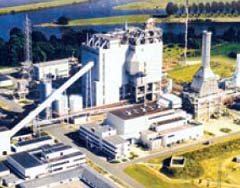
The Power Purchase Agreement docket for Excelsior’s Mesaba Project is ramping up to a delightfully warm level. Yesterday, our Rebuttal Testimony was due, and I got it done with a couple hours to spare, finally managed to get in on the discount rate at the local copy shop, left for the airport Post Office before dark, and got a couple hours of sleep the night before even — hey, life is good!
mncoalgasplant.com has been blessed with two great witnesses, Ed Anderson, M.D., and Ronald R. Rich, and here’s what they have to say:
Ed Anderson, M.D.
anderson-exhibit-2-price-of-pollution.pdf
anderson-exhibit-3-environmentalcostsofdiseasesdisabilities-davies.pdf
anderson-exhibit-4-environmental-pollutants-and-disease-in-american-children.PDF
Ronald R. Rich
Exhibits are too big — will link to them
Ex. 6 – The Economics of CO2 Storage
Ed and Ron are a treat to work with, and it means so much more when they not only are the perfect witnesses in their areas, but they literally have a stake in the geographical area in question. This community means a lot to them and they are playing an important part of making sure the record is built about the impacts of this proposed project. Ed is one of the Co-Presidents of CAMP, Citizens Against the Mesaba Project, and Ron, of Atmosphere Recovery, Inc. fame, is an active member of the Swan Lake Association. Both have contributed comments and testimony for the DOE Scoping process and the “agency formerly known as the EQB” (maybe a glyph contest is in order here, this mutant agency needs it!), and Ed was on the Citizens Advisory Task Force, as perverted a public process as I’ve ever seen. Those who were part of real task forces in the past wouldn’t recognize it as a Task Force! Anyway, they’re both actively part of this PPA docket, and will be testifying in November’s hearing. We’re so fortunate to have them drop out of the sky, the right people at the right time.
As for the rest of the testimony, I’ll get that posted next. It is real kick-ass stuff, Xcel and Minnesota Power and even Commerce — NO Ed Garvey testimony this time! Given where it’s at now, I cannot imagine a scenario where this would be approved. Yeah, yesterday a good time was had by all, except Excelsior, I imagine. Great Testimony. So sit there on the edge of your chairs… naaaaaah, get comfortable, because it may be a while. And if you’re looking for the latest testimony in the enviro’s case, well, don’t hold your breath, MCEA, Fresh Energy, and the Waltons didn’t file any. And they didn’t file any Dispositive Motion, didn’t file any response to either of our Summary Judgment Miotions that were made, and didn’t bother to show up at the hearing to argue them. So next time you see them, ask them what they’re doing to STOP Mesaba…
I guess the best we can hope for is that they keep out of the way. I mean really, we’re the ones who entered “The Price of Pollution” into the record — this is a cost docket after all, an appropriate place for it! Is something wrong with this picture?
Chief Deputy A.G. slaps up City of Red Wing!
October 10th, 2006
EEEEEEEEEEEEEEEEEEEEEHAAAAAAAAA!
Just got back from the airport Post Office, mailing the Rebuttal Testimony in the Mesaba case and found some great news:
The City of Red Wing has been told very specifically that they have no authority to do background checks on people filing as candidates filing for municipal office. Not only that, the information they’ve collected on candidates is public data. That means it must be disclosed. That means we’ll find out what they’ve been up to!
DUH! There’s an echo in here… of course they have no authority. But this is good. Details tomorrow.
It hadn’t even occurred to me to make a Data Practices Act request… this puts a whole ‘nother spin on it.
Yes, a good and “interesting” day all around.
Big Stone Public Hearings this week!
October 10th, 2006
AAARGH! I forgot to post these!
The Big Stone Information Meetings and Public Hearings are being held this week around western Minnesota. Here’s the poop:
Yesterday – oh well, missed that…
Today, Tuesday October 10 at 1 p.m. & 6 p.m.
Morris, UofM,
600 E. 4th St., Science Auditorium
Room 2950 Science Bldg.
Wednesday, October 11 @ 1 p.m. & 6 p.m.
Ortonville
Matador Supper Club
778 US Hwy 75
Thursday, October 12 @ 1 p.m. & 6 p.m.
Canby
Canby Community Center, City Hall
110 Oscar Ave North
Friday, October 13, 2006 @ 1 p.m. & 6 p.m.
Granite FAlls
Kilowatt Center, Rm. 107
600 Kilowatt Dr.
Monday, October 16 @ 1 p.m. & 6 p.m.
St. Paul – MPUC Large Hearing Room
121 – 7th Place E., Third Floor
To look at what’s been filed in the Big Stone II docket, go to www.puc.state.mn.us and click on eDockets, and plug in the docket number 05-619.
The purpose of this is to allow public comment on whether this is needed or not — it’s a Certificate of Need proceeding, not a siting proceeding, so NEED and lack thereof is the issue. Witnesses should be there so you can ask questions. Ask your questions on the record, and get good answers! In particular, check out how this plant will satisfy not some generic “need” but how it will satisfy the particular need of those specific utilities asking for the permit.
For the Company’s application, check the Big Stone site, there’s one site for the BSII power plant, and another for the Minnesota Transmission docket. One thing you should look at CRITICALLY is the MISO Big Stone transmission interconnection report. Make sure this gets in the record in the proceeding.
Mesaba LTE in Grand Rapids paper
October 10th, 2006
Today rebuttal testimony is due on Mesaba, so it’s been a long day… that’ll be posted here later, maybe tomorrow. In the meantime, here’s the latest Letter to the Editor in the Grand Rapids Herald Review:
Health consequences should be considered with Mesaba Energy
Editor:
Mesaba Energy. I’m reminded of people who smoke. When they start, they donâ??t think about possible consequences 10, 15, 20 years down the road. Their focus is the instant gratification of the nicotine hit. Their focus is on thinking they are acting like an adult, an idea sold by tobacco companies They don’t consider the long term consequences.
As with most things, a person’s decisions will be based on the information they choose to focus on. If their priority is instant gratification, only the information that validates instant gratification will seem correct. Among the many ironies is that people start smoking because they were conditioned to think it was the adult thing to do. They stop smoking, with a large amount of pain and effort, because it is the adult thing to do.
The irony of Dave Johnsonâ??s comment on NIMBY is that the people in power of the Mesaba project are also guilty of NIMBY. They never considered building the power plant in their back yard. Dave also mentions the sequestering of carbon dioxide, but fails to mention the carbon dioxide continually created to build the plant, mine the coal, and transport the coal and other elements needed to keep the plant running.
He also mentions all the time, energy, and money needed to clean the exhaust at Clay Boswell. He fails to mention that there are no pollutants or byproducts created with a wind generator once its operable. Now that’s truly sensational.
Wind Logic is a company, with an office in Grand Rapids, that tests places worldwide for the potential of wind-generated power. When I last spoke with the company, I was told that none of the towns on the Iron Range has ever been tested for their potential to generate electricity using wind. Wouldn’t it be wiser to consider all possible alternatives before committing to an industry that makes and keeps us dependent on so many people and natural resources, and creates so much pollution and waste in the process.
If consumers had a choice between clean, non-polluting wind energy, and Mesaba, how many would choose wind power? I believe Mr. Johnson’s logic regarding the use of wind-generated power is specious because we donâ??t have that choice. I also suspect the executives of Mesaba Energy want to keep it that way. They want us dependent on them for jobs and money, as it will ensure their fortunes.Has anyone in power ever considered how much wind power would cost and how much money and jobs it would generate long term if we had available the money that Mesaba wants to get and has gotten. Has anyone in power ever considered how much less dependent we would all be using wind power? Are the people in power so focused on instant gratification, that they can’t consider the possible long term consequences of their decisions? If that is the case, arenâ??t we leaving our children with a legacy of dependency and pollution?
Gary Burt
Taconite
David Morris on Habeas Corpus
October 8th, 2006
In today’s STrib:
David Morris: What would Wellstone have done? He would have fought.
Four years ago this month Paul Wellstone was taken from us. Today, more than ever, American politics suffers from his absence.
Just days ago, Senate Democrats agreed not to filibuster a bill allowing the president to detain indefinitely, even for life, any alien, whether in the United States or abroad, whether a foreign resident or a lawful permanent resident. The bill denies prisoners the right to challenge their detention in court.
Why would Democrats allow 51 senators to eliminate one of the fundamental pillars of free societies? I imagine it was because their pollsters told them a vigorous opposition would lose them votes in the coming election as Republicans pummeled them for being soft on terrorism.
Paul would have filibustered. That would almost certainly have delayed a Senate vote until after the election, enabling Americans to more clearly demonstrate how they stand on the 800-year-old right of habeas corpus.
Three weeks before he died, Paul voted against war in Iraq. At the time, his opponent was aggressively accusing Paul of being weak on national security. Polls told Paul a vote against war would lose him the election. But as he told the Washington Post two days after the vote, “I think people want you to do what you think is right … .” And added, in typical Wellstone fashion, “how would I have had the enthusiasm and the fight if I had actually cast a vote I didn’t believe in? I couldn’t do that.”
A few days later Paul delighted in the fact that his vote resulted in a surge of support among Minnesotans, a surge that almost certainly would have led to his reelection.
Paul knew how to filibuster. Singlehandedly, his filibusters prevented a remarkably inequitable bankruptcy bill from being passed while he was in the Senate.
And he knew how to speak truth to power. When Exxon, the No. 1 oil company, gobbled up No. 2 Mobil, and the No. 1 grain company, Cargill, devoured runner-up Continental Grain, and the No. 1 bank, Citicorp, snapped up Travelers Insurance, the silence from Washington was deafening.
The New York Times, commenting about the Exxon-Mobil merger, observed, “scarcely a politician of any stripe headed for the cameras” to question “whether the $76 billion deal was good for the country, for workers or for consumers.” Except one: “Senator Paul Wellstone, the Minnesota Democrat who is among the few in Congress still exercised about the concentration of corporate power … .”
In 1996, Paul was among the very few who voted against the Telecommunications Act. He argued it would lead to concentrated ownership. He was right. Over the next 22 months, more than 1,000 radio stations were sold. Some 450 owners left the field. Single companies now dominate local radio broadcasting.
In 1996, Paul bravely voted against ending the nation’s commitment to the poor. Again, he was the only politician running for reelection who did so. “If you want to reduce poverty, stop scapegoating people,” he said. “Start focusing on a good education and a good job.”
Paul Wellstone proposed as well as opposed. For example, when the United States tried one more time to join the rest of the industrialized world in making access to medical care a right, not a privilege, Wellstone helped organize a grass-roots coalition that gained considerable support in Congress in favor of a system similar to Canada’s 30-year-old program: a single insurer, local control, and private suppliers.
But it was in his opposition that he most clearly demonstrated both his character and his uniqueness. Four years after his death, we sorely miss his courage and leadership.
David Morris is vice president of the Institute for Local Self-Reliance, based in Minneapolis and Washington, D.C.
©2006 Star Tribune. All rights reserved.