“My” state Senator pushing nuclear and garbage burning again
April 8th, 2007
.

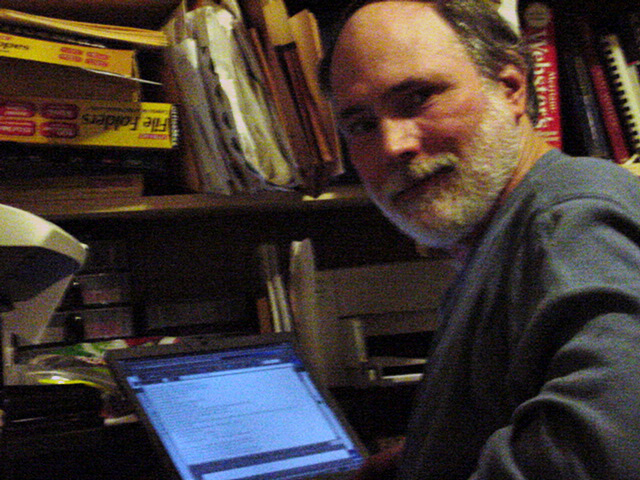
Prairie Island nuclear plant, right here in my front yard. This is the best photo I’ve seen of the plant site, it’s stolen from Joseph Gonyeau’s Nuclear Tourist, a must see (and must argue with) site. Check the “about author” section and you’ll see he’s into not only nuclear, but dioxin/furans too!
Anyway, Sen. Steve Murphy is at it again, stumping for nuclear and garbage burning, which is to be expected because afterall, Xcel is his employer, those are the generator units here in Red Wing. But with such limited vision, he loses credibility when he says things like:
I strongly support the use of renewable sources of energy, but I still believe the expansion of nuclear energy has to be a part of the power mix. As a state, we need to encourage the expanded use of renewable energy resources that have been proven clean, like nuclear and biomass.
My home, his home too, is in Red Wing, and Red Wing is home to electric generation from nuclear and “biomass.” The “biomass” he refers to there is the Red Wing garbage burner, hardly “biomass” and hardly “renewable.” There’re really two incinerators in Red Wing, the NSP one right along Hwy. 61, and the city incinerator on Co. Rd. 1. Both spew lots of highly toxic stuff we should not be breathing. Here’s a report hot off the wire today from my favorite muller:
Steve Murphy — you should know better… take the time to read this report.

Steve Murphy, Minnesota District 28 Senator, The Republican Eagle
Published Friday, April 06, 2007
Clean, renewable energy has been a high priority for the Minnesota Legislature this year.
The first major bill passed this session was the Renewable Energy Standard. Under this standard, most energy utilities will be required to produce 25 percent of their energy mix from renewable sources by 2025. Xcel Energy, which provides half of the electricity for the state, will be required to produce 30 percent of its energy from renewable sources by 2020.
The standard is flexible in cases where a utility company cannot meet the standard without significantly increasing customer rates or compromising the reliability of energy delivery.
The Renewable Energy Standard was the result of long negotiations between members of the Senate, the Governor’s Office, utility companies, Minnesota Chamber of Commerce, and environmental organizations.
Through this collaborative effort, Minnesota now has the strongest energy standard in the country, while ensuring utility companies will have enough time to build the needed transmission lines and facilities to deliver reliable energy at a reasonable cost to customers.
Also this session, eight Senate and House committees on the environment, energy and transportation met to learn about the potential consequences of global warming. We heard from arctic explorer Will Steger, ecologists, and faith leaders. Steger told us the Earth’s atmosphere is warming at a startling rate and we need to curb the rate at which people are producing greenhouse gases. We heard about melting ice caps, melting permafrost, polar bears dying and ice shelves caving in.
The profound effect of the presentation led to other legislative initiatives that would require utilities to reach energy-savings goals and reduce greenhouse gas emissions.
I came on board with the global warming issue later than most and was not convinced of its great impact until a personal meeting with Steger. He is known worldwide for his exploration endeavors and his promotion of environmental protection, so I was honored when he requested a meeting with me to talk about global warming.
The depth and breadth of his knowledge made a lasting impression on me. I challenge people to listen to him speak and not be affected.
I strongly support the use of renewable sources of energy, but I still believe the expansion of nuclear energy has to be a part of the power mix. As a state, we need to encourage the expanded use of renewable energy resources that have been proven clean, like nuclear and biomass.
We also need to promote cleaner technology, as well as hybrid and fuel-efficient automobiles.
We’ve made a great start toward clean energy here in Minnesota, and I am optimistic that bipartisan cooperation on this important issue will continue beyond this session.
Steve Murphy can be reached at sen.steve.murphy@senate.mn
Delaware – NRG’s down in flames, and the other two too!
April 6th, 2007

Yup — it’s the north end of a horse headed south… It’s not just Excelsior Energy’s Mesaba Project that doesn’t deserve a Power Purchase Agreement. Any proposal is too expensive and a forced contract is not in the public interest when you don’t need it!
Here’s the State of Delaware’s latest Conslutant Report:
Given this report, confirming, round robin’s barn, moi’s take on this, it’s time to focus on the IRP and get the state’s energy priorities in order — it wouldn’t take much to replace the nasty coal plant that’s only running at nominal capacity with a dispatchable wind/gas combination.
Public hearings are next week:
Tuesday, April 10, 2007 @ 7:00 pm
Delaware Tech – Jack F. Owens Campus
Theatre, Arts & Science Center
Wednesday, April 11, 2007 @ 7:oo pm
Thursday, April 12, 2007 @ 7:00 pm
In addition, written comments from the public will be accepted on or before Wednesday, May 2, 2007. Written comments should be submitted to the Commission at 861 Silver Lake Boulevard, Cannon Building, Suite100, Dover, Delaware 19904.
What to comment about? Here’s the docket with the IRP and submissions on the record so far: Delaware PSC – Integrated Resource Planning Docket
And in the sNews today:
Bidding questions arise in Assembly
By JEFF MONTGOMERY, The News Journal
Posted Friday, April 6, 2007A day after a consultant’s report called for a delay in choosing a new power plant, speculation mounted that the process is on the verge of sputtering out and could wind up back with the General Assembly.
“This has gotten off track,” said House Energy and Natural Resources Committee Chairman Gerald Hocker, R-Ocean View. “I think it’s going to get thrown back in our laps.”
State lawmakers ordered Delmarva Power, the state’s largest power supplier, to solicit bids for a new plant last year in the wake of a 59 percent jump in Delmarva rates. But the process, which drew three proposals — including offers for an offshore wind farm and a “clean” coal plant — was flawed, the state energy consultant’s report released Wednesday said.
Now, that report, which said Delmarva should restart the process to seek more bids, is pushing the process closer to collapse, observers say.
“I think everyone who’s looked at this recognizes that the cart is before the horse,” said Alan Muller, who directs the environmental group Green Delaware.
Delmarva’s own consultant said the three proposals were not in the company’s best interest and recommended choosing none of them. That thought was echoed Thursday by Delmarva President Gary Stockbridge. He said Delmarva opposes all three as too costly, and opposes postponement of the May 8 target for a tentative decision.
“They want us to find an option that would stabilize prices at a reasonable cost, and we don’t believe any of these bids meet those demands,” Stockbridge said. “We’ve been very clear that any of these bids have to have enough benefit to offset all the downsides of a long-term contract.”
Under the process, Delmarva would be forced to enter into a long-term contract with the winning bidder.
But one of the bidders accused Delmarva of “doing everything within its power to retain the status quo.”
“They should not be rewarded — and Delaware rate payers should not be punished — for Delmarva’s intrans-igence,” said Jim Lanard, director of strategic planning and communications of Bluewater Wind.
Bluewater wants an order that would make Delmarva sign a long-term power purchase agreement from a proposed 30-square-mile wind farm several miles off the state’s Atlantic coast.
Also up for consideration is a proposal by Conectiv Power to build a new 177-megawatt gas turbine at its Hay Road complex in east Wilmington and NRG’s offer to build a next-generation coal plant and produce 600 megawatts of power.
A group of state agencies is expected to decide on one of the bids.
“If Delmarva comes back and says ‘This is not a prudent thing to do, this is not going to save ratepayers any money,’ then I think this whole debate is going to fall back to the General Assembly,” said Sen. George H. Bunting Jr., D-Bethany Beach.
Gov. Ruth Ann Minner said Wednesday that the consultant’s objections should be considered before the PSC and three other reviewing agencies make a joint recommendation.
Previous reports have estimated that the plants could cost ratepayers from $100 million to $5.2 billion more than they would pay by 2038 if Delmarva got the power from regional markets.
NRG spokeswoman Lori Neuman said in a prepared statement that “NRG continues to be actively involved in the … process.”
Bill Yingling, a spokesman for Conectiv, said the company would stand by its proposal. The selection or any decision to change the process, Yingling said “is between Delmarva Power and the state.”
But Senate Minority Leader Charles L. Copeland, R-West Farms, said he was uncomfortable with arrangements that force Delmarva to sign a long-term purchase-of-power contract with plants that could be financially shaky.
“Why put Delaware ratepayers at risk to make an investment that power industry people themselves are not willing to make?” Copeland asked.
Copyright ©2007, The News Journal.
Waseca Co. Planning Commission – machine guns, tanks, oh my!
April 6th, 2007
.

Dig this – it’s all the way to DENVER!
The Borglum’s Application for a Conditional Use Permit had a hearing last night before the Waseca County Planning Commission, and the room was beyond standing room only. We were allotted 3 minutes, and despite that quashing, the hearing went on until 11:30 p.m., at which time it was tabled, with the Planning Commission wanting more information, including:
– Residence issue – is the nearest neighbor’s home a legal residence
– Is it a wetland? (rumor has it that a “cease and desist” order was issued yesterday)
– Site map details needed – a greatly altered map was produced at the last minute
– Latest mitigation and technology for lead pollution
– Track – is it a “track” or is it a “course” (zoning setback issue)
– Is it a “gun club” (similar use)
– Need copy of NRA Source Manual referenced in Minn. Stat. 87A

Saladin – this one goes up to 45MPH! Says so right HERE!

The Ferret goes up to 60MPH! Says so right HERE!
Hot off the press from the DNR:
From the St. Paul Pioneer Press:
For the guy who has everything … rent a tank
Waseca County family wants to put you behind the wheel of a heavily armored vehicle
BY TAD VEZNER
Pioneer Press
TwinCities.com-Pioneer Press
Article Last Updated:04/03/2007 11:06:47 PM CDTIn a county filled with heavy farm equipment, how does one blow away their neighbors with the heft of their ride? Or impress a dinner date, perhaps?
Answer: Buy a tank with a 105 mm barrel.
Or to be more specific, a British FV433 Abbot “self-propelled gun,” complete with armor, treads and a defunct gun.
The Borglum family, of Waseca County, Minn., hopes to get into the tank-driving business – starting with an obstacle course for the curious – where bored city slickers and country folk can tear up and down hills and (hopefully) between trees.
They’ve already imported four British-built vehicles to play with: the Abbot and three armored personnel carriers, including a wheeled Ferret, a Saladin and a FV432. And they’ve ordered three more.
Thrill seekers, they say, could spin a few treads for the same price as a bungee jump – exactly how much, they’re not certain, but hopefully in the neighborhood of $100.
“We’ve been in the construction business so long, we’re not really familiar with the marketing of this kind of thing,” said Marie Borglum, who co-founded Marie’s Excavating (now Marie’s Concrete Recycling) with her husband, Richard, in 1988 on their property off Minnesota 13.
The family’s plans for the property, which have yet to be approved by local zoning officials, have attracted attention – good and bad.
“To be honest, I’ve had a lot of e-mails,” said Marie Borglum, starting with the good. “You’d be surprised how many women say, ‘Hey, I don’t know what to get my husband.’ “
She’s also received e-mails from nonprofit organizations similar to the Make-a-Wish Foundation, for instance. “Somebody never drove a tank, that sort of thing.”
The family also hopes to market what she calls a “dream date.”
“Your wife could say, ‘Hey, let’s get something to eat,’ and we’d pick you up in an armored personnel carrier. The driver would dress up like in a tux,” Marie Borglum said. “Instead of limousine, it’s a tank.”
And bumps in the road aren’t a problem, said son Tony Borglum, who traveled with his father to Northamptonshire, England, in September to scout and buy the vehicles.
“The track vehicles definitely ride the smoothest,” he said.
The family’s investment was considerable. Total transit cost, including getting the vehicles past U.S. customs, the Agriculture Department and the Bureau of Alcohol, Tobacco and Firearms, was about $10,000 for each vehicle, Borglum estimated. That’s on top of the roughly $20,000 sticker price for each vehicle.
But some in the rural town of 10,000 have their reservations about the enterprise – particularly in view of the fact the family hopes to tack on an indoor-and-outdoor shooting range and a retail space to sell small arms on the 30-acre property. They’ve applied for a conditional-use permit for the entire affair, which will be reviewed Thursday by the Waseca County Planning and Zoning Commission.
“There is a lot of concern about it. We’re just finding out what it’s all about, and we’ve got a lot of questions,” said John Schiefelbein, who lives about two miles from the rural property. “The concern, of course, is shells going wild,” he added. However, none of the guns in any of the units can fire projectiles.
As for just driving the unarmed vehicles, however, “That isn’t that offensive,” Schiefelbein said. “The only thing is, I don’t see who gets their jollies out of driving military vehicles.
“I guess it’s OK – but the Army’ll pay you to drive ’em free. In a small rural area, we don’t need this kind of crap.”
Gladys Carlson lives about 1½ miles from the Borglums. And she’s much rankled by the prospect of tanks.
“I just don’t see a place for it,” Carlson said. “I think this is kind of disrespectful. Our soldiers, this is what they’re driving in and riding in. I just feel it’s totally out of place.”
And what if it catches on, Carlson wondered?
“We’ve already got our all-terrain vehicles going down the road banks, the ditches, and this might be the next thing,” she said. “I don’t know why the government would even allow that.”
But Borglum believes he can win residents over, if they’d just come to him and talk about the tanks. As for the firing ranges, he points out there are at least two in the county already.
Richard Roessler, Blooming Grove township supervisor, said the whole thing is out of his hands.
“We, as a board, are not going to take a position on it because it is outside our jurisdiction,” Roessler said.
“I’m really gun-shy to talk about it,” he added.
Tad Vezner can be reached at tvezner@pioneerpress.com or 651-228-5461.
Tony Borglum stands in the driver’s port of his British-made FV433 Abbot self-propelled gun. The tank is one of the Borglum family’s collection of military vehicles. None of the guns in any of the units can fire projectile.
Great letter, Mandy!!!
April 6th, 2007
Mandy Nesheim wrote a great letter in the Timberjay:
Friday, April 06, 2007Â Â Â Â Volume 18, Issue 14
Dill should focus on his own district, stop distorting record on Mesaba EnergyLetter to the editor from Amanda Nesheim, Bigfork, Minn.
The residents of District 6A might be interested to learn that their Representative, David Dill is involving himself in District 3A�s business.
There is an Integrated Gasification Combined Cycle (IGCC) coal burning power plant being proposed for Taconite, Minn. (Dist. 3A) that is called the Mesaba Energy Project (MEP). Mr. Dill did not mention by name the MEP in his statements, but there are no other coal burning power plants being proposed for this region.
Mr. Dill has stated erroneously that new base load electricity is needed for a proposed steel plant, (Minnesota Steel Industries, MSI), which is proposed for Nashwauk, Minn. (Dist. 3A). Representatives of MSI have repeatedly confirmed that their energy needs have been accounted for, which makes sense considering MSI proposes to be operational years before the proposed MEP goes online.
Mr. Dill has also falsely stated (for the record) a 6.3 cents/kWh, which is the cost per kWh represented by the lobbyists of the MEP. There is a range of 9.604 – 13.76 cents/kWh that was established by evidence produced in the current Power Purchase Agreement (PPA) proceedings.
Most recently Mr. Dill proposed $475,000 for a study of the feasibility of carbon sequestration in Minnesota in the House Omnibus bill. This study can only refer to the MEP as there are no other IGCC projects being proposed for Minnesota.
Mr. Dill’s interference in Dist. 3A’s business suggests that he is working for the lobbyists of the MEP, (Excelsior Energy), and not his constituents. The people of Dist. 3A have elected Tom Anzelc to represent them, not Mr. Dill. His intervention is inappropriate and unwelcome.
Residents of Dist. 6A need to contact their representative and remind him that he works for you, not the 18 paid lobbyists of Excelsior Energy.
It’s MAPP NM-SPG time
April 3rd, 2007
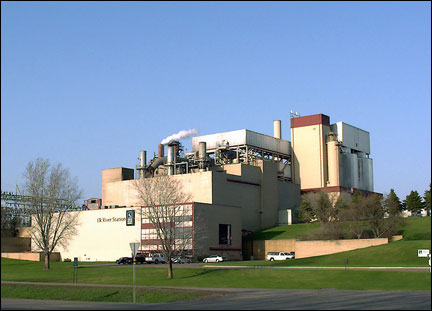
Here’s the GRE HQ, stolen from GRE’s site. It’s the former home of Minnesota’s first nuclear plant, the little bitty one that my father helped design the conventional side, the steam stuff, not the nuclear, though I do remember playing with a geiger counter as a kid.
Today it’s time for the NM-SPG meeting up in Elk River, transmission planning for the area. And so hot off the press, here’s the abbreviated report with presentations below:
TRANSMISSION PLANNING
The first issue was one that I care about — the 2007 Transmission Plan (Minn. Stat. 216B.2425). There’s a problem because “nobody’s showing up” and so their thought is to eliminate the zonal meetings. Ummmmm, no… They will hold them this next round, but then what?
Here’s the Minnesota Transmission Owners site.Here’s the CapX 2020 site.
CAPX 2020 – Jared GRE
Phase I projects and Brookings to Twin Cities
Slides they’ve been giving to County and Township routes
Projected Population Growth 1.3 million by 2050
Job growth 500,00 new jobs
Projected Electric Demand growth 4,500=
CapX Group 1 –
Four lines work together to ensure reliability for the region
Lines meet most urgent need
Lines will serve as out let for whatever generation resources are built
CapX Brookings
250 miles of 345kV, “access to new generationCoN – Based on SW MN-Twin Cities EHV completed Nov 2005
Additional studies – Generation Alternative for load serving
MISO queue additions, Lake Marion xfmr overload – overloaded before they put it in
Combined CapX Groupe I loss analysis
Load serving, Marshall, Franklin, Lake Marion, New Ethanol loads
Underlying system study to see impact on lower levelsCost allocation – MISO RCEB Analysis
BISO Baseline Reliability Study – MTEP
CapX Notice Plan – in 30 days or so.
EOM – PUC meeting on Exemptions
Brookings project – Randy Fordice 763-241-2463 rfordice@grenergy.comReliability project or generation project – MTEP process, studying now, some results on Fargo project
Load use more like 2004 load and not 2016
MTEP 06 – will be in MTEP 07 if determined to be reliability projectsFargo CapX line
Corrects loss of bulk lines – Center-Jamestown-Maple River
Dorsey Forbes
Local load serving benefits – Alexandria, St. Cloud
Loss Reduction of 100MW real-time
Fargo need – not until 2018
Alexandria – big problem is loss of Grant County-Elbow Lake Lind
St Cloud – this is the primary local problem – loss of Benton County – Granite City 115kV, St. Regis load drop, cannot Reconfigure GraniteCity without new source
So, seems to me that CapX is doing a good job of proving it’s NOT needed.
Here are a few of the juicier presentations:
Big Stone II Transmission Update – Phase 6
And here’s a presentation using RES as justification for more unnecessary transmission:
Click HERE for RES Language
Now doesn’t that make you wonder just what they were thinking when they passed an RES with transmission language in there???