ConocoPhillips Town Hall Meeting
April 26th, 2007

ConocoPhillips Road Show is coming to your town:
Jan. 17: Reno, Nev. July 18: Wilmington, Del.
From the Inbox from Green Delaware:

ConocoPhillips Town Hall Meeting — “a conversation on energy”
ConocoPhillips (CP) is a major promoter of “(un)clean coal” gasification technology. CP is one of the few vendors of “gasifier” technology, a key element of the heavily-promoted “new” way to burn coal.
CP is a main technology provider for the proposed Mesaba IGCC project in Northern Minnesota.
Minnesota Administrative Law Judges recently recommended that Mesaba not be approved. Here’s the ALJ decision.
On April 26, in Rochester, MN, CP will sponsor one of a national series of meetings at which the giant oil company will present its present views on US energy policy.
A Conversation on Energy will be hosted by ConocoPhillips and the University
of Minnesota, Initiative for Renewable Energy and the Environment (IREE) and
moderated by Richard “Dick” Hemmingsen, Director of IREE. In addition to
speakers from ConocoPhillips, invited panelists include representatives from
the Minnesota Center for Environmental Advocacy, Minnesota Renewable Energy Society and other organizations active in business and industry.
Also see ConocoPhillips Energy Guide.
These “conversations on energy” smell like a public relations campaign by CP and other big fossil fuelers to pretend to do something about global warming, while coopting for-real advocates. They have realized that simple denial won’t work any more and they need a more nuanced line.
Ed Burke, of ConocoPhillips, said that industry researchhas shown “we’ve lost all credibility, we’re at the bottom of the list, below even tobacco!” We’re viewed as caring only about profits and high salaries, and we need to get back in touch with the American people.” He notes that global warming is an issue “and we need to do something about it.” These meetings are not really a hard sell on the company at all. They’re doing meetings in 35 cities, and this is the 11th one. When asked if it has anything to do with the Mesaba Project, he said “absolutely not. It’s about opening a dialog with the Amercan people. It’s about how do we do innovation… new energy solutions…”
Guess? Truly independent voices won’t be prominent at these meetings. We’ll see…
For example, the panelist lineup in Rochester includes:
Loren Abraham of the Minnesota Renewable Energy Society 612.308.4757
Chuck Laszewski of the Minnesota Center for Environmental Advocacy 651.223.5969
Edward Garvey, deputy commissioner of the Combined Energy and Telecommunications division of the Minnesota Department of Commerce
Bob Ridge, CP, Vice-President for Health, Safety and Environmental
Sabrina Watkins, CP, Manager, Advanced Technology
Carol Overland has been a key opponent of IGCC projects. She commented:
“ConocoPhillips is a technology provider for coal gasification projects such as Mesaba. The same technology is utilized at the Wabash River plant that has been such a disaster both economically and environmentally. They are choosing to do a road show at this time when the Mesaba project is going down in flames, and that they are featuring Ed Garvey, a top energy official in Governor Pawlenty’s administration. I’m concerned they are trying to grease the skids for Excelsior Energy, the Mesaba promoters, contrary to the recommendations of the judges assigned to the case. It’s noteworthy that they have scheduled stops in other locations where IGCC projects are proposed, such as Delaware, Alaska, West Virginia, Indiana, New York, Texas, and Arizona. How can it be anything other than a promotional road show?”
Overland is concerned about the participation of representatives of the Minnesota Renewable Energy Society and the Minnesota Center for Environmental Advocacy. “MCEA was ineffective and lackadaisical in opposing the Mesaba Project.”* Â Why is MCEA now cooperating with ConocoPhillips? Thankfully, Fresh Energy [ formerly Minnesotans for an Energy-Efficient Economy] had the sense to turn this “opportunity” down.”
Doug Shoemaker , Co-Chair of the participating Minnesota Renewable Energy Society had some concerns: “… at least on the surface it looks good,” but “we’ve got … [questions] … hanging over our heads.”
Chuck Laszewski of the Minnesota Center for Environmental Advocacy told us: “We thought about it in some depth because were concerned that it could be seen as some sort of greenwashing.” But on balance, MCEA concluded that it would be “a worthwhile opportunity to get our opinions out.”
Corporations are usually more sophisticated than community-based advocacy groups. Is CP successfully using orgs in Minnesota and elsewhere to greenwash itself? Or are these meetings indeed a “worthwhile opportunity?”
We can’t judge doings in Minnesota, but in Delaware many orgs would be flattered to be invited, would crave the exposure, and would hop on board without intelligently considering the consequences of their actions.
The CP road show is scheduled to come to Wilmington, Delaware, on July 18, 2007.
Alan Muller
Alan Muller, Executive Director
Green Delaware
Box 69
Port Penn, DE 19731 USA
302.834.3466
greendel@dca.net
www.greendel.org
* Ineffective and lackidasical? Isn’t that a bit harsh? Well, considering that they presented only a CO2 case, did not deal with the economics of the project, and did not participate in any of the kick ass motions flying around, didn’t argue to free information up to the public and didn’t know that we’d won those motions, didn’t even submit a Summary Motion of any sort… and then there’s this, released last week, knowing that the decision turned on choice of fuel, unreasonable cost and broad emissions non-performance:
“Had the Excelsior proponents made a clear commitment to carbon capture and storage in a reasonable time after it was built, we might have had a different view as to whether the project should go forward,†said Bill Grant, associate executive director of Izaak Walton League of America.
Turkey turds redux
April 26th, 2007
  
Stolen from St. Olaf, an interesting piece on “Thanksgiving and the Environment” (Interior of a turkey barn, 1947. Photo courtesy of the MN Historical Society)
In today’s STrib:
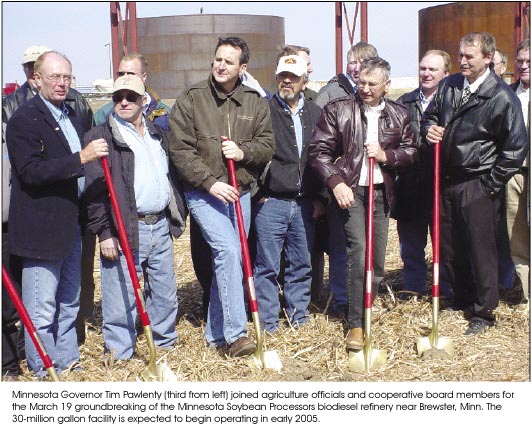
Gov. Pawlenty, who wants to be known as the “Energy Governor,” supports Fibrominn and turkey turd incineration:
As the STrib article notes:
Even in an era when renewable energy has moved from environmental wish lists to mainstream discussions embraced by President Bush, Gov. Tim Pawlenty and labor unions, the business of burning poultry manure has ruffled some feathers.
David Morris lays out the problems. It’s not “green” by any measure:
“Being green means being informed and being sophisticated,” said David Morris of the Institute for Local Self-Reliance, an energy expert and longtime critic of the litter-burning project. “Simply because you’re taking a renewable resource and turning it into something else does not mean that it’s environmentally benign or economically worthwhile.”
and the price is not reasonable:
But even with federal tax incentives, Xcel is paying twice as much for Fibrominn’s power than for wind energy, according to Morris of the Institute for Local Self-Reliance. He said it amounts to an $11-million-a-year subsidy that ratepayers ultimately will pay.
“That’s almost a quarter of a billion in subsidies over the life of this contract,” he said. “And in terms of projected power needs for Xcel or the state, this is a really, really tiny plant. From a systems analysis it stinks. And talking about it from an economic analysis, it stinks.”
Here’s a piece from David Morris:
Here’s the EQB’s Order on Fibrominn:
Findings of Fact, Conclusions of Law and Order Granting Exemption
And on p. 16, there’s a recap of the Senate Committee Hearings on Fibrominn:
A couple of points on the STrib article and turkey turds from Alan Muller, of Green Delaware. Green Delaware was an active part of the effort to run Fibrowatt out of Delaware:
Sent to the STrib:
Nothing short of nuclear reactions can turn poop or anything else into energy. The carbon burns to CO2 and the hydrogen burns to water (H2O). This is a constant misrepresentation made by burner promoters….
Energy is not “created.” This is basic thermodynamics. Some chemical energy is released as thermal energy in the chemical reactions of combustion, and some of this (maybe 85 percent or so) can be captured in the boilers and used to operate steam turbines. The overall thermal efficiency for a plant like this is likely to be on the order of 25-30 percent. The electricity is useful, if very expensive, but against this we need to consider various negative impacts.
This type of facility is likely to be a significant source of air pollution…. “Renewable” does not mean “clean” or “green.” (Note the 350 foot smokestack needed to disperse air pollutants!) It is likely that people living near the facility will suffer health impacts, particular from fine particle pollution and acid gasses.
Removal of poop nutrients from the agricultural cycle is undesirable. Using the ash as fertilizer is not as desirable as using the poop itself as fertilizer. David Morris made this point in his testimony.
Bill Hanna spinning tales for Excelsior again
April 25th, 2007

“Don’t forget, some projects die nine times before they go.â€
No problem. I’ve been working on killing this one since December, 2001, and as the STrib quoted me, it’s “dead, dead, dead. It was on life support, we’ve pulled the plug, and are waiting for the inevitable.”
But from the promoters and their promoters, the spin is dizzying, sore losers who can’t accept well documented reality. The Mesaba Project has been outed and the record is there for the world to see. It’s going down. Finally.
Bill Hanna, Editor of the Mesabi Daily News, is spinning his web of PR deception — there he goes again, claiming a “$1.5 billion” cost — when we’ve provided him with the DOE primary documentation of the $2,155,680,783 cost HOW MANY TIMES???
Micheletti’s spinning — claiming “they only referenced what we had to say one or two times.”  Oh, bull-shit… read the decision.  In the 75 page ALJ recommendation of denial, there are 184 footnotes, and 95 references to Excelsior exhibits and arguments.
Micheletti has whined to at least one reporter that the ALJs didn’t take their Fluor Report into consideration, but hey, look at the FIRST, SECOND AND THIRD footnotes! “EE1016 at 11 (Fluor Report).”  The Fluor Report is cited many times. And if its “TOP SECRET” parts were made public, exactly what would the public know that it doesn’t know now, eh? The project would look even worse.
Here’s Bill Hanna’s spin — put on your seatbelt and get ready for a wild ride — he claims that the “Minnesota Pollution Control Agency” is the decision maker! Give me a break!
Micheletti looks to PUC for final decision on Excelsior Energy project
Range lawmakers supportiveBill Hanna
ST. PAUL — On the night of April 12, Iron Ranger Tom Micheletti didn’t sleep well, especially knowing those who want to see a proposed clean-coal project for the region fail were likely having sweet dreams.
It was revealed that evening that an administrative law judge had issued a ruling recommending the Minnesota Pollution Control Agency deny approval of a power purchase agreement with Xcel Energy — an agreement authorized by the Legislature; and an agreement that is crucial to moving the energy project along.
“They said it was not innovative energy because of coal. What do they think we’ve been talking about for five years?
“We had 17 witnesses testify including world-class experts and yet they only referenced what we had to say one or two times. They didn’t say one good thing about the project … economically, they had nothing good to say. To me, this should have been a slam-dunk, a no-brainer. The bias in the ruling against us was obvious,†said Micheletti, co-president and co-CEO, along with his wife Julie Jorgensen, of Excelsior Energy.
The $1.5 billion project envisions several power plant units across the Range, with the first one slated for the Bovey/Taconite area of Itasca County. It would produce hundreds of new jobs and each unit would require about 1 million man hours of construction work.
The law judge’s ruling is not a killer for the project. It is but a recommendation to the MPUC, which will likely decide the issue some time in June.
But it is a recommendation that found a lot of favor with groups that have been opposed to the project, including the Minnesota Center for Environmental Advocacy, Fresh Energy and the Izaak Walton League of America-Midwest Office. Representatives of those three groups made the environmental arguments against the project.
“We agree wholeheartedly with the recommendations. These two judges are taking seriously the consequences of building a new coal-fired power plant and their recommendation makes it clear that the Public Utilities Commission has to take the pollution problems seriously as well,†said Kevin Reuther, a lawyer for the Minnesota Center for Environmental Advocacy. “The judges essentially found this is just another coal plant, but an expensive one.â€
But Micheletti said he “expects a better response from the PUC because, based on the clear testimony and evidence this is a good project in all areas, including the environment.â€
That’s also the hope of Iron Range lawmakers who have been on board for the project since it was hatched more than five years ago. And Republican Gov. Tim Pawlenty, who has also been a supporter, remains so.
“We’re taking a close look at the ALJ’s report and looking for opportunities within the report to keep the project alive,†said Alex Carey, Pawlenty’s press secretary speaking on behalf of the governor.
“I’m very disappointed in the judge’s conclusions but that doesn’t mean it’s the end of the road. It’s still up to the PUC to make the final determination, so I think there’s a long road to go yet,†said state Sen. David Tomassoni, DFL-Chisholm. “The project still has a good shot of happening. So I’m disappointed but I’m not totally discouraged and we’ll keep plugging away.â€
“I’m frankly pretty disappointed for all the time they took. It didn’t seem they had a good grasp for the needs of power in Minnesota and the difference between pulverized coal and coal gasification,†said Sen. Tom Saxhaug, DFL-Grand Rapids. “I have a little more faith in the Public Utilities Commission. They know the needs of Minnesota and our additional baseline energy needs.â€
“That’s the process. The state has a strong review process and that’s fine. They’ve made a recommendation to the PUC. I’m sure it’s a strong recommendation,†said Rep. Loren Solberg, DFL-Grand Rapids.
But Micheletti said a friend of his with Conoco-Phillips talked to him the day after the ruling the night before — a night when he “couldn’t sleep a wink†— and told him to remember: “Don’t forget, some projects die nine times before they go.â€
“It’s a body blow. But we’re Rangers … we’re tough. We’ll bounce back,†Micheletti said.
——————————-
Bill Hanna can be reached at bill.hanna@mx3.com. To read this story online and comment on it go to www.virginiamn.com.
Let Bill Hanna know what you think of his spin.
Hot off press – CRVC granted Intervention
April 24th, 2007
Just in today — the “Second Order of Intervention” granting Concerned River Valley Citizens Intervention status:
And check this Memorandum, which simply must be read in its entirety to appreciate:
Because of the concerns Concerned River Valley Citizens (“CRVCâ€) raised in its filings as to the extent of public participation if its motion for intervention as a party were not granted, a few points deserve special emphasis.
It bears noting that while the Administrative Law Judge had concerns as to who might make an appearance on behalf of CRVC in these proceedings there was never a serious question as to whether, as an association of affected landowners, CRVC had a legal right to raise questions or be heard as to the proposed project. Similarly, there was never a risk that the views of CRVC would not be sought, or integrated in a meaningful way, into hearing record. Likewise, it is free from doubt that Mr. Neuman, Ms. Johnson or other affected landowners, could have intervened in their individual capacity, without counsel. The fact is that our system of due process delights in the contributions that genuinely motivated parties make toward building a record for later decision-making.
The much narrower item of concern for the Administrative Law Judge was whether Mr. Neuman or Ms. Johnson, neither of whom are attorneys, could permissibly make an appearance on behalf of CRVC – which is a corporate entity. The general, and more familiar rule, is that a corporation must be represented by an attorney in legal proceedings.
There is, however, an important exception to this general rule. The predecessor Environmental Quality Board2 had a specific representation rule for proceedings “involving … the routing of high voltage transmission lines†that is more generous and permissive than both the common law rule and the representation rule for contested cases under the Minnesota Administrative rocedures Act. Rule 1405.0600 permits “all persons†to be “represented by legal counsel, or by a person of their choice, or they may represent themselves.â€Â Under these same rules, the definition of “person†is broad enough to include corporate entities such as CRVC.Â
Because of these more generous rules, which are specific to these proceedings, granting CRVC’s request as it was submitted by its chosen representatives, is appropriate.
CRVC – unauthorized practice of law… NOT!
April 24th, 2007
And this is another aspect of the Chisago case that has me fuming! There’s yet another twist in the Chisago proceeding is the harassment of my former client, Concerned River Valley Citizens (CRVC). I’m glad I’m a step removed, because this is such flagrant _________ (your favorite invective here).
Earlier this month, CRVC’s Motion for Extension of Task Force was “taken under advisement,” and they received the most bizarre Order from the ALJ, directing them to respond to specific questions of the ALJ set out in Order point 3:
   3.   On or before 4:30 p.m. on Wednesday, April 18, 2007, a representative of the Concerned River Valley Citizens shall file responsive papers addressing the following matters:
a.   Whether either Mr. Neuman or Ms. Johnson is licensed to practice law in Minnesota or any other jurisdiction;
b.   Whether, in the view of the association, representation of Concerned River Valley Citizens by a non-attorney would amount to the unauthorized practice of law, as those terms are used in Rule 1400.5800;
c.   Whether, in the view of the association, retaining the services of a licensed attorney to appear on behalf of Concerned River Valley Citizens would be unduly burdensome;
d.   Whether the Concerned River Valley Citizens, if granted intervention as a party, would seek access to confidential trade secret data; and,
e.   Whether a more limited role than intervention, under Rule 1400.7150, might meet the needs of Concerned River Valley Citizens.
Seems to me that this is express notice to CRVC that they are being offered the “choice” of caving and relinquishing meaningful participation, or they’ll get only a “limited role.” Good thing I’m not representing them, because MY response would not be printable in this “family blog.”
Here’s the full Order:
Bill Neuman has taken the lead in CRVC’s Intervention, since they “passed me off” to the City, and he submitted the following responses to the ALJ:
II. CRVC POSITION ON ISSUES
A. Whether either Mr. Neuman or Ms. Johnson is licensed to practice law in Minnesota or any other jurisdiction.
CRVC objects to this question as it infers a requirement that it be represented by a licensed attorney. Maintaining that objection, neither Mr. Neuman nor Ms. Johnson are attorneys licensed to practice law in Minnesota or any other jurisdiction. There is no authority in rule or statute to support the notion that licensure is required for an individual to represent themselves or a non-profit organization of which they are an officer. Further, the statutory and regulatory policy of encouraging public participation requires that parties be afforded the opportunity to represent their interests.
B. Whether, in the view of the association, representation of Concerned River Valley Citizens by a non-attorney would amount to the unauthorized practice of law, as  those terms are used in Rule 1400.5800.
CRVC objects to this question, as it, again, infers a requirement that CRVC be represented by a licensed attorney. While maintaining that objection, representation of CRVC by a non-attorney does not amount to unauthorized practice. Rule 1400.5800 does not offer guidance as to the definition of “unauthorized practice,†which is correctly found in Minn. Stat. §481.02. CRVC notes that this statute draws a distinction between those corporations organized for pecuniary profit, and non-profits such as CRVC. Minn. Stat. §481.02, Subd. 2. The statute also specifies legal representation in “court†and does not address administrative proceedings. Parties may draw and submit documents without charge where they are officers of a corporation, as Ms. Johnson and Mr. Neuman are with CRVC. Neither Johnson nor Neuman are receiving payment for their work on this issue. Minn. Stat. §481.02, Subd. 3. Minn. Stat. §481.02, Subd. 1,Subd. 5. Further, it has long been agency practice that individuals and officers of non-profit corporations represent themselves before the Commission and the Environmental Quality Board, and before ALJs of the Office of Administrative Hearings. Departure from this practice would be a change of great magnitude and impact and would greatly limit the ability of the public to participate in dockets that have a direct impact on
their lives and property.Again, there is no authority in rule or statute to support the notion that licensure is required for an individual to represent themselves or a non-profit organization of which they are an officer. Further, the statutory and regulatory policy of encouraging public participation requires that parties be afforded the opportunity to represent their interests.
C. Whether, in the view of the association, retaining the services of a licensed attorney to appear on behalf of Concerned River Valley Citizens would be unduly burdensome.
CRVC objects to this question as it again infers a requirement that CRVC be represented by a licensed attorney and that an Order to that effect is contemplated. Maintaining that objection, CRVC states that retaining the services of a licensed attorney to appear on behalf of Concerned River Valley Citizens would be unduly burdensome, utterly unnecessary, and that any Order that CRVC must retain an attorney would be unreasonable. It should be noted that Minnesota does not offer Intervenor Compensation.
D. Whether the Concerned River Valley Citizens, if granted intervention as a party, would seek access to confidential trade secret data.
CRVC objects to this question because whether a potential party would seek access to confidential trade secret data is not a criteria for granting or denying intervention. Commission and OAH practice has long been to provide Intervenors with confidential trade secret data under a protective order, whether utility or non-profit intervenors. These agreements are routine. CRVC would obviously be bound by a confidentiality agreement. Further, there does not seem to be any confidential trade secret.
E. Whether a more limited role than intervention, under Rule 1400.7150, might meet the needs of Concerned River Valley Citizens.
CRVC objects to this question as it implies granting a limited intervention only, contrary to the policy goals of encouragement of public participation. Further, provisions of Rule 1400.7150 do not convey a right of participation. CRVC requires intervention with full-party status, as has been granted previously, because of the depth and breadth of issues raised, and that no other party adequately represents these interests.Â
I guess CRVC told the ALJ, huh!!!
The ALJ’s Order is unprecedented harassment of Intervenors and is an extreme example of the many attacks against public participation, the basic due process rights of people affected by all these infrastructure proposals. HOW DARE THEY!!!!