DOE schedules more transmission meetings
May 11th, 2007
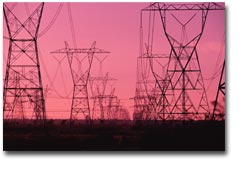
Not long ago, I was calling and emailing the few contact people I could find about those “National Interest Electric Transmission Corridor” meetings — THREE meetings for the whole damn country — THREE. That entire program is such a crock, because we don’t need no stinkin’ transmission… however, THEY do if they want to accomplish their goal of bulk power transfer, capturing megabucks, holding pass-through communities hostage as they build a grid on local land… WHO BENEFITS? WHO PAYS?
I wasn’t the only one incensed by their THREE meetings. From Sen. Charles H. Schumer, D-NY:
“This uninformed decision by the DOE simply defies logic and places an unacceptable and noxious burden on the communities that would be affected by NYRI’s proposed power line,†Schumer said. “Why is it easier or better to hold a hearing in Rochester than in Utica, or Oneonta or Norwich or Middletown or another locale easily accessible to the communities that lie directly in its path? I am very concerned that DOE may be trying to duck these communities so their voices won’t be heard. This needs to be immediately rectified by setting a hearing in a locale easily accessible to the communities that lie directly in its path.â€
Schumer: More power hearings needed
Way to go! And lo and behold, they scheduled FOUR more, again, for the whole country, only FOUR:
DOE sets more meetings for draft National Corridors
And why would they want transmission corridors declared? Why to build transmission lines, of course:
… it’s getting a little greedy in here…
Where is all this going? Check out the PJM 2007 Strategic Report.
… sigh…
IGCC DEAD IN DELAWARE, WIND/GAS MOVING FORWARD!
May 9th, 2007
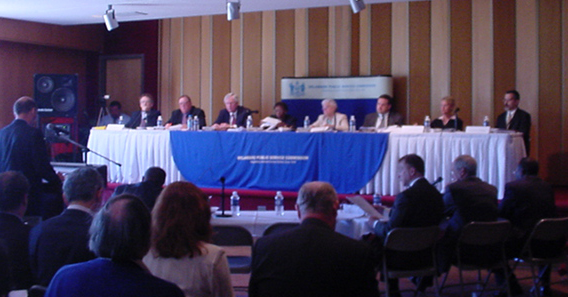
Oh, it was a LONG meeting. It makes an equally long post.
As in Minnesota, it’s not quite dead, but the plug has been pulled and we’re waiting for the inevitable.
The good news is that the PSC did adopt the staff recommendation for a wind/gas hybrid! Sure makes my day when state agency staff recommend something I’ve been pushing for so long, and then the PSC actually adopts it, like wow, a bit of progress. And staff is recommending a big broad look at energy policy. I don’t have the exact quote, but in his presentation to the Commissioners explaining how they got to proposing the hybrid, Bob Howatt, PSC staff, said something like, having done all the work of analyzing the proposals, and seeing the necessary path, “It’s time staff just said what needs to be done” (Bob, if that’s off, let me know). They did a superb job on it, of course I can pick at points, but the overview was, indeed, just what was needed, and this is a trend that needs nurturing — FORETHOUGHT IN POLICY!
Here’s the report from the News Journal, something to do while I’m finishing my write up:
PSC endorses offshore wind farm with gas backup for Delmarva
And yes, DNREC’s Phil Cherry needs a little awakening, spouting things about IGCC that are patently false. So much for his credibility as a public servent charged with protecting the state’s natural resources! I’ll be sending him his own personal copy of the ALJs’ recommendation that the Mesaba PPA be denied. He’s got access, they know the Mesaba info is all public record, and there’s no excuse for misrepresenting IGCC — which then leads me to question… WHY???
The PSC motion passed was to accept the staff recommendation of the wind/natural gas hybrid EXCEPT that both Conectiv and NRG are to negotiate at same time. Bluewater Wind is also to be evaluated as single supplier, and that the PPA shall be reduced but it shall not be a fixed figure, to provide flexibility. The precise words will appear in a PSC order soon.
Here’s the PSC Staff Recommendations (p. 63-71, click below for link) in its entirety — it’s too well done to omit any of it:
Staff’s conclusions with respect to the process at this time are as follows:
Today is Delaware PSC meeting
May 8th, 2007
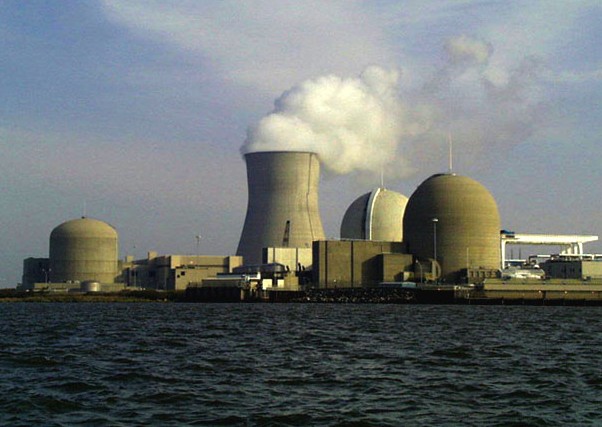
It’s about as perfectly beeeeauuuuuteeeful a spring day as can be found anywhere. From my desk looking out an easterly window towards the river, this Salem plume would be visible if a block’s worth of houses weren’t in the way — and unfortunately, not being able to see it does reduce its presence, much like the way my Prairie Island nuclear plant is nestled behind a bluff, but directly upwind and upriver… Here in this nuclear zone, they don’t get calendars, they don’t get pottasium iodide, though they do have the nuke sirens.
There have been some very interesting reports coming out of the PSC lately, things that look like thoughtful energy planning — and I hope it’s not a ruse. There was that staff recommendation of a wind/gas combo on the RFP side of things, and the recommendation focused on the broader policy issues that need to be addressed, those pesky little things like the need for a portfolio approach, the state’s dependence on transmission and need for its own generation… like wow!
Then there’s a report about transmission and generator interconnection:
And a short update/correction with additional runs on the RFP evaluation:
Overland’s take? The staff recommendation is a good option, in the public interest, and it gets wind going as dispatchable generation, removing one of the primary objections to wind, it’s variability. The IRP is the venue to make the larger policy changes, where, as staff noted in the RFP recommendation, a portfolio approach can be established. This is where the policy directives establishing DSM with TEETH (not present in DE yet), establishing the need for Delaware generation to prevent extortion by generation and transmission owners, demonstrating the need for specifically sited generation that would eliminate voltage problems in this electrical island. This RFP docket is one step and can propel the state into energy planning in the IRP — that’s what I’d like to see.
Imagine DE fulfilling its “baseload” needs with dispatchable wind — wind in combo with backup generation! Arizona is using concentrated solar and gas, Minnesota is using wind/gas and wind/hydro, Delaware can do wind/gas!
Imagine DE, through policy declarations, systematically choosing not to buy dirty coal! Indian River Units 1 and 2 are only 160 MW, not hard to replace. If Xcel can do it (well, we know, anything but IGCC!), imagine…
An MPR piece on the Bluewater Wind proposal in the RFP:
Here’s the Delaware State Treasurer standing up for the public interest (stolen from Green Delaware): State Treasurer Jack Markell’s Letter to Delmarva Power.
Plus there’s a new report – a consultant’s view of reregulation! Where is it??? Can’t find it. I’ll post it as soon as I do…
Delaware PSC staff recommends wind/gas combo!
May 2nd, 2007

Yes, in Delaware, IGCC coal gasification going down in flames! I just got the call moments ago, and am SO tickled. Delaware’s PSC staff gets it!
In Delaware’s RFP they have three “choices,” IGCC, gas and wind. So what does PSC staff do? They pick one from column B and one from column C, the wind/gas combo!
Now what are the odds the PSC will do what staff recommends?
I am SOOOOOO tickled… hopeful even…
Here’s the entire News Tribune article:
By AARON NATHANS, The News Journal
Updated Wednesday, May 2, 2007 at 7:44 pmWind power generated off the Delaware coast took a step closer to a reality today.
A Public Service Commission staff report recommended building an offshore wind park, as well as a natural gas plant in Sussex County to back it up. The PSC released the report late this afternoon.
The wind park would be half the size of the development envisioned by Bluewater Wind, the New Jersey-based company behind the plans to build the wind farm. Bluewater had originally proposed a 600 mw facility; the report suggests the PSC instead approve a 200-300 mw facility.
Environmentalists expressed guarded optimism at the recommendation, which now goes to the commissioners for a vote.
“On the face of it, it seems like a sound recommendation,†said Alan Muller, executive director of Green Delaware, who cautioned that the wind project might not be economical if made smaller from the original proposal. “I think it’s a valuable step forward.â€
Instead of building at the Hay Road facility as Conectiv proposed, the report recommended building its natural gas plant in Sussex County, at a site to be determined.
“Although Staff’s recommendation is not the least expensive solution, it is a complementary energy arrangement that will help to mitigate global warming and reduce dependence on fossil fuels. Taken together, these projects, when appropriately managed, should have a positive impact on price stability,†the report read.
“This is a great day for Delaware,†said Jim Lanard, spokesman for Bluewater Wind, who cautioned that the proposal needed the approval of the commission itself, as well as three other state agencies.
Bluewater still hopes to build the larger wind park, and would attempt to convince Delmarva to accept more electricity, Lanard said. If it fails, Bluewater could seek other customers to accept the electricity Delmarva does not want, he said.
There was not yet word from Conectiv about whether it would be willing to build the recommended facility.
The recommendation comes after seven months of deliberations, and a series of public meetings in which speakers overwhelmingly backed the wind farm proposal.
The commission is expected to vote on whether to accept one or more of the bids at its meeting on Tuesday in Dover. The five commissioners are free to accept the staff recommendations or ignore them.
Bids went out last year after the Legislature asked the commission, and three other state agencies, to seek a home-grown source of electricity, with the intent of stabilizing and bringing down the price of electricity. That’s after deregulation, and the removal of rate caps one year ago, led to a 59 percent average rate increase for Delmarva Power residential customers.
Contact Aaron Nathans at 324-2786 or anathans@delawareonline.com.
Kenyon Wind – Price of Wind
May 1st, 2007
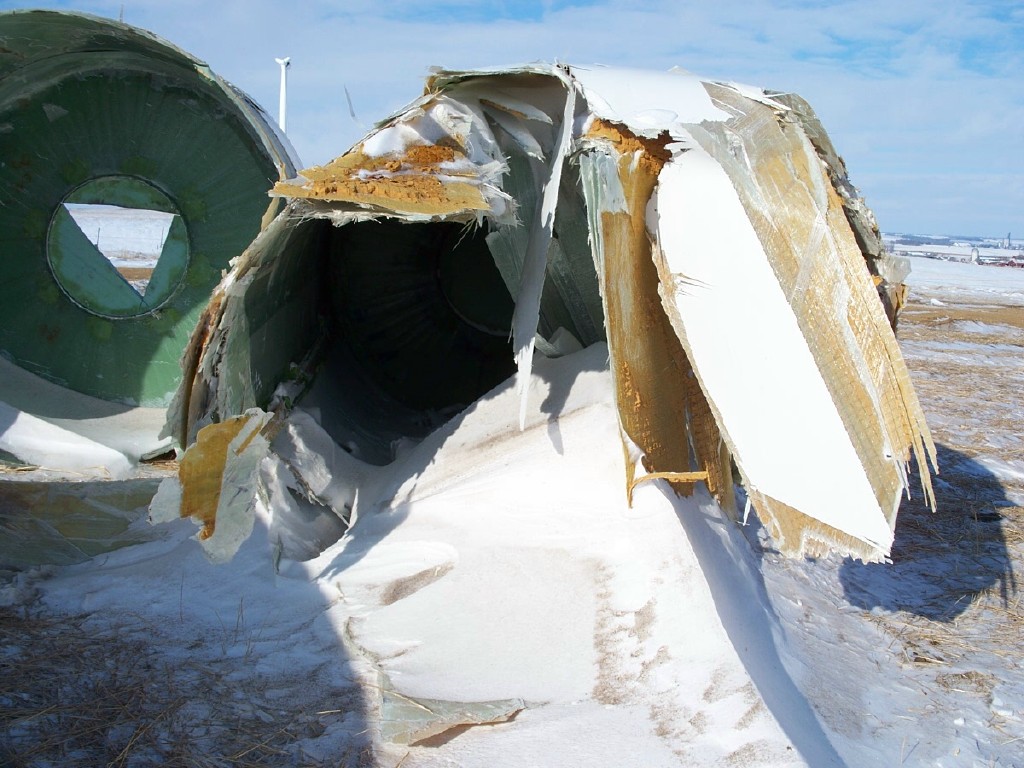
In today’s STrib, a letter from my clients, neighbors to the proposed Kenyon Wind project:
Price of wind energy
Legislation to develop renewable energy needs introspection. History shows when there’s a rush to implement new policy, unintended consequences prevail.
Such is the case with wind energy. People assume wind energy is “free” — no pollution, no greenhouse gases, no downside — but there’s more to consider.
Wind turbines have typically been installed in remote areas with sparse population. The legislative mandate has developers feeling they’ve been given “carte blanche,” but wind generators must be sited responsibly.
Utility-grade wind turbines are taller than the Foshay Tower, more than 400 feet to blade peak, with spinning rotors weighing 30 tons. Kenyon Wind proposes to site turbines within just 800 feet of residences of people not invested in the project, which is too close given safety and noise concerns. Turbines are annoying, noisy neighbors, and they generate not just electricity but “flicker” by casting shadows during daylight hours.
Like any “good” idea, there are consequences. Wind turbines on sparsely populated southwest Minnesota prairie are one thing — siting them among close residences here in southeast Minnesota is another.
MIKE CHASE, KENYON, MINN.
PRESIDENT, CITIZENS FOR ENVIRONMENTAL RIGHTS AND SAFETY