Services set for Clete McGovern
August 23rd, 2008

Clete McGovern died early Thursday morning. In a past life, well, a few past lives ago, he was my father-in-law, and he was also Director of St. Lawrence Band. He played saxophone, and helped me switch from clarinet to alto sax, his politics were so far to the right that we went full circle and agreed on many things, but most importantly, he taught me how to argue! I think of him regularly as I take on corporations bigger than Dog!
Wake:
Monday, August 25th
4 – 8 p.m.
O.E. Larson
23rd and Central Ave, Minneapolis
Visitation & Funeral:
Tuesday, August 26th
Visitation from 9 a.m. to 10 a.m.
Furneral at 10 a.m.
Reception to follow
St. LawerenceChurch
Southeast Minneapolis
Thanks to Earl for the photo of Clete, above, stolen from St. Lawrence Band Reunion site. Paul, if you’re out there, do you have any classic B&W photos of him from way back that I could post?

Problems with ED in Texas!
August 20th, 2008

Yes, folks, the world, polar bears particularly, have a serious problem with ED. Environmental Defense is at it again, selling out and allowing yet ANOTHER coal plant in Texas. Remember that deal they did in early March 2007? Here’s the Legalectric post about that:
And now they’re at it again, the quote from Smitty says it all:
Here it is in the Austin Statesman:
Environmental group signs off on coal-fired power plant
Deal illustrates different philosophies among environmental groups on energy future
By Asher Price
AMERICAN-STATESMAN STAFF
Monday, August 18, 2008When the Environmental Defense Fund signed a deal with utility NRG Texas late last month to end its opposition to a plan for a new coal-fired power plant in Limestone County, about 140 miles northeast of Austin, the advocacy group cheered that it had won concessions that will make a dent in the global warming problem.
Under the deal, NRG agreed to capture half of its carbon dioxide emissions or mitigate the emissions by investing in things that can absorb the carbon dioxide, as well as to limit emissions of other greenhouse gases.
However, other environmental groups declined to participate in the negotiation. Any coal plant, as far as they were concerned, would contribute to the world’s warming.
Reaction to the deal throws into relief differences between environmental groups — those that compromise and those that take a harder line — as they try to shape how Texas and the nation address global warming in coming years. And it illustrates how the regulatory climate in Texas, far from comfortable for environmental groups, shapes deal-making.
Under the agreement, the Environmental Defense Fund and a Dallas- and Houston-led group called Texas Clean Air Cities Coalition that includes Travis County will withdraw their opposition to a proposed 800-megawatt coal-fired power plant in Limestone County, east of Waco, that will feed the statewide electrical grid.
The utility says it will mitigate carbon dioxide emissions; reduce nitrogen oxide, sulfur dioxide and mercury emissions at the plant site, where there are already two coal-fired units; cut its water use; and pay for the development of a utility-scale solar energy project or contribute money to an energy efficiency fund.
The plant, large enough to power 640,000 homes, should go online in 2013, said David Knox, a spokesman for the company. The plant will emit about 800 tons of carbon dioxide an hour, or about 7 million tons of carbon dioxide a year. By comparison, Texas’ coal-fired power plants collectively emitted just over 147 million tons of carbon dioxide in 2004, the most recent data shows.
The parties to the deal are not releasing the nitty-gritty details, such as how much NRG might pay toward the solar project or how carbon dioxide offsets, which have been faulted in the past for being a squishy term for all kinds of ways of mitigating emissions, were calculated.
“We wanted it to be real and not have an accounting trick,” said Jim Marston, head of the Austin office of the Environmental Defense Fund.
He said NRG had agreed to help pay for a pilot project of capturing carbon dioxide in grasses over the Ogallala aquifer and would finance carbon capture studies at the University of Texas. He would not say how much the utility will pay.
Marston said that without government regulations on carbon dioxide — neither Texas nor the federal government limits emissions of the greenhouse gas — it is up too groups like his to hash out details on offsets, which have included planting trees and building solar panels to cancel out emissions of carbon dioxide.
Groups including Sierra Club and Robertson County Our Land Our Lives, which counts as its members the watchdog environmental group Public Citizen, would not enter the deal with NRG. Officials with those groups said they will continue to contest the utility’s air permit application at the Texas Commission on Environmental Quality. The commission is unlikely to decide whether to issue the permit before 2009.
“The reason Sierra Club and others are staying in this fight is that carbon dioxide emissions from this site are huge,” said Ilan Levin, a lawyer for Sierra Club.
Environmental groups have said the proposed plant, called Limestone 3, does not meet federal Clean Air Act mandates that require industries to use top-of-the-line technologies. The groups also say the impact on air quality in cities such as Dallas and Austin should be fully studied.
But those arguments have gotten little traction in Texas, where the demand for energy has grown as the population booms and where the environmental agency that issues air permits and the governor’s office have been sympathetic to energy industry arguments.
“I have less confidence in the regulators in Texas than in other states,” said Marston, who also played a role in brokering a deal that rolled back power plant plans by the utility TXU in 2007. “It does not make sense for me to ignore the regulatory climate I’m in. If I get two-thirds a loaf, I’m going to take it.”
The split between the environmental groups on the NRG deal is part of larger differences about how to address the energy crunch.
“The difference between us and some other groups is some are against all coal plants no matter what,” Marston said. “We’re not anti-coal, but we worry how much CO2 from the plant will get into the air. We think you can sequester it, and we think you can offset it.”
Representatives from Sierra Club and Public Citizen concede that the deal could offer “downside protection” if they are not able to block the plant but said they will continue to fight the deal.
“While Environmental Defense Fund has done great work in cutting carbon dioxide emissions at the plant by as much as 50 percent, it’s not enough to assure viability of our climate,” said Tom Smith, the head of the Austin office of Public Citizen.
Anatomy of a deal
NRG Texas already has two coal-fired power plants at its Limestone County site, and in 2007, the utility proposed a third. The Environmental Defense Fund and Texas Clean Air Cities Coalition, a group of 36 local governmental entities, dropped their objections to the plan in exchange for these concessions, among others. NRG says it will:
• Offset half of the carbon generated by the proposeed unit, making the carbon profile of this coal-fueled plant roughly equivalent to that of a gas-fueled plant. Those efforts could include ‘sequestration,’ using crops or other plants to absorb carbon dioxide; retiring older, less efficient power plants; and using wind or solar energy. NRG will not build another coal-fueled plant in Texas unless this condition is met.
• Use new technology at the new plant and improve the old plants, which will push nitrogen oxide, sulfur dioxide and mercury emissions for all three units below the 2006 levels of the two existing units.
• Help pay for a large solar energy project in Texas, if economically feasible as determined by criteria in the agreement. If NRG does not build or participate in a utility-scale solar plant, it will contribute to a trust that would pay for Texas energy efficiency projects, such as getting schools to replace older heating and air-conditioning units with more efficient ones.
• Use special technology to cut water use. NRG says it will consume 1.3 billion more gallons of water annually at the site once the plant is built, not the 3.2 billion gallons typically required by an 800-megawatt coal plant.
• Help pay for experimenting with ways that grasses absorb carbon dioxide.
asherprice@statesman.com; 445-3643
Doris Duke Foundation & Coal Gasification
August 18th, 2008
Doris Duke Foundation, you’re on the Legalectric radar again…

I wonder what Doris Duke would think about her foundation pushing coal gasification…
It’s that time of year again — the Doris Duke Foundation grants are due to be awarded. I was reminded recently while tooling down the road waiting for the Minnesota Public Radio report on the Public Utilities Commission meeting and decisions about Excelsior Energy’s Mesaba Project (note that Renee Sass is still MIA from their “About Us” page):
Reminded? How? Turns out the Doris Duke Foundation is an underwriter of news on MPR. Here’s their IGCC page:
Hmmmmmm… So let’s keep an eye on MPR news and see if Doris Duke Foundation comes up every time there’s something about the Mesaba Project.
Hey, Doris Duke Foundation, are you out there? When do grants come out this year? Have you figured out that coal gasification is one big losing proposition, “too risky for private investment” as the DOE says?
Transmission lines v. renewable – it’s NOT binary!
August 18th, 2008
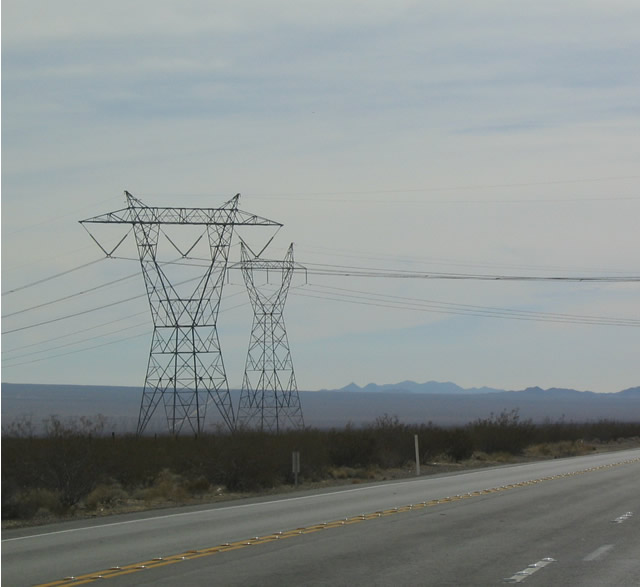
There’s an article in the Chicago Tribune today, setting the transmission discussion as binary, transmission against renewable energy, but it’s not. We can have it all, if we do our conservation, SERIOUS conservation, and site generation carefully and thoughtfully, displacing fossil fuel generation with combinations of intermittent renewables, utilizing the existing infrastructure
Transmission v. Green: Any characterization like this should be checked out further because it’s just not that simple. The Christian Science Monitor did a little looking a year ago and lo and behold…
But of course “that’s not a reliability issue.” That’s because the purpose of all this transmission is to make money, not to address reliability. It’s about those market transactions and displacing natural gas with coal, which is laid out right here, the purpose of the MISO Midwest Markets and all the benefits of the market, like payment for excess generation, payment for transmission services halfway across the universe…
Today’s Chicago Tribune article:
PIONEERTOWN, Calif. — April Sall is a keeper of the Mojave Desert and its mountains, tending a private conservancy in the same canyon where her grandmother homesteaded in the 1920s.
Once considered wasteland, this expanse of sunshine and wind is now a prized battleground between unlikely opponents. For generations, conservationists like Sall’s family have guarded the landscape, but 21st Century demands for renewable energy are threatening to crash into the pristine desert, now deemed a gold mine for solar, wind and geothermal farms.
Unlike offshore drilling and other oil and gas ventures in which developers and environmentalists are obvious adversaries, renewable energy is increasingly pitting two kinds of green advocates against each other as the nation seeks alternative sources in the face of record oil prices and global warming, both sides say.
The issue bears upon building a new infrastructure—such as gargantuan transmission towers or wind turbines—to connect remote areas where clean energy is being harvested while conservationists vigilantly protect the land and its life.
Big plans, big stakes
Such conflicts have played out in the Midwest, but the stakes are acute in California, where new state laws demand industry cut carbon emissions to 1990 levels by 2020 and require private utilities to generate 20 percent renewable energy by 2010.
Near Pipes Canyon—where Sall, a preserve manager for the non-profit Wildlands Conservancy, resides—a group led by the Los Angeles Department of Water and Power is considering building a leg of transmission lines between a substation outside Palm Springs and one in Hesperia, about 80 miles away.
Called Green Path North, the lines would ultimately connect Los Angeles and other communities to the Salton Sea’s 2,000 megawatts of geothermal power—enough to juice 2 million homes—as well as solar and wind plants. The utility group will select from six potential routes, including one as long as 313 miles, but a dispute over a “preferred” route through Pipes Canyon and the broader Morongo Basin has residents fuming.
“There’s some conflict due to what’s been described as a feeding frenzy for renewable energy in the desert,” Sall, 28, said as she walked through a landscape of mesas and the Sawtooth Mountains that surround Pipes Canyon and adjacent Pioneertown. The setting is so evocative of the Old West that Roy Rogers and other cowboy actors built Pioneertown in 1946, and Hollywood made more than 200 movies and TV serials here, such as “The Gene Autry Show,” “The Cisco Kid” and ” Annie Oakley.”
“If you’re going to destroy conservation and pristine lands, then yeah, how green is it in the end?” Sall asked. She favors cities building solar plants on warehouse roofs, for example, but the utilities say the desert’s geothermal fields provide a steady stream of power and do not rely on weather conditions as solar and wind power do.
Still, the dispute has led to tense meetings, and residents set up a Web site condemning the renewable-energy transmission lines through their communities.
No easy answer
As Congress and presumptive presidential candidates John McCain and Barack Obama struggle with the nation’s energy crisis, developing alternative energy poses conflicts too.
“We’re really at the forefront of a discussion that is certainly going to be repeated throughout the state of California and nationally as well,” said David Nahai, general manager and chief executive officer of the Los Angeles Department of Water and Power. The nation’s biggest municipal utility, the department has set a goal of providing 35 percent renewable energy by 2020, up from the current 8 percent.
“All of us are going to face this challenge of where to build transmission corridors in a way that is going to impact the local communities as little as possible,” he said.
The farther the green source is from urban users, the greater the risk of controversy, industry leaders say.
“It’s interesting that we consider some of these areas as pristine and we don’t want to put turbines or solar or transmission lines there, but they are suitable for [housing] development. There’s sort of an irony there,” said Mick Sagrillo, president of the non-profit Midwest Renewable Energy Association.
In the Mojave’s Morongo Basin, open space advocates fear transmission towers—as high as 220 feet, with rights of way as wide as 330 feet—would endanger a wildlife corridor. But Los Angeles officials said they haven’t determined tower sizes.
The California Desert Coalition, which opposes the towers, says the Los Angeles utility identified the Morongo Basin as the “preferred” route last year when helicopters landed on private property and the utility’s crews laid survey disks and markers in the area. Later the utility apologized, calling it a “premature” move.
Residents want the transmission lines confined to an existing Southern California Edison corridor along Interstate Highway 10, but those lines are running at capacity, Los Angeles officials said.
Nahai, who joined the Los Angeles utility last year after the controversial helicopter surveys, acknowledges mistrust among angry residents, whom he visited last month in a meeting that was heated and raucous.
“We need to continuously talk to people and need to gain their trust and confidence,” Nahai said.
Seems they ought to read that article from Christian Science Monitor, one that lets reality see some ink on paper, and do a little research!
Excelsior Energy at the PUC yesterday
August 15th, 2008

Excelsior Energy’s Mesaba Project, coal gasification for the Iron Range, had yet another bad day at the PUC. PHEW!!! GOOD!
It’s not done yet, EEEEEUW, BAD, but it’s one slow step closer. Excelsior lost big — all its motions were tossed out. But the life support was extended until May 1, 2008. Issues:
- Make finding that it’s an Innovative Energy Project a “Final Decision.” Separate this out from all the other issues in this mess and let it be FInal. PUC said no.
- Let Excelsior Energy enter more Exceptions. MORE! Haven’t we heard enough on this, and over and over and over and over… and the PUC said ENOUGH, no, no more!
- Require that an Independent Consultant be hired a la Big Stone II, another docket where the PUC hasn’t the balls to say yes to the ALJ Recommendation and say no to the project. PUC said we don’t need an expert, we’ve got enough information.
- They gave Excelsior Energy and Xcel another 9 months to fart around, with reports due every 90 days, and if they don’t come up with a PPA by then or both come to PUC asking for an extension, it will be considered closed. Yes, it’s good to have some likely finality, but that’s a long way out, a lot can happen in nine months!
I think it was Commissioner Wergin’s first meeting, for sure it was one of the first, and she made a good debut. She challenged Tom Osteraas’ characterization of legislative intent — GOOD — it helps that somebody was there who remembers. She also spoke up about all that they’d submitted, stating that she’d been reading through the piles of crap submitted (well, she didn’t put it quite that way) and had the issue of entering additional Exceptions, and she felt they had plenty of opportunities and didn’t need another round.
Here’s the article from Hibbing Daily News (thanks to a little birdie for this!):
But Micheletti sees silver lining
Published: Friday, August 15, 2008 6:12 AM CDT
The commission “clearly does not want us to go away,” Micheletti said.
Micheletti’s right about one thing, that the Commission “clearly does not want us to go away.” They just won’t pull the plug, drive in the silver stake, they just don’t have the balls to do it. WHY? I think there’s an interesting story there.
Meanwhile, the Office of the Legislative Auditor about the IRR’s Mesaba Project expenditures should be out soon. Now this should be good — going through Excelsior Energy’s Mesaba Project documentation to the IRR and finding the $1,200 in golf balls, a trip to a candidate fundraiser, big buck hotel in Washington and “movies,” and a trip to Italy was choice, and this will probably go a lot further than those juicy discoveries!