TVA Coal Ash Dike Inspection 2008
January 6th, 2009
Regarding the TVA coal ash slide on December 23 — this report wandered into my inbox today, and for inquiring minds, here’s the:
Kingston Fossil Plant Annual Ash Pond Dike Stability Inspection 2008
You’ll see some problematic areas highlighted in yellow. Check this out!
Pennsylvania well goes BOOM!
January 6th, 2009
This is the kind of thing that Nancy Prehn gets worried about, living atop a 7 billion cubic foot gas storage dome… things that go boom in the night! Yes, you guessed it, there’s natural gas drilling just down the road…
CLICK HERE FOR VIDEO (and dig the cute “Mr. Sparky” ad)
——————————–
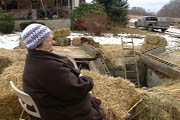
Search For Cause of Well ExplosionNorma Fiorentino said she isn’t satisfied with the negative test results.
Face it, Norm, you LOST!
January 6th, 2009


TVA coal ash — we had our own slide here in MN
January 5th, 2009
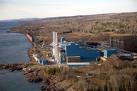
Today’s STrib has an article about Minnesota coal ash piles, prompted by the TVA coal ash disaster in Tennessee. Seems Minnesota regulators have been sleeping at the switch — the three ash piles in dikes “classified as dams” in Minnesota are supposed to be inspected every eight years, and there are “no” records of inspections for two out of three. NONE. Not good odds. The three sites in Minnesota are at Xcel’s Sherco plant in Becker, MP’s Boswell in Cohasset and Laskin Energy Center in Hoyt Lakes (remember Hoyt Lakes? Where the Mayor testified “We’re used to mercury here.” Uh-huh…).
Thanks to the STrib for reporting on this:
The STrib’s “yes it CAN happen here, yes it HAS happened here” heads up on Minnesota’s own prior coal ash disaster, spilling all over Highway 61 and into Lake Superior:
The disaster highlights the concerns over disposal of coal ash, which has been a worry in Minnesota because of the risk of groundwater contamination. The Tennessee ash slide also is reminiscent of a July 1993 mishap on Minnesota’s North Shore, in which a rain-soaked coal ash heap crashed down the hillside.
…
Fly ash is known to become unstable when saturated with water. It happened 15 years ago on the North Shore of Lake Superior, when a 27-acre ash heap at a former LTV Steel power plant turned into uncontrollable sludge after heavy rain. About half of the heap crashed down the hillside, covering part of Hwy. 61 near Taconite Harbor and knocking out an electric substation. Some reached the lake, and the land cleanup cost the company $11 million, said Jeff Stollenwerk of the Pollution Control Agency.
Needless to say, Minnesota’s coal ash slide went to court:
Here’s the court’s description of what happened:
Between 1957 and June 1982, LTV and Cliffs (collectively LTV) deposited waste ash, generated by LTV’s plant, on an ash heap located uphill from UPA’s facility. The heap consisted of approximately 770,000 cubic yards of waste ash, covering approximately 27 acres. When the contract was agreed to, much of the ash heap was covered with top soil, grass, legumes, and new growth trees.
In March 1991, LTV applied to the Minnesota Pollution Control Agency (MPCA) for a permit to resume depositing ash on the heap. The MPCA investigated and determined that the deposits could be polluting Lake Superior through rain and other water run-off. The MPCA issued a “no discharge” requirement, ordering LTV to stop the release of water from the ash pile.
LTV had several options for compliance, including placing a clay cover over the ash pile or hauling away the water from the ash pile. Instead, LTV opted to construct a containment and recirculation system, consisting of a large pond on the downhill side of the ash heap to collect surface runoff and leachate water. Water was pumped from the pond to the top tier of the ash heap, sprayed back onto the heap, and dispersed by “evapotranspiration”; i.e., evaporation of water through the vegetation covering the ash pile. This system was approved by the MPCA.
LTV also hauled excess water from a coal stockpile and dumped the water into the pond or directly onto the ash heap. The level of water in the ash heap was increased by above normal rainfall in July 1993. On July 28, 1993, the ash heap became saturated and liquified (a rare phenomenon called “static liquefaction”). A large part of the ash heap collapsed, and a mixture of ash and water flowed downhill, causing damage to UPA’s facilities.
For damages resulting from the ash slide, UPA recovered $509,345.38 from its casualty insurer, Hartford Steam Boiler Inspection and Insurance Company. Hartford brought this subrogation action against LTV on theories of negligence, trespass, nuisance, and strict liability. LTV denied liability and affirmatively alleged that an act of God (the above-normal July rainfall) caused the ash heap’s collapse.
The result in the case? Mixed:
The insurer of an electrical cooperative brought this subrogation action against mining companies to recover payments for property damage caused by the collapse and liquification of a large ash heap. The district court ruled that an exculpatory clause in a contract with the electrical co-op exonerated the mining companies from strict liability but was unenforceable because it violated public policy. We affirm the construction of the exculpatory clause but reverse the determination that the exculpatory clause violated public policy. We also affirm the inapplicability of the act of God defense, and we remand for further proceedings to determine whether the mining companies are liable for willfully causing the damage.
Now we know what Heidi Hamilton’s up to!
January 3rd, 2009
Now we know what Heidi Hamilton’s up to since she left Northfield — it’s in today’s STrib:
A snippet:
But shouldn’t Steve Brandt be covering the developments in the CapX 2020 transmission project? The application for routing of the Brookings line is now in… see NoCapX 2020!