Suit over Xcel’s new coal plant in CO
July 3rd, 2009
A suit has been filed against Xcel regarding emissions from its Comanche 3 plant, under construction. Here’s the Complaint:
Utility toadies are trying to diss the Complaint, oblivious, or too aware of, the hazards of mercury and the damage it does. In Minnesota, we can’t eat the fish because of the mercury, and the major source is coal plants. Proof of the harmful impacts of mercury is the statement of the Mayor of Hoyt Lakes at a hearing regarding Excelsior Energy’s Mesaba Project, commenting about the expected mercury emissions, “Mercury? We’re used to it here.” Mercury is a neuro-toxin, and causes birth defects, decreased intelligence, etc., and air permits PERMIT mercury emissions, they do nothing to stop them. There’s no excuse for continuing to spew mercury into the air, our lakes, and us. Kudos to those in CO challenging Xcel.
From today’s STrib:
Suit targets mercury pollution from Colorado plant
DENVER – An environmental group is suing Xcel Energy, saying the utility isn’t doing all it can to cut mercury emissions from a new coal-fired unit at a Pueblo power plant.
WildEarth Guardians says in a federal lawsuit filed Thursday that Xcel is violating federal environmental laws by failing to obtain the approval required by the federal Clean Air Act.
“Xcel Energy is plowing ahead to fire up its smokestack without first ensuring full protection of public health and welfare.That’s not only dangerous, it’s illegal,” said Jeremy Nichols of WildEarth Guardians’ Denver office.
The $1.3 billion unit, the third at the Comanche Generating Station, will produce 750 megawatts of electricity — enough for approximately 750,000 households. Construction is under way.
Xcel and state health officials say the company has a permit that sets limits on the unit’s mercury emissions.
Paul Tourangeau, director of the state Air Pollution Control Division, said plans for the Comanche Station include equipment to significantly reduce mercury pollution and monitor emissions.
Tourangeau said the state extended the deadline to July 29 for Xcel to update information on efforts to reduce mercury emissions. The update is required by the U.S. Environmental Protection Agency.
Minneapolis-based Xcel took part in negotiations in 2007 that resulted in statewide rules on mercury emissions. Xcel, Colorado’s largest electric utility, and other large power providers agreed to cut emissions 80 percent by 2012.
Colorado’s rules were approved as several states were battling the Bush administration over a mercury standard the states felt was too weak. Last year, a federal appeals court overturned the Bush administration’s approach for mercury reduction that allowed plants with excessive smokestack emissions to buy pollution rights from other plants that foul the air less.
The Obama administration is seeking more stringent controls on mercury.
Mercury is a powerful toxin that accumulates in fish and poses a risk of nerve and brain damage, especially to pregnant women and children.
About 40 percent of the manmade mercury pollution in the United States comes from coal-fired power plants.
Nichols said Xcel’s current permit for the new Pueblo unit will cut mercury emissions by about 65 percent. But experience with other coal-fired plants shows that technology is available to reduce the pollution by up to 95 percent, he added.
“They could be doing a lot better,” Nichols said. “The permit they have now doesn’t cut it.”
*******************************
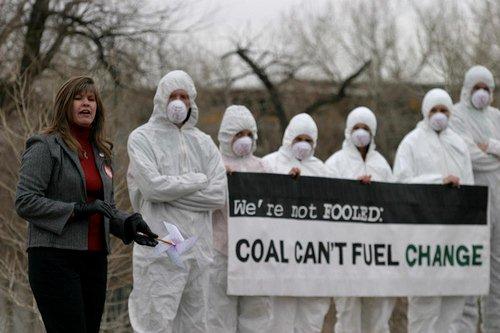
Here’s another problem from Xcel’s Comanche plants:

PSE&G’s PR machine
July 2nd, 2009
Here’s their PR machine:
Here’s the poop:
New Poll Finds Strong Public Support for PSE&G’s Transmission Line UpgradeJul 1, 2009 12:38 AM
Public Service Enterprise Group Inc.A recent poll finds that the majority of people in Morris and Sussex counties in New Jersey favors PSE&G’s plan to upgrade the Susquehanna-Roseland transmission line to ensure reliability of the electric grid.
The poll, conducted by the firm of Luntz, Maslansky Strategic Research, showed approximately 3-to-1 support for the project, with 60 percent of those surveyed saying they “strongly support” or “somewhat support” it, compared to 22 percent who “strongly oppose” or “somewhat oppose” the line. Support for the line was equally strong regardless of the respondent’s proximity to the line.
“It is evident that most people understand that the existing line, which went into service in 1931, can’t be expected to handle today’s demand for safe, reliable electric service without an upgrade,” said Ralph LaRossa, president and COO of PSE&G.
“If we don’t act, Morris and Sussex counties, as well as all of northern New Jersey, could experience widespread brownouts and blackouts by the summer of 2012,” LaRossa said. “That’s not our judgment at PSE&G. It’s the verdict of the independent experts empowered by the federal government to manage the electrical grid. It’s a warning we take very seriously.”
The poll showed that 81 percent of the people in these counties see America’s energy situation as either a “crisis” or “major problem.” LaRossa added, “Most people who live in this area clearly understand the need to do what is required to maintain and ensure reliability.”
PSE&G, which funded the poll, is seeking permission to invest $750 million on the upgrade, adding a 500-kilovolt line to the existing 230-kilovolt line, within an existing transmission right-of-way. The project would create the equivalent of nearly 4,000 jobs lasting one year each, according to a recent report by senior economists at Rutgers University. And by relieving some of the congestion that drives up electric rates in New Jersey, it would help contain electricity costs for homes and businesses in the region.
The Board of Public Utilities is considering PSE&G’s petition to upgrade the line and is expected to make a decision by the end of the year. Public hearings were held on June 11 and 18 in Sussex County; a third hearing will be held June 30 in Morris County. In addition, the New Jersey Highlands Council is expected to vote on PSE&G’s request for an exemption for the project at its June 25 meeting.
The Luntz, Maslansky survey was conducted by telephone with 525 utility ratepayers across Morris and Sussex counties. The survey captured a statistically significant population of each county. To make sure the survey elicited the opinions of those ratepayers most likely to be affected by the project, the survey included an oversample of 100 respondents self-selected as living near the current transmission line, as well as an oversample of 100 respondents who lived in towns known to be near the existing transmission line. All respondents were registered voters. The survey was in the field June 4-11 and has a margin of error of plus or minus 4.3 percent at the 95 percent confidence level.
MN Supreme Court for Franken, 5-0
June 30th, 2009
So, are we done with this now???
Let’s hope they gave Pawlenty a good kick in the butt to certify the election!
PEPCO may not finance MAPP transmission line
June 27th, 2009

And that’s a good thing, because their SEC filings show that demand is down from 2007-2007, as it is everywhere. It’s looking like utilities are unable to sustain their drive for long distance market dispatch, and if this trend is the reality, and their stock continues to be in the toilet, they can’t build their transmission dream — this is good news! Chalk up one for the economic depression!
All of us participating in the Delmarva Power IRP have to make sure the PSC knows about the tanked market, after all, they’re addressing how Delmarva Power will fulfill its demand, and for sure we don’t need new generation (need different generation, to be sure) or any transmission. As to needing different generation, it’s particularly important at this time to attach a requirement to SHUT DOWN FOSSIL FUEL to any RES. Without that, they’ll just sell it elsewhere, and we won’t gain anything.
Here’s one example of how the economy can have an impact on electric infrastructure and market. Hot off the press — PEPCO may not be selling stock to finance projects, and the biggest project they’re looking at is the much-detested Mid-Atlantic Power Pathway, electric transmission known as the MAPP line.

And remember, not that long ago, PJM cancelled the part from Indian River to Salem, NJ, at the Salem & Hope Creek nuclear plants. Here’s what it looks like now, supposedly:
HA! THEIR MAPS DON’T EVEN REFLECT THAT CHANGE!!
The Press Release says:
According to Gausman, PJM has also reviewed the need for the section of the line that would run from Delmarva Power’s Indian River substation near Millsboro, Del., to Salem, N.J., and has decided to move this portion of the line into its “continuing study” category. This means that the reconfigured MAPP line will now extend approximately 150 miles from northern Virginia, across southern Maryland and the Chesapeake Bay, and terminate at Indian River. The change would likely reduce the total project cost from $1.4 billion to $1.2 billion.
(Emphasis added). Hee hee hee hee hee — “… terminate at Indian River.” No Indian River to Salem, NJ section. Cutting a section out is just one more step to tanking the project. What’s the point of a radial line to Indian River? Some would say that “hey, there’s transmission there, it’s not a radial line,” but there’s NOT transmission there to facilitate the bulk power transfers coming in on a 500kV line. The system there is comparatively VERY low voltage. Others would note that the Indian River plant has two units shutting down, but folks, they’re the smallest units, totalling about 150MW or so, that will not make a big electrical difference, though it has a significant impact on our ability to breathe the air in southern Delaware! Taking the small Indian River units most probably means that Bluewater Wind should have no problem interconnecting — lets see the interconnection studies with Indian River units off line!
Anyway, here’s the poop — and look at the PEPCO price: $13.39, about half of what it was a year ago ($26.25) (for month, YTD, year and 5 year, go HERE) If you look at the 5 year trend, it’s the same reflected in Xcel’s demand — everything goes south in 2007. THIS IS NOT A “BLIP” FROM LAST FALL’S CRASH, this is a 2 year, nearly 3 year trend. (For Xcel month, YTD, year and 5 year, go HERE).
From PEPCO’s 2008 SEC 10-K, here’s their 2007-2008 energy delivery numbers (DOWN), regulated and default:
|
Regulated T&D Electric Sales (Gigawatt hours (GWh))
|
||||||||||
|
2008
|
2007
|
Change
|
||||||||
|
Residential
|
17,186
|
17,946
|
(760)
|
|||||||
|
Commercial
|
28,739
|
29,137
|
(398)
|
|||||||
|
Industrial
|
3,781
|
3,974
|
(193)
|
|||||||
|
Other
|
261
|
261
|
–
|
|||||||
|
Total Regulated T&D Electric Sales
|
49,967
|
51,318
|
(1,351)
|
|||||||
|
Default Electricity Supply Sales (GWh)
|
||||||||||
|
2008
|
2007
|
Change
|
||||||||
|
Residential
|
16,621
|
17,469
|
(848)
|
|||||||
|
Commercial
|
9,564
|
9,910
|
(346)
|
|||||||
|
Industrial
|
640
|
914
|
(274)
|
|||||||
|
Other
|
101
|
131
|
(30)
|
|||||||
|
Total Default Electricity Supply Sales
|
26,926
|
28,424
|
(1,498)
|
|||||||
Here’s PEPCO 2007-7008 SEC 10-K info, 2006-6007, regulated and default – these numbers should be the same for the same years, and they’re not, what does that mean:
|
Regulated T&D Electric Sales (GWh)
|
||||||||||
|
2007
|
2006
|
Change
|
||||||||
|
Residential
|
17,946
|
17,139
|
807
|
|||||||
|
Commercial
|
29,398
|
28,638
|
760
|
|||||||
|
Industrial
|
3,974
|
4,119
|
(145)
|
|||||||
|
Total Regulated T&D Electric Sales
|
51,318
|
49,896
|
1,422
|
|||||||
|
Default Electricity Supply Sales (GWh)
|
||||||||||
|
2007
|
2006
|
Change
|
||||||||
|
Residential
|
17,469
|
16,698
|
771
|
|||||||
|
Commercial
|
9,910
|
14,799
|
(4,889)
|
|||||||
|
Industrial
|
914
|
1,379
|
(465)
|
|||||||
|
Other
|
131
|
129
|
2
|
|||||||
|
Total Default Electricity Supply Sales
|
28,424
|
33,005
|
(4,581)
|
|||||||
Here’s the PEPCO 2006 SEC 10-K info, their 2005-2006 energy delivery numbers (DOWN), first regulated sales:
| Regulated T&D Electric Sales (gigawatt hours (Gwh)) | |||||||||||
|
2006 |
2005 |
Change |
|||||||||
| Residential |
17,139 |
18,045 |
(906) |
||||||||
| Commercial |
28,638 |
29,441 |
(803) |
||||||||
| Industrial |
4,119 |
4,288 |
(169) |
||||||||
| Total Regulated T&D Electric Sales |
49,896 |
51,774 |
(1,878) |
||||||||
| Default Electricity Supply Sales (Gwh) | |||||||||||
|
2006 |
2005 |
Change |
|||||||||
| Residential |
16,698 |
17,490 |
(792) |
||||||||
| Commercial |
14,799 |
15,020 |
(221) |
||||||||
| Industrial |
1,379 |
2,058 |
(679) |
||||||||
| Other |
129 |
157 |
(28) |
||||||||
| Total Default Electricity Supply Sales |
33,005 |
34,725 |
(1,720) |
||||||||
CLICK HERE – PEPCO’s SEC 10-K filings for lots of years to do your own looking!
From Bloomberg:
Pepco CFO May Postpone Investment to Avoid Share Sale
Pepco fell 3 cents to $13.39 in composite trading on the New York Stock Exchange.
LS Power’s Sunrise River mega gas plant
June 26th, 2009

LS Power is proposing to put a massive 800+ MW gas peaking plant in Chisago County, right by the Chisago County substation. This isn’t news for regular Legalectric readers, but the community is just starting to wake up.
This plant was the subject of a utility personal property tax exemption bill introduced by area legislators, Rep. Jeremy Kalin and Sen. Rick Olseen, and they introduced it without notifying local governments that they were pulling out a lot of much needed funding by exempting the plant from taxes (if local residents have to pay taxes, shouldn’t they? How is LS Power special?). THIS SAYS THE GOVERNOR VETOED IT.
When it came up at the county, and a Commissioner wanted to send a thank you to Kalin and Olseen, things got a little hot:
That’s encouraging, not everyone is toadying…
There have been meetings this week about the LS Power proposal, one on Monday for “stakeholders” it seems, and another on Tuesday for the public. The one on Monday, well, we need more information… like, who’s a “stakeholder,” and who decides?
As for Tuesday, here’s a link:
And will you look at who was there?!?!?!
And I hear they’ll be holding another next Monday, so you should go if you’re interested:
Where?
When?
I’m struck by how the statutory reference on the “Friends” site is only to Chapter 216E, the siting and routing process, and worse, it focuses on the the shortened “Ram it Through” alternate review... if they’ve got that up their sleeves, they’ll need a whack upside da head on that one. And if it’s shortened review, they have the option of “local review.” Is that the plan? FOR AN 855MW PLANT??? GUESS AGAIN, CUPCAKE!!!
And so, welcome to the Certificate of Need concept.
It seems to me that they had at least one similar meeting over a year ago, in April, 2008, looking at a snippet from Larry Baker’s page — who was regarded as a “stakeholder” then??
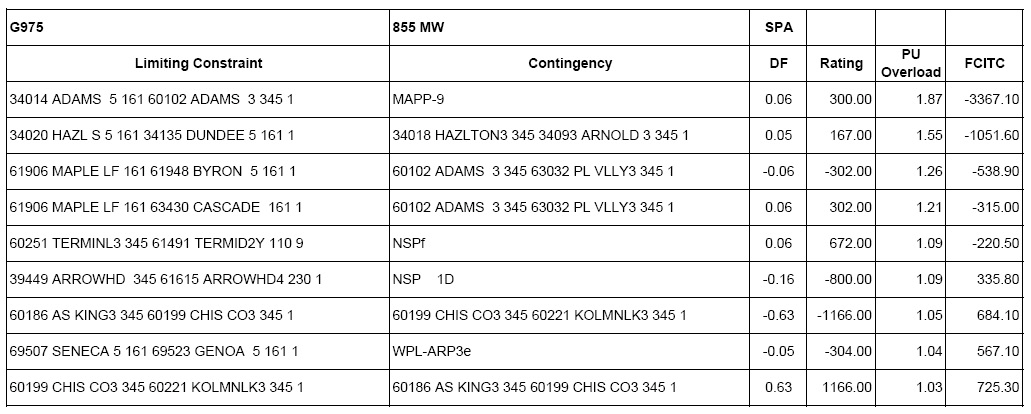
LS Power’s proposal is moving along in the MISO queue:
As you can see from the G975 chart in the study above, G975 has a few problems:
Here’s an earlier report from one of the three prior MISO queue’d projects for this location:
… and what’s interesting about is, first, they eliminated a reconductoring option because it was deemed too costly, not feasible, and here are the other options, starting with Option 2, p. 7 in the study above:
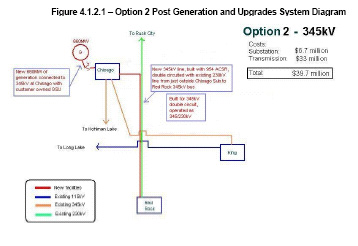
See that big honkin’ 345kV line that would have to be built?!?!
And for Option 3, p. 8:
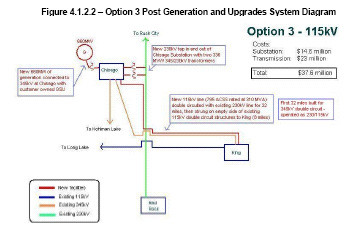
More transmission lines to be built…
Either way you look at it, we’re talking lots of big transmission in Chisago land.
Whatever are they thinking?