Goodhue Wind Truth in the news
March 9th, 2010
AVA Goodhue Wind has applied for a Certificate of Need and a Routing permit, and there are two Power Purchase Agreement dockets open at the PUC. To see what’s been filed:
- Go to www.puc.state.mn.us
- Click on “Search eDockets“
- Search for:
- 08-1233 – Wind Siting Permit
- 09-1186 – Certificate of Need
- 09-1349 – Power Purchase Agreement
- 09-1350 – Power Purchase Agreement
The EIS Scoping Meeting was held by the MN Dept. of Commerce MOES last Thursday, and here’s the report from the Red Wing Republican Beagle:
Weighing in on wind
MAZEPPA – Larry Hartman threw a question out to the large crowd gathered Thursday to learn and comment about a proposed 52-turbine wind farm in rural Goodhue.
“What is wind?” the Minnesota Office of Energy Security staffer asked.
Mumbles from the crowd highlighted what has divided some neighbors and friends the past few years since wind energy companies came knocking, offering landowners money to house turbines.
“An investment.”
“Energy.”
“A scam.”
More than 30 residents provided a wide variety of opinions and comments during a three-hour meeting to gather input for an environmental review required as part of AWA Goodhue’s certificate of need application filed with the Minnesota Public Utilities Commission.
The company, managed by National Wind, also has filed a site permit application with the PUC, the state agency that handles such large-sale projects.
Some Goodhue County residents remain skeptical of the proposed 32,000-acre project that some of their neighbors and wind energy company advocates say will stimulate the area’s economy and help the state meet renewable energy demands.
Hundreds of project opponents – dubbed Goodhue Wind Truth – have submitted a petition to the Goodhue County Board asking for a “safe renewable energy plan.”
The petition asks commissioners to implement a one-half mile setback between wind turbines and homes to help reduce the health and safety threats residents say turbines pose.
“The safety and health of people is a priority over money,” said Steve Groth, a Belle Creek Township landowner and member of Goodhue Wind Truth. “The government is there to protect you. When you sidestep that issue, everything falls apart.”
Economic opportunity
Chuck Burdick, senior wind developer with National Wind, said his company’s project will bring 100 to 200 jobs to the area during construction and two to five permanent jobs.
He said leaseholders and participants will receive more than $20 million over the life of the project.
“We think that’s a significant economic injection into the area,” Burdick said.
Some area landowners agree.
They say harvesting wind gives farmers another way to supplement their income and that wind energy is another part of the changing rural lifestyle.
Larry Fox, a Belle Creek Township landowner, said he hears the hum of corn driers and can smell manure when the wind blows just right.
“I don’t complain,” he said. “We just adapt and know this is a farm community.”
Fox said he would receive $30,000 over the next 20 years for housing a wind turbine.
“That’s a tremendous amount of revenue for these small communities,” Fox said. “I think revenue outweighs a lot of factors here.”
Other farmers say they’re excited to house alternative energy on their land.
Sara Linker Nord lives in Minneola Township and has land in AWA Goodhue’s project footprint. She said she found the wind turbines just outside Palm Springs, Calif., “aesthetically pleasing and majestic” and was disappointed when she found out others did not feel the same.
“It gives farms another crop with little land loss,” she said. “Alternative energy created on American soil increases our energy independence.”
Health concerns
But opponents argue the dangers associated with wind turbines outweigh any alleged financial benefits.
“When you put these turbines up and call yourself and environmentalist, I’d like you to do some soul searching,” said Tom Schulte, a rural Goodhue County landowner who said he recently built a geothermally heated and cooled energy efficient home.
“Because you’re probably not doing it for the environment, you’re doing it because you’re profiting.”
Schulte and other opponents said the environment and rural landscape are at risk if wind energy is not developed properly and responsibly. Livestock, water supplies, agricultural land, bald eagles and other birds need to be protected and studies need to be completed to analyze wind farm impacts, several residents told state officials.
Opponents also argue the state-required setbacks between homes and turbines are not great enough to minimize safety and health issues associated with turbine shadow flicker and noise.
Minnesota law requires a minimum 500-foot setback from residences or the state noise standard, whichever is greater. Minnesota’s noise standard restricts wind turbines from exceeding 50 decibels at night.
In practice, meeting that standard often means placing wind turbines at distances of 700 to 1,200 feet, according to a recent report by the Minnesota Department of Health.
The DOH’s scientific study found that noise from wind turbines “generally is not a major concern for humans beyond a half-mile or so,” because of design innovations to reduce noise.
Goodhue Wind Truth members want at half-mile setbacks. AWA Goodhue is doing voluntary 1,500-foot setbacks (just over one-quarter mile) from non-participating residents, Burdick said.
Zumbrota Mayor Richard Bauer also asked state officials to consider two-mile setbacks from Zumbrota and Goodhue’s corporate limits to make sure the cities are able to grow in an “orderly manner.”
Comments for the environmental report will be accepted until March 26. They can be sent to Larry Hartman, Minnesota Department of Commerce, 85 Seventh Place E. Suite 500, St. Paul, MN 55101. Comments can be sent by e-mail to larry.hartman@state.mn.us.
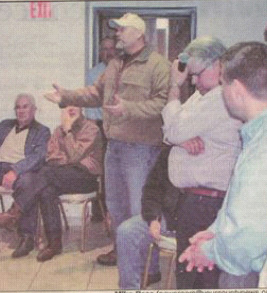
Photo from the Country News – Does MOES’ Larry Hartman have a headache? Is he dreaming of retirement? He IS holding on to the microphone, word has it that people such as the speaker here, Dean Bungum, weren’t given the microphone to speak. It was standing room only for the MOES public meeting for the wind project going up on Dexter.
On March 4, Thursday, it was the same scene in Mazeppa for the Goodhue Wind Project… Oh, the AVA Goodhue Wind Project, the names have been changed to protect … nevermind. We don’t know why the name was changed. But there are new people involved. How does that change in ownership affect the already questioned C-BED status of this project?
They held the Goodhue meeting in Mazeppa? Why? Why not in Goodhue County? Why not at the Goodhue Lions Club? Why not at the Zumbrota school? Or the Legion on 58 in the middle of town…
There are some significant deadlines in the Goodhue Wind Project. Oh, first, to look up the dockets on PUC site:
CLICK HERE FOR PUC DOCKET SEARCH
Search for 09-1186 (Certificate of Need); 08-1233 (Siting) and 09-1349 & 09-1350 (Power Purchase Agmts)
IMPORTANT DATES:
March 15 – Comments in PPA Dockets on Xcel’s request for amendment – send to stuart.mitchell@state.mn.us and burl.haar@state.mn.us and file on eFiling if you can.
March 26 – Comments for scope of Environmental Report for Siting & Certificate of Need – send to larry.hartman@state.mn.us
March 29 – Reply Comments in PPA Dockets about others comments on Xcel’s request for amendment – send to stuart.mitchell@state.mn.us and burl.haar@state.mn.us and file on eFiling if you can.
Holler if questions!
Big Stone II transmission is DEAD
March 5th, 2010

This was in the mail — what a day this has been. I’ve been buried in other things and lost track of this one.
Big Stone II transmission connected into CapX.
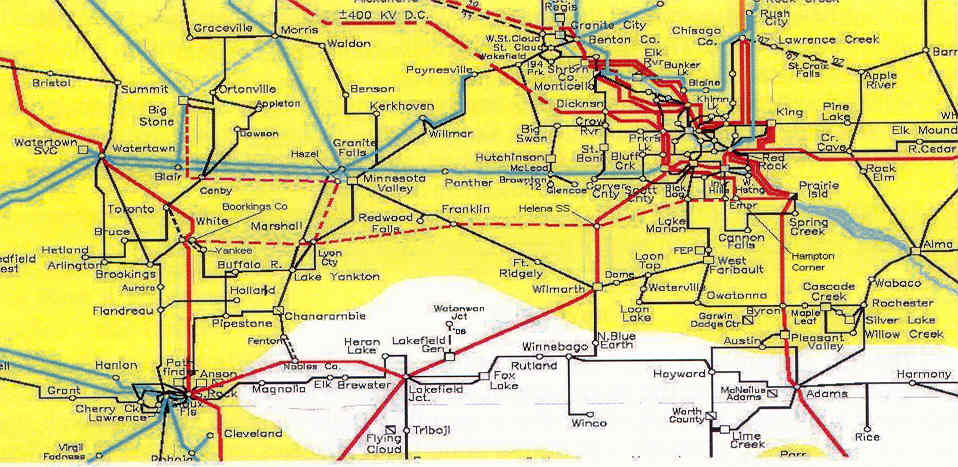
The transmission study shows that BSII transmission needs CapX:
And the question remains — how much does CapX 2020 need BSII?
Thanks to a little birdie for bringing this PUC Order to my attention!!!

National Park Service extends Comment period
March 5th, 2010

National Park Service has extended the deadline for EIS Scoping Comments on the Susquehanna-Roseland transmission project. WHEW! Now we have until March 12 to send our comments in!
Get your clues on Comments from what they do and do not include:
It’s in the Pocono Times:
From the NPS blog:
Posted March 5th, 2010 by Kurt Repanshek
High public interest has prompted the superintendents of Delaware Water Gap National Recreation Area, the Appalachian National Scenic Trail, and the Middle Delaware National Scenic and Recreational River and National Recreation Water Trail to extend by a week the public comment period on a proposal to run a transmission line across the areas.
The comment period was scheduled to end today, but has been extended through March 12.
There are numerous ways for the public to provide comments on the public scoping phase of the planning process, including leaving a message on the Park Planning Information Telephone Line (570-426-2491), submitting comments online through a link on the National Park Service Planning, Environment and Public Comment site, http://parkplanning.nps.gov (select Appalachian NST or Delaware Water Gap NRA), or by mailing comments to:
Detailed information about the need for the EIS and the project timeline
can be found on the National Park Service Planning, Environment and Public
Comment site: http://parkplanning.nps.gov.
DUH… eastern states don’t want our transmission
March 5th, 2010
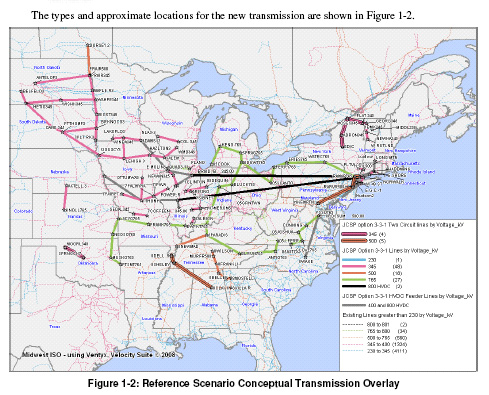
Repeat after me… EASTERN STATES DON’T WANT OUR MIDWEST TRANSMISSION.
Once more with feeling… EASTERN STATES DON’T WANT OUR MIDWEST TRANSMISSION!!!
And they don’t give a rodent’s rump what we do with our transmission but THEY DO NOT WANT TO PAY FOR IT!

It’s not anything new, but it seems that the message is getting through all the way to Iowa. Soon Minnesota? The message? That the east coast does not want Midwest transmission, that they have their own renewables and not only that, they know that transmission from the Midwest means coal and, most importantly, THEY WILL NOT PAY FOR TRANSMISSION FOISTED UPON THEM.
The 7th Circuit case tossing out PJM’s cost apportionment scheme must be having an impact because everyone is freakin’ about cost allocation. Again, GOOD! The court said that PJM could not shove the costs of transmission on those who do not benefit from it:
Enter the Coalition for Fair Transmission Policy, just launched today with a press conference in Washington, D.C.
Dig this from their site:
HA! I love it when that happens…
Here’s some background on our Midwest Transmission — transmission we don’t need and they don’t want:
This opposition to Midwest transmission is nothing new, I’ve entered documentation in the record in a couple of proceedings now, but what is new is that as of today’s “launch,” there’s now an industry group advocating against Midwest transmission, and that’s one utility interest I’m glad to see hopping mad as hell and not going to take it anymore! GOOD! Maybe that will help stop this stupid transmission-fest across the Midwest.
PUC Chair David Boyd had it right when he testified before Minnesota’s Legislative Energy Commission and led off with, “We need a business plan.” Yes, that’s true, there is no business plan, and there is no MARKET for transmission. I just hope that message gets through before “we” build and WE have to pay for all these wires in the air!
Here are a few recent posts of mine on this, followed by today’s article in the Des Moines Register.
And today’s Des Moines Register article:
By DAN PILLER • dpiller@dmreg.com • March 5, 2010
Alliant Energy has its objections
But as wind energy becomes bigger and more corporate, the utility industry is divided even in Iowa.
Other states have their own plans
While Iowa has speckled its countryside with wind turbines, other states have similar aspirations.
Atlantic seaboard states advanced plans for offshore wind farms, which they say would eliminate the need to ship wind-generated electricity from Iowa.
Read the rest of this entry »