RAGNAR Relay?

August 20th, 2010

Learn something every day… there’s a day and night relay going on right now along Hwy. 35 in Wisconsin, it’s called the RAGNAR Relay.  They run day and night in teams doing a relay until they’ve made it from Winona to Minneapolis or drop dead in the process… Check this route:

ragnarrelay

.

As inevitable as the tide, the Minnesota winter snows, mosquitos, death and taxes…  This is way too predictable!  Charlotte Neigh, of Citizens Against the Mesaba Project, is dead on again with her trajectory of Excelsior Energy’s weaseling out of their financial responsibilities in this Mesaba Project boondoggle.  A deadline is approaching where Excelsior Energy has to make a payment on its financing from the Iron Range Resources Board:

MCGP Exhibit 5023 – IRR & Excelsior Convertible Debenture Agreement

littlebirdie2

A little birdie just sent this, literally hours after Charlotte had mentioned that the next payment was coming due and wondering what they were going to pull this time to get out of it (it’s ALWAYS something):

Published August 18 2010

Excelsior asks for more time to repay Iron Range loans


Excelsior Energy’s plans to build a coal gasification power plant known as the Mesaba Energy project on the Iron Range have suffered numerous delays.

By: Steve Kuchera, Duluth News Tribune

The Iron Range Resources Board will consider a request Thursday to give Excelsior Energy more time to pay back nearly $9.5 million in loans.

Excelsior’s plans to build a coal gasification power plant known as the Mesaba Energy project on the Iron Range have suffered numerous delays.

“Development plans originally contemplated that the project would have been under construction prior to 2010 and repayment would have begun,” IRR Commissioner Sandy Layman wrote in a memo to board members requesting the extension of the loan and delay in interest payments. “Sufficient funds are not available to meet repayment requirements under the existing loan terms at this time.”

The IRR has two outstanding loans with Excelsior: one for $1.5 million approved in December 2001 and one for $8 million approved in June 2004. Excelsior has paid back $45,038 of the loans’ principal.

If approved, the new loan agreement will require annual principal payments of $100,000 due Dec. 31 beginning this year and running through 2017. Interest on timely payments will be figured at 5 percent for the preceding 12 months. With IRR approval, Excelsior can repay all outstanding principal before Dec. 31, 2017, at a reduced interest rate.

In exchange, Excelsior would agree to pay the IRR 5 percent of the proceeds from any sale of equity in the Mesaba Energy project in excess of Excelsior’s liabilities from the project.

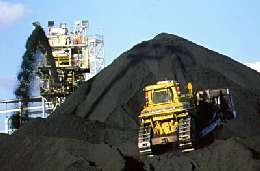
coalpile

There’s been change afoot as the facts of the infeasibility of CO2 capture and storage filters up to the higher regions of the cesspool, and as the financing nightmares and high capital costs of IGCC are paraded in public as the Indiana Duke IGCC project moves forward, and as, of course, the DOE’s EIS (here’s the DOE’s project page) for Excelsior Energy’s Mesaba Project drags on and on and on as the agency refuses, thankfully, to issue the Record of Decision on that… and slowly, painfully slowly, the truth about this IGCC pipedream is coming out.

A few telling tidbits, first, that they’ve given up on FutureGen IGCC, YEAAAAAAAAA:

DOE to provide $1B to revamped FutureGen

Katherine Ling, E&E reporter

The Energy Department today announced $1 billion in stimulus funding for a carbon capture and sequestration retrofit project it is labeling “FutureGen 2.0.”

The new project would retrofit a mothballed unit of an Ameren Energy Resources coal-fired power plant in Meredosia, Ill., to capture 90 percent of carbon dioxide and other pollutants using “oxy-combustion” technology, and then transport and sequester the CO2 in a regional storage site in Mattoon, Ill. The Mattoon location — the site of the original FutureGen project — would also house a training facility to teach oxy-combustion technology and retrofitting skills.

DOE is providing the $1 billion to the FutureGen Alliance, Ameren, Babcock & Wilcox and Air Liquide Process & Construction Inc. to develop the facility. The total cost of retrofitting the plant and building a “collection facility” for carbon dioxide, a training facility and CO2 pipelines will be about $1.13 billion in federal investment, with the expectation of up to $250 million in private investment, Sen. Dick Durbin (D-Ill.) told reporters. Durbin has been a strong advocate for the project and repeatedly requested appropriations for it.

The project would be a significant change from the original FutureGen clean coal project announced by President George W. Bush and DOE in 2003. The original project supported by DOE and the FutureGen Alliance — a consortium of major coal and utility companies — aimed to build a new coal power plant on 444 acres in Mattoon that would use integrated gasification combined cycle (IGCC) technology, produce hydrogen and electricity, and capture and sequester CO2. Bush and then-Energy Secretary Samuel Bodman announced in 2008 that they were walking away from the project because of skyrocketing costs (Greenwire, June 12, 2009).

“Today’s announcement will help ensure the U.S. remains competitive in a carbon-constrained economy, creating jobs while reducing greenhouse gas pollution,” Energy Secretary Steven Chu said in a statement.

“This investment in the world’s first, commercial-scale, oxy-combustion power plant will help to open up the over $300 billion market for coal unit repowering and position the country as a leader in an important part of the global clean energy economy,” Chu added.

Oxy-combustion technology utilizes oxygen and CO2 instead of air to produce a concentrated CO2 stream for safe, permanent storage, DOE said. The technology also eliminates almost all of the mercury, SOx, NOx and particulate pollutants from plant emissions and could be potentially the lowest-cost approach to clean up existing coal-fired facilities and capture CO2 for geologic storage, according to the National Energy Technology Laboratory.

“It really didn’t make any sense to prove a technology that has already been proven” and move forward with IGCC, Durbin said. “I think this is going to build way beyond the original FutureGen concept.”

Durbin said the plan is to conduct engineering and land acquisition this fall and start on construction next spring.

The construction of the pipelines, facilities and retrofit will create about 900 jobs in southern Illinois and another 1,000 jobs at suppliers across the state, according to DOE.

This study was released last June, which shows that leakage of CO2 is a major problem, and which makes sequestration not feasible:

Long-term Effectiveness and Consequences of Carbon Dioxide Sequestration – Shaffer

Can’t have information like that getting out, so USA Today, of course, plays it with the following headline — DUH, of course critics pan the study — and this is the best they could come up with and it took two months!

Critics question carbon storage study


Worries about leaks from buried greenhouse gasses unearthed in a recent climate study look overblown, say critics.

Carbon sequestration, burying carbon dioxide in underground reservoirs, has emerged in recent years as one option for continuing to burn coal and other fossil fuels from power plants while addressing global warming. A 2004 Science journal report by Princeton researchers, for example, pointed to carbon sequestration as one strategy, among many, for humanity dodging the climate consequences of pumping global warming gases into the atmosphere.

A June Nature Geoscience report by Gary Shaffer of the Danish Center for Earth System Science, however found such carbon dioxide reservoirs would have to leak less than 1% per millennium to help the climate. “The dangers of carbon sequestration are real and the development of (carbon sequestration) should not be used as a way of justifying continued high fossil fuel emissions,” Shaffer said in a statement, alluding to a debate over whether “clean coal” power plants, which would store their greenhouse gas emissions underground, are a worthwhile goal for addressing climate change.

The study made news in climate circles, but some have since pointed out problems with Shaffer’s study. “I feel that this calculation adds little to the question of whether we should use carbon capture and storage,” wrote Nature assistant news editor Richard Van Noorden, suggesting that researchers need to figure out whether carbon can be safely pumped underground in the first place before worrying about 20,000 years from now, an end point of the study.

This month, an Energy Department analysis from the Pacific Northwest National Laboratory (PNNL) of the study found “two deeply flawed assumptions which combine to grossly overstate the impacts associated with society using carbon dioxide capture and storage.”

First, the Nature Geoscience analysis suggested that carbon sequestration would be used to bury enough greenhouse gas to stave off all future climate warming. At best, carbon sequestration could store only about half of the carbon dioxide emissions responsible for global warming, notes the PNNL critique, and likely much less. And those carbon dioxide emissions are only partly responsible for projected future average surface temperature increases (anywhere from 2 to 11 degrees Fahrenheit depending on actual emissions, according to March National Research Council reports) alongside deforestation, and other greenhouse gasses:

“The assumption that (sequestration) is the only mitigation technology available is therefore highly questionable as a simplifying assumption as it leads to a dramatic overestimation of the amount of CO2 required to be sequestered. This significant overestimation of CO2 stored leads directly to the enormous volume of leakage and the resulting harm from imperfect retention reported by Shaffer.”

Second, the whole point of carbon sequestration underground is that the carbon dioxide would chemically bind to the rock layers there, preventing it from leaking, over decades and centuries.

“My study was not meant to propose if and how much (sequestration) to use but rather to look for the first time at the long term consequences of any leakage back to the atmosphere of any CO2 sequestered,” Shaffer says, by email. “My results show that high emissions with (sequestration) is not the same as low emissions without (sequestration) because of the leakage and its consequences.”

But the amount of sequestration contemplated in the study is “off by at least two orders of magnitude,” says MIT’s Ruben Juanes. “I’m as skeptical of carbon sequestration as anyone — the energy penalty it incurs is substantial — but the assumptions made in this (Nature Geoscience) paper are very hard to justify.”

Princeton’s Michael Celia, another sequestration researcher, notes that research already shows that 95% of any carbon injected into a reservoir would become trapped within 1,000 years. “In general I agree with the PNNL comments,” Celia says, by email.

Carbon sequestration critics often make over-sized assumptions about the technology to write it off, Juanes adds, such as objecting to the amount of pipe needed to immediately equip every existing power plant in the nation with it, making a one-time purchase out of an economic process that would play out over decades. “No single technology can immediately bridge the gaps in climate,” Juanes says.

By Dan Vergano

pseg_logo

HA!  I love it when this happens.  Just before National Park Service public hearings (schedule below), PSEG screws up and an application gets tossed back in their face!

I’m representing Stop the Lines against PSEG”s Susquehanna-Roseland transmission project in New Jersey.

PSEG thought they’d be “smart,” and given the length and intensity of process for the federal environmental review of its proposal to cross the federally designated Wild & Scenic Delaware Water Gap with massive transmission…

delawarewatergap

… they tried to divide the line in half for its News Jersey Dept. of Environmental Protection wetlands application and other DEP applications too.

First the DEP rejected that maneuver, short and sweet, and rejected their wetlands application:

PSEG Deficiency Letter July 28, 2010

Here’s the meat of it, first the funny part:
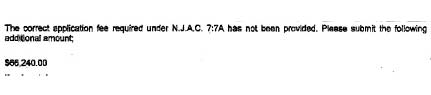
dep-rejection-snippet1

… and then, the substantive issue…

pub-rejection-snippet2

So then, PSEG withdraws their other DEP applications:

PSEG Letter of Withdrawal July 29, 2010

I love it when that happens… and what great timing.  Bring on the National Park Service hearings!

Here’s an Alert from the New Jersey Sierra Club:

Urge the National Park Service to Select the “No Action” Alternative!

The National Park Service will be hosting 3 public meetings to present the Preliminary Alternatives for the Susquehanna-Roseland transmission line as part of its NEPA (National Environmental Policy Act) review for this project. The meetings will consist of an “open house” portion where information will be available and NPS staff can answer questions and a formal “public hearing” portion. The meetings will be held:

Tuesday, August 17
Fernwood Hotel and Resort
US 209 North
Bushkill, PA
Open House: 2:30 p.m. – 4:30 p.m.
Public Hearing: 6:00 p.m. – 9:00 p.m.

Wednesday, August 18, 2010
Stroudsmoor Country Inn – Terraview
North 4th St
Stroudsburg, PA
Open House: 2:30 p.m. – 4:30 p.m.
Public Hearing: 6:00 p.m. – 9:00 p.m.

Thursday, August 19, 2010
Farmstead Golf and Country Club
88 Lawrence Road
Lafayette, NJ
Open House: 2:30 p.m. – 4:30 p.m.
Public Hearing: 6:00 p.m. – 9:00 p.m.

The proposed alternative routes can be viewed here.  Click on the “Preliminary Alternatives Newsletter” for details and mapping of the 6 proposed routes.

Please come to these meetings and voice your support for the “No Build Alternative”!  If you are unable to attend the hearings, comments can be submitted online here.  NPS will accept comments on these alternatives August 8- September 7.

++++++++++++++++++++++++++

And word is getting out:

Opponents of powerline upgrade are happy that project is delayed

BY COLLEEN O’DEA • STAFF WRITER • August 5, 2010

Opponents are cheering the news that Public Service Electric and Gas Co.’s transmission line upgrade will be delayed by three years because of problems with environmental permits.

But they are still urging people to comment on the National Park Service’s proposed alternatives to the line, which would span 47 miles in New Jersey. Some of those options would bring the line south into areas of Morris County that are more congested.

The utility had hoped to begin work this summer to add 500-kilovolt lines on towers as high as 195 feet, along its existing 230-kilovolt Susquehanna-Roseland line. It received approval from the state Board of Public Utilities and was awaiting OKs from the state Department of Environmental Protection and NPS.

Last week, PSE&G’s second quarter earnings statement disclosed that the utility would not complete work on the eastern half of the line, from Hopatcong through portions of Morris County to Roseland, until 2014 and on the western section to the Delaware Water Gap until 2015.
Read the rest of this entry »

dollarsbigpile.jpg

Xcel is trading a bunch of paper for a bunch of money, 21,850,000 pieces of paper to be precise.  How much money is that?  Seems to be $469,775,000,  or $408,500,000, gross, or $396,245,000 net to Xcel, depending on what numbers you look at, or what they sell at!

Xcel’s 424B2 filed with SEC August 4, 2010

What will they do with it?  According to the prospectus, and an article written about it:

“Xcel Energy intends to use any net proceeds that it receives upon settlement of the forward sale agreement described above, or from the sale of any shares to the underwriters to cover over-allotments, to repay outstanding commercial paper and make capital contributions to its operating subsidiaries.”

Here’s an article from Marketwatch:

Xcel Energy Announces Pricing of Common Stock

Doesn’t this have the feel that they’re desperate for cash flow?  We know they can’t get their construction capital to build the Brookings transmission line, and they’re hot to trot both about PUC ordained rate recovery, which they did not get and their Motion for Reconsideration (PUC Docket 09-1048) went nowhere.

Here’s Seeking Alpha’s Xcel 2Q Earnings Call Transcript!

Seeking Alpha Xcel 2Q Earnings Call Question & Answer

And a choice answer snippet from the Q&A:

Ben Fowke

Transaction transmission will be a very big part of our capital profile as you get to the middle and latter part of the decade it’s a result of all the years of efforts we’ve already put into project like CapEx 2020. It takes a very long time to get these things done.