OAH’s continuing efforts to chill participation
June 28th, 2011
You may remember prior posts about that but I’ll start from the beginning and try to make it quick. There’s a pattern at the Office of Administrative Hearings that is disturbing…
Way back on the MinnCan pipeline, members of U-CAN had tried to intervene and were refused. They got late notice and were not represented, stumbling through the administrative process pro se. MPIRG showed an interest and started working on it, among other things, submitting a Petition for Intervention:
Despite the late notice and their attempts to “work within the system,” the Petition of MPRIG individual U-CAN members was denied:
And when they appealed, they were tossed out, as if they had not even tried to intervene:
So when CapX 2020 hit, and they filed a Certificate of Need and landowners learned it wasn’t just the pipeline, but now transmission TOO (how much can a landowner stand?) they got right to it, and intervened as United Citizens Action Network (U-CAN), participating pro se as they had no resources to hire an attorney and were in condemnation and appellate court at the time. They Petition, and were admitted as full parties. So what happens?

Judge Heydinger, the same ALJ in the CapX Certificate of Need case as in the MinnCan pipeline case, files sua sponte (on her own initiative, not a Motion brought by parties) a demand that they explain why they, and the Prairie Island Indian Community, should remain intervenors:
This had been done before in the Excelsior Energy Mesaba Project siting docket, where ALJ Steve Mihalchick booted out Xcel Energy, Minnesota Power, and my client, Public Energy – Mesaba, because no testimony had been provided:

This docket went forward, there were two days of hearings, first in Taconite, where ALJ Mihalchick rammed through 4 witnesses and where we weren’t provided adequate opportunity for questioning, and, I swear, when I tried to get a table, he said, “Whatever would you need a table for?” Really… after much hassle, Bill Storm of Commerce found one (thank you!!). Since that day, I bring my own. Anyway, the second day, it was -30 in Hoyt Lakes and the hearing was in the unheated gym next to the hockey rink.

That day, Judge Mihalchick rammed through … what… 16 witnesses?… in one day, and left saying, “I’m not coming back here.”

Travesty doesn’t begin to characterize that hearing. And worse, Excelsior Energy got a permit for a vaporware project:
Fast forward to 2011, where ALJ Heydinger has now again issued a similar Order to Show Cause regarding two intervenors, Energy Cents and Verso Paper:
Here’s Verso Paper’s response:
Just filed: Order Confirming Party Status – Verso Paper
Where’s the Energy Cents Coalition?
Anyway, I’ve submitted a Rulemaking Petition to OAH about Minn. R. Ch. 1400 & 1405 to try to address some of this. We shall see…
PUC Briefing Papers for Goodhue Wind
June 23rd, 2011

Thursday, June 30, the last day before the state government shuts down, the Public Utilities Commission will hear oral arguments and deliberate and likely decide fate of the AWA/Goodhue Wind Project.
The Staff Briefing Papers matter-of-factly point out a couple of things that make a huge difference in this case:
In the ALJ’s December 8, 2010 First Prehearing Order, Order point #13 noted:
13. As noted above, the parties may submit legal argument on how the good cause standard should be applied, if at all, in their closing memoranda. In particular, the Administrative Law Judge would like the parties to brief the issue whether Minn. Stat. 216F.081 (2008) is intended to apply only to counties that have assumed the responsibility to process applications and issue permits for LWECS with a combined nameplate capacity of less than 25 MW pursuant to Minn. Stat. 216F.081. …
This is not an issue that the Commission referred to the ALJ. The ALJ’s findings on this issue are included in her report as findings #39 – 47.
And shortly after that:
Staff recommends that the Commission consider all parties‟ positions on this matter and their previous November 2, 2010 Order for Hearing (cited above).
Staff believes that if the Commission comes to the same conclusion as the November 2, 2010 Order, it should strike ALJ findings #40-46 on the basis that the Commission has already considered this matter and the matter was not referred to the ALJ. Findings #39 and 47 are general in nature and staff doesn’t believe the findings would need to be omitted.
The recommendation of staff to the Commissioners? Hold on to your seats:
Staff recommends adopting the ALJ’s Report with the following changes:
1) modifications to findings #10, 60 and 71 as outlined in Attachment B under “Staff”;
2) striking findings #40-46, as discussed above; and
3) providing for other modifications the Commission deems necessary.
YEAAAAAAA! From there to where this should be isn’t all that far…

To watch the oral arguments and PUC’s deliberation, CLICK HERE and then click the blue button to “Watch Webcast!” Or come on down, Thursday, 9:30 a.m. ( a little after, we’re 2 and 3 on the agenda), at 121 – 7th Place East, 3rd Floor, Large Hearing Room, St. Paul, MN, 55101.
Flooding and Fort Calhoun nuclear update
June 16th, 2011
 Not much time to pull this together, but a couple of things to note before I head off to Cannon Falls for the hearing today… From my stats, it’s clear people want more information — there’s flooding,and it’s a lot:
Interview with Bernard Shanks – from KMOX – Total Information AM
“Fort Peck dam failed when it was under construction, it failed… 8 men are buried in it…”
… and in response to Shank’s claims, here’s the response from the US Army Corps of Engineers, the Ft. Peck dam operators:
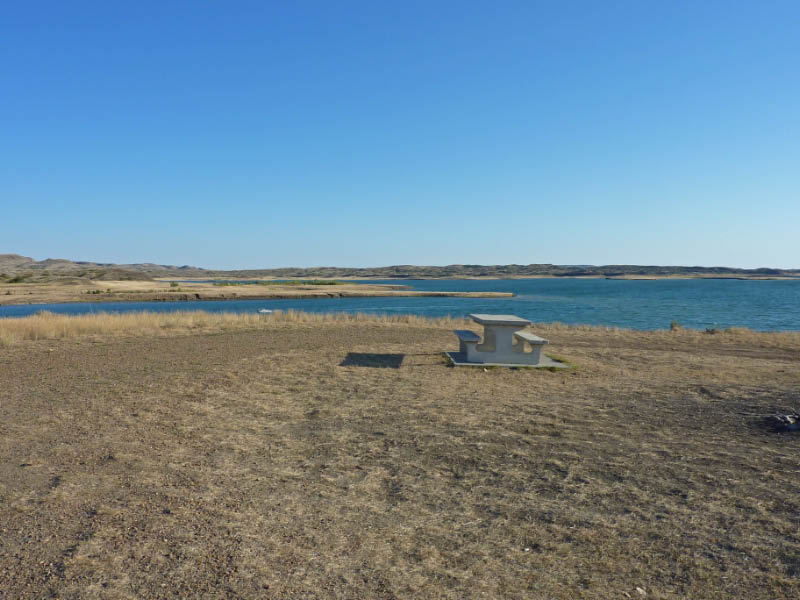
If you’ve not been to Fort Peck dam, put it on your list and get there. The campground there is one of the things that will stand out in my memory forever, what a dogforsaken place it was in the 60s… The ranger came around to say hello, he’d been out shooting rattlesnakes, had a bag full, and cautioned us!
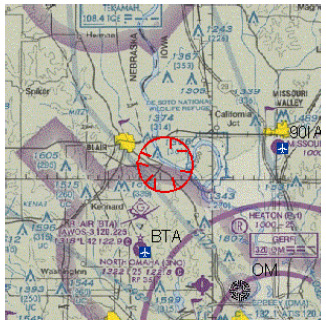
So back to the impacts of the flooding. There’s water, water everywhere… surrounding the Fort Calhoun nuclear generating plant, and it’s getting higher, the plant is now completely surrounded by water and sandbags are for now keeping it at bay. June 6, the day of the fire, a no-fly zone was declared that remains today:
And here’s the OPPD site:
Who needs rumors when we’ve got the truth!
Ft. Calhoun nuclear plant flood and fire
June 8th, 2011
Remember the flooding info and maps I’d posted a couple of days ago, noting that two nuclear plants in Nebraska were in the flood inundation area?
Well, Frieda Berryhill sent this photo of the flooding at the Ft. Calhoun nuclear plant:
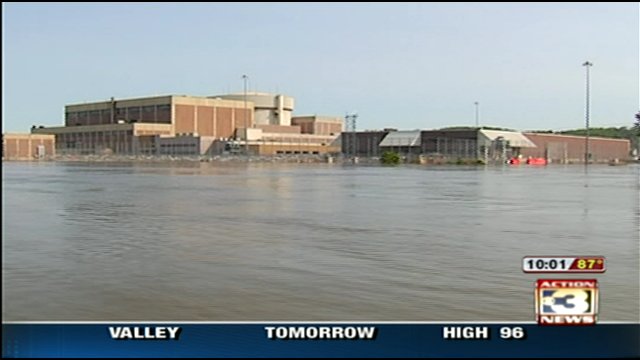
Check the video, Omaha Public Power District – OPPD didn’t want the news crew filming the flooding!!! And thankfully, they reported that point:
As if the flooding isn’t enough, they had an electrical fire, and shut down the spent fuel pond pumps to aid in fighting it. There are many articles posted on this, all the IDENTICAL AP article, and not one mention of flooding:
Here’s a local paper with some additional details:
Omaha Public Power District’s release on the flood:
OPPD Declares Notification of Unusual Event
Fukushima can’t happen here? Uh-huh… right…
June 6th, 2011
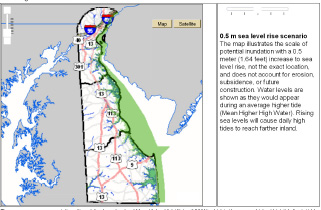
I’ve gotten a few emails questioning raising issues about our own GE nuclear reactors, like at Monticello, and they always note, “it can’t happen here.” Anyone who knows anything about nuclear knows better… and as one living in a “nuclear” community, two reactors here in Red Wing, and three in Salem, NJ, right across the river from Port Penn, I know too well the risks. Floods happen. Hurricanes happen. Salem and Hope Creek are built on a manufactured sand “island” on the Delaware River just up a tad from the Atlantic Ocean, up just enough to suck in the fresh water (and lots of fish), and close enough to be history as the sea continues to rise:
Well, folks we have a situation… the U.S. Army Corps of Engineers is releasing a lot of water from dams along the Missouri River backed up with too much rainfall, and they’ve started to evacuate parts of North Dakota, and it’ll affect South Dakota and Nebraska too.
The U.S. Army Corps of Engineers has a site: Flood Resources
Here are the “Inundation Maps”
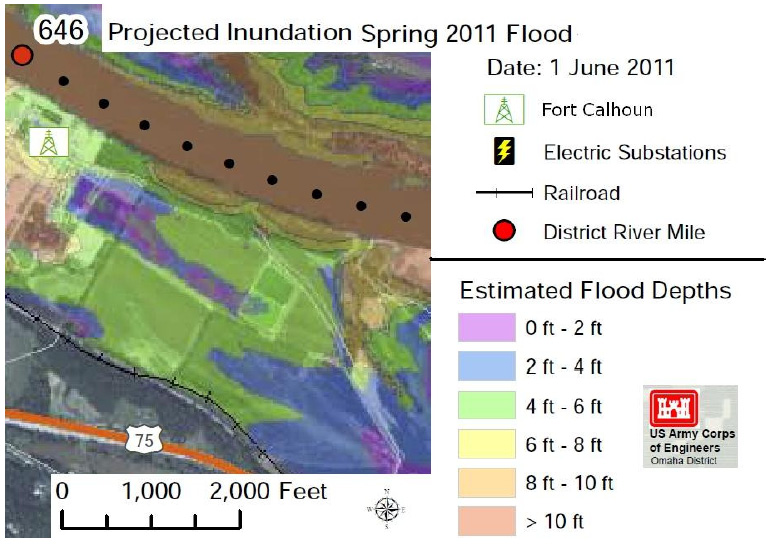
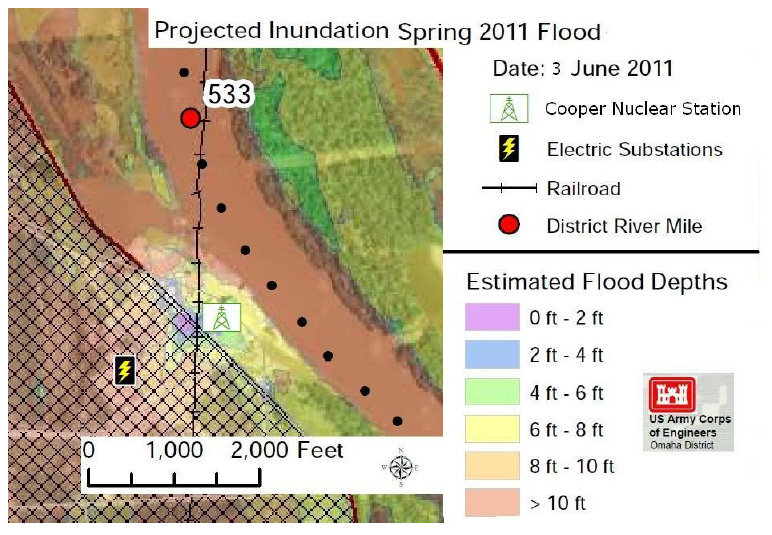
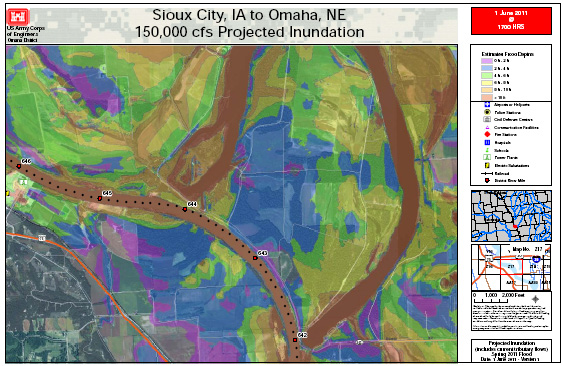
On the Sioux City, IA to Omaha, NE link, check out map Z17 and look way over in the right side for the Ft. Calhoun nuclear plant (yes, there is something in Ft. Calhoun in addition to the legendary “Ft. Calhoun Interface.”), and compare with the maps below that focus on the plants — it’s hard to miss the placement of these “critical” plants in hard to find places:
From Roger Herried today:
As a result of one of the wettest winters in over 100 years the Missouri River is threatening 6 dams that were put in place over the last 60 years to reduce annual flooding on the Missouri’s floodplain which averages between 10-20 miles across. When the area of concern was first settled by Europeans, they built their towns and farms in the fertile plain because it contained the best soil to grow food. In 1889, there was a wet year that filled the entire floodplain with a torrent that lasted for weeks. All towns and farms on the plain were washed away. The only thing left of my home town of Vermillion SD. were a few big concrete blocks of the local church. The next time they rebuilt was not on the flood plain but on the bluffs overlooking the Missouri.
Starting in the 1960’s the US Corps of Engineers constructed 6 dams on the Missouri River, the last of the six being located near Yankton SD called Gavins Point Dam. With the dams in place, everybody went back to putting farms and guess what, two nuclear power plants on the flood plain. Due to the extreme winter including major rains in May the Corp of Engineers has announced that it will be forced to release 150,000 cubic feet of water per second throughout much of June. This is five times more water than the Corp has ever had to release before, and the rainy season has not ended yet. They are suggesting that these levels will continue for much of June.
The Corps of Engineers has just released a set of projected flood maps for the area from Yankton SD throughout Nebraska showing what they think will happen in terms of controlled flood levels in the region. Based on these maps both of Nebraska’s nuclear facilities are in severe danger with the Fort Calhoun unit located 19 miles north of Omaha Nebraska and projected to be under water from 4 to over 10 feet of water (see map below). Note that in May of this year, the NRC hit Ft. Calhoun for poor flood control problems from flooding that took place last year. The facility is a 500 MegaWatt Combustion Engineering PWR reactor that is currently shut down.
The other reactor the Cooper nuclear station is located 23 miles south of Omaha and is an 830 MWe GE Mark 4 reactor and is currently at full operation. It is predicted to be under water from 4-8 feet. Behind the reactor and to the Northwest are located levees that are meant to keep at least reduce flooding by 2 feet.
Here are two maps sent by Roger Herried that identify and focus on the Ft. Calhoon and Cooper Nuclear Station nuclear generating plants: