AWA Goodhue appeal refiled
December 13th, 2011
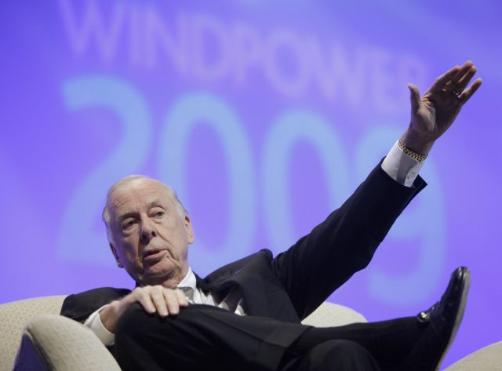
The T. Boone Pickens’ AWA Goodhue Wind Project proposed for Goodhue County is headed to the Appellate Court… again.
Here we go!!!
Why again??? Ask the PUC — they sent around a bogus memorandum pushing to appeal in September, we did, and said, “Hey, Appellate Court, look what they’re saying, can you believe it?” and the Appellate Court said, “PUC, what ever do you think you’re doing? APA rules do not pre-empt your own rules about appeal, DUH!”
They’re worth a read to see how convoluted and brazen the PUC’s push was. The Court agreed with us and said the PUC was so egregious that hey, don’t worry about it, when you refile at the appropriate time, NO CHARGE!!! As it should be.
And MISO “approval” means exactly what?
December 9th, 2011

Here it is, MTEP 11, the Midwest Transmission Expansion Plan for 2011 (CLICK HERE, look on lower right), and it’s in the news too. The main report and some appendices:
MTEP 11 Appendix A-1_2_3 – Cost Allocation
Page listing all the Appendices
MTEP Appendix e52 Detailed Proposed MVP Portfolio Business Case
Please take note that this includes not only the CapX 2020 Brookings-Hampton line (#2 on map), but also the LaCrosse-Madison line (#5 on map), the one they need to build or they’ve got a lot of system instability goin’ on.
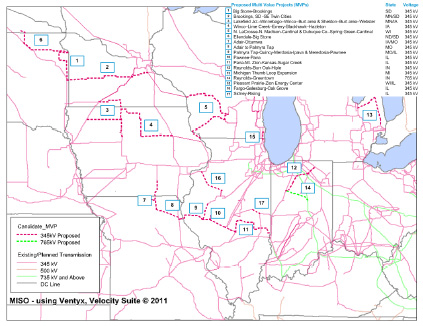
From my perspective, the most important thing to be aware of is that MTEP 11, and the MTEPs that preceded it, are about the shift to economic dispatch and development of the electric market. At the outset, MISO studied potential benefits of this shift, and found massive economic benefits, of which they speak in their press release. The economic benefits are realized by optimizing use of lower production cost generation, and in their own words, to “displace natural gas with coal.” Don’t believe it? Read this study that ICF did for MISO:
This is the worst possible result for those of us who breathe, and means that tens of thousands of landowners will have very high voltage transmission lines on their land, taken from them by eminent domain. These projects, almost all of the MTEP projects, are not about electric reliability, they’re “need” is to deliver market transactions of electric generation from any “point A” to any “point B,” and this is a private interest, a desire for market profits, and not a public interest.
Another issue looming is “what does MISO ‘approval’ mean?” Transmission lines are regulated by states, individually, and there is a movement to strip states of their regulatory authority and transfer that to federal entities. Look no further than Obama’s transmission “fast track” proposal, naming one of the CapX 2020 projects! States must make their energy regulatory decisions in an open, transparent process and based their decisions on ratepayer and public interest. That focus is not present in federal top-down edicts. States’ rights are at issue and we need to keep on our toes so this power shift doesn’t slide through.
And it’s not “just” the ICF report above, that’s it’s all about coal is clear from prior press. Here’s an important sentence, quoting GRE’s spin-guy Randy Fordice — explaining what we all know, that the MISO effort to get the “benefits” of displacing natural gas with coal:
Coal with benefits, yesiree… Gotta hand it to Fordice for being honest!
Xcel shelves projects, admitting demand is down
December 3rd, 2011

Black Dog Plant – photo by Rick Orndorf.
Xcel Energy is cancelling some of its projects, choosing to shut down Black Dog coal plant rather than spent the $$$, our ratepayer $$$, to convert it to gas; pulling out of the Prairie Island uprate (though on this one it’s hard to tell if it’s economics or technical difficulties):
And also this choice tidbit:
For the financial-wonkishettes out there:
Seeking Alpha:
Xcel Energy CEO Discusses Q3 2011 Results-Earnings Call Transcript
Note that Xcel Energy’s expected residential demand is 0.5-1.0% increase…
For the December 1, 2011 Xcel Energy’s Investors Dog & Ponies GO HERE!
Back to coal plants… Xcel Energy’s Sherco 3 down, to remain down, after a fire:
And Xcel’s Black Dog blew up a while ago… what’s up with that trend?
BOOM! at Xcel’s Black Dog plant
September 22nd, 2010
…so let me see… they admit that demand is way down, that there’s too much generation… and we need CapX 2020 exactly why???
And consider that the Sherco plant and Black Dog plant are problem puppies in their pack — a direct quote from the 10-Q above:
National Park Service: “No Action Alternative” for Susquehanna-Roseland transmission
November 21st, 2011
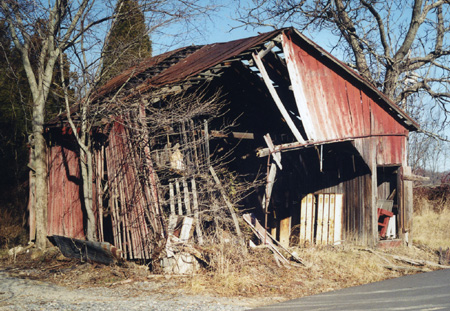
Yes, it’s true, the cow is out of the barn – and the National Park Service says that the “No Action Alternative” is the best alternative for the Susquehanna-Roseland transmission line. Can you hear PSEG and PPL squealing???

Big thanks to Scott Olson for the heads up, and this link:
The bottom line, from page 16 of the pdf below, page vii of the actual document:
ENVIRONMENTALLY PREFERRED ALTERNATIVE
The environmentally preferred alternative is the alternative that would promote the requirements of the
national environmental policy expressed in section 101(b) of NEPA. It is the alternative that causes the
least damage to the biological and physical environment and that best protects, preserves, and enhances historic, cultural, and natural resources (CEQ 1981, Q6a). Alternative 1, the no-action alternative, was selected as the environmentally preferred alternative by the NPS. This decision was based on the available scientific data about the proposal and mitigation measures presented by the applicant and collected by NPS. An analysis of this data made it clear that alternative 1 best meets the requirements of the environmentally preferred alternative.
Really, that’s what it says… wow… I’ve never seen that before in a DEIS. You can see for yourself here, again, p. 16 of the pdf, page vii of the actual document:
SRLine DEIS Volume 1, Front Matter, Chapters 1 and 2 (8.2 MB, PDF file)
Here’s the NPS page with the whole thing:
Comments are due by 11:59 p.m. January 31, 2012:
National Park Service Susquehanna to Roseland 500 kV Transmission Line Right of Way and Special Use Permit Draft Environmental Impact StatementFrom the site, there are three public “meetings” scheduled where you can make comments in person:
Tuesday, January 24, 2012
(snow date 1/31)
Fernwood Hotel and Resort
U.S. 209 Bushkill, PA 18324Wednesday, January 25, 2012
(snow date 2/1)
Stroudsmoor Country Inn – Ridgecrest
RD#4 Stroudsmoor Road Stroudsburg, PA 18360Thursday, January 26, 2012
(snow date 2/2)
Farmstead Golf and Country Club
88 Lawrence Road
Lafayette, NJ 07848
Comments are due by 11:59 p.m. January 31, 2012. If you are unable to attend the public meetings, please submit your comments by January 31, 2012 via the internet at http:// parkplanning.nps.gov/DEWA or by mail to address below (there are two addresses below – best send to BOTH!):
John J. Donahue, Superintendent
Delaware Water Gap National Recreation Area &
Middle Delaware National Scenic and Recreational River
HQ River Road, off Rt. 209 Bushkill, PA 18324and
Pamela Underhill, Superintendent
Appalachian National Scenic Trail
P.O. Box 50 Harpers Ferry, WV 25425
Or by filing it at this site:
Comments are due by 11:59 p.m. January 31, 2012
Gov. Dayton rolls and caves again!
November 17th, 2011

O… M… D!
Gov. Mark Dayton has done it again, apparently looking to leave a legacy of being one of the most environmentally harmful Governors in Minnesota history.
 And to think he’s a shep guy…
What’s this all about? Well, for example, first there was his roll and cave on MPCA and DNR permitting, “streamlining” or gutting, as the case may be, beating the Republicans and their legislative agenda to the punch:
Dayton “streamlines” for corporate interests!
And then adding insult to injury:
Walton’s Bill Grant – Deputy Commissioner of Energy?
Now, by Executive Order, he does it again, this time to the EQB:
Executive Order 11-32
Check it out:
By November 15, 2012, the EQB shall evaluate and make recommendations on how to improve environmental review, given the changes made in Chapter 4, House File 1, and the recommendations contained in the Office of the Legislative Auditor Environmental Review and Permitting Report.
Here’s Chapter 4, House File 1.
And now for the Office of the Legislative Auditor Environmental Review and Permitting Report:
Legislative Auditor’s Report – Environmental Review & Permitting