Keeping on keeping on…
October 12th, 2013
Sometimes it gets really tired out. There have been two LONG projects that slowly wound down lately, five long years. It’s hard to keep up that kind of slow-motion fight. Ya know how that is? Well, the article below was received a while back from a cohort in a big long mess of a case that ended sort of well (except that someone always gets stuck with the infrastructure in their yard). Knowing of the battle, being out there on the front lines, she sent this:
Worth the read… a reality check that we are indeed in a long strange trip!
And speaking of this activist cohort, look who’s joining her family, is she cute or what — look at that smile, it’s enough to sustain any conservationist. I’m SO looking forward to meeting this little grrrrrrrl:

After 5 (#&%(#)* years — Goodhue Wind is DEAD!
October 10th, 2013
What a day at the Minnesota Public Utilities Commission:
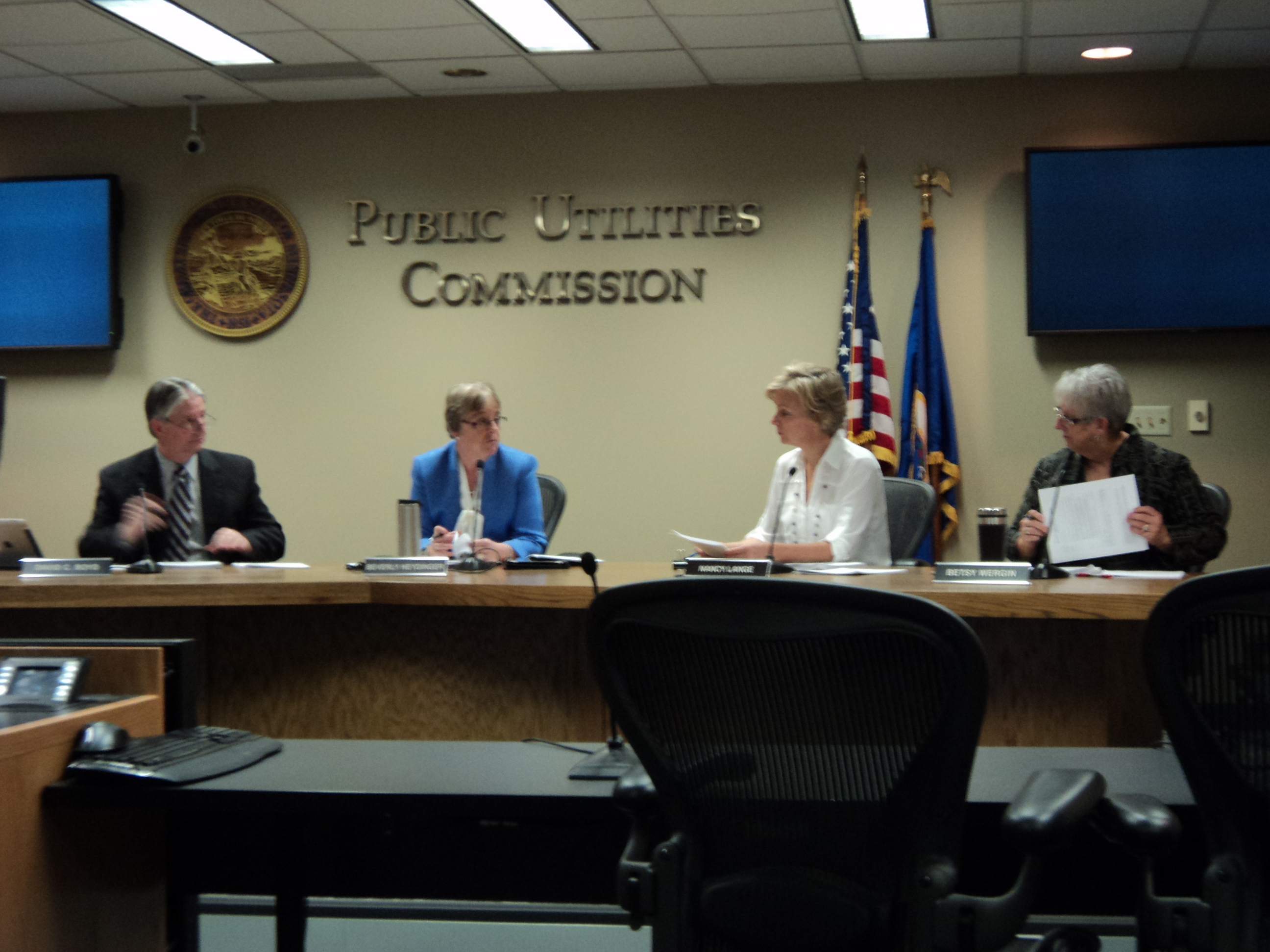
This project, applied for back in 2008 as “Goodhue Wind” and then in January 2010 becoming AWA Goodhue, and then ??? more recently becoming “New Era Wnd,” has been a headache for the state since the original application. For those in and near the footprint, it’s been much more than a headache. Now, after over 5 years of weighing in, participating, dodging helicopters and gathering frightened cattle, digging through deeds and filings at the County Recorder’s office, scouring the countryside for eagle nests that developers don’t want found, compiling piles and piles of information and testimony about impacts of low frequency sound, wading through misrepresentations, misstatements and mischaracterizations and discovering the truth, taking every possible avenue to be heard and finding a few more for good measure, after five long years we can finally say, “YES!!!” this project is over, it is done, DEAD!
The Goodhue Wind Certificate of Need and Siting Permit have been REVOKED. The Power Purchase Agreements with Xcel Energy have been terminated.
Five long years, what a headache…
Five years — what took so long?
Looking at the big picture, this is an example of systemic problems within the state, at the Public Utilities Commission, at the Dept. of Commerce, and at the legislature.
I also ask, what is it with these projects in Goodhue County? I’ve been involved in three of them, three projects not built, ranging from NSP’s nuclear waste “in Goodhue County” in Florence Township; to the Kenyon Wind project proposed by John Daniels, husband of Windustry’s Lisa Daniels and which, as the first C-BED project in the state, proposed to put a substation and turbine on former House Speaker Steve Sviggum’s land; and this “Goodhue Wind” project (note that we’re not counting the quickly dropped CapX 2020 initial talk of coming down the west side of the Mississippi over “Site P” in Florence Township, and the much longer CapX 2020 proposal and ultimately permitted transmission line on the west end of the county, that is a whole ‘nother story, to be found at www.nocapx2020.info!). NONE of these three projects were built, and ALL took five years to get from proposal to rejection. WHY SO LONG?
I see this as a litany of systemic problems.
SYSTEMIC PROBLEM #1 – INADEQUATE ENVIRONMENTAL REVIEW
It’s pretty much a no-brainer, but once more with feeling… environmental review for wind projects is inadequate because the siting law exempts wind projects from environmental review!!! This is not compliant with the Minnesota Environmental Policy Act. And under the Certificate of Need rules, all that’s necessary is an “Environmental Report,” and not an Environmental Impact Statement. This “Environmental Report” though, to be clear, is NOT statutory, it is the work of the agency in rulemaking, perfectly legal for the agency to write its own rules, BUT it’s time they were challenged on the result, the failure of any agency to require an environmental impact statement on a project with such significant impacts. We’re in rulemaking now on Certificate of Need, and it’s time to correct that change made about a decade ago.
Another aspect to this is that Bill Grant, formerly Izaak Walton League, is now in charge of utility infrastructure siting at the Dept. of Commerce. Bill Grant is one who helped usher through the legislation exempting wind projects from environmental review!!! He’s got to go and we’ve got to undo the damage he’s brought to the state of Minnesota.
The state law requires:
This review of impacts, including economic, employment, and sociological effects must be addressed. We need to look at the adverse impacts, not ignore them, and we must not inflict the impacts on a community while castigating those who struggle to make the impacts known. And FYI, an “Environmental Report” is not an “Environmental Impact Statement.”
SYSTEMIC PROBLEM #2 – REGULATORS THAT WON’T REGULATE
This project dragged on and on and on and on and on and on, because no one wanted to make a decision on this project. Evidence piled up, the developer wouldn’t produce requested information… How much of a demonstration of inability to put together a project is necessary before action is taken? How much is necessary before it’s apparent that the project shouldn’t have a permit in the first place? How much misrepresentation before the state stands up and says NO! The Public Utilities Commission must be willing to look at the economics and the structure of a proposed project — THEY’RE the regulator. Take a close look at projects, and sooner rather than later!
SYSTEMIC PROBLEM #3 – APPLICANTS ARE RUNNING ROUGHSHOD OVER PEOPLE
Projects run roughshod over people in the area. In this case, standing up to the Goodhue Wind Project took five years of commitment, as significant cost to those who participated. It was the people who initially raised the issues that ultimately killed the Goodhue Wind Project, including C-BED status, eagles, siting, multiple misrepresentations on the part of the Applicants. But this isn’t their job, it’s the job of the regulators, meaning it is the job of the Dept. of Commerce and the Public Utilities Commission to investigate, to verify information, to assure that the applicant produces the information necessary and that its representations are TRUE!
When I work with clients on a project like this, I urge them to develop a big picture approach, and to work within the framework provided. It’s arcane, it’s a royal pain, but this is what we’ve got. Unfortunately, this is not an example where “the system worked,” and instead, it is yet another example that it did not work. The Goodhue Wind Project fell apart of its own deficiencies. YEAAAAAAAAA! But don’t be fooled. The regulatory system in Minnesota is NOT working. Don’t be fooled for one minute!
The good news of this is that Peter Mastic can close his “office” and go back to Nevada:

Annual Humane Society Gala!
October 6th, 2013

Comments on EQB Standards & Criteria
October 4th, 2013
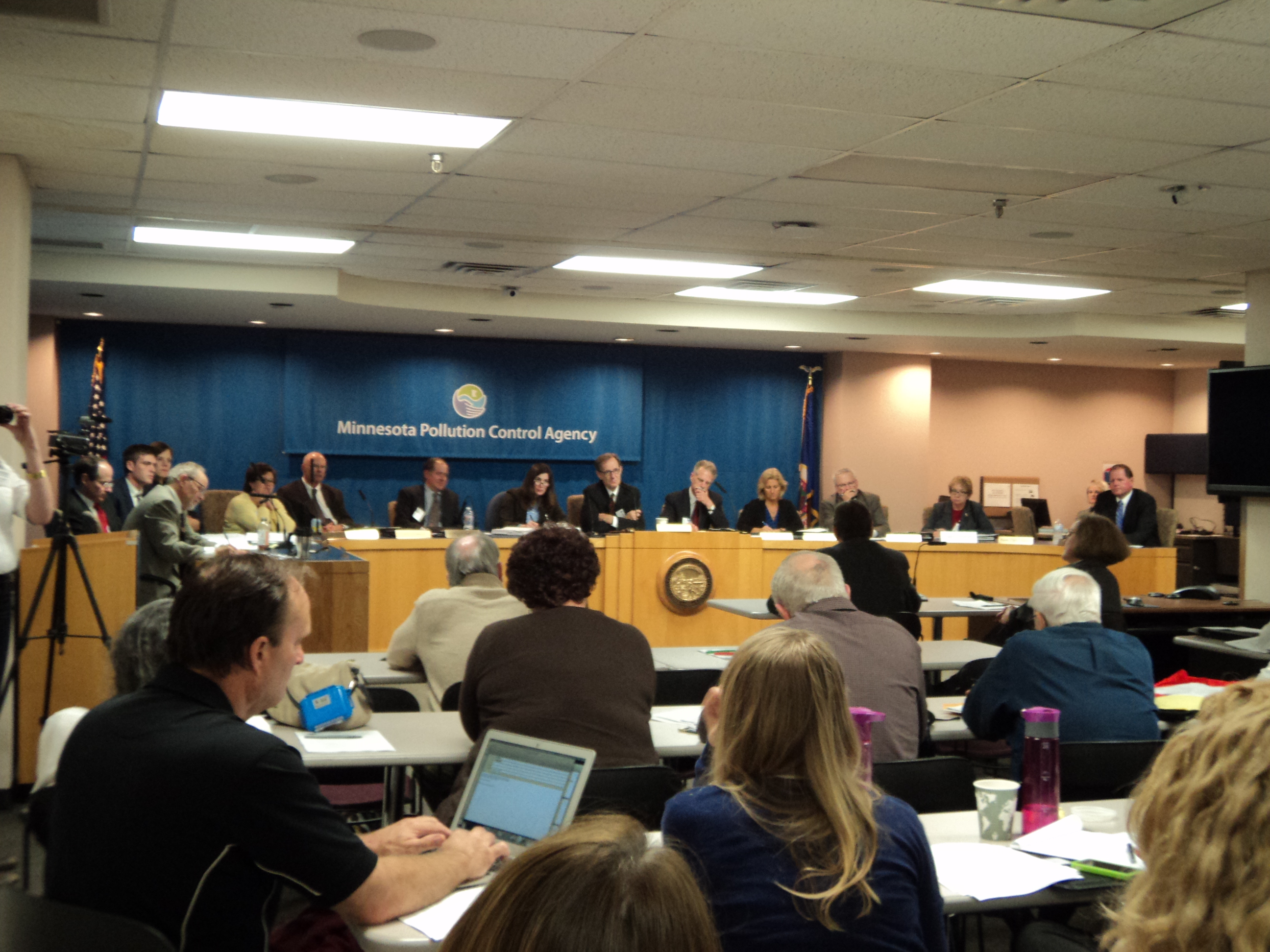
On September 18th, the EQB sent staff back to the drawing board to rewrite model Standards and Criteria for silica sand mining… so NOW is the time to be filing comments on your ideas for EQB Standards and Criteria. New EQB Executive Director Will Seuffert has said that at the next meeting he will trot out a schedule for these festivities:
Here’s an example — the Comment drafted on behalf of Winona Co. CASM:
So, what to do? How do write your own comments? Here’s a format and form that may prove useful, see below for suggestions:
Send comments ASAP (the sooner the better) to:
Will.Seuffert@state.mn.us
jeff.smyser@state.mn.us
bob.patton@state.mn.us
kate.frantz@state.mn.us
The legislation passed last year, Minn. Session Laws Ch. 114, sets out categories for these Standards and Criteria (remember, this is NOT rulemaking, not any specific procedure for doing this). They’re needing your thoughts on Standards and Criteria, and there are so many categories that you’re bound to have some thoughts on this.
Many people have said this is just too complicated, and what I suggest is to take it in small pieces. For example, if you care about protecting the bluffs, just select that one row:

One way to do this is to work it backwards, do your research and work from right to left:
1) “Support for language” column, where you’d list the studies that support protection of the bluffs, i.e., “DNR Eco-Regions Subsections map” (with a copy to attach to your comment);
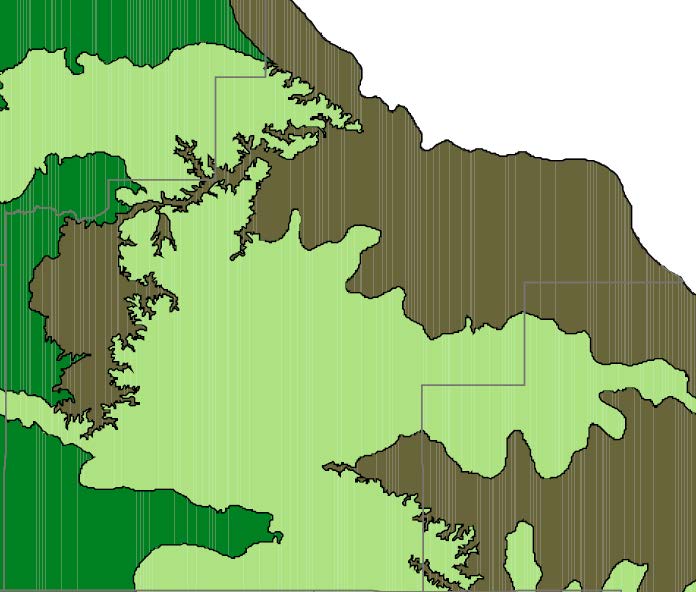
2) “Proposed Language” using that info as basis for language, from a map, studies, state statutes, local ordinances, figure out how bluffs could be protected, such as a prohibition of mining in bluffland areas as depicted by the dark green/grey of this map:
Your comment would look like this:

Or if you’re concerned about water, again, working backwards:
1) “Support for Language” column: Goodhue County map showing Sensitivity to Pollution of the Uppermost Bedrock Aquifers (with copy of map attached to Comment):
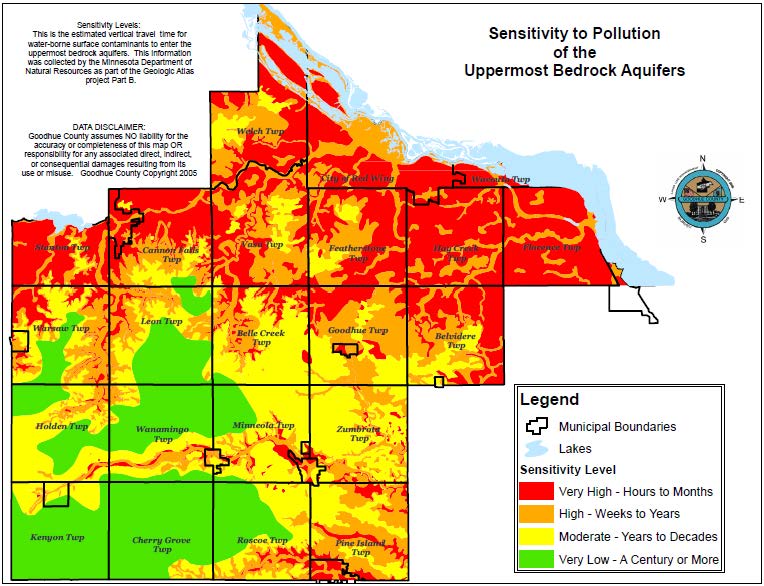
2) “Proposed Language” column: Prohibition of mining in areas with Very High or High sensitivity to pollution of the uppermost bedrock aquifer.
Your comment would look like this:

And another example:

The catch in all of this is that your comments have to specifically relate to the legislatively mandated development of Standards and Criteria — it’s not enough to give vague generalities and rah-rah no frac sand mining here statements. And working backwards seems to be the best way to develop this, to do some basic googling and find studies. Check the Save the Bluffs reference page for some ideas:
Again, here’s a format and form that may prove useful, see below for suggestions:
Send comments ASAP (the sooner the better) to:
Will.Seuffert@state.mn.us
jeff.smyser@state.mn.us
bob.patton@state.mn.us
kate.frantz@state.mn.us
| Standards & Criteria (from statute) | Proposed language | Support for language |
| (1) Setbacks or buffers | ||
| (iv) Bluffs |
Maps at Goodhue Co. Mining Committee
October 1st, 2013
Very interesting…
Here is a copy of the map at issue at the Goodhue County Mining Study Committee (see below too):
Ecological Subsections Map
(a similar federal one can be found at http://upload.wikimedia.org/wikipedia/commons/8/8b/Minn_ecoregionsmap.pdf, for origin, see http://en.wikipedia.org/wiki/List_of_ecoregions_in_Minnesota)
This map was presented to the County Mining Study Committee at its last meeting. At issue is how this would be used — the DNR’s boundary is clear, and more specific on other maps somewhere, and a more detailed map with additional layers is likely within the county resources already. Is it a matter of:
- a prohibition of all mining in the grey/green; or
- prohibiting silica sand mining in the grey/green; or
- more intense regulatory scrutiny of proposals in the grey/green; or
- some other option?
I’d vote for the first, with the second as a fall-back.
Use of this map as guidance is a big step forward because it isn’t an arbitrary boundary (a distance is arbitrary), instead it’s one delineated by the DNR (and a good reference for the EQB Standards and Criteria), not just an arbitrary distance. The County is sensitive to the need for this support because of the issues over the wind 10 RD setbacks and loss at the PUC and Appellate Court. They need to be able to refer to something and say, “This is why!” These maps do just that. It’s based on science, it’s based on research of the state agency with the expertise, it’s easy to establish whether something is or is not in the zone, and it’s supportable and defendable in court.
So what it looks like for Goodhue County, without any other layers, is this:
In addition, there’s this “Sensitivity to Pollution of the Uppermost Bedrock Aquifers” map which I’ve not seen before. It’s on the County site, and look at the red “Sensitivity level – very high, hours to months” which should be referenced (it’s similar to, but more dramatic, than the MN Dept. of Health map about nitrate contamination):
Kristen Eide-Tollefson has told me that there’s a Water Sustainability Framework Report, and with directions, lo and behold, I found it (still downloading, must be very large with the maps, won’t download as pdf, grrrrrrrrrrr, firefox has locked up twice):
When you look at big picture, which our aquifer is, there’s nearly universal support for protecting the aquifer, and it’s pretty hard to credibly argue against protecting it. There’s a lot of good information, various maps and studies, to support protections, and that’s important because if the county’s ordinance is challenged, as it has been before, it has to be defendable. Protection of the aquifer is the protection of our natural resource that does something for the entire county.
The Mining Study Committee seems to be on a good track here, looking at bigger picture and stronger regulation moving toward prohibitions.
These maps are also oh-so-relevant information that should be considered by the EQB for the Standards and Criteria that they’re reworking.