Info Requests in ITC Midwest MN/IA transmission
March 5th, 2014
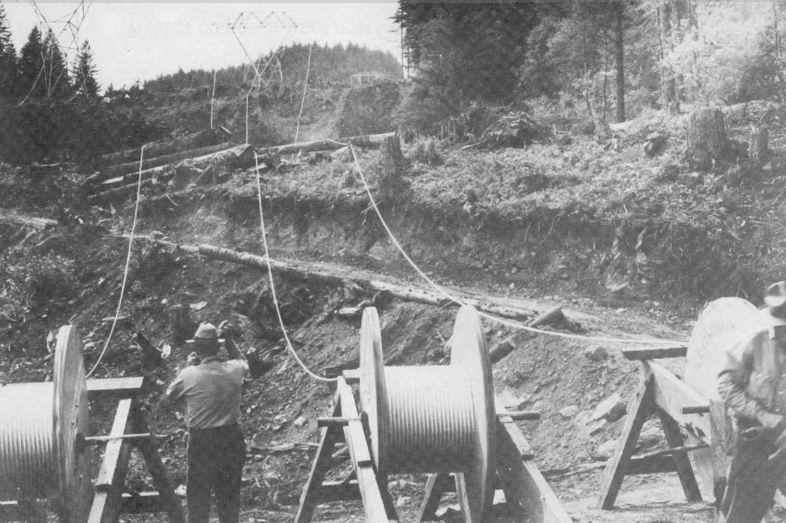
It’s a different kind of “Wild West” in transmission these days (the photo up above could well be the old 230 kV line through PA and New Jersey!). But it gets pretty exciting reading through these applications and seeing what it is that these evil transmission promoters are doing.
I did send out a lot of Information Requests today on the ITC Midwest MN/IA transmission project:
IR 1 to ITC (sent a while ago, responses received)
What I’m most concerned about is that they’re touting all these benefits resulting from this project, but the benefits are associated with not just this project, but the REST of MVP 3, which is this project PLUS the MidAmerican part of MVP 3 in Iowa, PLUS MVP 4 (heading eastward to the Mississippi, and MVP 5, which is heading up to the Madison 345 kV ring, not just the part connecting the MVP 3 and MVP 5, but also Badger Coulee connecting CapX from La Crosse to Madison. IT’S ALL CONNECTED, and the benefits, as modeled by PROMOD, are economic benefits, where a fundamental assumption of the modeling which includes ALL of the MVP projects, and not just MVP 3, MVP 4 and MVP 5, but all 17 of them. 17. OK, find, we’re including all those benefits…
… but what about costs? Wellllllllllllll…
They’re only addressing costs for their teeny-tiny portion of MVP 3, about 1/2 of it in Minnesota and a little bit into Iowa, the red part on this map, and no other costs:
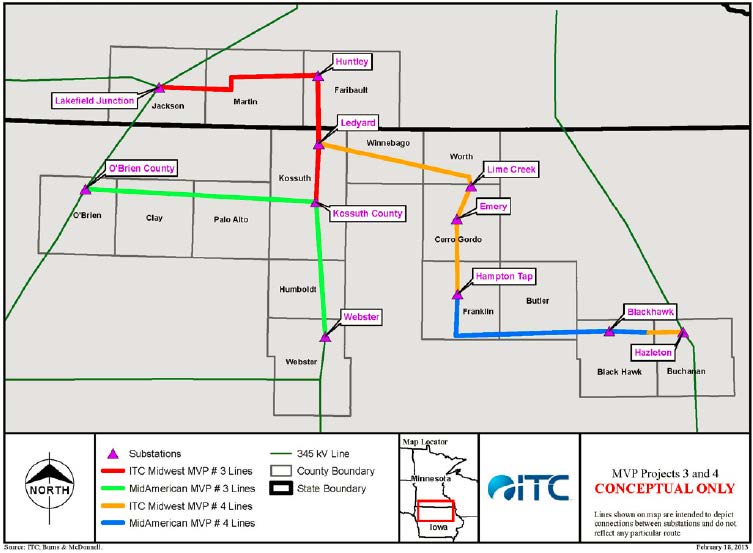
The cost/benefit analysis of this project is a little unbalanced:

And it should come as no surprise that their lead witness, ITC Midwest’s David Grover, was behind the TRANSLink docket (oh my… for that docket, go to the PUC search page, and search for docket 02-2152 (NSP) and/or 02-2119 (IP&L) where both utilities were asking the PUC for permission to transfer transmission assets to TRANSLink, what was to be the first transmission only company in Minnesota. It wasn’t exactly going well, and so they bought out the enviros who had intervened:
Things went south in transmission from there, because even though the TRANSLink Petition was withdrawn, the utilities just did it another way, and got everything they wanted, including legislation authorizing transmission only companies:
2005 Ch 97 – Transmission Omnibus Bill from Hell — Xcel’s transmission perks and C-BED
… plus perks like construction work in progress (CWIP) rate recovery, broadened definition of “need,” on and on, a transmission company or utility’s dream.
It’s all connected…
Someone explain rulemaking to the MPCA
March 2nd, 2014

The Minesota Pollution Control Agency (MPCA) is in charge of organizing the three rulemakings mandated by last year’s silica sand bill, and it’s really not that complicated — narrow specific issues. From the Session Law, here’s what they’re supposed to do.
Sec. 105. RULES; SILICA SAND.
(a) The commissioner of the Pollution Control Agency shall adopt rules pertaining to the control of particulate emissions from silica sand projects. The rulemaking is exempt from Minnesota Statutes, section 14.125.
(b) The commissioner of natural resources shall adopt rules pertaining to the reclamation of silica sand mines. The rulemaking is exempt from Minnesota Statutes, section 14.125.
(c) By January 1, 2014, the Department of Health shall adopt an air quality health-based value for silica sand.
(d) The Environmental Quality Board shall amend its rules for environmental review, adopted under Minnesota Statutes, chapter 116D, for silica sand mining and processing to take into account the increased activity in the state and concerns over the
size of specific operations. The Environmental Quality Board shall consider whether the requirements of Minnesota Statutes, section 116C.991, should remain part of the environmental review requirements for silica sand and whether the requirements should be different for different geographic areas of the state. The rulemaking is exempt from Minnesota Statutes, section 14.125.
Do notice that each directive for rulemaking says that “The rulemaking is exempt from Minnesota Statutes, section 14.125.” That’s code words for “take your time, we’re in no hurry to see anything accomplished. Dawdle, go around in circles, fall down, and get lost along the way…” Folks, that’s just what we’re experiencing in this rulemaking process, molasses on a cold day in hell.
Initially, the MPCA resisted forming an Advisory Committee. Those of us who’ve participated in rulemaking before know that the Advisory Committee is where it happens, where you can have some meaningful input, because in the world of rulemaking, you can’t adopt a rule that is substantially different than that offered for comment by the agency. Therefore has to happen at the draft stage, before the agency releases it. But this MPCA is the same MPCA that worked very hard to avoid having a Citizen’s Advisory Committee, despite it being expressly authorized by statute. Once more, with feeling:
MPCA staff’s report to the EQB stated inexplicably that they were “confused,” claiming ignorance of how rulemakign works and the impact of comments at this stage:
i. Staff requests Board direction on a question that arose at the August 2nd public meetings.
Members of the public expressed interest in a citizen committee to participate in the rulemaking. It is not clear how a citizen committee would affect the rulemaking process laid out in Minn. Statutes Ch. 14. A multi-step public review and comment process is already required in that statute and we just completed the preliminary step. Rulemaking is essentially creating law: Minnesota Rules have the force and effect of law. Rulemaking is a lengthy process, averaging about two years.
As I said in comments prior to, during, and after the meeting, “It is not clear…” NO NO NO! For someone in Smyser’s position, there’s no excuse for statements like this. The statute is very clear about the agencies’ authority to appoint an Advisory Committees and how an advisory committee it would affect rulemaking – it improves the output by providing input before the draft rule is issued.
CLICK HERE FOR STATUTES ON RULES
CLICK HERE FOR RULES ON RULES (don’t worry, it’s not a mobius strip), 1400.2000 – 1400.2570.
Here’s how the Dept. of Health explains the role of Advisory Committee members (link to their entire Rulemaking Manual below, it could be helpful for those stuck in this molasses process, yes this is about Health, but the intrinsic role and function of an Advisory Committee remains the same):
And now, about ten months after the legislation was passed, TEN MONTHS, rulemaking is flailing about, there is no language proposed, and staff has no language. What’s going on? My money is on one path — that they’ll stall and bamboozle with bullshit and take in a few general comments, and then hand the draft rule that they want, without any draft, without any review by the Committee, to the agency to issue a SONAR, Notice and put out for public comment, totally blowing off the Citizens Advisory Committee.
Whatever their intent, the impact is that tempest is a fugiting and there’s nothing to show for the time slowly ticking away.
Why would I say such a thing? First, again, there is no draft language for the Committee to review. None, nada, nothing for any of the three rules they’re charged with drafting. So what exactly are they doing?
Second, they are for sure bamboozling them with bullshit, because look what’s posted as materials, from the Silica Sand Advisory Panel page:
Resources for the panel and the public
Reports
Air monitoring data for industrial sand mine/processing plants in Wisconsin
Report on Silica Sand (2013)
Rulemaking
Information sources
Other
Existing rules
Environmental Quality Board
Air: State and federal

OH. MY. DOG.
Now honestly, can you look at that without getting dizzy? If all that crap doesn’t have Committee members, most or all of whom have no experience in rulemaking, ready to commit hari-kari, or go utterly insane, or both…
MPCA, just get to the rulemaking, give the public the draft language, so we can tell you what we think about it. Show us you’re not acting in bad faith.
D-R-A-F-T L-A-N-G-U-A-G-E!
Feel free to let them know what you think, what you expect of the rulemaking process, and what you want to see for the draft rules:
nathan.cooley@state.mn.us
Jeff.Smyser@state.mn.us
wendy.turri@state.mn.us
And in the alternative, methinks we’d best come up with some specific draft language now, if not sooner. Show ’em how it’s supposed to be done.
10 a.m. TODAY – MN House Transportation Finance Committee webcast
February 27th, 2014
House Transportation Finance Committee
Thursday, Feb. 27, 2014 10:00 AM
Watch: Live Event | Enhanced version
Northstar Commuter Rail delays.
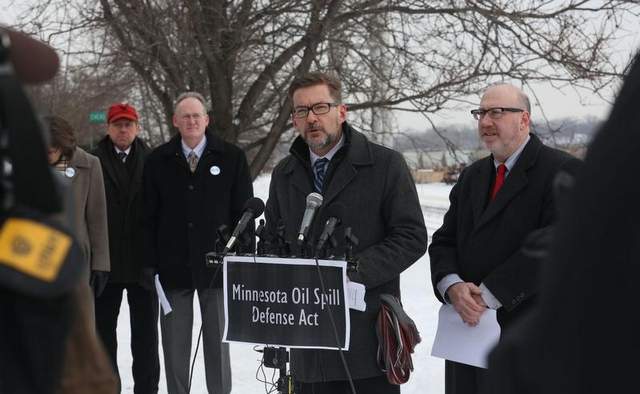
Informational hearing on oil freight and pipeline safety.
In the opening, Frank says that it will be continued on Tuesday, March 5. He expects there will be a hearing on a bill on March 12, and it will also go to the Public Safety Committee.
DOT Orders Crude Transport Changes!
February 25th, 2014
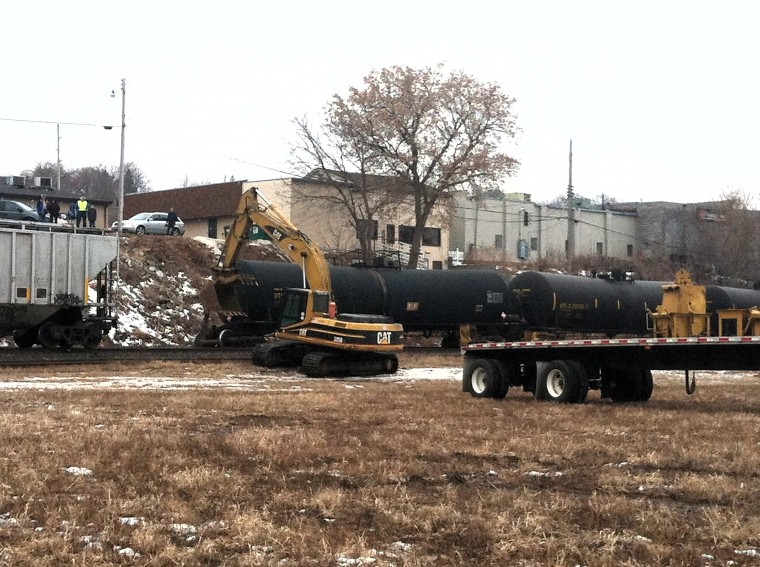 Above is photo from Red Wing derailment, from Republican Eagle.
The U.S. Department of Transportation has ordered stricter standards for transportation of crude oil, stemming from the Bakken oil train disasters cross country. It’s about time!
DOT – Emergency Restriction – Prohibition Order (Docket DOT-OST-2014-0025)
From the Order, it seems they’re getting it figured out:

Here in Minnesota, Rep. Frank Hornstein is holding an INFORMATIONAL hearing. He’s the chair of House Transportation Finance, and if you want to testify (this is not about a specific bill, that’s pending), contact the Committee staff and let them know you’re interested in speaking out:
Administrator: Matt Scherer 651-296-3316
Legislative Assistant: Rachel Nelson 651-296-5486
You can also contact committee members and let them know what you think, here’s the Committee Page and emails are listed.
Now, back to the DOT Order — here are some specifics about misclassification leading to improper shipment:

And they specifically address the Lac Megantic explosion and found that the rail cars that had NOT exploded were correctly classified:

There are a lot of interesting links in this report, links to investigations, etc., including this page, about the investigation that really got the DOT rolling:
PHMSA Ongoing Bakken Investigation Shows Crude Oil Lacking Proper Testing, Classification
From this report, note the links to Notices of Proposed Violations, chump change, but nailing down some violations (note, for example the Hess Corporation one, with multiple violations, and there’s a sliding scale taking into account past violations, so will they be on them in the future? We shall see.):
As a result of today’s findings, PHMSA has expanded the scope of Operation Classification to include testing for other factors that affect proper characterization and classification such as Reid Vapor Pressure, corrosivity, hydrogen sulfide content and composition/concentration of the entrained gases in the material. PHMSA will also move forward with the Notices of Proposed Violations totaling $93,000 that were issued to Hess Corporation, Whiting Oil and Gas Corporation, and Marathon Oil Company, and will continue working with the rail and oil industry based on Secretary Foxx’s Call to Action, including sharing of additional data, and recommendations for future safety initiatives.
MN Rules 7849 & 7850 Updates
February 25th, 2014

It’s like winter in Minnesota — will this rulemaking never end? We’re pretty much ensconced in Minn. R. ch. 7850 now, siting. PROGRESS! Here’s where it stands:
The next meeting of the Rulemaking Advisory Committee is TOMORROW:
February 26, 2014 @ 9:30 – 11 30 a.m.
Rulemaking Advisory Committee
PUC Building, Basement (look for signs)
121 – 7th Place East
St. Paul, MN 55101