John Howe enters 2CD Rep. race
September 22nd, 2015
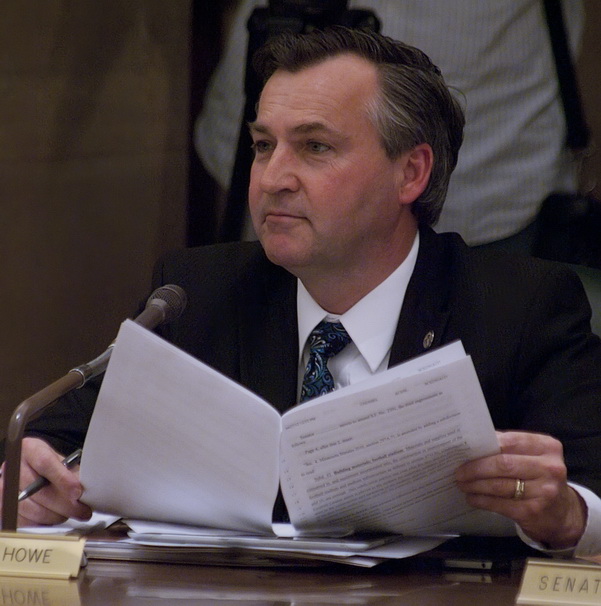
Photo – Gretchen Hoffman, Capitol Chat
John Howe has announced he’s running for Congress in Minnesota’s 2nd Congressional District. It’s all over the web. I’d wager a fair amount that John Howe would win the election. The good news is that Drazkowski will not run, Dog help us if he did (though it would get him out of the MN House!). What I know about Howe is that as Mayor of Red Wing, and as our area state Senator, he stood up to Xcel Energy on its Prairie Island uprate and worked to get the full story out, and Xcel Energy did ask that the Certificate of Need be revoked/withdrawn after it was clear that there was no need for the uprate. Howe also returns phone calls, and he’ll stop for a chat at the Farmers Market.
He was working for a bipartisan legislative environmental lobbying/caucus org of some sort, so I hope that he’ll continue with that mindset. But given the MPR blurb below of Howe’s early campaign stop at a Red Wing Tea Party meeting, that gives me the willies, and I do hope he’s not taking that party line. He also says he’ll put in $500k of his own money toward the campaign. If he’s got that kind of money to throw around, and buys in to the “pay to play” notion, that’s a concern. He’s been a moderate, sane voice, and if he continues on in that vein, he’ll win. If not, if he goes off like Republican Presidential candidates these days, well, he’ll have trouble in this swing district.
We shall see…
Here’s the MPR article:
Howe enters race for Congress
And on Hubbard’s KSTP:
How’s this for an awkward headline from the Red Wing Republican bEagle:
Howe will attempt to win congressional seat
Winona Daily News:
Howe’s in, Drazkowski’s out in race for open Congress seat
In the STrib and STrib blog:
Former GOP state senator joins race to succeed Kline
Former state senator enters race for Rep. Kline’s seat, adding to smaller-than-expected field
In the StPPP and StPPP blog:
2nd Republican announces bid to replace Rep. John Kline
Howe runs for Second District as ‘conservative’ but ‘electable’
I think that last headline pretty much sums it up for CD2!
Sandpiper-NDPC’s Whale-Eye Inducing Petition
September 21st, 2015

WHAT!?!?! Yes… Really… after the delightful decision from the Appellate Court requiring an Environmental Impact Statement, telling the Public Utilities Commission that an EIS must be completed before a Certificate of Need can be issue, the Applicants dropped Petition. Read this whale-eye inducing filing from North Dakota Pipeline Company, LLC (a/k/a Enbridge) hot off the press:
North Dakota Pipeline Company _ Petition for Rejoinder and Comment Period 20159-114150-03
Here’s the short version:

Once more with feeling, here’s the Appellate Court’s decision:
And the bottom line:
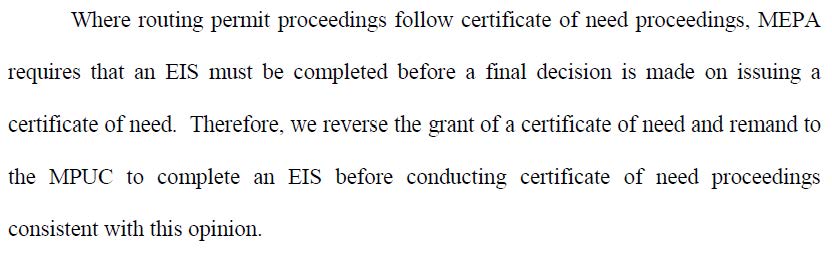
So from this order of the Appellate Court “to complete an EIS” the Applicant now asks for the “need” docket and “routing” docket to be brought back together and to use the “Comparative Environmental Analysis” that the Appellate Court says isn’t sufficient. Yes, that what they’re saying:
What planet is North Dakota Pipeline Company living on? Earth to Mars!!!!! A “CEA” is not sufficient. MEPA requires an EIS. The court told the Public Utilities Commission to complete an EIS. The Court did NOT say to go ahead with a “CEA.”
Not too long ago, Lisa Agrimonti sent around notice that she had moved over to Fredrickson & Byron. $50 says that she’ll be filing Notice of Appearance for this docket!
It’s fall… and almost time for BaronFest
September 21st, 2015

It’s fall, the sun is rising on the other side of the house and bluff now, and I’m not ready! Getting out to enjoy fall as much as possible, and then Little Sadie and I are heading to St. Louis soon for BaronFest III (didn’t have one last year). Maybe down to Arkansas to catch fall later! This is the first BaronFest where I don’t have a German Shepherd, and I’m not sure how Little Sadie will fare.
It’s hard to feel motivated to work with all this transmission going up here in Minnesota. Earlier in the summer, we went down through Wabasha, and south of Wabasha where CapX Hampton – La Crosse cuts across the Mississippi River to Alma, through La Crosse and checked out the Briggs Road substation, host to CapX and Badger Coulee transmission, to Cassville and Dubuque and back up further west, a tour of electric infrastructure.
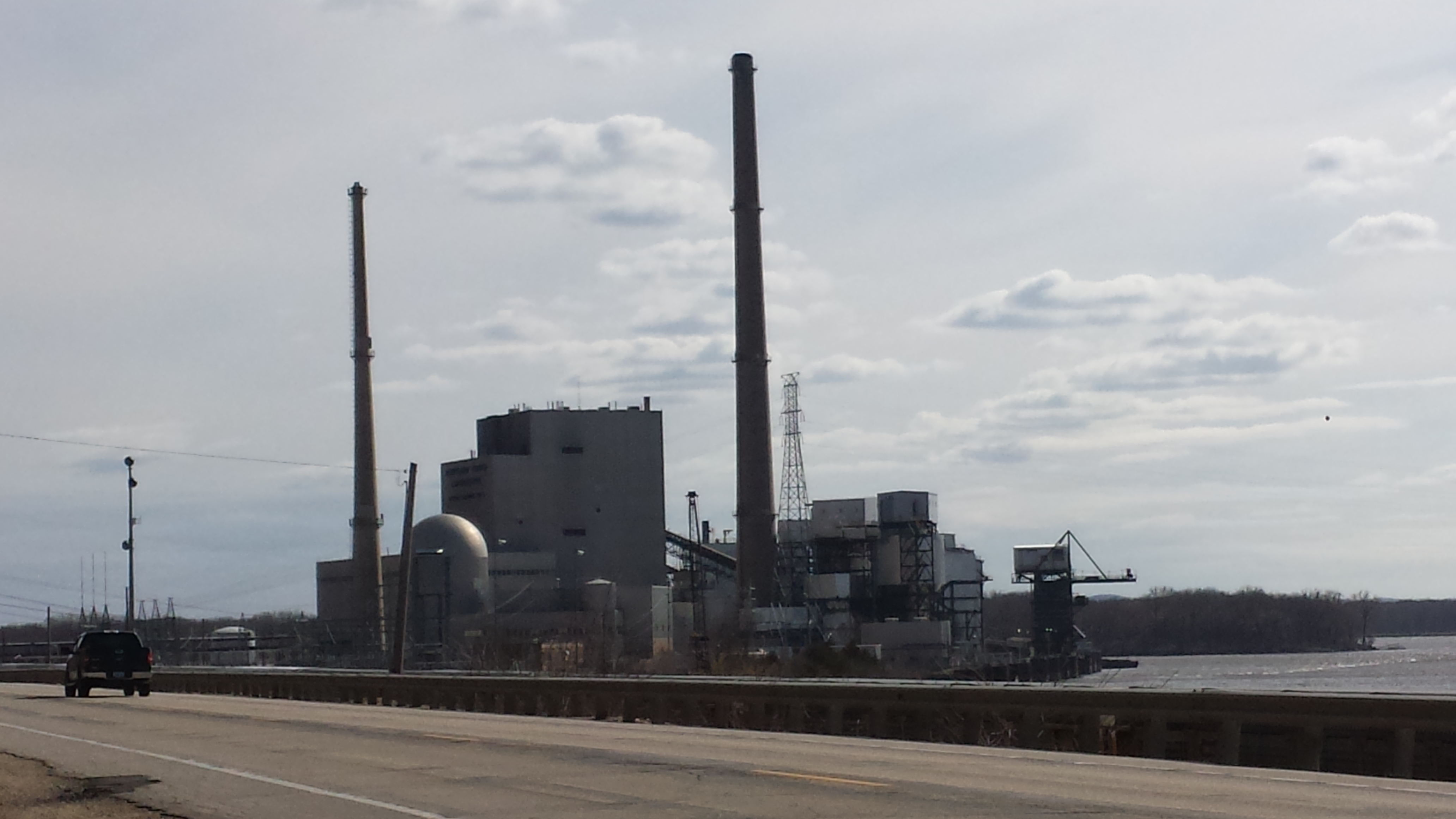
Don’t they have enough? If they’re shutting down this coal plant, why would they need transmission? How about using that capacity… oh, right, they get that 12.38% or thereabouts for building transmission, that’s their primary revenue source these days!
Time for a break…

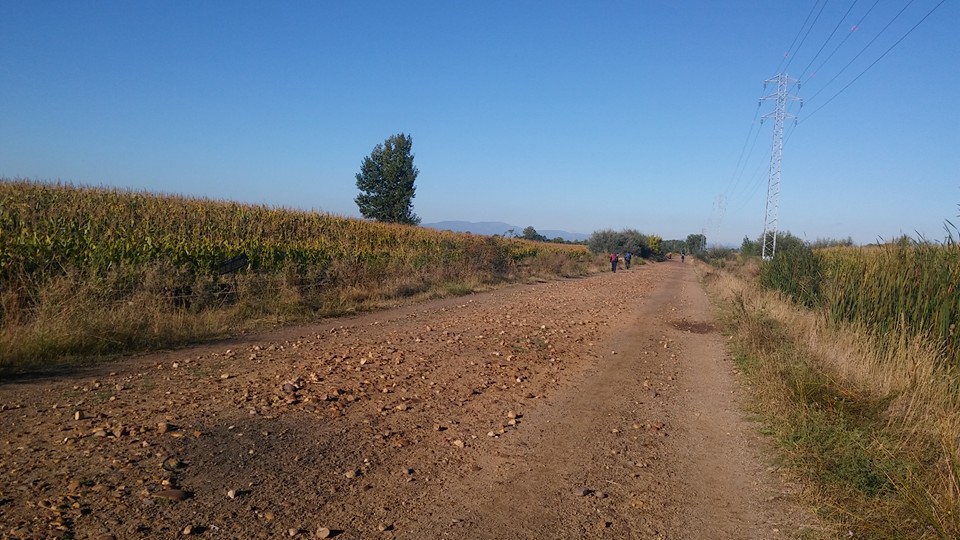
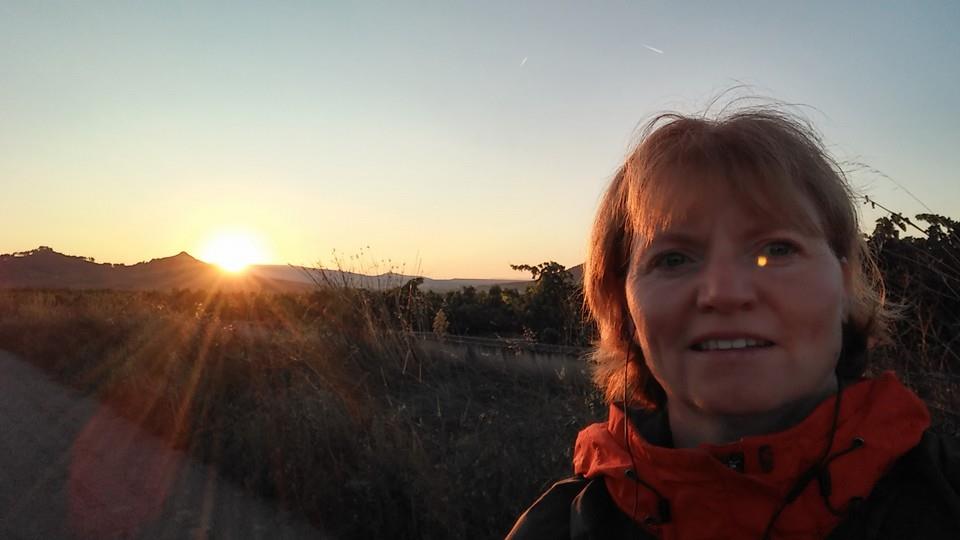
Until then, I can vicariously enjoy my SiL’s trek along El Camino, and transmission lines too, in Spain. Go, Jeanne, go!!!
Arkansas Delegation, Section 1222, and Clean Line
September 15th, 2015
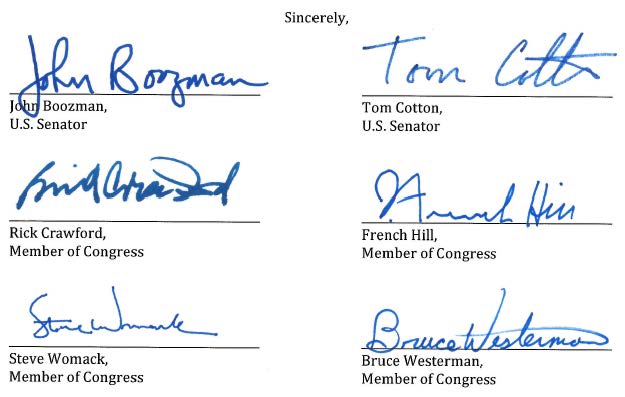
Yesterday, the Arkansas Delegation hit Plains & Eastern Clean Line where it counts — a line drive to the Secretary of the DOE with this letter:
Maybe this letter should have been headed “FREEDOM OF INFORMATION ACT REQUEST.” Plains & Eastern Clean Line applied under Section 1222 of the Federal Energy Policy Act of 2005.
For reference, here’s Section 1222 of Energy Policy Act 2005.
Many of the points raised were ones brought forward in testimony, public comments, and media reports of the Plains & Eastern Clean Line transmission line proposal. Questions the AR delegation raised include basic project information and:
- transactions and costs related to participation in Section 1222;
- obvious failure to qualify because it is not in a “national interest electric transmission corridor” under Section 216(a) of the Federal Power Act;
- improper use of Federal eminent domain authority undermining states’ rights;
- that the project is outside the statutory mission of federal Power Marketing Administrations (Southwestern PMA is proposed by Plains & Eastern Clean Line as partner in its project);
- project boundaries extend beyond the statutory boundaries of Southwestern Power Administration;
- costs for this private project could be transferred to electric utilities and their customers and this possibility has not been walled off/mitigated to insulate Southwestern’s customers;
- concerns about “non-completion” assessment of costs and prevention/mitigation have not been addressed;
- Clean Line’s assertions that they will pay certain taxes to local communities have not been investigated and verified;
- use of existing federal rights-of-way and federal land;
- Clean Line’s substantially incorrect, misleading, and/or inconsistent statements, which are basis for rejection or denial of the application, have not been addressed;
- draft EIS “did not meet the expectations of an inclusive, community-driven feedback process” expected of administrative agencies, and public comment periods and involvement of landowners and stakeholders was insufficient public engagement;
- questions regarding tribal consultation; questions regarding DOE position on state’s role in siting under Section 1222;
- impacts of traversing Mississippi Flyway on waterfowl and migratory birds, together with resultant economic and recreational impacts;
- impacts on public recreation on outdoor recreation in Arkansas;
- use of non-governmental email accounts for Department deliberations regarding this project.
Like WOW! I’m impressed — this letter is a work of art.
At long last, EIS is required for Certificate of Need
September 14th, 2015
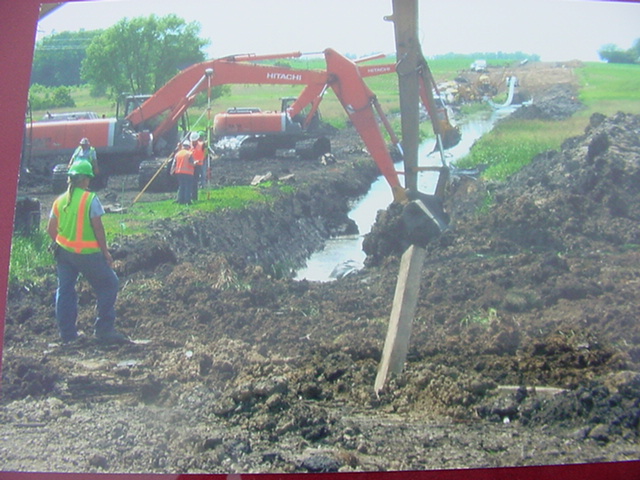 Putting MinnCan pipeline through the Nietes field
Today the Minnesota Court of Appeals finally determined that under the Minnesota Environmental Policy Act, a full Environmental Impact Statement, not the abbreviated “Environmental Report,” is required. I’ve been before the Appellate Court, the Public Utilities Commission, the Administrative Law Judge, in Comments to the Dept. of Commerce, and at the Rulemaking Advisory Committee for Minn. R. ch. 7849 how many times on this?!?!? … sigh… OK, whatever…
Sent this to the PUC’s rulemaking staff because we’ve got to make sure the Certificate of Need rules are in line with this decision:
So back to today’s Appellate decision — I’m glad they’re finally acknowledging this problem. Very, very glad to see this order to remand to the Public Utilities Commission for a full Environmental Impact Statement, as required by the Minnesota Environmental Policy Act.
Here is the decision:
Here’s the meat of it — it’s so simple — why did it take so long?