MISO & Xcel Energy, et al.’s Dream
July 25th, 2022
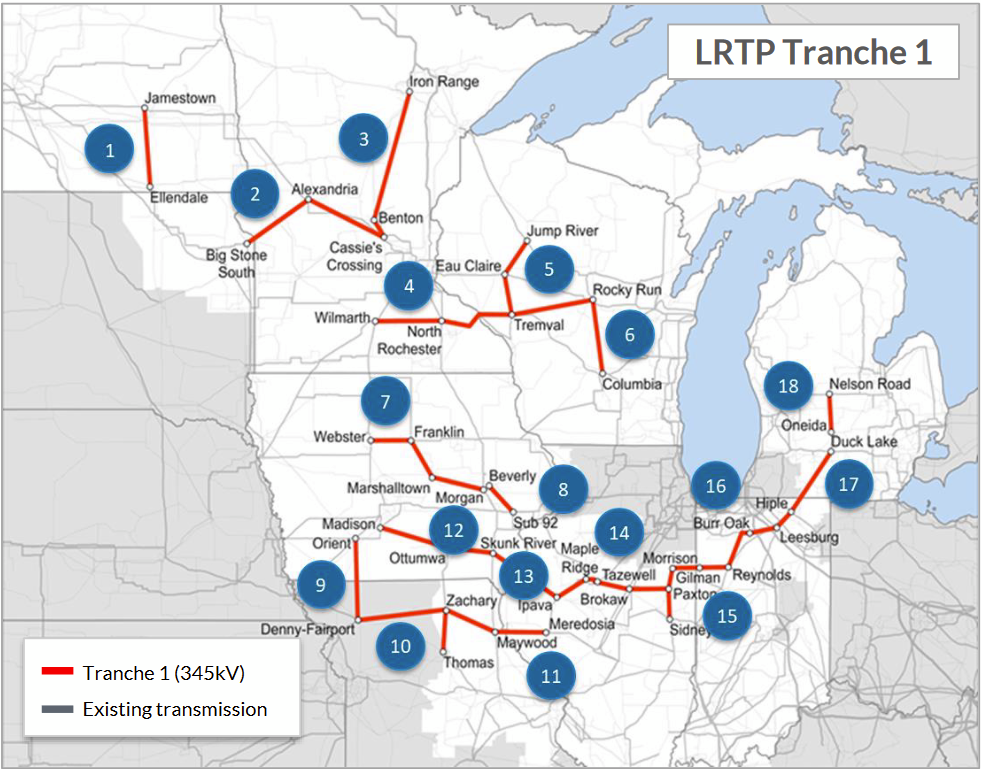
I’ve been working on digging info about Xcel Energy’s proposal in May of a big honkin’ xmsn line from “Lyon County” to Sherco substation, wanted so they can retain transmission interconnection rights.
And today, this, from the MISO “July 26, 2022 Executive Update” appears in the inbox, the dream of MISO and Xcel... errrrr… “Grid North Partners” right?
Here’s the MISO Planning Committee meeting handout for May 20, 2022 meeting:
20220527 PAC Item 02a MTEP21 LRTP Report and Feedback Review PresentationPublished 05/25/2022
20220527 PAC Item 02b BALLOT MTEP21 LRTP Tranche 1 AddendumPublished 05/27/2022
20220527 PAC Item 02b MOTION MTEP21 LRTP Tranche 1 AddendumPublished 05/20/2022
20220527 PAC Item 03 CTA Update PresentationPublished 05/20/2022
20220527 PAC Item 03 Tariff Redlines for Upgrade FilingPublished 05/20/2022
For background, check out MTEP 21 (MTEP = MISO Transmission EXPANSION Plan, no secret the intent):
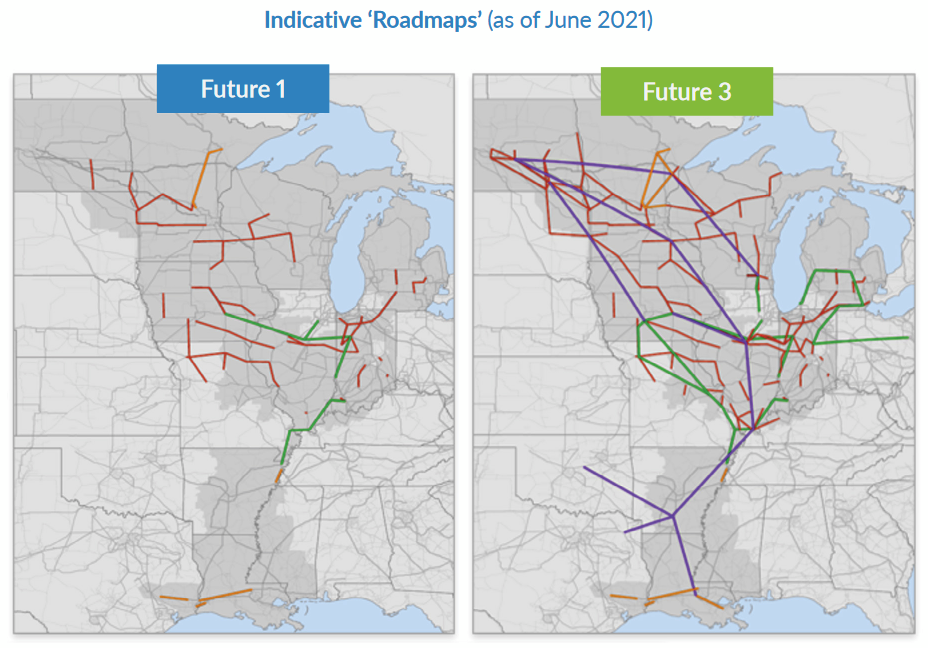
Good grief…
In the STrib:
Utilities plan to spend $2.2B on new power line projects in Minnesota
From the article:
PUC does NOTHING about Freeborn wind noise
July 13th, 2022
Yet another example of GI/GO noise monitoring, following the GI/GO noise modeling, notice of the discrepancies between modeled noise expected and the actual noise found in the post-construction noise modeling.
It doesn’t want to embed, so here’s the link:
https://minnesotapuc.granicus.com/MediaPlayer.php?view_id=2&clip_id=1737&meta_id=205848
The noise study for Freeborn Wind at issue, Parts 1 and 2:
And Commerce-EERA “analysis” of it, with the emphasis on “anal” eh?
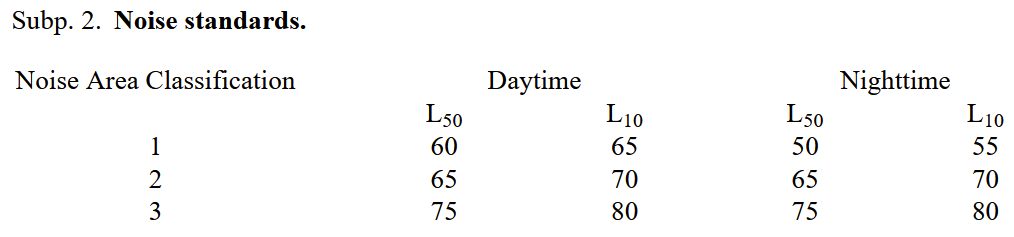
There was a lot of talk about the Minnesota noise standards (which are admittedly NOT designed to address wind noise), Minn. R. 7030.0040:
And not until quite late in the discussion did they even bring up the 47 dB(A) limits imposed by the “Special Condition” deal that Commission did with Freeborn:
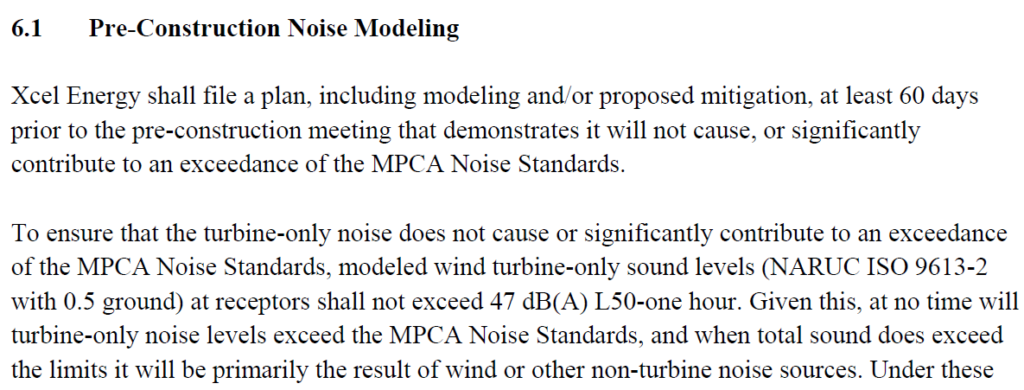
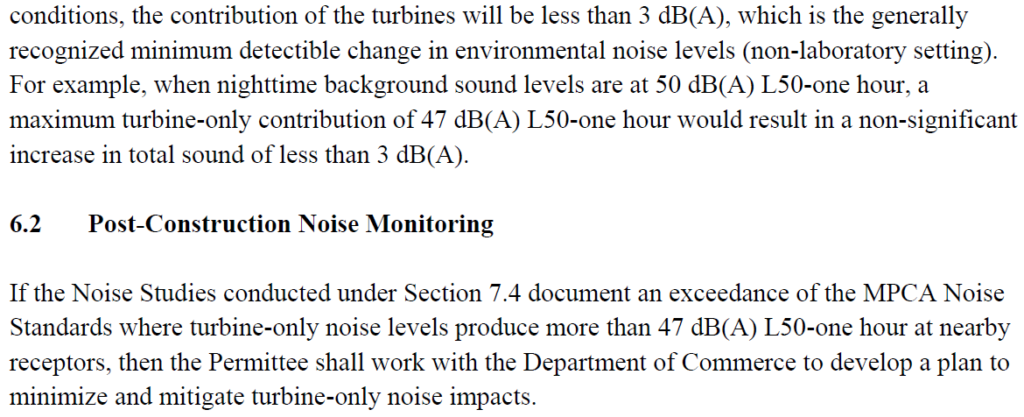
Note that when there are levels above 47 dB(A), “the Permittee shall work with the Department of Commerce to develop a plan to minimize and mitigate turbine-only noise impacts.” Where does the landowner/resident/human “receptor” fit in? Zero consideration, evidence shows. GRRRRRRR.
Working remotely?
June 30th, 2022
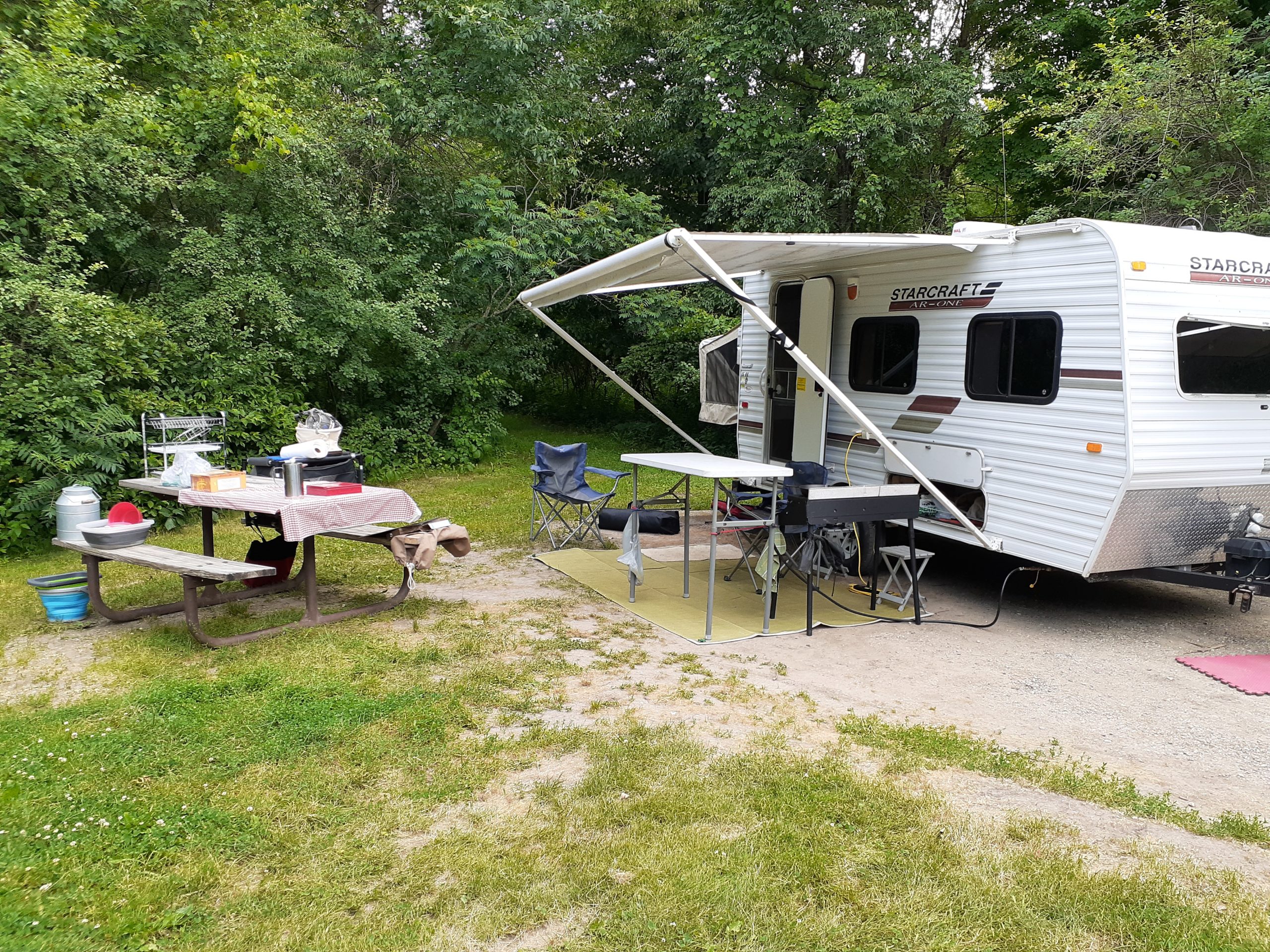
Is that sort of like the “working hard” v. “hardly working” conundrum?
Last week was almost a pre-COVID “back to normal” with a trip to Freeborn County to meet with two clients, new pipeline and long-time wind. I so miss being on the road, miss trucking, and miss travel out and about to meet with folks. Timing worked so well, it was a good opportunity to take out the trailer and continue to debate about whether it’s time for the trailer to go on to new owners (oh, that mpg hurts!), to debate whether a tent is really workable. And the debate is over. Now to clean it out and sell… sigh…
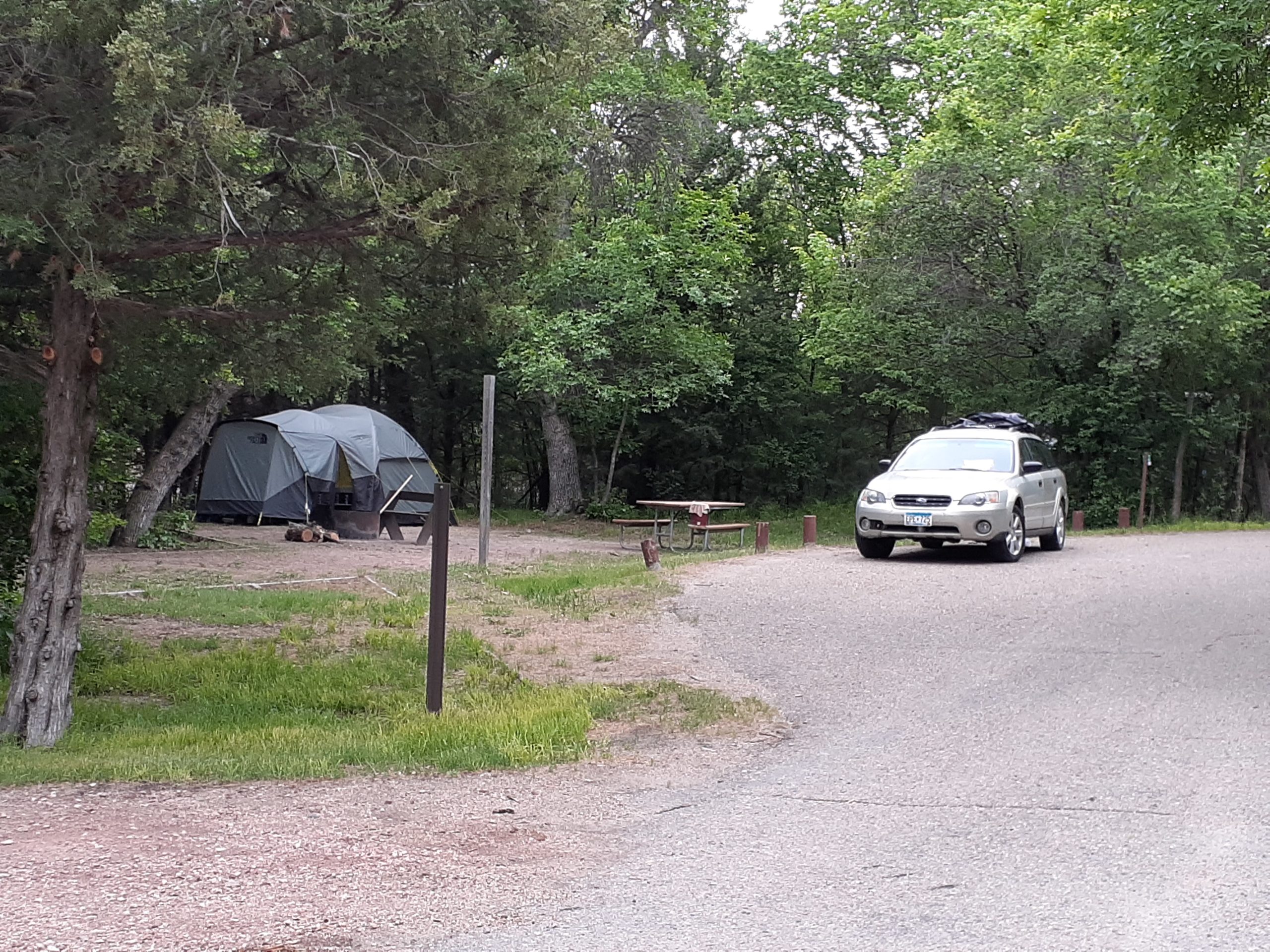
The Freeborn Wind project is up at the PUC next Thursday, July 7, to address the noise studies, not that they’ll do anything — seems the primary goal is to duck and cover, not deal with noisy turbines.
And the pipeline is going to be a recurring issue. There’s the “little” line going in under Northern Natural Gas’ FERC blanket authority (seems cost/size of project determines whether NNG applies to FERC); there’s the Ventura North E-Line, part of NNG’s Northern Lights 2023 Expansion applied for at FERC earlier this year; and supposedly this month, the “Albert Lea” project. We’ll see how this goes. I know there’s natural gas storage under the Prehn home along Hwy 13, below Hwy. 60, north of Waseca, and DOH, that gas has to get there somehow. And there’s the east/west gas transmission line along Hwy. 14, through my client’s yard in Kasson (and TOO MANY others). But check the map — I didn’t know that there are this many lines.

More to follow…

The Lava Ridge wind project is likely the country’s largest wind project thus far, with turbines twice the size of those in Minnesota. Here’s the “Magic Valley” developer page: https://www.magicvalleyenergy.com/
And the BLM page for the project:
LAVA RIDGE WIND PROJECT
Cut & paste of some basic facts for the project:
BLM National NEPA Register — Lava Ridge Wind Project
The “Friends of Minidoka” are actively challenging this project, more info here, the link is dated, a cut & paste blurb from BLM:
Bureau of Land Management Extends Public Scoping for the Lava Ridge Wind Project
The prerecorded presentation and scoping posters are available on the project website at https://go.usa.gov/xFKxg.
Contact info for BLM, please contact Kasey Prestwich, Lava Ridge Wind Project EIS Project Manager, Phone: 208-732-7204, E-mail: kprestwich@blm.gov.
From that Scoping Report, here’s another, better map:
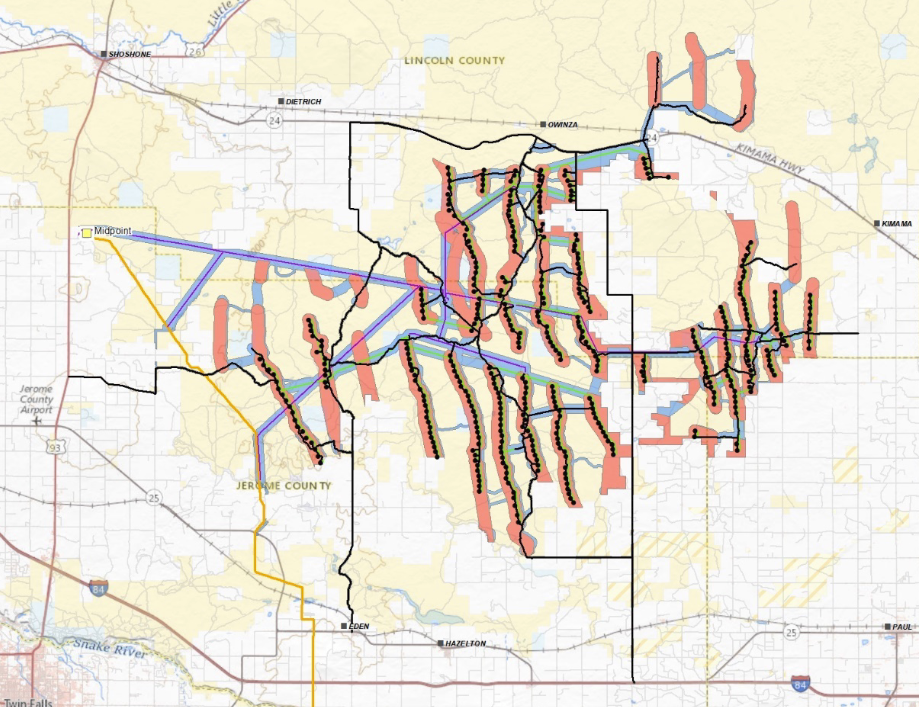
I’d expect the EIS will take at least a few more months, and perhaps not be released until next year. I’ve asked and will report in if I get a response. And here ’tis, expected that “Draft EIS will be published in September 2022 and a Notice of Availability for the Final EIS will be published in April 2023.”
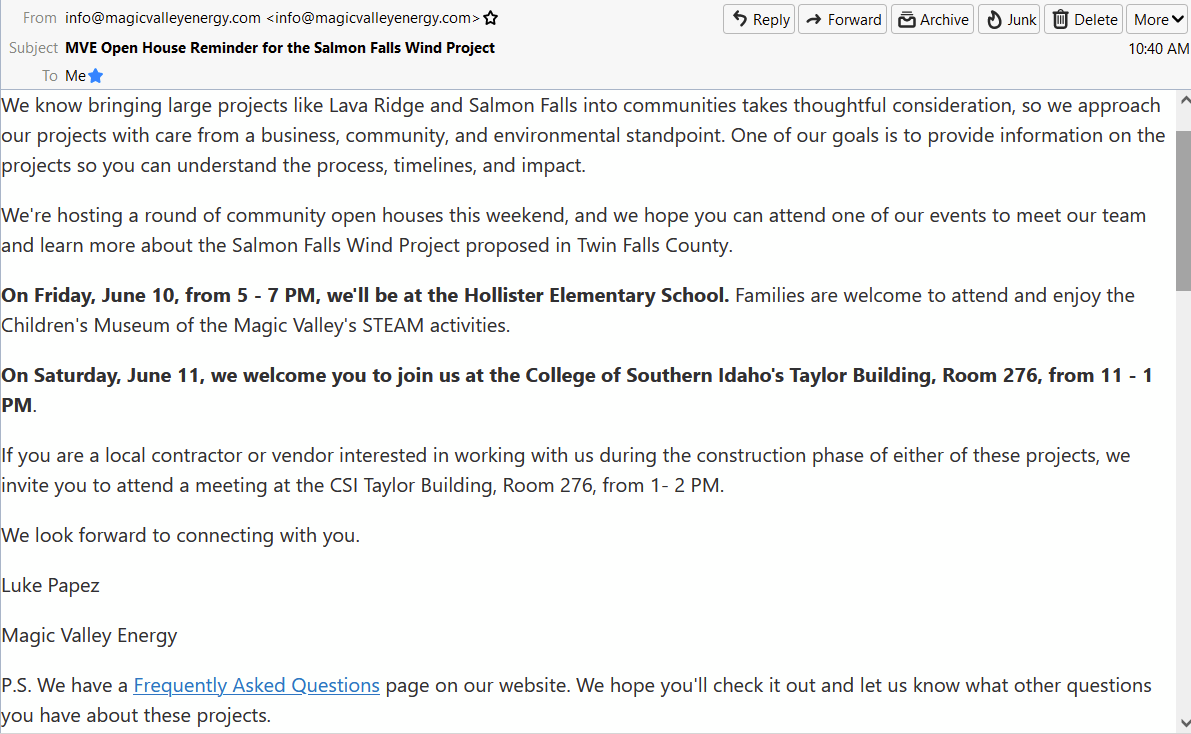
Just in today (I’d requested to be on developers project list) – there’s a meeting on Saturday,11a-1p at College of Southern Idaho, Taylor Building, Rm. 276:
DOE wants our comments on transmission “facilitation”
May 22nd, 2022
On May 12, 2022, the DOE released a “Notice of Intent and Request for Information Regarding Establishment of a Transmission Facilitation Program.” Comments are due June 13. Here’s the Federal Register publication:
https://www.govinfo.gov/content/pkg/FR-2022-05-12/pdf/2022-10137.pdf
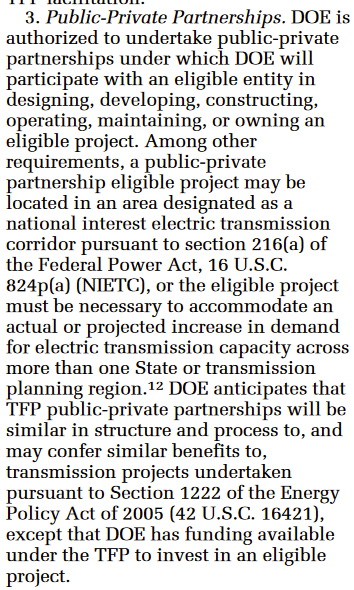
One aspect that particularly concerns me is focus on NIETC transmission corridors, designated more than a decade ago, 2005 to be precise, and also containing a category of claimed need for “transmission across more than one state or transmission region.” That criteria would apply to almost every transmission project I’ve worked on, although most were segmented (so that the full extent of the project would not be considered or evaluated, DOH!):
What to comment on? Go to the above Federal Register link, and specific issues for comment start on page 6, “Questions for Requests for Information.” However, if you know of issues that should be considered but are not specified, have at it, put it down in detail.
I do get a little paranoid when they request comments on subjects like this — that “barriers to transmission” is one often raised by Beth Soholt, WOW (now as “Clean Grid Alliance” even more directly identifiable as transmission toadies), and here it is:
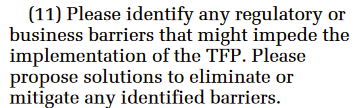
Comments are due by June 13, and should be sent to the “Federal eRulemaking Portal” (the only option), and must include the “agency name and identifier.” The agency is “Grid Deployment Office, Department of Energy.”
A decade ago or more, our state agencies eliminated consideration and scrutiny of “need” for transmission by making transmission a “regional” and market matter, making state permitting review nothing more than a rubber stamp. There’s never been a transmission proposal that state agencies didn’t love, rubber stamping everything that came their way. Now that fossil is to be shut down, that should free up immense capacity, but you’ll note that that doesn’t ever seem to be in the mix. Even NERC notes that fossil generation isn’t projected to decrease much, and locally, a good example is GRE’s walk-back on their promise to close Coal Creek, and instead “sold” the plant and transmission, and signed PPA to buy the Coal Creek generated energy.
Here’s NERC’s 2021 Long Term Reliability Assessment’s projection of MW of resources, note that coal doesn’t seem to be going anywhere anytime soon:
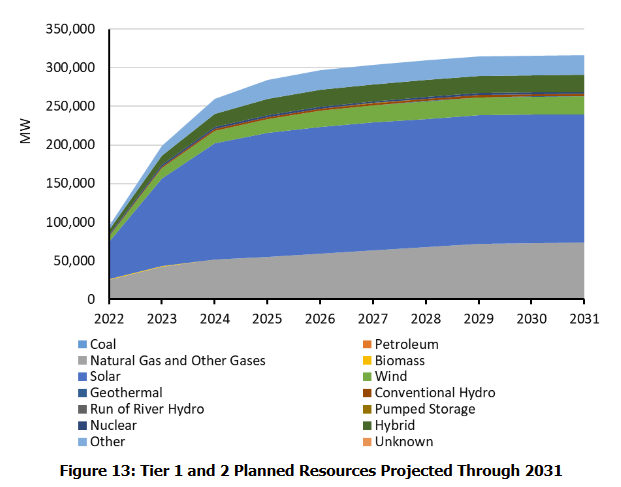
If shuttering down fossil is not incorporated into the transmission capacity “need,” exactly what are they basing the “need” claim on? Inquiring minds want to know.
Anyway, do check out the request for comments and let them have it. There are a many specific issues presented that has something for everyone!