NRG’s RFP bid should be tossed out!
March 26th, 2007

NRG sues in Chancery Court to withhold emissions data
By Rachel Swick
Cape Gazette staffLocal watchdog group Green Delaware is calling for NRG’s bid proposal for coal gasification to be disqualified from consideration as Delaware officials review plans for a new energy supply. The company is refusing to publicly reveal detailed emissions data for its proposed plant, and Green Delaware says making that information public is critical.
NRG filed a petition late in the afternoon Wednesday, March 21, in the Court of Chancery to keep emissions data and “trade secrets†from the eyes of the public.
Alan Muller, president of Green Delaware, along with many Sussex County residents, has been calling for full disclosure of the NRG bid proposal to build a 600-megawatt coal gasification system at Indian River Generating Station in Millsboro.
“Let me take this opportunity to reiterate that emissions data of the sort NRG is fighting so hard to conceal has been published elsewhere for proposed and existing [coal gasification] projects,†said Muller, citing a Wisconsin project that fully released all data in its bid. “This information, along with pricing information, is so fundamental to the public’s consideration of the bids that refusal to release it should be considered equivalent to withdrawal of the NRG bid, and NRG should be disqualified.â€
NRG first threatened to file suit to ensure the secrecy of certain parts of its proposal during a five-hour meeting of the Public Service Commission, Tuesday, March 20, in Dover. The threat became reality the next day.
In the petition, NRG officials state that the material sought by the public includes “certain proprietary and confidential information contained within NRG’s comprehensive bid to build an advanced coal gasification facility at its Indian River Generating Station.â€
Caroline Angoorly, senior vice president for NRG’s northeast division, said, “The more than 1,100-page bid NRG submitted to the PSC is the culmination of two years of focused effort, as well as significant funding to support development of NRG’s [coal gasification] project at Indian River. We have disclosed the vast majority of information contained within our bid and seek only to protect vital and proprietary details that, if released, could potentially harm NRG’s ability to most effectively structure and bring its proposed generation projects to fruition.â€
NRG’s bid was submitted in response to Delmarva Power’s request for proposals, which called for proposals that would generate 400 megawatts of electricity – enough to power more than 300,000 homes. When the public first requested copies of the three proposals, all three companies – Conectiv, Bluewater Wind and NRG – released heavily redacted copies. Later, both Conectiv and Bluewater released more in-depth information, but NRG refused, stating the requested information contained trade secrets. Conectiv plans to build a 200-megawatt natural gas plant in Wilmington, while Bluewater Wind proposes a 600-megawatt wind farm in the Atlantic Ocean.
Muller sent a letter to the Public Service Commission Wednesday, March 21, stating that he is challenging NRG’s ability to withhold the emissions data. He says the information is required under state law. “Green Delaware respectfully puts staff and the commission on notice regarding this point: secret filings, absent service, must not be accepted and considered by the commission. Filings claiming confidentiality must attest to the justification for secrecy. These violations are issues that taint the RFP process.
“Green Delaware feels a remedy for this situation must be sought. We propose that NRG Energy be declared disqualified from further participation in the RFP process.â€
Contact Rachel Swick at: rswick@capegazette.com
Florida doesn’t need IGCC either!
March 26th, 2007

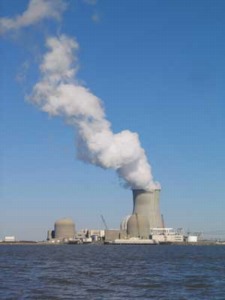
As I sit here watching the cooling tower plume of Salem I & II waft by, it’s hard to ignore the idiocy of the state of energy generation proposals. Coal gasification… nuclear… Whatever are they thinking????
In a number of states, legislation is being introduced, a la Harvard, which gives IGCC perks and benefits to make IGCC seem competitive, to make it seem like a good idea. It happened in South Dakota recently, and now it’s Florida’s turn.
Florida’s taking a dive off the cliff and quickly moving toward legislation to pave the way for coal gasificaiton (IGCC). Remember the Harvard Report, Volume 1? Deploying IGCC in this Decade with 3 Party Covenant Financing. If you haven’t read it, at least read the first 21 pages to get the depth and breadth of what they’re proposing. It sets out a detailed scheme of risk shifting to facilitate coal gasification market penetration — something that ought to have the free marketers across the country flapping… The Harvard plan requires federal perks, like outright grants; the DOE “studies” on sequestration, use of different coals; tax breaks like the 48A DOE credits; federally guaranteed loans. It requries state perks like outright grants, more tax breaks, and regulatory acquiesence. And from the project proposer, they can get by with 20% equity, not the typical 45% for a generating plant, and worse, they can get into it with just a Power Purchase Agreement as their equity. So we’ve got a new, unproven shaky technology that HAS been proven to have a capital cost of $2,155,680,783, or $3,593/kW; a piss-poor emissions profile and which doesn’t capture CO2; and that costs 9-13 cents/kWh… well, folks, it seems to me the market has already decided that IGCC is a pig in a poke. On top of that is a pattern of IGCC proposals where there is no demonstrated need for the power. AAAAAAAAAARGH!!!
But states march on in lockstep. Most likely the legislators, like the enviros supporting IGCC (NRDC,Southern Alliance for Clean Energy, TNC, Audubon, et al.), have no clue of the realities, they do not have a clue what we’ve learned via Excelsior’s Mesaba Project. That’s a pretty irresponsible position, and worse, if they DO know and advocate none the less, that’s reprehensible. The problems with IGCC are all laid out so well in the Excelsior Energy Mesaba Project docket at our PUC. Or like the Delaware PSC docket on NRG’s proposed IGCC project, rated as the lowest of three bidders:
Florida specifically, though, has a first hand expert view of the problems with IGCC in response to pseudo-enviro demands that IGCC be considered (WHAT IS SO DIFFICULT ABOUT “NO NEW COAL PLANTS” ?????):
But when you’ve got “friends” like Richard “the Vermin” Furman demanding IGCC, well, those’s fightin’ words:
So enough background and now on to the point — as this Glades Power Plant project moves through the Florida PSC, where a big coal plant is proposed, there’s legislation in Florida:
Bill Number: HB549/SB1202
Sponsors: Rep. Traviesa & Senator Bennett
At those sites are links to the Senate version.
Author in the House is Traviesa and co-sponsors are Ambler; Aubuchon; Brandenburg; Brisé; Cusack; Garcia, R.; Glorioso; Grimsley; Hasner; Homan; Kendrick; Kreegel; Machek; Mayfield; McKeel; Murzin; Nehr; Planas; Precourt; Richardson; Seiler; Troutman; Weatherford; Williams.
Author in the Senate is Bennett and co-sponsors are Aronberg; Dockery; Lynn; Fasano; Joyner; Constantine; Jones; Gaetz.
To contact Florida Senators and Representatives, click on their name above to get to their individual page to send an email. TELL THEM WHAT YOU KNOW ABOUT IGCC!!!
Mowing down Frontenac
March 25th, 2007
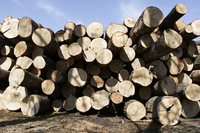
Photo of trees mowed down in Frontenac — Stolen, fair use, from the RW Republican Beagle
I got a frantic call early Monday from a Florence Township resident, distressed that trees were being mowed down, perfectly healthy and beautiful trees, in township parks and near the river. What to do???!!!??? Quick, call the Township supervisors:

From today’s Republican Beagle:
By Ginger Holm, Contributor
The Republican Eagle – 03/23/2007FRONTENAC — Frontenac residents expressed great disappointment and concern Tuesday over a tree harvesting project gone wrong.
About a year ago, Florence Township Heritage Preservation Commission began working on a plan to rejuvenate Frontenac’s Wakondiota and Valhalla parks.
“We were trying to improve our parks by getting rid of the dead and damaged vegetation, and intrusive species — especially buckthorns — and to preserve the parks for future generations.†said Bill Flies, chair of the commission.
Buckthorns are an invasive shrub. Once established, they can crowd out native shrubs and herbs and can alter water tables.
Speaking to the Town Hall crowd, Flies explained the need to manage the plant growth in the parks.
“This was not a management plan,†Kristen Eide-Tollefson said. “That’s not what happened here.â€
“I watched the loggers from my house,†said a man sitting in the back of the room. â€They didn’t just cut the marked trees. They cut all the trees.â€
Parks had been ignored
According to the management plan, the parks have been ignored for decades and are in need of cleanup that will improve accessibility and create healthier, more attractive parks.
Local residents were given opportunities to voice concerns and share ideas during the planning process. Many residents were hoping to improve their views of the landscape along the river.
A plan was finally approved in September 2006. The appropriate permits were obtained, Flies said.
Albers Farm and Forest was contracted to harvest the marked trees and work was scheduled to begin March 13.
The trouble began when the logging firm, subcontracted through Albers, began work a day early. No one from Florence Township Heritage Preservation Commission was present to supervise the job.
On March 13, Flies and Clay Ruggles, a Florence Township supervisor, noticed that more trees had been cut than were marked. They also noticed that the skidder, a type of tractor equipped with a grapple used for hauling logs, had damaged new growth.
They immediately notified Albers to correct the problem.
Albers management met with the logging crew, and changes were implemented.
The crew finished Wakondiota Park on March 18.
FHPC decided the heavy equipment used by loggers in Wakondiota was not suitable for the rolling terrain in Valhalla Park. To prevent further problems, Flies met with Albers management on Monday to terminate the cutting effective Tuesday.
How could it happen?
Residents at Tuesday night’s meeting wondered how this could have happened. One man asked why there was no one to supervise the logging crew.
Flies explained that they simply didn’t have enough volunteers. “Everyone on this board has other commitments,†he said.
Then a man in the back asked, “How do you plan on getting enough volunteers for the cleanup when you can’t even get enough to supervise the harvesting project?â€
Flies agreed the shortage of volunteers has contributed to the problem, then gesturing toward the attendees, he added, “But now that so many people are interested in the project, maybe we will have more volunteers.â€
His response was not well accepted.
“I object to being connected to this situation,†Eide-Tollefson said. “I agree it would be great to have more help, but to harvest trees to pay for removal of buckthorns or vistas — to harvest some of our best trees — economically, I don’t understand this.â€
Many in attendance seemed to agree with Eide-Tollefson’s views. Others, like Jan Bruce, preferred to look ahead.
“We can point fingers all day,†Bruce said. “But the fact is we all have to work together to find a way to clean this mess up and move beyond it.â€
Then Bruce offered a suggestion to bring in a wood chipper to deal with the debris and to spread the wood chips on the path.
“I think we pursued it with all the correct plans of getting rid of the dead and diseased trees and the right kind of species, but as the contractors came in, more was cut than what was marked,†Flies said.
“We made corrections to limit the damage and now we need to work together to get the job done right.â€
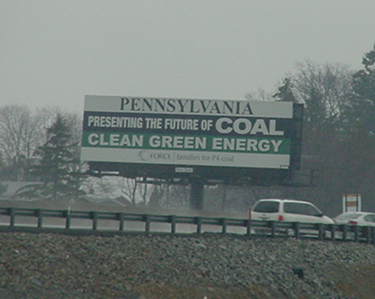
“The Future of Coal” as seen on PA turnpike
March 25th, 2007
… sigh…
WI-PSC says no Xmsn study
March 23rd, 2007
Transmission in the news, in today’s Cap Times and in Fortune Magazine, where they trot out an old NRDC pro-transmission piece:
March 22, 2007
The state Public Service Commission today denied a request by Dane County and the city of Madison for an independent study on the need for new power lines in the area.
“One-hundred years ago, the Wisconsin Legislature created the PSC, an independent state agency, to ensure the state has a safe, reliable and affordable energy infrastructure and that the public’s best interest is protected,” PSC Chairperson Dan Ebert said in a statement. “PSC staff is dedicated to energy planning and is constantly reviewing transmission needs at the local, state and regional levels. The staff has the technical expertise and professionalism to perform the thorough, comprehensive and independent analysis that the city and county requested.”
The PSC has the authority to approve, deny or modify any proposed electric construction project.
The PSC said that under state law it must determine if there is a need for a proposed transmission line and consider alternatives, including different energy sources, route options and energy efficiency and conservation measures. The PSC also must consider individual hardships, engineering, economic, safety, reliability and environmental factors during its review process.
“The PSC has a long history of having an open process and encouraging those who may be affected by commission decisions to get involved,” PSC Commissioner Mark Meyer said in a statement. “Dane County residents who voted in support of an independent transmission study can rest assured that the Commission will look at every possible alternative and will consider the comments, suggestions and testimony provided for each case when making decisions on upcoming proposals.”
The joint request came from County Executive Kathleen Falk, Mayor Dave Cieslewicz and County Board Chair Scott McDonell.
“The Public Service Commission is the place to turn to for an independent study,” Falk said in a statement at the time. “It has the tools and access to the independent expertise necessary to determine if transmission lines are needed.”
Last November, Dane County voters overwhelmingly approved an advisory referendum calling for the independent study to determine the actual energy needs in the area.
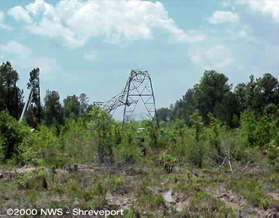
American Transmission Co., the power line company for Wisconsin, has proposed constructing a controversial 345-kilovolt line across southern Dane County, with one of the three possible routes going along the Beltline freeway.
ATC has maintained an independent study has already been done and has no intention of paying for another one.
========================================
And now, from Fortune Magazine, an argument for transmission… ummmmm… get real, when was the last time you heard of a transmission line denied? The reality is way different than this mantra:
Fixing the grid
Everyone wants electricity, but no one wants new power lines in their backyard, says Fortune’s Marc Gunther.
FORTUNE Magazine
By Marc Gunther, Fortune senior writer
March 22 2007: 7:11 AM EDTNEW YORK (Fortune) — Here’s an idea that won’t spark much controversy: To provide clean, reliable and affordable energy, and to effectively fight global warming, America needs to upgrade its electricity grid.
The GridWise Alliance, a coalition to promote a stronger grid, counts among its members the nation’s big utility companies, as well as GE (Charts), IBM (Charts), the Tennessee Valley Authority and the U.S. Department of Energy.
But just try to build a new high-capacity transmission line – and you can’t upgrade the grid without new power lines – and you’ll get not only controversy, but protests, lawsuits, efforts to sidestep the regulatory process and acts of Congress, if opponents get their way.
Some of the opposition comes from people who call themselves environmentalists – even though new power lines will enable development of renewable energy sources, particularly wind power.
One case in point: The proposal by a company called the New York Regional Interconnect, or NYRI, to build a 200-mile transmission line from Utica to Middletown, N.Y., to bring more electricity to New York City and its suburbs.
The developers say the power line is needed to improve the grid’s reliability in New York. They also say it will enable cleaner power, with fewer greenhouse gas emissions.
“You can’t have big wind projects and hydro projects in New York City,” says Bill May, the NYRI’s project manager. “Transmission is the resource that connects rural areas where renewable energy can be generated with urban areas where electricity is needed.”
In truth, there’s no guarantee that the electricity moving from upstate to the city would come from renewables; it could come from burning coal. But better transmission makes it easier for wind and solar power sources to compete against fossil fuels. Once wind turbines are built, they can generate electricity at a lower cost than fossil-fuel plants.
Special report: Going green“In essence, the transmission network defines the marketplace for buying and selling power: If it is robust and flexible, so is the market for power. If it is limited, congested and rigid, the market will be equally rigid,” says Michael Powers, the owner of a small solar power firm and a board member of Global Energy Network Institute, a non-profit research group based in San Diego.
The NYRI planners say that about 80 percent of their route runs on existing utility or railroad corridors. They applied for a permit at the state’s Public Service Commission, whose job it is to analyze the options and decide whether to grant a permit for the power line.
Then trouble arose. State legislators enacted a law designed to block the power line by denying the developers the ability to use the power of eminent domain to buy property along the way. In February, a Democratic congressman from upstate New York named Maurice Hinchey introduced a bill of his own to prevent the Federal Energy Regulatory Authority from stepping in if the state denies NYRI its permit. The 2005 Energy Policy Act grants authority to the federal government to overrule states and localities – precisely because of the difficult of getting new power lines built.
Hinchey declared: “No one wants massive towers or power lines cutting through the Upper Delaware Scenic River Valley or their backyard for that matter.”
Ah yes, the backyard. This sure sounds like a classic NIMBY (not in my backyard) problem. Everyone wants electricity. Everyone’s ready to blame the power company when the lights go out. Everyone favors renewables. Just so long as the 130-foot towers don’t go anywhere near anyone’s house, or farm, or park, or school.
This isn’t just a New York issue, of course. In northern Virginia, a plan by Dominion Power to build a 240-mile power line has run into a buzzsaw of opposition, including a lawsuit by one of the region’s most powerful developers, whose family lives nearby. American Electric Power has also met initial resistance as it seeks to develop a major transmission line from West Virginia through Maryland and Pennsylvania to New Jersey.
To be sure, these billion-dollar construction projects may – or may not – have make sense as planned. Other solutions to relieving grid congestion may be preferable, including energy-efficiency programs, pricing strategies to reduce demands during peak periods or more distributed or localized generation, such as small-scale solar and wind projects. The Bonneville Power Administration, a federal agency that delivers electricity to much of the Pacific Northwest, has found smart and lower-cost ways to upgrade its grid that you can read about in an article published by the Natural Resources Defense Council.
But there’s no question that some new power lines are needed, and the role of state and federal agencies is to decide where – balancing local objections against the broader need for clean, reliable and low-cost power. The NYRI, at the behest to state regulators, is now looking at alternate routes.
“Why don’t the legislators trust the regulatory process?” asks Len Singer, general counsel to NYRI. “It’s up to us to prove our case. What are they afraid of?”
It’s a good question. The NYRI’s opponents charge the power lines will mean “unprecedented environmental, economic and community damage,” higher electricity prices, hazards to public safety, and disruption of children’s camps, schools, playgrounds, historic properties and archaeological sites.
They may well be right. But if they are, stopping the power line should not take state laws targeted at one company, let alone an act of Congress.