Gov’s plan looks scary to me…
February 1st, 2008
Mikey Bull’s been busy… he was promoting this last night, though earlier he’d said it would be a while before something came out in writing. Well, wait no longer…
Here it is, warm off the press:
Here’s what jumps out at me that sucks (yes, Mikey, to critique is to live, it is my job):
Remove the barriers to and encourage development of Combined Heat and Power (CHP) projects.
Repeal the state’s moratorium on new nuclear energy facilities.
Reduce regulatory barriers by eliminating the Certificate of Need requirement for generation and transmission facilities needed to meet the renewable energy standard.
Create renewable energy “zones” and “corridors” to streamline the regulatory, environmental and siting review process for new renewable energy generation facilities and transmission lines.
Support the creation of incentives aimed at bioenergy facilities that use biomass as an energy feedstock to lower their carbon footprint.
Define wastwater sludge and byproducts as biomass and define wastewater sludge and the organic portion of solid waste and organic byproducts of each as renewable fuels.
Cap and Trade Implementation – SHOULD BE CAP AND TAX!
Advance Coal and Carbon Capture and Storage — the Midwest Regional Commitment on coal use for electricity generation is that by 2020, all new coal gasification and coal combustion plants will capture and store CO2 emissions.
And the best thing, I guess the only thing that excites me about this plan, is recycling increase, although I’d previously heard it was 75%, not 50%:
• Expand waste reduction, recycling, composting and management efforts:
- Increase further recycling and source reduction rates in Minnesota. Minnesota has reduced GHG emissions from the solid waste sector by 14% since 1990 by having the second highest recycling rates in the country and landfill gas emissions controls.
- Support increased source reduction and the interim goal of achieving a 50% statewiderecycling rate by January 2011, through efforts including:
– Recycle More Minnesota Campaign
– Office paper and junk mail reduction
– Waste reduction in the grocery sector
– Electronics recycling
– Telephone book reductions
– Increased beverage container recycling
OK, folks, comments???
Excelsior Mesaba Project siting hearing
February 1st, 2008

Above — the mittens (approximation) the judge was wearing at the hearing, big brown leather — DURING the hearing, yes, it was indeed a cold day in hell…
The “siting” hearing for Excelsior Energy’s Mesaba Project was Tuesday and Wednesday, that’s the long dead IGCC/coal gasification plant that keeps hanging on as we beat that equine’s bloated and stinky carcass. It was bizarre, but it’s hard to tell how far back to go in detailing the bizarreness… and I’m a little cranky, having sat most of the 20 degrees below zero day in an unheated gym attached to the Hoyt Lakes Arena (they couldn’t turn the heat on because when they did, the blowers made so much noise we wouldn’t hear anything but the blowers). The first day went pretty well, we did get through a few witnesses with some good issues raised in the record, so good for our side that the second day the process was shut down. They rammed through all the witnesses through at once, before any public questioning was allowed, and it wasn’t until around 7 p.m. or later that we could get started.
How far back to go… It really started back in Big Stone II, I think, but I’ll stick to this docket for now… First large weirdness in this docket was the ALJ’s Prehearing Order granting intervenor status to Xcel, Minnesota Power, and Public Energy-Mesaba (coalition of groups actively challenging Mesaba), and then there was the Prehearing Order that those not submitting prefiled testimony would no longer be intervenors and could not participate as intervenors, only as members of the public! Really!
In that Fourth Prehearing Order, it was noted that there would be a Phase I and Phase II as provided by Minn. R. 1405.1500:
1405.1500 SEQUENCE OF PROCEEDINGS.
STAT AUTH: MS s 116C.66; 216E.16
HIST: L 1984 c 640 s 32; 17 SR 1279
Current as of 08/21/07
About this time, I saw trouble coming… So anyway, when Xcel, Minnesota Power and Public Energy-Mesaba did not submit Pre-Filed Testimony, we got the ax, we were out as Intervenors. THERE WERE NO INTERVENORS IN THE EXCELSIOR ENERGY – MESABA PROJECT DOCKET!!! That happened in Prehearing Order 5:
which said, in pertinent part:
4. Because they have failed to file testimony when due, Xcel Energy,
Minnesota Power, and Public Energy—Mesaba are denied further participation as
parties in this matter. They shall remain on the service list and may participate as
members of the public and interested persons as set forth in the First Prehearing Order
(January 19, 2007).
So let’s go back to that First Prehearing Order:
Note the foreshadowing:
3. Any person desiring to become a formal party must file a Petition to
Intervene by February 12, 2007. Any person petitioning to intervene after that date may
be restricted as to the scope of their participation. Any existing party that wishes to
object must file an objection within seven days of service of the petition. Petitions to
Intervene should comply with Minn. R. 1400.6200.
5. Members of the public need not become formal parties to participate in the
hearings. Members of the public may offer either oral or written testimony, may offer
exhibits for inclusion in the record and may question the parties’ witnesses as set forth
below.7. As suggested by Excelsior Energy, and for the greatest convenience of
the public, the two-stage hearing procedure permitted by Minn. R. 1405.1500, subp. 2,
will be used. In Stage One, the prefiled direct testimony of each party’s witnesses shall
be admitted and those witnesses shall be cross-examined by the other parties. If time
allows, limited questioning by other interested persons may be allowed. In Stage Two,
other interested persons may present testimony and may question the witnesses who
offered testimony during Stage One. Interested persons offering testimony may be
questioned by other persons at the hearing.
In the First Prehearing Order, there were to be days and days of hearings, more than two weeks worth! Given there were 20 or so witnesses, that sounds workable:
April 2-6, 2007 Stage One sessions in St. Paul, Taconite, and/or
Hoyt LakesApril 9-11, 2007 If necessary, additional Stage One sessions in
St. Paul, Taconite, and/or Hoyt LakesApril 20-24, 2007 If necessary, additional Stage One sessions in
St. Paul, Taconite, and/or Hoyt LakesApril 25-26, 2007 Stage Two sessions in Taconite and/or Hoyt
LakesApril 27, 2007 If necessary, additional Stage Two sessions in
Taconite and/or Hoyt Lakes
But all the Intervenors were eliminated and so was the public vetting and gutting of Excelsior Energy’s Mesaba Project. That got it down to two days… TWO DAYS!!!!!! Twenty witnesses in two days. Yup, great record we’ve got here. So under the rules, Minn. R. 1405.1500, Subp. 3, seems it’s time for a Motion…
Stay tuned… highlights and lowlights of the hearing to follow …
Pawlenty stirs the Chamber pot…
January 24th, 2008
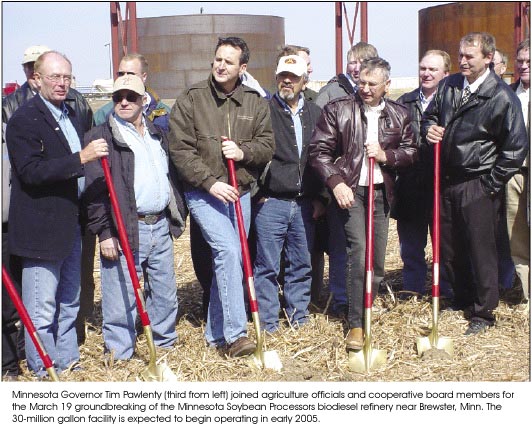
Or is he just digging a deeper hole…
In today’s STrib, there’s an article that is hard to take seriously. It’s “Pawlenty: State overemphasizing social services,” where Pawlenty opines:
And a story of a “welfare king” with 11 kids conniving health care:
Jim Carlson. owner of Carlson Financial Strategies in Burnsville, was one of those business people who said he was glad to hear the govenor talking of containing such costs.
Carlson told the governor and others of one of the unintended consequences he’s seen when it comes to the high cost of health care — and the state’s generosity. One of his clients, who works in the construction industry, had been trying to earn less than $50,000 a year so that his 11 children could qualify for public assistance for health care, Carlson said.
Pawlenty said he, too, has heard of people who try to adjust their income so they can qualify for subsidized health care.
Snickering questions aside about whether vasectomies are covered by “subsidized health care,” how could someone afford to pay for health coverage for 11 kids? What would that amount to monthly? If this is an example of the type of social service expense Pawlenty wants to cut, is this what’s meant by “family values?” And nevermind that the big state health care line item is nursing home costs… sigh…
And here’s his Energy agenda…
Clean Energy Technology Collaborative
Governor Pawlenty today signed an Executive Order creating the Governor’s Clean Energy Technology Collaborative (CETC). This group of up to 15 members appointed by the Governor will be responsible for developing a Clean Energy Technology Roadmap that will provide the research and development vision, along with a plan and milestones, to ensure Minnesota achieves the state’s clean energy goals.
Among those goals are the 25 x ’25 renewable energy standard that requires 25 percent of the state’s energy to come from renewable sources by 2025.
CETC members will include scientists from industry and academia, with the Director of the Office of Energy Security and Commissioners of Agriculture, Employment and Economic Development and the Pollution Control Agency serving as ex officio members.
“To achieve our clean energy goals we will need new, better and cheaper renewable energy technologies. That requires scientific and technological breakthroughs,” Governor Pawlenty said. “This collaborative will bring together scientists from our state’s great academic laboratories and industry research centers to draft a roadmap for achieving these breakthroughs and reaching our nation-leading clean energy goals.”
Office of Energy Security
A second Executive Order signed by Governor Pawlenty today creates the Minnesota Office of Energy Security within the Minnesota Department of Commerce.
“Clean energy and energy security is a critical issue to Minnesota’s future. This organizational change will keep Minnesota moving towards a better energy future,” said Governor Pawlenty.
The Governor appointed Commerce Department Deputy Commissioner Edward Garvey to also become the director of the new office. Garvey will coordinate energy and climate issues throughout the administration. Creating a focused office on energy security will allow the public easier access to energy information and technical assistance.
The Office of Energy Security will be housed in and receive administrative support from the Department of Commerce and there is no fiscal impact from this change.
“This structural change will support Governor Pawlenty’s efforts to secure a clean energy future,” said Glenn Wilson, Commissioner of the Minnesota Department of Commerce. “Edward Garvey is the right person to lead this new office because of the universal respect he enjoys from all sectors of the energy industry.”
Carbon Market Planning Authority
Through increased energy efficiency, use of renewable energy and changing industrial processes over the next several years, Minnesotans will address the threat of climate change and take actions to reduce greenhouse gas emissions.
These actions could result in marketable carbon credits that could be sold in developing regional, national or global carbon trading programs.
To help plan for and foster this credit trading opportunity, Governor Pawlenty is proposing the creation of the Carbon Market Planning Authority (CMPA) within the newly created Office of Energy Security. Creation of CMPA will be submitted to the legislature in the 2008 session.
CMPA will study and plan for the potential for a carbon market exchange and the need for financing strategies to encourage the creation and viability of a carbon credit market.
CMPA will include six at-large members appointed by the Governor, as well as the Commissioners of the Pollution Control Agency, Employment and Economic Development, Finance, and Agriculture and would be chaired by the Director of the Office of Energy Security.
“While it’s still too early to know exactly how the carbon credit market will develop, it’s not too early to prepare for the emergence of markets,” Governor Pawlenty said.
Mikey’s been busy…
Rock-Tenn heats up — FIRE!
January 19th, 2008
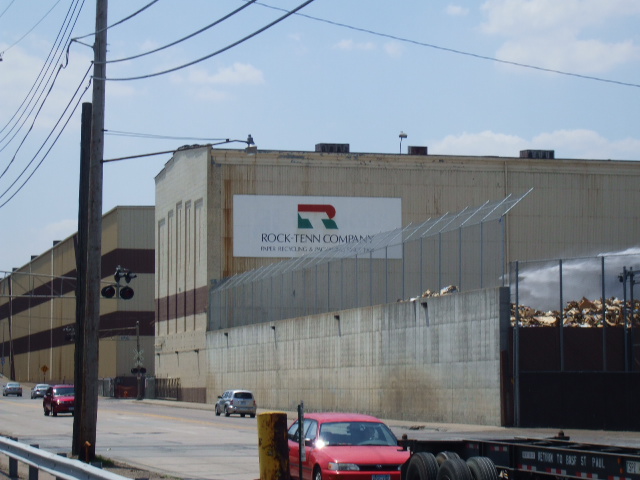
I’ve posted previously about the garbage burner planned for Rock-Tenn and the fight to keep that from happening, lead by Neighbors Against the Burner, a very effective bunch from the surrounding community. Well, it got really hot on Thursday (yeah, old news, that’s how it goes…), hot in a different way:
Fair Use photo stolen from WCCO…
Rock-Tenn fire caused $500,000 damage
BY MARA H. GOTTFRIED
Pioneer Press
Article Last Updated: 01/18/2008 06:21:05 PM CSTThe two-alarm fire at Rock-Tenn Co. in St. Paul on Thursday caused $500,000 in damage, the St. Paul fire marshal said today.
Fire investigators have narrowed the cause of the fire, but it remains under investigation, said Fire Marshal Steve Zaccard. It wasn’t intentionally set, he said.
At the state’s largest paper recycler, work has continued elsewhere at the 42-acre site and will soon resume at the site of the fire, said Rock-Tenn general manager Dave Briere.
No workers were injured in the fire at Rock-Tenn, near Interstate 94 and Vandalia Street. More than 40 firefighters fought the blaze.
Throughout this garbage burner fight, Rock-Tenn is claiming to be a “victim” of MERP, the Metropolitan Emissions Reduction Project (plan? p???), which was the means of shutting down coal at Xcel’s Riverside and Highbridge plants.
Anyone involved in MERP knows full well that loss of steam at Highbridge was NOT an unknown, and Rock-Tenn sat on its hinder, thumb or head implanted, and did nothing, NOTHING, as MERP went through a long negotiation and PUC docket, not exactly a private proceeding, and Rock-Tenn was certainly discussed. And now here they are, begging at the public trough, expecting taxpayers to subsidize their business by building them a steam source, and by financing a District Energy expansion into the eastern edge of St. Paul… say what??? Why? THEY DIDN’T EVEN BOTHER TO INTERVENE IN THE MERP DOCKET!!! This whining “victim” stance is very odd… the basic legal word for their “problem” is “laches,” the “you snooze, you lose” theory. Rock-Tenn is trying to turn it into a “you snooze or you sit back, feet up, and YOU WIN THE SUBSIDY LOTTERY!!!” I don’t think so. “STRANDED COSTS?” Over my dead polar bear! Here’s what they tried in 2004, and thankfully it didn’t prevail, but it gives an indication of the extent they’re willing to go to get that big subsidy:
This wasn’t just in the Senate, S.F. 2854, there was also a House bill, H.F. 2823:
S.F. 2854, authors Anderson; Pappas; Larson; Hottinger (Gaither removed his name as author)
H.F. 2823, author Hausman (referred to Regulated, but no hearing)
The bill would have added the following language to 216B.1692, Subdivision 5, and renumbered subsequent paragraphs:
and the 2003 “Prairie Island” bill, Laws 2003, First Special Session Chapter 11, article 3, section 12, would have been amended, adding:
Thankfully this didn’t get anywhere. Whatever were they thinking?
Note Larry Schedin weighing in on this. He was “The Environmental Organizations” expert witness in the SW MN 345kV line, a former Xcel employee, probably back in the NSP days. He’d worked on the 345kV ring around the metro area! Here’s his testimony for the Minnesota Chamber of Commerce in the Rate Case. He was also involved in the 2004 Wind Integration Study.
South Dakota Supremes rule BSII approval not BS
January 17th, 2008

The South Dakota Supreme Court has issued its Opinion — essentially that the Big Stone II approval by the PSC was not “clearly erroneous.” Yup, that’s the standard for administrative actions and so that’s where that’s at. Read it here: