Mad Cow Beef & MN Dept of Education
February 11th, 2008
Seems folks really do read this blog — the last post got me a full inbasket of primary documents, verrrry interrrresting… the undercurrent of concern is strong, with the primary focus that “No instances of illness have been reported…” but we all know incubation takes a long time.
FULL DISCLOSURE: I must confess that I was a meat hauler for a lot of years, hauling tubs and boxed meat from the Midwest to California, and I’ve spent way too much time siting around slaughter houses waiting to get loaded… er… waiting for the truck to get loaded, so I have a fair amount of first hand knowledge of what goes on there. Needless to say, I’m essentially a vegetarian.
Overall, it seems the Dept. of Education got right on it. On one hand, it’s a good thing that the MN Dept. of Education went public and brought this beef with beef to our attention. It’s good they got on the schools and had it inventoried. It looks like it was just a one day exercise, with this update a week later, so that’s not too bad. St. Paul, New York City and Cos Cob are a few others districts that have taken action. On the other hand, what do we expect! Given federal inspections are nominal at best, we’ve got a problem here, folks… it’s not like this is something they could hide… For years, the industry has been recommending irradiation of meat rather than clean up, and disregard for basic common sense practices, much less regulations, shouldn’t surprise us.
Here’s the article from L.A. Times:
Here’s what the Dept. of Education sent out, but notice WHEN they got this update out, conveniently AFTER everyone had shut down for the day:
The attached memo and lists went to Minnesota superintendents a few minutes ago. Here are the highlights:
* No instances of illness have been reported in connection to this product and there is also no other evidence at this time that this product represents an increased health risk. If impacted districts become aware of illness potentially related to this product, we encourage them to contact the Minnesota Department of health immediately at: 651-201-5414.
* On Monday, the Minnesota Department of Education released a list of schools and organizations that have potentially received Westland beef. As a result of our efforts to contact school districts, distributors and processors to identify the location of this product, we have been able to narrow that list down to 374 schools and organizations that likely received Westland beef. (Attachment #1)
* Of the schools and organizations that received Westland beef, we have identified 120 that currently have unused product. (Attachment #2) We have contacted those schools and organizations and instructed them on how to isolate the product.
*
The majority of the Westland beef that was sent to Minnesota was likely served to students before the USDA issued its advisory. Based on the information that has been gathered by the Minnesota Department of Education, approximately 60,000 pounds of the initial 240,000 pounds of Westland raw beef sent to Minnesota has not been used and has been isolated.* The Department of Education has also been able to identify approximately 15,500 pounds of Westland beef that was delivered to Minnesota schools as processed products, including beef crumbles and hamburger patties. That identified product has also been isolated.
* Today, we will be reporting the information we have collected to the USDA, which is compiling information by region to determine how much of the product remains in the food distribution supply chain.
*
Based on its investigation, the USDA will make a decision, regarding the status of unused product. We expect their decision within the next several days and will keep you up-to-date.Christine Dufour
Deputy Communications Director
Minnesota Department of Education
1500 Highway 36 West
Roseville, Mn 55113
Ph.: 651.582.8720
Cell: 612.306.0895
Dept. of Health Beef – Feb 7 2008
Schools that likely received Westland Beef
Schools with Westland Beef on hold
So it seems likely that the schools on the “likely” list that aren’t on the “hold” list have served up that beef.
Meanwhile, Westland Hallmark Meat Company has suspended operations. SEE WESTLAND WEB PAGE
One thing I don’t understand is why the district would buy beef from all the way out there, pay for shipping at over $2,000 a truckload, increasing the cost by about $0.225/lb. Oh well… guess it’s like thinking those in Illinois would buy SD or MN wind and pay for the transmission when they’ve got 10,000MW in the MISO queue.
Downer cows = Mad Cow disease?
February 11th, 2008
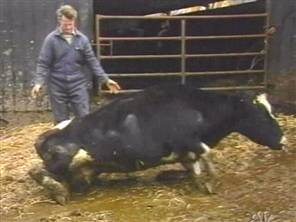
The US has cut testing for Mad Cow disease, or bovine spongiform encephalothopy:
So when I saw the reports recently that Minnesota told schools not to serve beef produced at a plant where they’d mistreated animals, my red flags went up, because since when is humane treatment of animals something businesses and state agencies care about? Then I heard that the issue was that they were mistreating “downer cows” and dragging and forklifting them into the plant. And that’s something completely different, downer cows = mad cow disease in some cases, it’s a symptom. Were these animals tested? Or were they just run through the line and shipped on out to MINNESOTA SCHOOLS? WTF? And the silence about the relationship of mad cow to downer cows at the slaughterhouse is deafening.
Here’s how it was framed in the STrib – note “mad cow” and “testing” is not mentioned:
Minnesota orders schools not to use beef from California plant
Minnesota school districts told to stop using meat from California company embroiled in sick-cow controversy.
Last update: January 30, 2008 – 11:27 PM
The Minnesota Department of Education said Wednesday that it has ordered state school districts to stop using beef from a California company accused of abusing sick animals it later processed for human consumption.
Westland Hallmark Meat Co. delivered ground beef to schools in 36 states via a U.S. Department of Agriculture program between Oct. 26 and Nov. 5, 2007, the agency said.
The Humane Society of America released a video on Wednesday that shows workers at the Chino, Calif., plant kicking, shocking and prodding sick cows into a slaughterhouse.
The USDA has suspended the company from federal food and nutrition programs.
PATRICE RELERFORD
And today I was checking up on things back at home, and found this, that it was sent to schools near Red Wing:
Suspect beef may have been sent here
Mike Longaecker The Republican Eagle
Published Friday, February 08, 2008Beef from cattle shown on video being dragged by forklifts and other methods described as inhumane was likely shipped to several area schools, officials announced Thursday.
Cannon Falls, Goodhue, Kenyon-Wanamingo, Pine Island and Zumbrota school districts all likely received the beef from Westland Hallmark Meat Co., according to the Minnesota Department of Education. A total of 375 Minnesota schools and districts were on the list.
According to a department news release, no instances of illness were reported in connection to the beef and there is no other evidence the beef represents an increased health risk.
Meat from the plant has been placed on hold by the federal government since Jan. 30, the same day the U.S. Department of Agriculture indefinitely suspended Westland’s meat products from the National School Lunch Program.
Westland halted operations Feb. 1 after allegations surfaced that cattle at its California facilities were being sent to slaughter under inhumane conditions.
Undercover video released by the Humane Society of the United States shows “downer” cows — those unable to walk — being skidded and dragged through a processing plant.
Cannon Falls and Kenyon-Wanamingo were among 120 Minnesota districts identified by the state that had unused meat as of Thursday. Those districts have been contacted by the state and instructed how to isolate the product.
About 15,500 pounds of Westland beef sent to Minnesota was sent as processed meat products, including beef crumbles and hamburger patties, according to the state.
Most of the Westland beef sent to Minnesota was likely served to students before the USDA issued its advisory warning earlier this week.
Based on state research, one-third of the 240,000 pounds of Westland’s raw beef that has not been used is isolated.
The USDA will determine what should be done with the meat that hasn’t been used.
You can see the video here on the Humane Society’s site, where you’ll note that they DO point out the correlation between Mad Cow and downer cows, that 12 of the 15 known cases of mad cow were downer cows:
I mean really, Mad Cow Disease, Pissy Deer Disease (Chronic Wasting), Sheep Scrapie, Creutzfeld-Jakob variant… Come on, folks, wake up and smell the cow shit!
Here’s what the World Health Organization has to say about Creutzfeldt-Jakob variant:
Think it doesn’t happen here? Check these Chronic Wasting maps from Wisconsin:
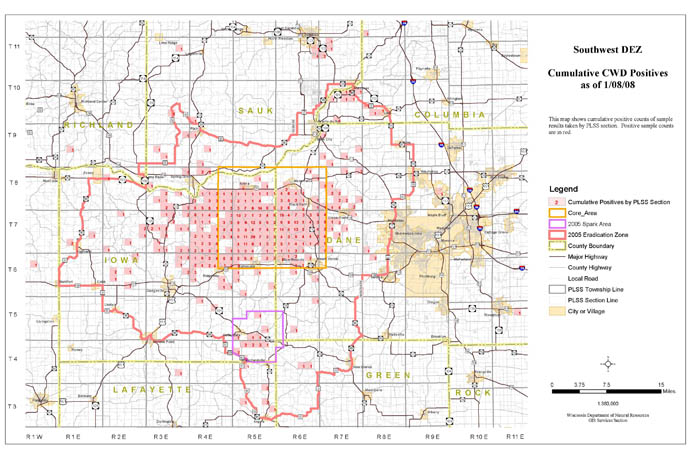
Farmed Deer with CWD – info HERE!
Maybe when big ag is held accountable, LIABLE, for humans with Creutzfeldt-Jakob variant, maybe then things will change…
In the meantime, demand rigorous testing. MEAT – it’s NOT what’s for dinner…
Rep. Tschumper takes on ethanol
February 9th, 2008
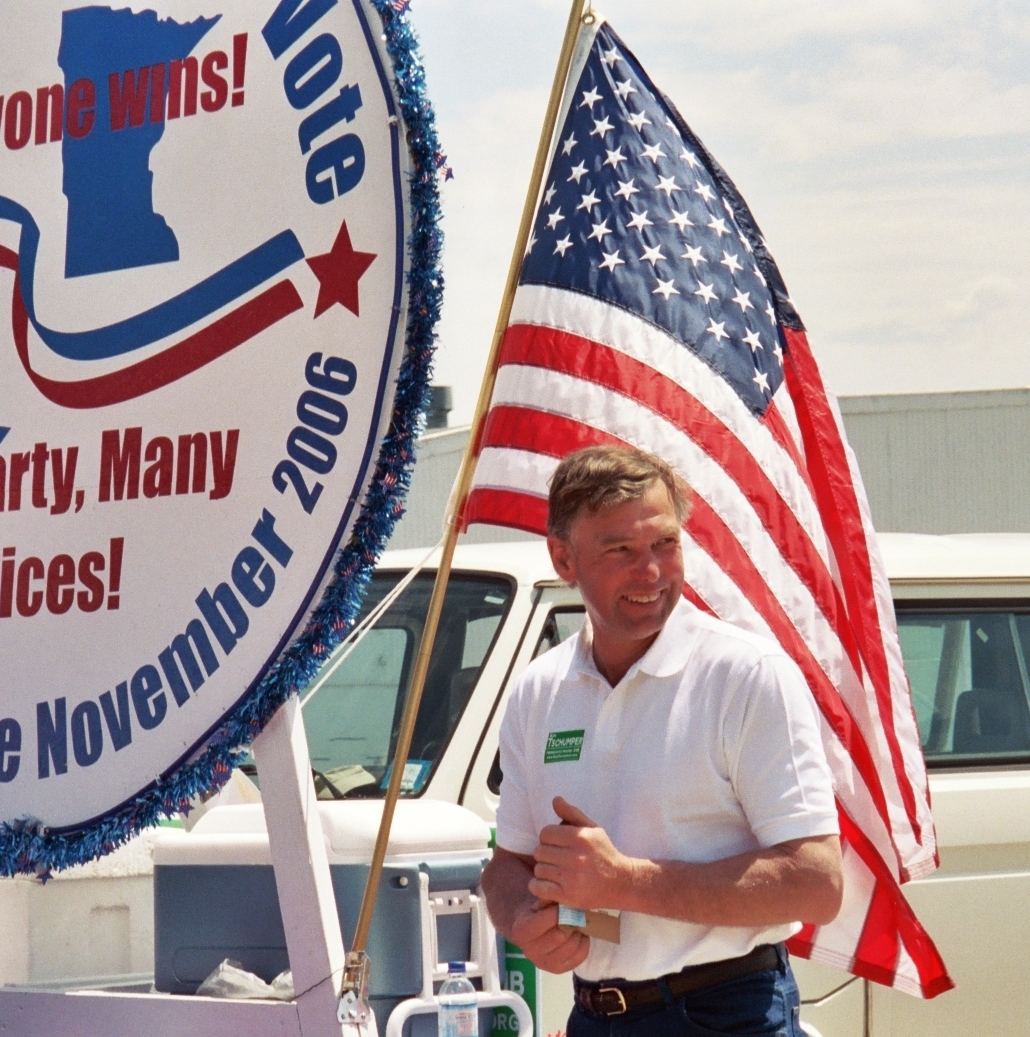
Today’s StPPP reports that Rep. Ken Tschumper is taking on ethanol, demanding environmental review. THANK YOU, KEN! Here’s the article:
Lawmaker proposes environmental review of new ethanol plants
BY DENNIS LIEN
Pioneer Press
Article Last Updated: 02/08/2008 04:03:42 PM CSTA southern Minnesota lawmaker said today he plans to introduce a bill in the state House next week that would require mandatory environmental reviews of all new ethanol plants.
State Rep. Ken Tschumper, DFL-LaCrescent, said such plants have environmental impacts, and should face the same types of scientific study that many other large ventures undergo. Besides using substantial quantities of groundwater and polluting the air, corn-based ethanol plants have led to increases in soil erosion, fertilizer runoff, and herbicide use, according to Tschumper.
This will go to the House Environment Committee.
CLICK HERE for House Environment Committee members & contact info.
Here’s his own press release with a little more detail:
TSCHUMPER PROPOSES ENVIRONMENTAL IMPACT STATEMENTS FOR ETHANOL PLANTS
ROCHESTER, MN – State Representative Ken Tschumper (DFL – Houston and Fillmore counties) announced new legislation today that would require mandatory Environmental Impact Statements (EIS) for all new ethanol plants in Minnesota. Facilities that produce ethanol in Minnesota are currently exempt from having to do an EIS in most cases.“Congress and various state legislatures have passed generous subsidies to promote the development and expansion of ethanol plants and mandated various levels of ethanol content in gasoline,” Tschumper commented. “Some states, including Minnesota, have gone even farther by exempting ethanol production facilities from the normal environmental review and regulation that such projects of similar size would undergo in other sectors of the economy.”
However in the last several years existing ethanol facilities have expanded and new plants are proposed that are much larger than in the past.
“The environmental impacts of this expanding ethanol production are causing great concern,” Tschumper emphasized. “Huge demands on groundwater, increased air pollution, heavy demands for rail transportation, increased soil erosion and fertilizer runoff, negative impacts on livestock prices and the increased use of atrazine, (a pesticide known to cause prostrate and uterine cancer in humans) are impacting our lives, our financial stability, and our environment.”
This is especially true for Minnesota. Many of the rural areas where ethanol plants exist or are proposed also have important livestock farming, especially in southern Minnesota.
“As we all know, the most important resource we have in southern Minnesota is our abundant, high quality supply of groundwater. Our livestock industry is very dependent on this critical resource, ” Tschumper, a dairy farmer himself, added.
Since the Groundwater Protection Act was passed in 1989, the State of Minnesota, working with county governments, has engaged in many initiatives to monitor and protect our precious groundwater resources.
“Unfortunately our groundwater resources on which our livestock industry is so dependent, is now being threatened by this new generation of ethanol plants. I plan on doing everything I can to protect our groundwater and our livestock industry,” Tschumper promised.
Ethanol production uses 5-6 gallons of high quality groundwater for every gallon of ethanol produced. An ethanol plant capable of producing 100 million gallons of ethanol annually will draw 500 million to 600 million gallons of water from an aquifer annually. This tremendous draw down in such a short period of time will challenge the ability of many aquifers to recharge themselves and will expose cleaner, higher quality aquifers to more pollution from pesticides and fertilizers. This has long-term implications for not only our livestock farming but also our small towns and other rural businesses.
Environmental Impact Statements are a complete scientific study of all the environmental, economic and health impacts of a proposed project.
“It is important to understand that Environmental Impact Statements do not halt projects,” said Rep. Tschumper. “They simply provide more science-based information as to the long-term consequences of these projects for our environment, our economy, and our health. Requiring an EIS for all future ethanol production facilities is reasonable, responsible and necessary.”
The EIS process that ethanol facilities will do under this legislation is similar to the standard environmental review required for projects of similar size in other sectors of the economy.
“Many large industrial and commercial projects in Minnesota are required to complete an Environmental Impact Statement before they can be built,” said Rep. Tschumper. “Prior to 2004, ethanol plants of a certain size were required to do the same, but they were exempted from this requirement that same year. Clearly that was a mistake given the growing environmental concerns surrounding current ethanol production practices.”
Rep. Tschumper will introduce his bill when the legislative session resumes February 12, 2008.
Harris McDowell — public on the “B” list…
February 7th, 2008

Harris McDowell runs the Senate Energy Committee here in Delaware. There’s a ongoing spat, seems he isn’t excited about enforcing what’s affectionately known as H.B. 6 (LINK HERE), which is how the Bluewater Wind project was put on the map. Bluewater won a level playing field RFP competition between its proposal and NRG’s IGCC/coal gasification plant and a ho-hum gas plant. So he’s decided to have hearings about it — why, I don’t know, because everything’s been public record, the PSC has held so many hearings, even I’ve testified three times and written too many comments. So why? Only reason I can see is delay. Alan’s been dealing with him for some time, and it seems his primary constituent is Delmarva Power. Check Green Delaware Alert 581 for more on that.
I’m inclined to agree. What I’ve seen is that Delmarva Power is resisting, they do NOT want to sign a PPA with Bluewater Wind, they do NOT want offshore wind for Delaware. The state legislature, reeling from huge price increases that came with deregulation (and that deregulation bill was thanks to Harris McDowell), passed HB 6, which required that Delmarva do an RFP to stabilize cost for the “SOS” customers, “Standard Offer Service,” but the other meaning is as relevant. These are the residential customers hardest hit. There was a level playing field comparison of the three bidders, which were NRG with a coal gasification plant (oh, give me a break…), Conectiv with more natural gas, and Bluewater Wind with offshore wind (in Delaware, the wind is offshore, and onshore, it just doesn’t cut it). Bluewater won, following a very detailed, careful and thoughtful analysis by PSC staff, the PSC approved it, but it takes approval of four agencies, and at the meeting of the Gang of Four, the Gov’s Office of Management & Budget rep made a motion to table the whole thing and it was tabled! Since Bluewater won at the PSC, it’s sour grapes everywhere, and the people are clearly shouting, “WE WANT WIND” and the legislature is getting into the middle of it rather than follow HB6 (because they don’t like the results — rumor has it that this was desgined for NRG to get an IGCC plant and that didn’t work so they’re trying to throw a wrench in the gears — and to this observer, that rumor makes sense, whereas to the rest of the world, IGCC is senseless). McDowell doesn’t get that it’s not binary — he tosses out “conservation” and “efficiency” when faced with new generation of a type he doesn’t like, and doesn’t get that it’s electricity but it’s NOT binary, that we need it all, and we need it now. We need conservation, we need efficiency, we need wind and we need the gas for backup, and then we can shut down the coal plants (which is something he NEVER talks about, fancy that). So, here are primary documents shaping the fracas:
Having experienced the first of Harris McDowell’s Senate Energy “public hearings” today, well… it was sort of like testifying about transmisison at Rep. Bill Hilty’s House Energy Committee… let’s start at the beginning.
Alan and I got there early, not an easy or common thing for either of us. We signed in, and I checked the box that said I wanted to speak (with a BIG green X) and roamed around. It was standing room only and were lucky enough to find a seat, a desk on the Republican side of the Senate chamber, B. Gary Simpson’s desk. Only three Energy Committee members were present! Maybe they didn’t want to join in the farce? We sat and sat and sat, listening to speaker after speaker, mostly the “usual suspects” in Delaware, and suddenly he says, “We’ve gone through the list,” and he held it up, and started to close it down. At that point, I hollered out from the floor, “I don’t think so, I signed up as we came in.” He said that we had to sign up by 5:00 p.m. to speak ?? say what?? Where was that publicized and if that was the case, why sign in lists at the door with a box to check to speak? A young staffer ran up to confer, and it turns out there’s an “A” list and a “B” list.
Really! There was the list prepared beforehand, the “A” list that he called on at the “public hearing,” and then there was the “B” list, the list of the public who had made the effort and travelled to show up at the hearing and who had signed up to speak on the list they provided. And he calls this a “public hearing.” What a farce.
Alan had questions last week and had been called back by McDowell’s staff guy, and I know he had actually talked to him, the guy on the phone was very gracious and helpful in answering Alan’s questions, but I also know that he was asked if he wanted to speak, if he was planning on it, and Alan said he didn’t know, he wanted to see how it goes (and at the time, I thought that was strange, and noted it and asked him about it, wanting to know why he didn’t demand time to speak), but apparently he’d been put on the “A” list anyway, even though he didn’t ask. So Alan was called and he spoke. I’d signed up at the door and was not called, and the same goes for the others who signed up at the door and had not been put on the “A” list. I stuck to my guns and probably wore out my welcome in Delaware, but it’s not a small thing to shut out the public and include only those few you want to speak. Worse, he’s holding a series of “public hearings” but this one, of at least five, is the only one where the public can speak! Suffice it to say, this did not sit well, and I stuck to my guns and after some mild protestations and a few hostile glares, he moved over to the real list, and went through it, protesting repeatedly that it was late, that we didn’t have time for them all, and of course I was last. Thankfully, though, after I spoke, he asked if there was anyone else, and a representative of the Delaware Nurse’s Association spoke about the health risks associated with coal, and it was GREAT! Perfect ending to a really stupid night…
I’m writing up my comments, what I’d planned to say, and I’ll post that tomorrow, but in the meantime, what I did say, when finally given the “opportunity” to speak, was in essence that he’s obviously got an “A” list and a “B” list and that’s not OK, that this process seemed to be a delay and that they should just get to it and order that the agencies approve the wind project, and most importantly, that his sense of procedure was appalling, that he’s shutting the public out. They need to know that the people of Delaware have spoken and they want wind, and shutting them out won’t change that, can’t be avoided, the people want wind, so get to it, just do it and make it happen.
More tomorrow…
OH, I almost forgot, one of these guys for Harris McDowell, III:

Patti Fritz, whatever are you thinking?
February 2nd, 2008

News over the wire today, Rep. Patti Fritz has authored and introduced HF 2601, a stealth interim introduction, hmmmm…
H.F. No. 2601, as introduced – 85th Legislative Session (2007-2008)
Posted on Jan 22, 2008
1.1 A bill for an act
1.2 relating to natural resources; removing certain land in the Cannon River area
1.3 from the wild and scenic rivers program.
1.4 BE IT ENACTED BY THE LEGISLATURE OF THE STATE OF MINNESOTA:
1.5 Section 1. CANNON RIVER WILD AND SCENIC RIVERS DESIGNATION.
1.6 The commissioner of natural resources shall remove the following land within
1.7 the Cannon River wild and scenic river area from the Minnesota wild and scenic rivers
1.8 program under Minnesota Statutes, sections 103F.301 to 103F.345: all property west of
1.9 Faribault Boulevard, north of 164th Street, and south of 158th Street. The commissioner
1.10 shall amend Minnesota Rules, chapter 6105, and the management plan for the area to
1.11 reflect this change.
1.12 EFFECTIVE DATE.This section is effective the day following final enactment.
Whatever is she thinking? This bill would remove a chunk of the Cannon River from Wild & Scenic designation. Why? I can’t imagine any other reason than that the Wild & Scenic designation gets in the way of something some developer wants to do. What gives?
Here’s a google map: 158th & Hwy. 3
Here’s the street view (cool option, eh?), and isn’t this right by the park:
(Now, if I can just learn how to embed this stuff)