pseg_logo

It’s been a busy couple of weeks, with Discovery to and fro with PSE&G.  Here’s the results:

PSE&G-response1 to BPU Discovery

This is their response to the BPU Discovery.  Although Ken Sheehan at BPU had said we could proceed with Discovery before we were parties, we’d sent the blanket request for others’ requests to avoid duplication and find out where we were at, but they ignored it, and even BPU would not forward their requests… so we sat in the dark until after our intervention was formally granted.  I asked again, and lo and behold, that same day, BPU turned over their requests and PSE&G turned over their respones to BPU Discovery.  Many of the responses aren’t, so I imagine there’ll be some wrangling about that.

Here’s what we’ve sent to them so far:

STL-Discovery-Herling-1

STL-Discovery-McGlynn1

STL-Discovery-Crouch1-corrected

STL-Discovery-Millies1

STL-Discovery-Bailey1

STL-Discovery-King1

The Discovery deadline for the Direct Testimony has been extended to June 5th.

Prehearing Order – May 14, 2009

Are we having fun yet?

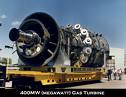
gas-turbine

The Chisago natural gas plant, dubbed “Sunrise River Energy,” finally made the news in Minnesota.   Could it be any larger?  “What do we need this for,” you may ask.  It’s simple, we DON’T, it’s for export.  Note their threat to move to Wisconsin if they don’t get what they want, and Rep. Kalin and Sen. Olseen buy into that and cave, giving them an exemption without letting the local governments who would lose tax revenue a heads up about it.   Here’s the whole thing from the STrib — sorry it took so long to post this, I’ve been on the road and mired in moving stuff:

855-megawatt power plant planned

A bill now before Gov. Tim Pawlenty would provide tax breaks for the $300 million gas-fired plant in Chisago County.

By MATT McKINNEY, Star Tribune

Last update: May 13, 2009 – 9:30 PM

One of the largest power plants in the state would rise in the township of Lent in Chisago County via a bill that on Wednesday went before Gov. Tim Pawlenty for his signature.

The $300 million Sunrise River Energy station, an 855-megawatt natural gas-fired plant, would open by 2013 pending regulatory approvals, according to the company that would build it, LS Power, a private utility with offices in New Jersey and Missouri.
Read the rest of this entry »

PJM demand is DOWN

May 10th, 2009

Yes, what’s new, but here it is again, so let’s take a look at their 2008 Annual Report and their 2008 Financial Report:

PJM 2008 ANNUAL & FINANCIAL REPORT LINK

crowd_cheering_med

Yeaaaaaaaaaaaa!  One for the home team!!!!

First it was NYISO and ISO-New England:

Feb 4 2009 NYISO & ISO-NE Letter to JCSP

Then it was New York’s Deputy Secretary of Energy testifying before Senate Energy Committee:

DeCortis Testimony- March 26, 2009

And now the Governors from the Northeast and Mid-Atlantic states have stood up against the insane Midwest transmission plans — transmission plans like CapX 2020, JCSP/MTEP, Green Power Express, and the unnamed group announced on April 3rd, starting in North Dakota, banding southern Minnesota, and shooting out into Wisconsin.

Here’s their letter:
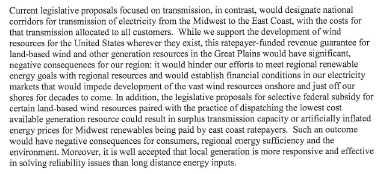
East Coast Govs Transmission Letter

easterngovs

It’s blurry, so click the letter and read the whole thing.  An eye opener for the Midwest, those who don’t recognize that there’s a big world out there and it’s not all about Midwest wind.  Folks, you have a marketing problem, your target market says NO!  What about NO can’t you understand?

economist_logo

I’d wondered why “The Economist” had shown up in my blog stats, and now I know.  But from the viewpoint of this article, it’s clear they didn’t do more than scratch the surface of transmission in the Midwest.  This is “party line” all the way — I hope they’ll now take the time to read NYISO and ISO-NE’s letter of withdrawal from publication of JCSP!

YOUR TURN!  Let them know what you think and why — the registration is instantaneous and easy, so COMMENT AWAY!

Spreading green electricity: A gust of progress

Apr 30th 2009 | CHICAGO
From The Economist print edition


Creating windpower transmission in the Midwest

FRANKLIN ROOSEVELT helped bring electricity beyond America’s cities to its most distant farms. Barack Obama hopes the countryside will return the favour. Much of this challenge rests in the gusty upper Midwest. In recent years Interstates 29 and 80, highways of America’s heartland, have teemed with lorries bringing wind blades to new plants. Efforts to build transmission have moved more slowly. There are 300,000 megawatts of proposed wind projects waiting to connect to the electricity grid, says the American Wind Energy Association. Of these, 70,000 megawatts are in the upper Midwest.

Now action is at last replacing talk. Firms are proposing ambitious transmission lines across the plains. The region’s governors and regulators are mulling ways to help them. The federal government is playing its part. In February the stimulus package allotted $11 billion to modernise the grid. Since then members of Congress have proposed an array of bills to develop transmission. Jeff Bingaman, chairman of the Senate energy committee, intends to start marking up transmission plans next week—though debate over other parts of the energy bill may delay progress.

America’s grid is complex: 3,000 utilities, 500 transmission owners and 164,000 miles (264,000km) of high-voltage transmission lines are stretched across three “interconnections” in the east, west and Texas. If wind is to generate 20% of electricity by 2030, as in one scenario from the Department of Energy, about $60 billion must be spent on new transmission. Just as important, regulations must change.

Historically, electricity has been generated close to consumers. Regulations are ill-suited for transmission across state borders. Rules for allocating a project’s costs burden local ratepayers rather than distant beneficiaries. One state’s regulators can scuttle a regional plan. The process for seeking approval from federal agencies is so disjointed and slow that pushing a line over a national park or river might as well be crossing the Styx.

American Electric Power (AEP) built a transmission line from West Virginia to Virginia in two years. The approval process had taken 14. “There are lots of people with authority to make pieces of the decision,” explains Susan Tomasky, president of AEP Transmission, “and no single entity that can say ‘yes’ or ‘no’.” Despite recent changes, the Federal Energy Regulatory Commission (FERC) has limited power to make projects go faster.

Fortunately, officials have started to address these problems. In September 2008 the governors of the Dakotas, Iowa, Minnesota and Wisconsin formed an alliance to co-operate on regional planning. Midwest ISO, which supervises 94,000 miles of high-voltage lines, is considering ways to spread the costs of new transmission beyond local ratepayers and taking part in preparing a broad plan for the eastern interconnection.

Federal legislation will help too. Harry Reid, the Senate’s Democratic leader, Mr Bingaman and Byron Dorgan of North Dakota have offered three of the most prominent proposals. Each would require comprehensive plans for the interconnections, and would, to varying degrees, expand FERC’s authority to locate big new projects and allocate their costs.

Initiatives like this would help to encourage firms already eager to invest. Two of the most ambitious plans belong to AEP and to ITC Holdings, which each want to build lines from the upper Midwest to cities farther east. In April FERC offered ITC’s “Green Power Express” initial incentives to push the project along.

However, even quick progress in the world of transmission is slow. If all goes according to schedule—an unlikely thought— the Green Power Express would still not be in service until 2020. Fights in Washington are inevitable. FERC’s role in siting projects is controversial. More important, this debate may be bogged down by broader ones, such as the fight over a mandate to make a greater share of electricity from renewable sources. Meanwhile the winds whistle across the plains.