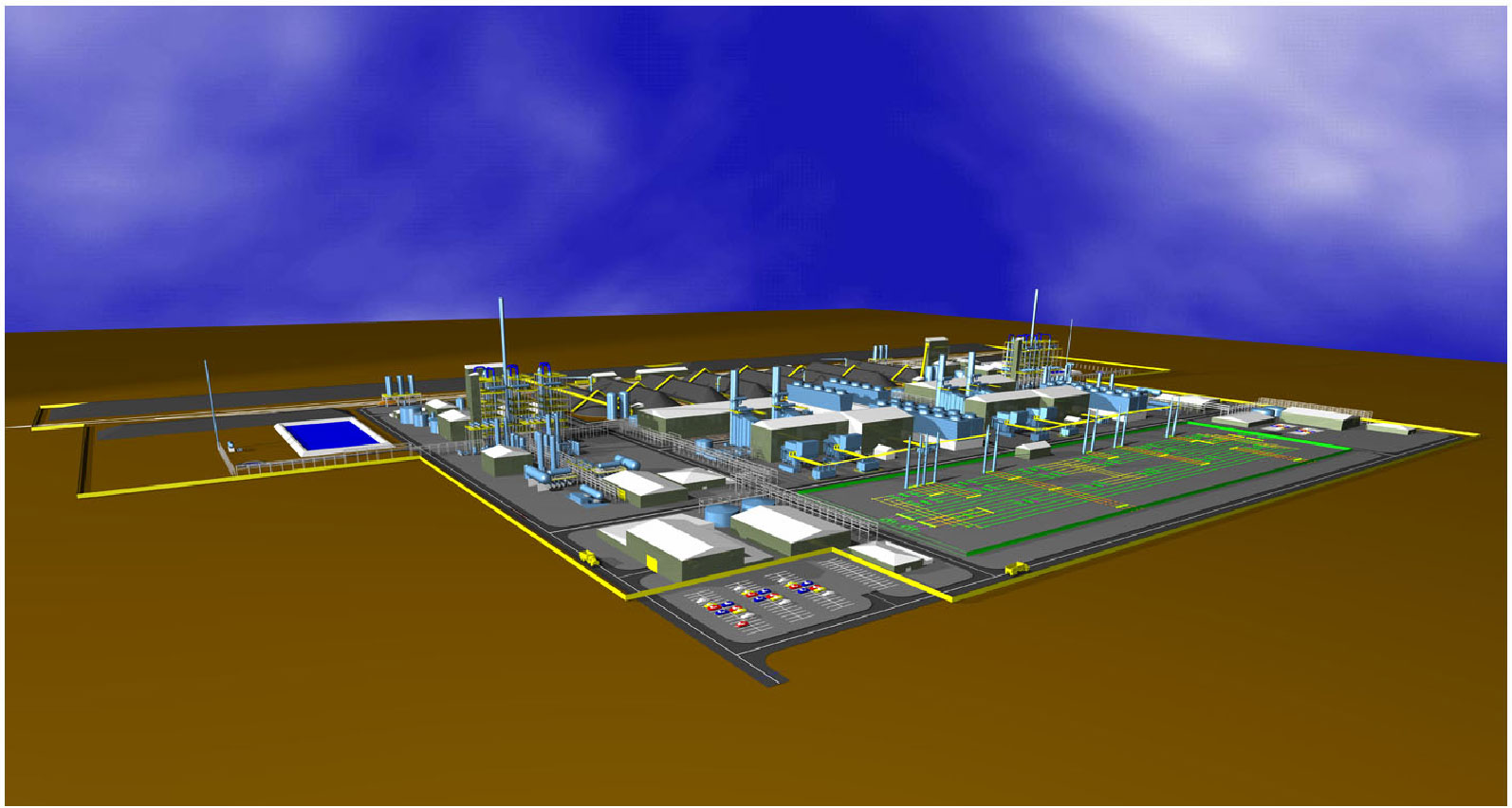
… before they back off on these stupid infrastructure projects?

We finished up the Susquehanna-Roseland hearing today, Stop the Lines has weighed in.  Time to say goodbye to beautiful downtown Newark.

nightny

Experts at power line hearing debate safety of EMFs

For me, the best parts today were:

1) Finally… FINALLY… getting some credible testimony about the capacity of that line.  Let’s see, they’re planning to double circuit it with 500kV, getting rid of the 230kV, but when… and they’ve designed the substations for 500kV expansion.  So DUH!  Here’s the poop:

140C for a 1590 ACSR Falcon @ 500kV – PJM summer normal rating conditions = 1838 amps

4 conductors = 7,352 amps

3 conductors – 5,514 amps or 4,595 MVA

2) Clear statement on the record about the Merchant Transmission’s Firm Transmission Withdrawal Rights:

Neptune 685MW

ECP 330 MW (VFT?)

HTP 670MW

TOTAL: 1,670 MW already heading across the river

And getting those numbers in was not easy, PSEG did NOT want this in the record.  It’s confirmed in the PJM Tariff, STL-12, p. 3 of the exhibit, p. 2 of SRTT-114 (BPU Staff IR).  But there’s something else disturbing going on here.  We were supposed to question Essam Khadr about “Leakage,” which is “New Jerseyian” for the increased coal generation that will be imported if CO2 costs are assessed:

BPU’s RGGI Leakage Order December 17, 2008

That will take some time to wrap my head around.

Here’s PJM’s 3Q bad news, well… good news to me!  Because it continues to go down:

PJM 3Q STATE OF THE MARKET REPORT

And if that’s not enough, here’s the Wall Street Journal:

Weak Power Demand Dims Outlook

By REBECCA SMITH

(See Correction below)

Electricity sales remained weak in the third quarter, prompting speculation that the sluggishness could persist even after the U.S. economy rebounds. Some utilities don’t expect power sales to recover to pre-recession levels until 2012 — if at all — because so many factories have closed.

Getting a read on future demand is crucial for utilities because they require long lead times to build power plants and make other upgrades. Declining sales put pressure on utilities to raise prices, cut costs or make other adjustments to bolster profits.
[Workers last month in Charlotte, N.C., home of Duke Energy. ] Associated Press

Workers last month in Charlotte, N.C., home of Duke Energy.

The sector began to feel the recession, which started in late 2007, later than many others. Sales held up well in the first half of 2008 but then declined and have continued falling this year, though some regions are reporting an uptick. The federal Energy Information Administration expects overall electricity sales to decline 3.3% this year and grow modestly next year, but many utilities anticipate far larger declines for the year.

Duke Energy Corp. said its energy sales to the textile industry based in the Carolinas fell 20% in the third quarter, versus a drop of 13.7% for sales to all industrial users. For the first nine months of 2009, electricity sales to the textile industry were down 23.5%, from the prior year, and overall industrial sales were down 15.8%.

American Electric Power Co. of Columbus, Ohio, which owns utilities in 11 states, saw industrial electricity sales plunge 17% for the third quarter versus the year-ago period. Chief Executive Mike Morris said his company is counting on industrial demand recovering about a third of the lost ground in 2010.

Beyond that, he is wary of making predictions. “I don’t know if we’ll ever get all of it back,” he said, acknowledging that factory closings in the auto sector will have a lasting effect.

Larry Makovich of consultancy Cambridge Energy Research Associates is among the few who believe electricity sales will experience a “strong rebound” next year. “It is dangerous to misinterpret a short-run phenomenon as a structural change,” he said.

Atlanta’s Southern Co., which owns utilities in four Southeastern states, has seen year-to-date industrial demand drop 15%, including a 9.6% drop in the past quarter. Chief Executive David Ratcliffe said he sees signs of recovery, but added that it feels “fragile.”

Bill Johnson, chief executive of Progress Energy, which has utilities in Florida and the Carolinas, said he thinks homes mostly have cut use voluntarily, unlike businesses. Total sales fell 10.9% in the first nine months of the year across all customer categories, led by industrial sales that dropped 11.4% in the Carolinas and 12.9% in Florida.

“I think there’s still a high level of concern and a great deal of unease” about the economy, Mr. Johnson said, adding that he doesn’t expect a sharp recovery.

Bob Shapard, chief executive of Oncor in Dallas, said he thinks the drop in energy use in 2008 “was so quick that it wasn’t structural but was probably cyclical.” Nevertheless, he said he doesn’t expect a full recovery in total sales volumes until 2012.

Portland General Electric in Oregon saw residential sales rise 4.6% for the quarter, but the gain was offset by a 5.3% drop in industrial sales.

Utility analyst Chris Ellinghaus at Shields & Company in New York said he isn’t hopeful the sector will recover next year but thinks “2011 will look more normal.”

Valero Refinery to close

November 21st, 2009

Back to Delaware for the weekend, it’s very strange being here on the east coast and Alan’s in Red Wing with the grrrrrrrrrls.  And speak of the devil, guess who’s in the Philadelphia Inquirer today?  The Valero refinery shut down, one of our neighbors works there, well, I’d guess a lot of our neighbors in Port Penn work there, it’s just up the road, they’ve been shut down for a couple of weeks, and now it’s forever.  I’m curious what Valero will do — $50 says the try to find a way to walk away from the mess they’ve created.  Nearby wells have been contaminated and people are just starting to look around for the source.    We’ll see…

AlanItasca

Posted on Sat, Nov. 21, 2009

550 to lose jobs as Valero Energy shuts Delaware refinery


By Harold Brubaker, Jan Hefler, and Jane M. Von Bergen

Inquirer Staff Writers

Oil-refinery workers on the Delaware River yesterday received their second big blow in six weeks, when Valero Energy Corp. said it would close its operation in Delaware City, Del., casting 550 out of work.

When workers heard the news, “it was like a time bomb went off,” said Matt Edler, who has worked for 10 years at the refinery that rises out of the lowlands near the Delaware River in southern New Castle County.

“My grandfather worked there, my father, and I worked there,” said Edler, who yesterday afternoon joined other shocked refinery workers at Red Lion Inn in Bear, Del. “We were all doing the best we could to keep the place alive. That’s our life.”

The loss of Valero as a provider of high-wage industrial jobs adds to the economic woes in Delaware caused by the recent loss of 2,000 auto-industry jobs at General Motors and Chrysler plants.

Coupled with Sunoco Inc.’s idling of its Eagle Point refinery in West Deptford, Valero’s decision shows the refining industry is under intense pressure, not just from the worst economic downturn since the 1930s, but also from expectations that U.S. gasoline demand will never return to the highs of 2007.

The Delaware City refinery, which Valero bought in 2005, when the industry’s biggest problem was lack of capacity to keep up with soaring demand, was losing an unsustainable $1 million a day this year, the company said.
Read the rest of this entry »

Susquehanna-Roseland hearing

November 20th, 2009

It’s warm here in New Jersey, unseasonably.  We’re slogging through the hearing.

The good news is that we’ve gotten pretty much everything in the record that we need, including, well not quite, got the 2Q State of Market, and last night I found that the 3Q was released November 13:

(great, can’t upload here, grrrrrrrrrr)

PJM – 2009 3Q State of the Market Report

Page 9 will tell you all about decreased peak demand:

2005          133,761

2006          144,544

2007         139,428

2008         129,481

2009         126,805

Down 2,676 MW this year, down 9947 from 2007 to 2008.  Down every year since 2006!

Here’s a report of yesterday’s festivities:

State told power plan pros, cons

By SETH AUGENSTEIN
saugenstein@njherald.com

NEWARK — Power grid experts testified about the need for the 500-kilovolt Susquehanna-Roseland power line Thursday in front of a dozen attorneys at the offices of the state’s Board of Public Utilities.

The four experts — three from grid operator PJM Interconnection, one from power company PSE&G — stated their case in proposing the power line, which will double the height and power of the existing line from Susquehanna, Pa., to Roseland, in Essex County, cutting through the southern half of Sussex County along the way.

Testimony surrounding routing and construction of the project was put on the record at evidentiary hearings earlier this week by PSE&G experts and engineers. The PJM-dominated needs panel will complete its input today, and will be followed by the objector’s experts. The need issue is considered to be the main question determining the future of the controversial power plans before the BPU.

PSE&G, the state’s largest electric utility, said it needs to build the line and have it operating by 2012 to meet the electricity demands and reliability requirements expected for the region in the coming decades.

Opponents have rallied around several issues, including safety and health issues stemming from having a 500-kilovolt system on the same pole with a 230-kilovolt system, the potential environmental damage the construction project will do, the visual and property value impact of the towers and whether bringing in electricity generated in other states meets New Jersey’s own goals of increasing so-called “green” and renewable sources of power.

Thursday’s seven hours of question-and-answer testimony included hypertechnical engineering explanations, staccato series of acronyms involving state and federal regulatory agencies and figures spanning all details of the $750 million project.

The PJM experts conceded regional power demands have decreased the last three years, but maintain their forecasting models predict increasing power needs beginning in 2012, which could induce brownouts if the line is not built.

“We don’t use actual loads, we use forecasts of loads,” said Steven Herling, PJM’s vice president of planning.

“I can only characterize it as a significant increase,” added John Reynolds, a senior economic analyst at PJM.

Four attorneys cross-examined the experts, with few breaks.

Carol Overland, a lawyer specializing in power grids, represented the Fredon-based citizens group Stop the Lines. Overland peppered the four-man panel with questions for about three hours, with detailed points about the methodology of deciding upon the lines as a power solution.

Catherine Tamasik, the attorney representing a seven-town coalition opposing the lines, followed with questions about determining the need through the peak demand of electricity during hot summer days.

Julia LaMense, the lawyer representing four environmental groups, including the Sierra Club, called into question the pressing need of the lines, as her clients have done since the plan was proposed last year.

Henry Ogden, New Jersey’s assistant deputy public advocate, finished the cross-examination by asking about the strategic routing of the lines, which could coincide with the much-publicized closing of a Bergen County power plant.

Joseph Fiordaliso, Board of Public Utilities commissioner, presided alone over the hearing. He occasionally urged the board’s experts to answer the questions succinctly, and to avoid “dissertations.” He had similar advice for the attorneys.

“I would appreciate it if you would just ask a question,” he said.

Karen Johnson, spokeswoman for PSE&G, said the experts had done an efficient job of presenting what the power company considers an energy necessity.

The opposition attorneys said they were getting the job done.

“We got on the record what we wanted on the record,” Tamasik said.

The hearings are expected to continue today. The state has set aside hearing times through Tuesday, if necessary. The board expects to reach a final decision in January.

mesabaone

The joint DOE and MN Dept. of Commerce EIS for Excelsior Energy’s Mesaba Project has been released.  WTF?  This is SUCH a waste of time.  And I am at a lost to explain how it is that this even was released, why we have to bother with it, when it’s the vampire-vaporware project from hell that is dead but … but…

Excelsior Energy Mesaba Project Environmental Impact Statement

Comments on the “adequacy of the Final EIS or its impact upon the issues” are due on December 2, 2009.  Send Comments to:

steve.mihalchick [at] oah.state.mn.us

or by mail to:

Steve Mihalchick, ALJ

Office of Administrative Hearings

P.O. Box 64620

St. Paul, MN  55164-0620

Here’s the Order establishing that deadline:

4-17-08 Order – Final EIS Comment Deadline Established

Is this weird language or what:

b. Such comments on the “adequacy” of the Final EIS or its “impact” upon the issues in this matter shall be filed with the Administrative Law Judge within ten business days after filing of the Final EIS.

So get cracking on “such comments” and send them in!

And just in, breaking news…

Just last Friday, a MCGPer and his son were out deer hunting on the preferred Excelsior site, guns in hand, on the alert, and what should come bursting through the trees but… BOB EVANS!  Bob Evans and two other Excelsior boys, they were out viewing the site during deer hunting!  That just doesn’t seem to bright.

Give it up!!!   Get a job, Bob!!!

And have they forgotten that other encounter in the woods, almost exactly three years ago?
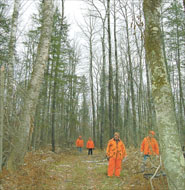
boysinthetreesgrhrnov182006

Meanwhile … the sun is coming up over New York right now…

sunriseovernewyork

Newark state of mind…

November 15th, 2009

outthewindow-ny

Yup, close, but decidedly Newark, New Jersey.  It’s more Alan’s country, he was born just south of here in Elizabeth, maybe the old Elizabeth General Medical Center I drove by???

And a hearing state of mind too, ready to kick in tomorrow.  Hearing — Susquehanna-Roseland transmission at the New Jersey Board of Public Utilities.  Stop the Lines! Stay tuned for reports from the trenches…