Goodhue Wind hearing continued to 3pm today
July 22nd, 2010
The Public Utilities Commission hearing/meeting on the Certificate of Need (09-1186) and Siting Permit (08-1233) for Goodhue Wind went on until 10:30 last night, and many people still had not spoken. It starts up again at3:00 p.m., again at the Goodhue school.
For the full record, go to www.puc.state.mn.us and “Search eDockets” for 08-1233 (siting) or 09-1186 (Certificate of Need).
And here is a small part of Goodhue Wind Truth’s filings:
The “How-To” Guide to Siting Wind Turbines to Prevent Health Risks from Sound
News coverage of yesterday’s shindig:
In the Beagle 
On MPR:
At Finance & Commerce:
Goodhue Wind execs, opponents meet before administrative judge
Rochester Post-Bulletin:
Wind buffer proposals from Zumbrota, Goodhue meet resistance
And at MinnPost:
Rochester Post-Bulletin:
Proponents and critics of proposed Goodhue County wind farm speak up
On KSTP – check the video!!!
I’d guess there will be something in the News Record and the Beacon soon too…
In the STrib – info on capital funding for the Goodhue project and other National projects:
Deutsche Bank funding will give a push to local wind developer
National Wind will get help on 12 projects and a loan to expand.
By JENNIFER BJORHUS, Star Tribune
A Minneapolis-based wind developer is getting a lift from Deutsche Bank. The German investment bank will help finance 12 wind projects, including five slated for Minnesota, that National Wind has in various stages in the pipeline, National Wind said Thursday. The bank also gave the developer a senior secured loan for an undisclosed amount to finance an expansion to the West Coast and New England.
“We anticipate that Deutsche Bank will participate in financing those projects,” Leon Steinberg, National Wind’s chief executive, said in an interview Thursday.
The projects are still subject to underwriting, but it’s good news for the company at a time when many wind developers are struggling with tight financing.
Robert Martorano, managing director of Deutsche Bank’s asset finance and leasing group, said in a statement that Deutsche Bank is making renewable energy a priority.
National Wind, which employs about 42 people, develops relatively large wind farms with local land owners who maintain majority ownership when projects are done. It has sold three operational wind farms so far: one in Minnesota’s Cottonwood County and two in North Dakota. The 12 projects it is working on would generate 3,950 megawatts of electricity, or enough to power an estimated 1.6 million to 3.6 million homes, depending on weather and the sizes of the homes. The five slated for Minnesota would generate about 1,030 megawatts, or enough to power 412,000 to 927,000 homes.
National Wind made headlines in April with news that one of Texas oil magnate Boone Pickens’ companies is backing another National Wind project in the state, a 78-megawatt wind farm it’s developing around Goodhue, Minn., south of Red Wing. Pickens’ Mesa Power is helping finance that project and supplying about 52 1.5-megawatt GE wind turbines.
The state Public Utilities Commission has granted the Goodhue farm preliminary approval. A group called Goodhue Wind Truth has been opposing the project, which would span about 32,000 acres.
GWT files Testimony for 7/21 hearing
July 19th, 2010
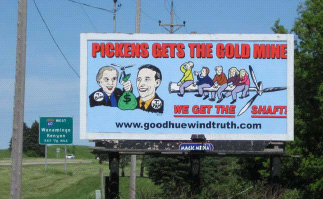
Today (well, really really late yesterday), Goodhue Wind Truth filed the testimony of Richard R. James, INCE, for Wednesday’s hearing over in Goodhue:
A must read:
The “How-To” Guide to Siting Wind Turbines to Prevent Health Risks from Sound
And this was published earlier this month:
To check out the rest of his exhibits, look at the PUC docket for the AWA Goodhue Wind project:
- www.puc.state.mn.us
- and then to “Search eDockets”
- and then search for docket 08-1233
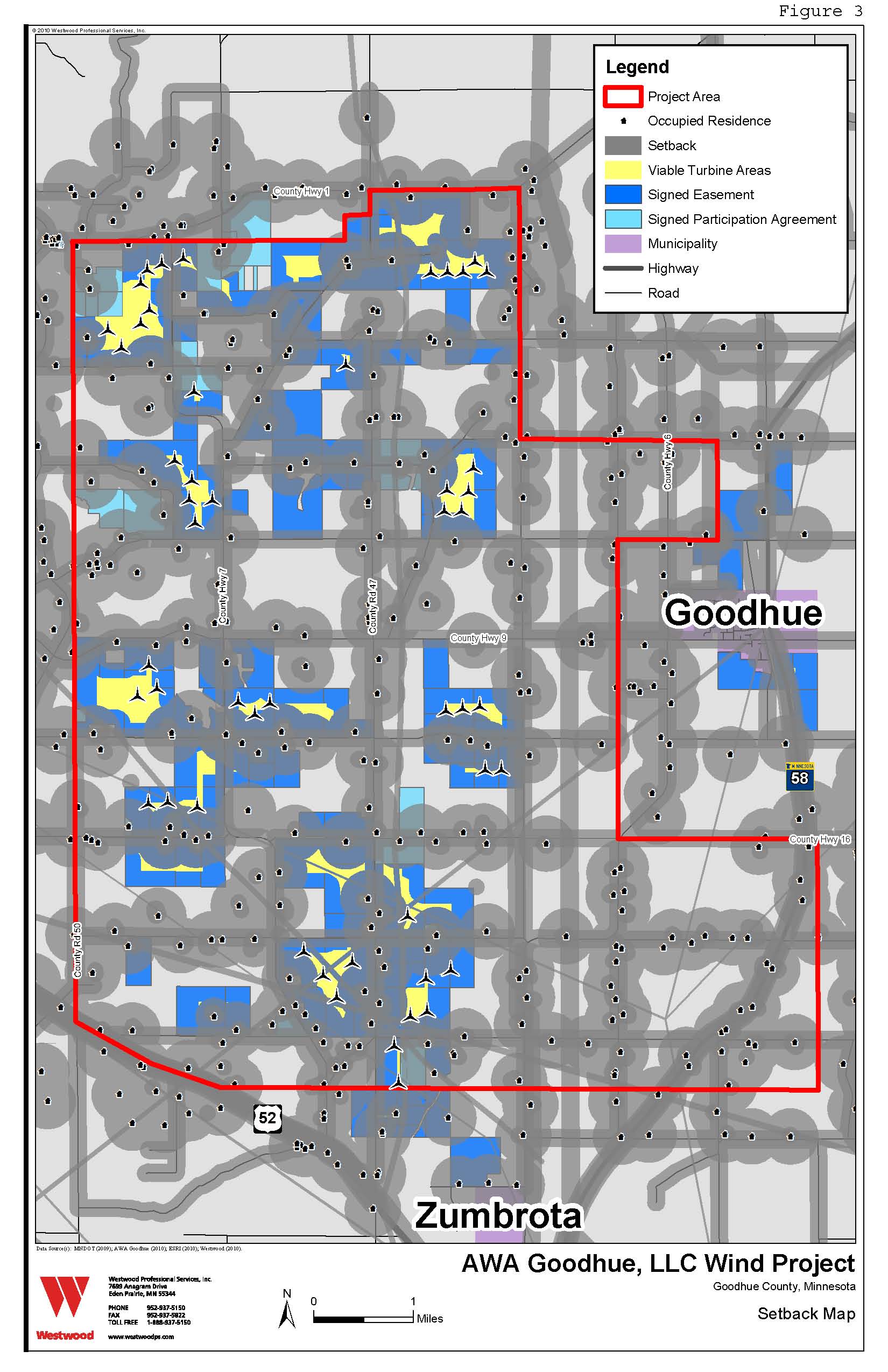
Wednesday’s hearing is for both the Certificate of Need and Siting Permit for AWA Goodhue’s 78MW wind project in Goodhue County, west of the City of Goodhue, utilizing the Goodhue and Vasa substations. This is the one that T.Boone Pickens is involved with, and they’re claiming it’s a C-BED project — but the AWA Goodhue LLC’s HQ is at 8117 Preston Road, Suite 200, Dallas, Texas, 75225. Walker Clarke is the “organizer” and he’s in Houston.

Yup, sounds locally owned to me!
East Coast Governors STAND UP AGAIN!
July 13th, 2010

YEAAAAAAAA! The East Coast Governors are mad as hell and letting the Senate know just what they think of this Midwest plan to build billions and billions of dollars of transmission from here to the East Coast and make them pay for it, oh yes, it’s about time the Midwest schemers start listening.
The Des Moines Register is paying attention — why not Minnesota papers?
And here’s the letter itself, pretty much the same spirit as the last one, although I don’t see the directly stated link to coal in this one:
Here’s a pithy snippet:
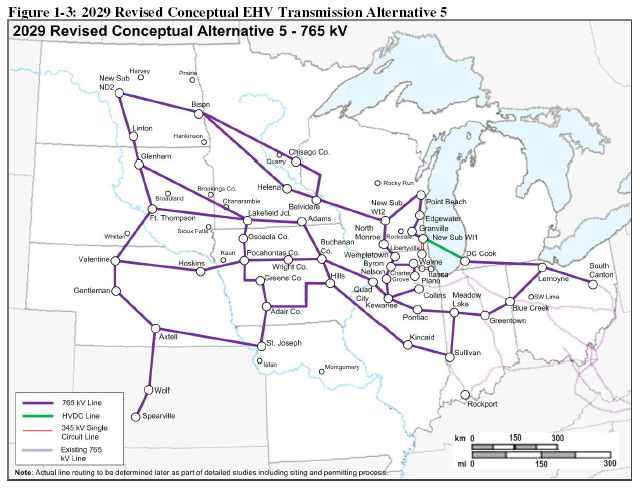
This comes not too far on the heels of some promotional announcements about those transmission plans, the “not so” SMARTransmission study — I though I’d posted this before, but don’t see it, so here it is:
How’s this for a vision/nightmare — it’s one of their chosen three:
CATF wants federal PPA?
July 12th, 2010
Oh, how bizarre can it get. Sometimes, I’m left speechless in disbelief. We all know about Clean Air Task Force’s toadying for coal, they’re the Clean Air Task FArce, but this? It’s just going too far.
CLEAN AIR TASK FORCE THINKS THE FEDS SHOULD SIGN A PPA FOR FUTUREGEN ELECTRICITY!
Really, here’s a quote from the Press Release:
And I’m sure that Tom Micheletti, of Excelsior Energy/Mesaba Project infamy, is not happy about this, not happy about it because they’re proposing the FutureGen and not Mesaba:

IGCC plants have problems getting Power Purchase Agreements because they are NOT economical, even with all the federal and state subsidies, with all the perks, with all the circumvention of regulation, as the ALJ’s noted in their Recommendation to the PUC on the Mesaba Project PPA, it’s just TOO COSTLY! And, plus, it’s NOT in the public interest!
But there goes Clean Air Task Farce saying the feds, US, we the taxpayers, should buy up the FutureGen electricity? Give me a break! Really, here it is from the horse’s mouth(the other end of the horse is further below) — this CATF press release just out:
REPORT CALLS FOR COMPREHENSIVE ARRAY OF NEW DEMONSTRATION PLANTS, $20 BILLION IN NEW FUNDING
Here’s the entire CATF report:
Contact the White House, Executive Office of the President, and tell the staff what you think of CATF’s brilliant idea and what you think of CATF’s lobbying for coal:
And this article about it:
Expert: Feds should buy FutureGen’s power output
Poop Power in the WSJ
July 12th, 2010
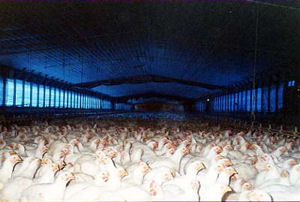
Fibrowatt in the Wall Street Journal?
I would think that Minnesota’s experience with burning chicken shit would wake up the world. How is it that so many states had the sense to run Fibrowatt right out of town, Alan Muller & Green Delaware led the charge in Delaware, and just recently, Fibrowatt was run out of North Carolina. He’s been digging into their file at the MPCA, it’s intense, he spent a LOT of time in the basement file room, got piles of papers and a disc or two, and he got a copy of the agreement after it came out:
FYI, here’s the PPA from November 2000 – I believe it’s been ratcheted up since:
To review the Minnesota Public Utilities Commission file on Fibrominn go to www.puc.state.mn.us and “Search eDockets” and search for docket “00-1169.” The compliance filings are redacted, so the comparisons between Fibrominn, Laurentian, and District Energy in the most recent filing that would be so enlightening, isn’t… DRAT!
What’s Minnesota’s experience with Fibrowatt/Fibrominn:
Contact: Forrest Peterson, 320-441-6972 Willmar, Minn. — The Minnesota Pollution Control Agency (MPCA) and Fibrominn of Benson reached an agreement recently resolving the company’s past failure to comply with state air-quality rules and permit conditions. Air emission violations occurring since 2007 resulted in a $65,000 penalty, and corrective actions including the installation of a new sulfur dioxide monitor at a minimum cost of $80,000. Fibrominn began operation in May 2007 burning primarily turkey litter to generate electricity. Since the start of operations, the facility has experienced numerous violations of its permit. The settlement addresses violations of late report submittals, failed performance test, and excess nitrogen oxide, sulfur dioxide and carbon monoxide emissions. The company also failed to self-report deviations that occurred during operation of the facility’s poultry litter-fired boiler. Fibrominn has since conducted the performance test and submitted a testing frequency plan, a continuous opacity monitor/continuous emissions monitor downtime elimination report, a pressure drop limit, a relative accuracy test audit test plan, a hydrochloric acid correlation curve and a permit compliance checklist. Minnesota law requires owners and operators of facilities with the potential to release air pollutants to have MPCA permits. Facilities must also carefully monitor and maintain equipment because emissions exceeding state standards can degrade air quality. The MPCA offers outreach and training to help facilities meet their permit requirements. For more information on air quality permits and emission standards, call Jennifer Lovett, MPCA air quality inspector, at 651-757-2538 or 1-800-657-3864. A stipulation agreement such as this is one of the tools used to achieve compliance with environmental laws. When calculating penalties, the MPCA takes into account how seriously the violation affected the environment, whether it is a first-time or repeat violation and how promptly the violation was reported to appropriate authorities. It also attempts to recover the calculated economic benefit gained by failure to comply with environmental laws in a timely manner. For a comprehensive list of enforcement actions by the MPCA, go to the agency’s Web site at www.pca.state.mn.us/newscenter/enforcement.html.
Here’s a link to Jim Turner’s blog digging into it when confronted with a proposal nearby in Page County, VA:
Where they were run out again:
But then we have yahoos like Delaware’s Senator Carper who just can’t seem to bend over far enough despite so much evidence on what a piss-poor idea poop power is:
So what’s Fibrowatt up to?
Back to the beginning, the article about Fibrowatt in today’s Wall Street Journal that means Fibrowatt is gearing up for another assault on some unsuspecting or uncaring state, with this about their plant here in Minnesota:
Here’s the full article:
Looking to Litter
Energy Company Sees a Future in Chicken Manure
Many farmers use chicken litter—a mixture of manure and bedding—as a fertilizer, either spreading it on their own croplands or selling it to other growers. But the litter increasingly is being blamed for phosphorus-laden runoff that chokes waterways in heavy poultry-producing areas, and environmentalists are pushing the federal government to set limits on its use.
Read the rest of this entry »