More on Fukushima nuclear disaster
April 8th, 2011
On Sunday, it’s Summer!
April 7th, 2011

Noooooo, we know it’s spring, but on Sunday, we’re going to Wisconsin to meet, and likely bring home, our new adopted doggy, a 12 y.o. GSD named Summer. She needs a retirement home, and that’s something we’re good at. What struck me about her is she’s Kenya’s twin, that perky smile, bright eyes (even if they can’t see) and this dear dog has 4 legs that work.

She doesn’t eat cats, and in case you didn’t notice, she’s a big’un, 120 pounds, WOW, that’s bigger than Krie the Big Galoot! She has some health issues, but nothing we can’t handle, and with her good attitude, she should fit right in with Kady and Little Sadie.
 Who can resist a smile like that?
Hiawatha Project “Need” Reply Comments due 4/29
April 7th, 2011
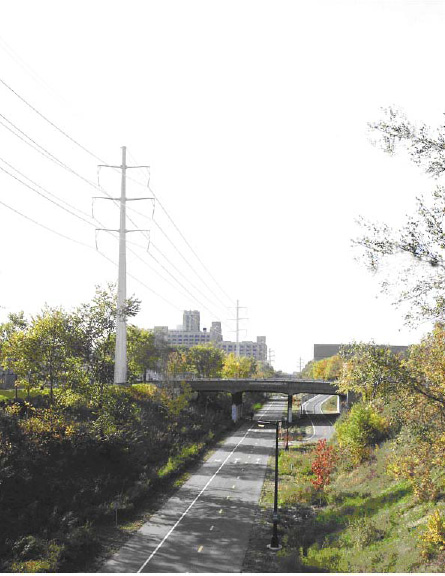
There’s a problem with not having a dog in the fight, and that is that I’ve not been tracking what’s going on in the Hiawatha Project Certificate of Need docket, or more correctly, what’s NOT going on. OH MY! Look what I just learned!
THE COMMENT PERIOD ON “NEED” ENDED 3/31/2011!!!
Yup, really, here’s the notice:
That was sent out in early March, setting the deadline for Initial Comments as March 31, 2011, and Reply Comments for April 29, 2011.
This Certificate of Need is going through the “informal process,” something arbitrary set up by the PUC and MOES, with no rules, and oh, it is going weirdly. Here’s the PUC Order authorizing the “informal process” that was issued in February:
Let me see if I understand this. The Environmental Report is not done, in fact it’s not yet begun, the Scoping Comments were due yesterday, April 6, 2011. And the notice for the Scoping of the Environmental Report notes that there will be a public hearing on need, as required by the statute and rules, after the Environmental Report is released.
… but the initial Comment period is closed, the Reply comment period ends April 29, 2011, and all of that will be over before the Environmental Report is done and before the “Public Hearing.” HUH? This makes no sense.
Worse, the only party to file comments by the March 31, 2011 deadline was MOES! There were how many intervenors in the Routing docket, and they raised such a stink about the need for a Certificate of Need proceeding that they rammed through a bill requiring it, and now that it’s begun (and now that their $90k was line-item vetoed by Pawlenty) they are all absent, not a one has bothered to show up and submit a single Comment. Give me a break! What does it take to put a comment in? And not one… and a few have submitted letters saying they won’t be intervening, notably the large funded intervenors:
…sigh… gee, I wonder why they’re not intervening…
Anyway, here’s what MOES has to say, and remember this is the beginning, not nearly the end:
So once again, let me see if I understand this. MOES has submitted Initial Comments recommending that this Certificate of Need be approved, and is basing that on the Application, and to support that Recommendation, using demand data from 2006, and using the Chisago Project record from 2007 as the basis for saying that a determination regarding undergrounding should be made in the routing docket. Really, that’s what it says, PLEASE read it!
MOES, CAN YOU SPELL “PREMATURE?”
Look what Xcel filed on January 6th, 2011, as a “Supplemental Filing” replacing their “Appendix B, Figure 7, Monthly Demand and Capability” chart (click to enlarge):
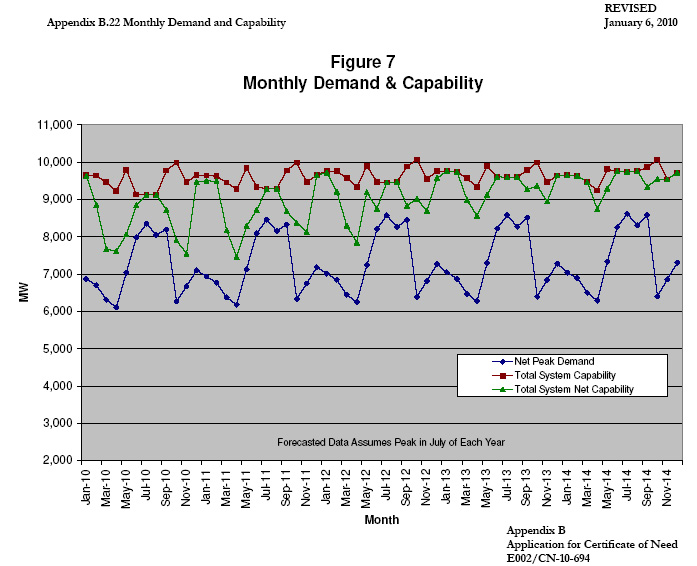
Compare that “Net Peak Demand” with the original chart — there’s a LOT more capability than demand… but hey, we knew that:

So can you believe this MOES Recommendation to grant the Certificate of Need? Where are my waders…

MOES clearly has not taken this chart into account showing a 10-15% decrease in demand. Plus MOES is not taking into account any Comments because theirs were filed on the first deadline! They’re taking everything Xcel says in its application and presuming it’s fact! Even the 55MW need claim based on 2006 data. HELLO?!?!
A Recommendation should come at the end of the process, not the beginning. DUH!
Well, here we go… Reply Comments due April 29, 2011.
Duck and cover!

EXPOSED – Xcel’s Hiawatha Project Magnetic Fields
April 6th, 2011
.
Comments for the scope of Environmental Review for Xcel’s Hiawatha Transmission Project through the Phillips neighborhood of Minneapolis are due TODAY at 4:30 p.m. These Comments must address the “scope” of issues to be addressed in the Environmental Report – not that you don’t like it (who would?) but raise all the issues, each and every one, each subtle variation and nuance, of the things they need to consider. Because this is a Certificate of Need docket, they need to include things like “consider system alternative of an upgrade of the distribution system” and “consider system alternative of solar panels on large buildings in area to follow peak” and so forth. TELL THEM TO INCORPORATE THE HIAWATHA PROJECT ROUTING DOCKET DEIS AND EIS INTO THE ENVIRONMENTAL REPORT. Be painstakingly specific. Send Scoping Comments by 4:30 p.m. today, be sure to label as “Scoping Comments for Hiawatha Project” and put the docket number on it, “Docket 10-694.” If you’re so inclined, file them on eDockets at the PUC.
SEND SCOPING COMMENTS TO: bill.storm@state.mn.us
AS “SUBJECT” STATE “HIAWATHA SCOPING COMMENTS – 10-694” SO THEY WON’T GET LOST
Why does this matter? Because so far they’ve gotten away with claims that this transmission project is “needed” to address a distribution system problem. The Certificate of Need docket is where we can demonstrate it’s not needed. This “Environmental Report” is a part of that. And these “Scoping Comments” are the only public input into an “Environmental Report,” because unlike a Draft Environmental Impact Statement,” there will be no public comments on its adequacy, what’s included, what’s missing, that doesn’t happen with an Environmental Report.” And that’s a problem. Someone needs to enter the DEIS and the FEIS from the Hiawatha routing docket (PUC Docket 09-38) into the record as a Scoping Comment and the entire DEIS and FEIS need to be incorporated into the environmental report.
Here’s an important example. Remember the furor over the “high” magnetic field levels in the Routing Docket, and that the ALJ recommended it be underground? Well, those levels are not even close to what those lines could produce. Forever, I’ve been saying, commenting, testifying in the routing docket that the magnetic field levels for the Hiawatha Project are a lot higher than they are claiming(click to enlarge) and nobody cared… sigh… Here’s what they claim:
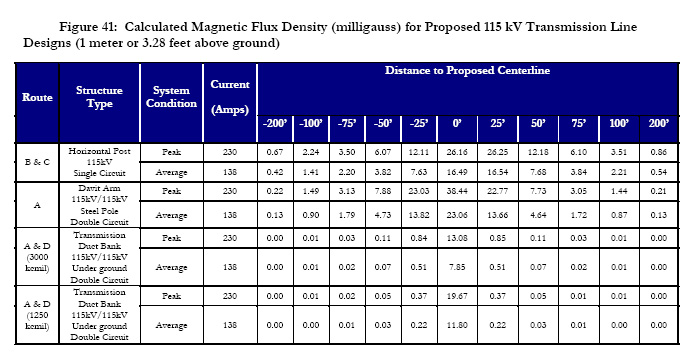
And sure enough, if you take the conductors specified, the potential levels are a LOT higher than they disclose. Here’s a chart of calculated magnetic fields for Route Options A, B and C (click to enlarge):
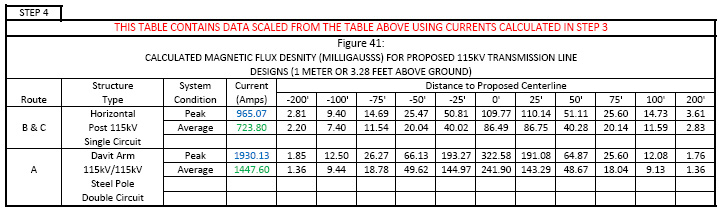
This chart is from a Scoping Comment Affidavit just filed: by Bruce McKay, the same engineer who filed a similar Affidavit in the CapX Brookings remand that got the Applicants to admit to those levels, which acknowledges the accuracy of McKay’s Affidavit and calculations, in Darren Lahr’s testimony in the Fargo-St. Cloud case. Well DUH!
So to get some accuracy going here, Bruce McKay filed a Scoping Comment with the above chart:
Again, Scoping Comments are due at 4:30 p.m. today. Send “Scoping Comments, Hiawatha Project 10-694” to:
bill.storm@state.mn.us
No frackin’ way!!!
April 5th, 2011
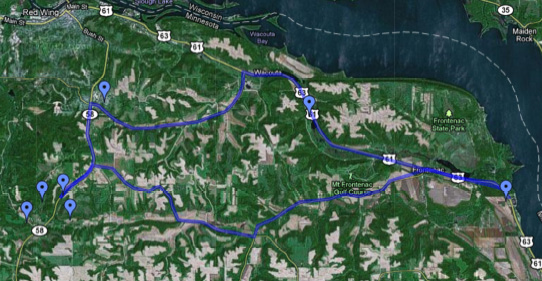 Above is the proposed mine location, on lower left, and alternate transportation routes to a rail/barge transfer station. This is from the “Fight Against Fracking” page, just click this link!
Community Meeting
Red Wing Library
Monday April 18, 2011 @ 6:30 p.m.
Heard a while back that some gas company had bought land for big BIG money in Hay Creek Twp on both sides of Hwy. 58. HUH? Whatever for?
FRACKING SAND!!!
Recently another company, a different company, expanded a sand mine in Maiden Rock, and the sand is for use in fracking, used in drilling for natural gas. An article on that mine:
Here’s a page for a fracking sand corporation that’s a subsidiary of Fairmont Minerals, parent of Wisconsin Industrial Sand Company, and which has many other companies and names too… they’ve got mines in Maiden Rock and Hager City, WI, just across the river from here:
Fairmont Minerals is in the process of expanding that mine in Maiden Rock. Here’s the Santrol Proppants product guide:
In Hay Creek Township, in Goodhue County, it’s supposedly Windsor Permian, which is in the gas drilling business… or as they say, “acquisition, exploration, development and production of high quality oil and gas reserves throughout the United States.” Want to learn something about them? Check their “History” page… oh… “Under Construction.” Rumor has it that Windsor Permian is owned by Wexford Capital, LLC, a hedge fund managed by Charles Eugene Davidson. I’ll keep digging.
The sand? The plan is to mine it and ship it by truck, lots of trucks, to a site along Hwy. 61 in Frontenac!
One person’s take:
… and …
… and …
What does Goodhue County have to say about it? What authority, restrictions, conditions, requirements?
Back to fracking. What is it?
Pretty cool, in the opener, they also answer my question, what the hell is a “proppant?”
And here’s a few words from the Wiki about the sand, something that should concern those of us near any mining operation:
Fracking has utterly screwed up Pennsylvania, where gas well are covering the countryside, New York too… I’m on a natural gas drilling list that contains some of the most distressing news ever, and to think that here in Goodhue County we’re contributing to that with our sand… and we’ll pay for it in the particulates spewed about hat go into our lungs, the massive truck traffic necessary to sustain this operation… eeeeeeeeeeuw, I do NOT like the sound of this.
If you’re interested, head on over to the meeting at the library: