Fukushima admittedly a mess…
August 9th, 2011

… to put it mildly.
I’ve posted a few things about the Fukushima nuclear disaster:
And it’s just so depressing to read about this, but here we go again, finally some admission that yes, it is really that bad. From the Washington Post:
Japanese scientist: Fukushima meltdown occurred within hours of quake
Well, DUH! A choice paragraph from that article:
From the Mainichi Daily News:
And from the Voice of America:
The International Atomic Agency’s most recent post was as of June 2:
adsf
Defending the liar…
August 3rd, 2011

Carrie Daklin – Fair Use
Who is Carrie Daklin and why is Carrie Daklin defending professional liar…errrrr… lobbyist Tom Minnery?
Franken missed an opportunity to be kind to a witness – Carrie Daklin
Why is Minnesota Public Radio promoting her defense of liar Tom Minnery?
Tom Minnery – Focus on the Family – Fair Use
You may have seen the video of Franken outing Focus on the Family’s Tom Minnery for misrepresentation of a study in his Senate testimony, claiming it supported his statements when it did not:
First, methinks everyone should be clear that when you testify, it’s supposed to be TRUE! If you make this sort of representation in law school, you can be tossed out. If you make this sort of representation in a trial, you can get slapped with a perjury charge. In Senate? Well, were I the chair, I’d have called an immediate recess to review and if, as Franken stated, it was a misrepresentation, I’d have tossed Minnery out of the room. That he thought it was acceptable says a lot about his character.
So on to his “defense.” Today one of the news services in my inbox noted that “Religious right attack (sic) Al Franken for exposing false anti-gay testimony” (where’s their editor?). That lead me to a number of blogs posting this MPR piece by Daklin, celebrating that someone had come to Minnery’s defense. HUH?
Listen to this pablum:
I have testified in a trial. It is not fun, it is not exciting. It is stressful. You are out of your element. Your adversary is salivating to get you to say something he can spin, some little something he can magnify out of proportion and use to his advantage. As an experienced paralegal I knew this when I testified, and I was in hyper-vigilant mode because I knew it. Imagine what it is like for someone who has no knowledge of the courtroom.
Yes, Daklin has testified at trial. Here’s an interesting one where she sued her father, a scary display of family dynamics and family values:
And she states she’s a paralegal. So one would think she has an understanding of the need for testimony to be true.
I have no knowledge of congressional hearings. I have never been to one. I can only hope that if I did have to testify before the Senate, whoever was questioning me would be kind, would recognize that this was his sandbox, not mine, and that, as a representative of our country, he would not embarrass me for his own purposes.
Sadly, when Tom Minnery testified, that was not the kind of treatment he received from Al Franken.
Excuse me? Someone makes a material misrepresentation during testimony, what, it should slide by? She thinks that someone, Minnery, is making misrepresentations “for his own purpose,” that is acceptable behavior?!? Someone, Franken, challenging Minnery on his lies (and too nicely at that) is unacceptable behavior?!?
What would be acceptable behavior for Minnery? He should start by issuing an apology to the Senate committee for his misrepresentation and his disrespect.
Yet Daklin goes on, paragraph after paragraph, whining on the “poor Tom Minnery” angle. What?
Minnery is a lobbyist who spends a lot of time in D.C. This guy is a pro. He knows exactly what he’s doing. Focus on the Family had $130 MILLION in revenue in 2008, the last year for which I could find an IRS 990. Minnery is a Senior Vice President of GOVERNMENT AND PUBLIC POLICY — he’s their lobbyists’ lobbyist. In 2008, he made $145,284 plus $17,911 in “benefits.” Focus on the Family reported 18,400 volunteer hours for lobbying in 2008. They reported direct and indirect lobbying expenses of $224,641.00 in 2008 “to influence a legislative body.” In 2008, they paid Minnesota Family Institute $41,640 for “assistance with voter guide.” This does NOT include the “Focus on the Family Action” activities (a 501(c)(4) entity).
Focus on the Family 2008 IRS Form 990
Daklin issues this bogus “defense” of poor attacked Minnery and the anti-gay crowd is lapping it up. Why is she taking up the defense of a professional lobbyist who spends his days influencing legislative bodies, and covering for his proven misdeeds? Her paralegal experience and her own experience of making statements under oath should make her sufficiently aware of the importance of truth in testimony. Why take up the defense of someone so powerful, with so much money behind him, when he was exposed as a LIAR! When he was caught in his misdeeds? Sounds to me like she’s acting out unresolved issues and doing herself and her credibility a big disservice in the process…
Happy Birthday, Jerry!
August 1st, 2011

You can pursue that goal and feed the dog at the same time, it just takes a little extra effort…
For years, through a B.A. in a truck, and losing everything getting through law school, that framed quote on my wall helped me keep going against tremendous resistance…
HAPPY BIRTHDAY, JERRY!
Dale Rohlfing, D.C., drums up some good news!
July 28th, 2011
.
Hey, … Dale Rohlfing… wasn’t this guy at Fiesta Mexicana Wednesday night???
What’s this all about? Here’s Mickey Hart’s take on it, from his testimony before the Senate:
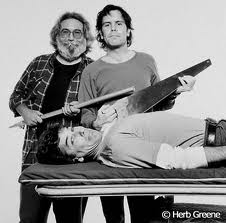
Rhythm as a tool for healing and health in the aging process
Senate Speech – Mickey Hart
Good morning. Thank you for inviting me to speak to you on an issue of great importance to me. This is the issue of how drumming, the rhythmic manipulation of sound, can be used for healing and health. I also would like to express my support for the concept of preventive, rather than crisis medicine,and specifically the role of music therapy as a means of maintaining mental, spiritual and physical health in people of all ages.
I am a professional percussionist. For over 40 years I have lived and played with rhythm; as an entertainer, as an author, and, always, as a student. Over the last ten years, I have spent much of my time exploring rhythm and it’s affect on the human body. Why is it so powerful and attractive? I have written on this subject in my books Drumming at the Edge of Magic and Planet Drum which try to address these questions. And yet I know that I have barely scratched the surface, particularly regarding the healing properties of rhythm and music.
Everything that exists in time has a rhythm and a pattern. Our bodies are multi-dimensional rhythm machines with everything pulsing in synchrony, from the digesting activity of our intestines to the firing of neurons in the brain. Within the body the main beat is laid down by the cardiovascular system, the heart and the lungs. The heart beats between sixty and eighty times per minute and the lungs fill and empty at about a quarter of that speed, all of which occurs at an unconscious level. As we age, however, these rhythms can fall out of synch. And then, suddenly, there is no more important or crucial issue than regaining that lost rhythm.
What is true for our own bodies is true almost everywhere we look. We are embedded within a rhythmical universe. Everywhere we see rhythm, patterns moving through time. It is there in the cycles of the seasons, in the migration of the birds and animals, in the fruiting and withering of plants, and in the birth, maturation and death of ourselves. Rhythm is at the very center of our lives. By acknowledging this fact and acting on it, our potential for preventing illness and maintaining mental, physical and spiritual well-being is far greater.
As a species, we love to play with rhythm. We deal with it every second of our lives, right to the end. When the rhythms stop, so do we. And this is where music becomes important. According to the late ethnomusicologist John Blacking, music is a mirror that reflects a culture’s deepest social and biological rhythms. It is an externalization of the pulses that remain hidden beneath the busy-ness of daily life. Blacking believed that a large part of music’s power and pleasure comes from it’s ability to reconnect us with the deeper rhythms that we are not conscious of. And it is the connection with these rhythms that gives music the power to heal.
Music as humanly organized sound or vibration has played a pivotal role in the development of our species, beginning with toolmaking. The tool record- all those delicately chipped arrowheads and choppers- is a dramatic illustration of our battle to master the subtle body rhythms that any advanced civilization requires to survive. In order to create the tools that allowed us to move forward as a species, we learned to scrape, strike, rub, shake and swing in rhythm. From there, we gathered in groups to sing our songs, to tell our stories, to dance our dances, all in rhythm. We found that by gathering together in this way, it reinforced our sense of community and family. The natural extension was the use of rhythm, and specifically percussion instruments, in healing ceremonies by traditional medical practitioners.
As modern technology takes us further and further from our natural rhythms, the use of percussion for healing has greater potential than ever. Today, without thoroughly understanding it, thousands of people across the country have turned to drumming as a form of practice like prayer, meditation or the martial arts. It is a practice that is widely acknowledged to help focus attention and to help people break free of the boredom and stress of daily life. More importantly, drumming is a way of approaching and playing with the deeper mysteries of rhythm.
Typically, people gather to drum in drum “circles” with others from the surrounding community. The drum circle offers equality because there is no head or tail. It includes people of all ages. The main objective is to share rhythm and get in tune with each other and themselves. To form a group consciousness. To entrain and resonate. By entrainment, I mean that a new voice, a collective voice, emerges from the group as they drum together.
The drummers each bring their own instruments and drum together for about a half hour. Afterward there is a discussion of issues of importance to the group. The drumming helps to facilitate this discussion because as they drum the group forms a common bond. From groups of women drummers, to twelve step groups like alchoholics anonymous to gatherings of men who are part of the ever-growing men’s movement, drumming is used to open up channels of communication and foster community and family. While some drum groups form around a particular issue, others have no agenda whatsoever, except to allow the members an opportunity to come together, play their instruments and share rhythm.
Older Americans are largely unfamiliar with this movement and yet these are the people who could benefit the most. The formation of drum circles among the elderly should be an integral part of any music therapy program. There is a large and enthusiastic group of drummers who could be called upon to lead workshops and make instructional videos to be distributed among the older population now isolated in nursing homes and retirement communities. It would be emphasized that the object is not public performance. Because, when we speak of this type of drumming, we are speaking of a deeper realm in which there is no better or worse, no modern or primitive, no distinctions at all, but rather an almost organic compulsion to translate the emotional fact of being alive into sound, into rhythm, into something you can dance to. Through drum circles, the aging population could tap into this realm, into these rhythms. The benefits would be wide-ranging.
First, there would be an immediate reduction in feelings of lonliness and alienation through interaction with each other and heightened contact with the outside world. While today many older people spend hours each day sitting in front of the television, drumming is an activity which would allow them direct exposure to younger people from the outside community. Whereas verbal communication can often be difficult among the generations, and in the sickly, in the drum circle non-verbal communication is the means of relating. Natural by-products of this are increased self-esteem and the resulting sense of empowerment, creativity and enhanced ability to focus the mind. Not to mention just plain fun. This leads to a reduction in stress, while involving the body in a non-jarring, safe form of exercise that invigorates, energizes and centers.
There is no question of the substantial benefits which could be derived from increased funding for the study and research of music therapy. This funding is critical to explore the most effective ways to utilize the techniques described here and by the other speakers. Billions of dollars are spent each year for crisis care, while little energy is spent trying to figure out how to avoid the crisis to begin with. A shift from crisis to preventive medicine needs to occur. The introduction of drum circles and percussion instruments into the older American population is a new medicine for a new culture. It was a good idea 10,000 years ago, and it is a good idea today.
Wind projects aren’t benign, to birds, or to humans…
July 25th, 2011

The importance of siting properly — maybe the message is getting through? Just like a nuclear plant, you can’t be putting generators in the ground without a lot of respectful planning and consideration for neighbors, be they the people living next door or the migratory birds making their way through, or in their foraging, roosting and nesting territory.
Eagles are as much an issue here as with the CapX 2020 Brookings transmission line crossing of the Minnesota River, and will be an issue with any of the proposed crossings for the CapX 2020 transmission line across the Mississippi River, which is North America’s major migratory flight path. Eagles in the proximity of transmission lines was the reason (arguably, because the real reason was that they couldn’t use the Myrick Road route, but that’s a whole ‘nother post, see www.nocapx2020.info and search for “Myrick”).
When you’re planning utility infrastructure, and permitting it, you’ve got to have concerns for impacts, but when it’s no
longer the “Environmental Quality Board” handling it, and it’s the Dept. of COMMERCE with their COMMERCE charge, humans and eagles don’t have a chance against the corporate promoters of these projects. It’s time to transfer review back to the Environmental Quality Board and develop standards for siting (do you know there are NO standards for
siting wind projects over 25MW? They just do it on a case by case basis, with no scientific basis whatsoever), and eliminate the Dept. of Commerce and their corporate shills from any oversight of utility projects, unless they want to intervene as a party.
Yesterday there were two articles on this, in the STrib and the LA Times:
Bald eagles could thwart Red Wing wind farm
Wind farms multiply, fueling clashes with nearby residents
Here are the full articles so they’ll be around once archived. First from the STrib:
Bald eagles could thwart Red Wing wind farm
* Article by: JOSEPHINE MARCOTTY , Star Tribune
* Updated: July 25, 2011 – 1:57 AMIn battle against a Red Wing project, citizens turn to a national symbol.
But there is no certainty such a plan will succeed in protecting eagles or other endangered species.
But that’s only if the deaths are discovered.
“If there are 50 birds hit, are they going to tell anyone?” he said. “We hope they would.”
And in the L.A. Times:
Wind farms multiply, fueling clashes with nearby residents
By Tiffany Hsu, Los Angeles Times
Reporting from Tehachapi, Calif.—
Tehachapi activist Terry Warsaw said he’s worried his community will soon be surrounded by turbines.
“They are not benign things,” she said. “We’ve seen turbines go berserk.”
“Monstrous insects,” she calls them. “I look at the propellers for a moment and my head gets dizzy.”
“We are resembling hundreds of towns around the country,” she said.
Some suggest that removing trees to make way for the machines could lead to erosion and flooding.