Spring in Minnesota?
March 18th, 2012
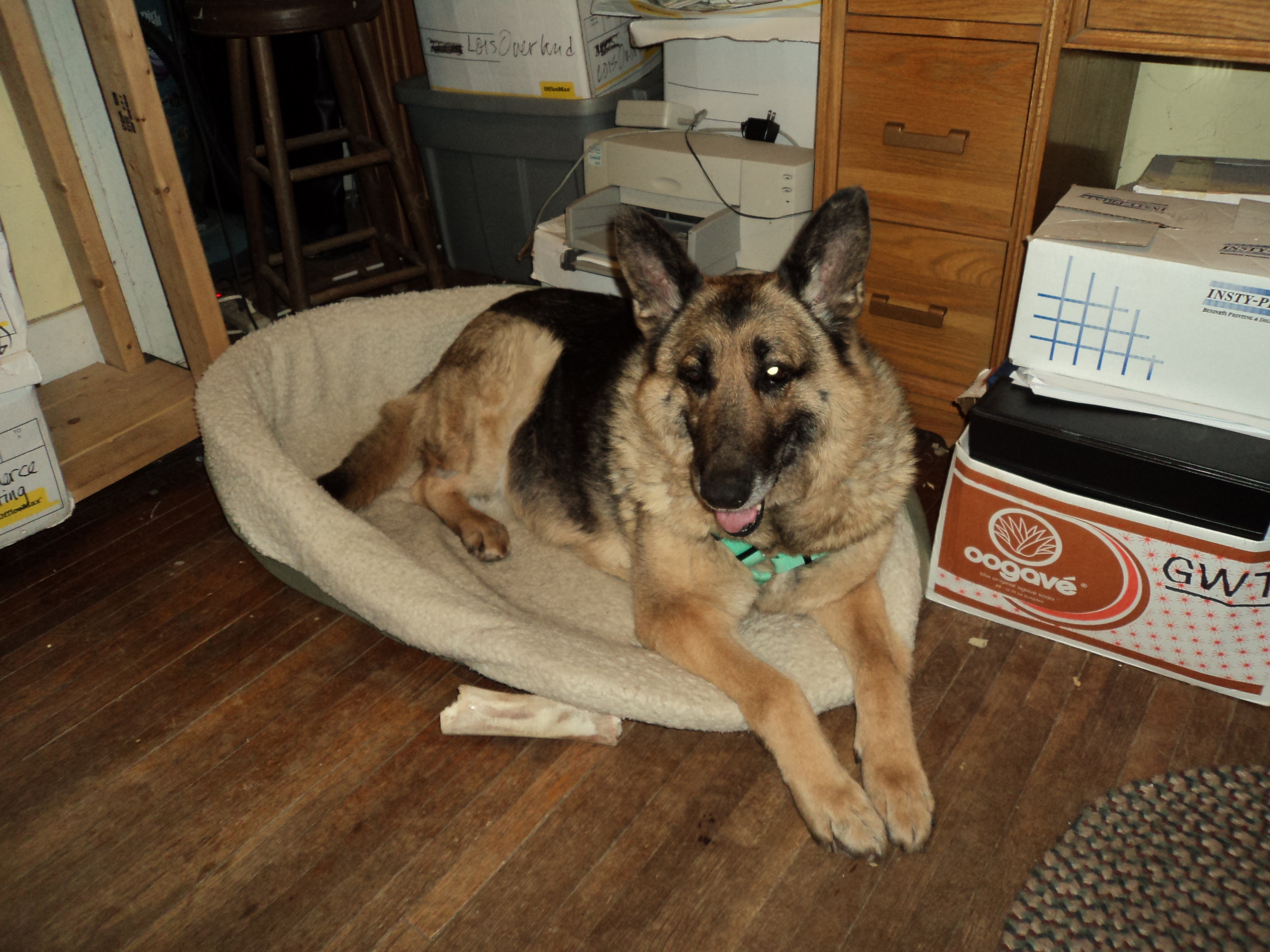
You’ll note I’ve hardly been writing! Yes, there’s been the Oregon PIELC Conference, and then right away off to Madison for the CapX Technical Hearing. But mostly I’ve been really sick, hit with allergies probably from the Madison hotel, George down the hall had the headache from hell right away, and by Thursday I was coughing like the DOT witness. So last week, I headed home and hacked and wheezed until the clinic opened, got fistfuls of prednisone and Doxycycline, a snoutful of prednisone too. Slowly I’m coming back, but there is no doubt that as I age, my allergies are getting worse. And the majority of dogs are GSDs, German Shedding Dogs, which isn’t likely to change anytime soon.
Meanwhile, the weather is glorious, the windows have been open for what, a week? Spring is very different in this house, lighter, breezier, because it’s out in the open, not nestled into the bluff, though still high up just a few houses from the top. So far, the day lilies are over 5″ tall on the NORTH side of the house. Robins are everywhere, and this morning, there is no doubt that the trees have leaves, little bitty ones, but there are indeed leaves, and the ground is covered with green and brown tree emissions. The river is FULL of boats, they’re fishing, the river is a normal level and there will be no floods this year, unless something else very weird happens.
What does a spring like this mean? Truth be told, I LOVE climate change, Minnesota winters wreak havoc on my back, I end up in pain for 6 months feeling each box of lettuce and can of whatever and tire and box of beef I ever hauled plus the idiot who ran a red light in front of me in 1991, YEOOOOW! But I can’t imagine that this is good for farmers. It’s been dry, with no rain in sight. I can hardly keep from raking up and diggiing in the garden — will farmers be going into the fields early or waiting until a more normal time?
Drought, low yield, means seed corn shortage
Midwest Farmers Urged to Buy Crop Insurance Due to Dry Weather
One year after Fukushima Daiichi meltdown
March 10th, 2012
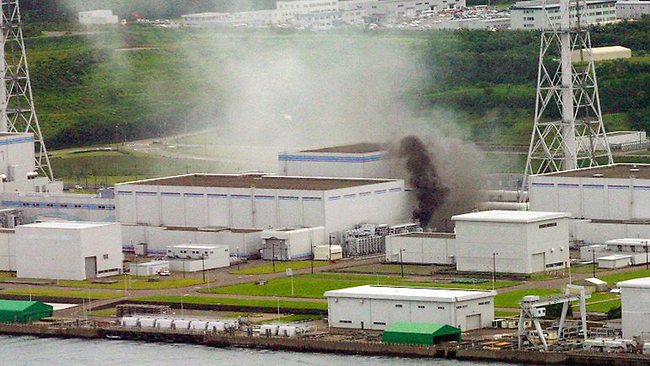
I live in Red Wing, home to two nuclear reactors. This week I hope you all will take some time to reflect on the mess at Fukushima Daiichi and the role of nuclear generators in our energy scheme. It was a year ago today when Fukushima Daiichi reactors melted down.
When Fukushima Daiichi first blew up, I spent some time tracking down every shred of info, which wasn’t much. That there was so little information available was startling, and that was emphasized by my blog stats which showed 4,00o+ hits in just one day, people trying desperately to find out what was going on.
For an overview of how difficult it was to get information, and the struggles of even NRC personnel, from Marketplace earlier this week:
From the New York Times:
The Wiki is packed with info:
Here’s what I’d posted then:
Another Allis nuclear plant
March 8th, 2012
Alan’s been digging around looking at the old nuclear demonstration plants, particularly since my father worked on the Elk River plant in Minnesota, now decommissioned. and lo and behold, Genoa is/was another Allis-Chalmers nuclear plant, although it’s a different branch of the family:
How bizarre…
And now for something a little more current:
Don’t forget that our Monticello GE reactor is similar to Fukushima reactors. Enough about upgrades – SHUT THEM DOWN!
PIELC in Eugene, Oregon
March 3rd, 2012
It’s been so long since I’ve been on the road that I forgot where Jubitz is! Oh, that is a sorry state of affairs…
Eugene, Oregon
Public Interest and Environmental Law Conference
Before our Transmission panel today was Alan Mitchell, Fredrickson & Byron, and Shruti Suresh, Meyer Glitzenstein & Crystal, all about wind projects and birds!
There’s more going on tomorrow, but I’ve got to get back, and head out the other way to Madison.
HERC Burner info on KFAI
February 27th, 2012
Today at 9:00 a.m. , Alan Muller is going to be on Andy Driscoll’s Truth to Tell on KFAI, together with Rep. Frank Hornstein, Rep. Karen Clark, and Lara Norkus-Crampton, RN.
Listen here:
Listen Now
- MP3:
- 256k
For more information generally, see Neighbors Against the Burner, and look for HERC.
Here’s from Andy’s Truth To Tell site:
Should Hennepin County garbage burner operator Covanta Energy be allowed to increase its burning volume by almost 20%?
State and city permits currently allow Hennepin County and Covanta to incinerate 1,000 tons of Minneapolis and near-ring suburban garbage at the HERC (Hennepin Energy Resource Center) facility in the heart of downtown (in Target Field’s backyard, so to speak). Covanta and the county want to up that by 212 tons per day, the maximum the plant could handle.
Here’s what Hennepin County’s HERC page proclaims (boldface ours):
About 365,000 tons of garbage (1,000 per day) is burned at HERC to provide enough electricity for 25,000 homes each year. Electricity generated at HERC is sold to Xcel Energy. (Covanta labels the 33.7 megawatts they sell to Xcel Energy as “renewable”.)
Through the steam line, HERC provides enough steam for the annual natural gas needs of 1,500 homes to buildings in downtown Minneapolis and Target Field.
Residents and businesses in Hennepin County generate 1 million tons of garbage every year. Processing waste at HERC is an environmentally preferable alternative to landfilling waste.
More than 11,000 tons of ferrous metal are recovered every year at HERC and recycled.
Processing one ton of waste at HERC prevents the release of one ton of greenhouse gas emissions. Since HERC opened in 1990, processing waste has prevented the release of 3 million tons of carbon dioxide emissions.
Is burning garbage really the best way to a) manage our waste without landfilling it? and/or b) generate electricity or other forms of energy? Whatever happened to the recycling, composting and reducing waste targets developed years ago now? Is this WTE – waste-to-energy – system the healthiest alternative?
Burned materials of all kinds pour pollutants into the air we breathe – and choke on, creating unprecedented percentages of respiratory problems in children and adults, especially adults with chronic health problems.
Lead, cadmium and other heavy metals are released into the air over Minneapolis and blow in different directions at different times of the year, settling in the systems of residents all around the Twin Cities. Remember, this is added to other burning and pollutants from other sources, including energy and manufacturing companies dotting the Metro.
Even with all the money generated for Hennepin County by this burning operation, can the health protection mandate of the county and the state justify such data as an 11.4% rate of children’s asthma in Minneapolis or 9.2% county-wide?
Two years ago, the Minneapolis Planning Commission bucked its own staff’s recommendation and turned down Covanta’s and Hennepin’s request for changing the city’s conditional use permit to allow for the increased burning. Covanta started to appeal that decision to the City Council, but could see the media coverage and count the votes on the City Council Zoning and Planning Committee and pulled it back to consult with the Pollution Control Agency about modifying THAT permit to burn.
Their appeal was coming up again in Minneapolis this month – now they’ve asked for another extension for that – to October. Anti-burning advocates and other environmentalists are pressing hard to keep any more garbage from being burnt there, insisting that all burning, not just the increase, is killing people. (Watch an interview between guests Lara Norkus-Crampton and Rep. Frank Hornstein.)
256k