#2 of 3: And the MPCA Rulemaking!
July 23rd, 2013

As if two rulemakings at the EQB, in addition to development of “standards and criteria” for silica sand mining, isn’t enough, as if a rulemaking at the DNR wasn’t enough, well, here we go with a fourth silica sand rulemaking going on at the same time.
Here’s the poop on that:
Minnesota Pollution Control Agency (MPCA)
Request for Comments on Planned Amendments to Rules Pertaining to the
Control of Particulate Emissions and Other Pollutants from Silica Sand Projects
NOTICE IS HEREBY GIVEN that the Minnesota Pollution Control Agency (Agency) is requesting comments on plans to amend rules relating to silica sand projects as directed by the 2013 Legislature. The Agency may amend Chapters 7011 (standards of performance for specific types of facilities), 7001 (water permitting), 7007 (air permitting), 7009 (air standards), 7017 (air testing), 7050 (water standards), or other related and affected chapters.
Subject of Rules: The Agency requests comments on plans to amend its rules or establish new rules pertaining to the control of particulate emissions and other pollutants from silica sand projects that may affect the state’s air or water resources.
As will be discussed in this rulemaking, “silica sand” is well-rounded, sand-sized grains of quartz that is commercially valuable for use in the hydraulic fracturing of shale to obtain oil and natural gas. Silica sand does not include common rock, stone, aggregate, gravel, sand with a low quartz level, or silica compounds recovered as a by-product of metallic mining.
“Silica sand project” means the excavation, mining and processing of silica sand; the washing, cleaning, screening, crushing, filtering, drying, sorting, stockpiling and storing of silica sand, either at the mining site or at any other site; the hauling and transporting of silica sand; or a facility for transporting silica sand to destinations by rail, barge, truck or other means of transportation.
The Legislature has directed the Agency to adopt rules pertaining to particulate emissions from silica sand projects. The Agency will also consider adopting rules to control other potential pollutants from silica sand projects, such as those that might contribute to water pollution. This Request for Comments is the Agency’s initial notice of its intent to begin rulemaking. This is only the first of several opportunities for public comment and input on this rulemaking.
Where to Get More Information: If you are interested in being notified when a draft of the rules is available, or of other activities related to this rulemaking, please register for GovDelivery at: https://public.govdelivery.com/accounts/MNPCA/subscriber/new. The “Pollution from Silica Sand Projects Rules” subscriber link is located under the Public Notices and Rulemaking topic. This Request for Comments and future notices will be published on the Agency’s Public Notice website:
http://www.pca.state.mn.us/index.php/public-notices/list.html. The Agency will establish a page on its website http://www.pca.state.mn.us/ for this rulemaking where additional information will be posted
as it becomes available.
Persons Affected: The Agency’s planned rulemaking potentially affects any owner or operator of an existing or proposed silica sand project and those persons potentially impacted by particle emissions or water discharges from silica sand projects.
Statutory Authority: Laws of Minnesota 2013, Chapter 114, Article 4, Section 105, (a) directs the Agency as follows: “The
commissioner of the Pollution Control Agency shall adopt rules pertaining to the control of particulate emissions from silica sand projects. The rulemaking is exempt from Minnesota Statutes, § 14.125.” The exemption from § 14.125 is that the Agency is not limited by an 18- month time limit to adopt, amend, or repeal rules following legislative direction. Further, the Agency plans to use existing general authorities under § 115.03, subds. 1(e) and (g); 5, and 5c; and § 116.07, subd. 4(b) to maintain rules that protect state waters.
Rules Draft: The Agency has not yet drafted the rule amendments. Persons interested in being notified when a draft of the rules is available and of other activities relating to this (or other Agency rulemakings) are encouraged to register at:
https://public.govdelivery.com/accounts/MNPCA/subscriber/new.
Public Comment: The Agency presently has no proposed rules on which to comment, but encourages interested parties to submit written comments or information regarding the Agency’s plans to amend rules on this subject until 4:30 p.m. on September 30, 2013. The Agency cannot publish a Notice of Intent to Adopt Rules until at least 60-days from the date of this Request for Comments. Comments or information should be submitted to the Agency contact at the address below.
Note: Written comments received in response to this notice will not necessarily be included in the formal rulemaking record submitted to the administrative law judge if and when a proceeding to adopt rules is started. The Agency is required to submit to the judge only those written comments received in response to the rules proposed in a Notice of Intent to Adopt Rules. If you submit written comments in response to this notice or during the development of the rules, and you want to ensure that the administrative law judge reviews those comments, you should resubmit those same comments in accordance with the instructions found in the Notice of Intent to Adopt Rules.
The Agency does not anticipate that the rule amendments will require a local government to adopt or amend an ordinance or other regulation under Minnesota Statutes, § 14.128. Local governments are welcome to submit written information to the contrary if this belief is incorrect.
Agency Contact Person: Written comments, requests to receive a draft of the rules when it is available, and requests for more
information on these planned rule amendments should be directed to:
Nathan Brooks Cooley
Minnesota Pollution Control Agency
520 Lafayette Road North
Saint Paul MN 55155-4194
Telephone: (651) 757-2290
Toll-free: 1-800-657-3864
TTY: (651) 282-5332
E-mail: nathan.cooley@state.mn.us
Alternative Format: Upon request, this information can be made available in an alternative format, such as large print, Braille or audio. To make such a request, please contact the rule process contact person at the telephone number or address listed above.
Dated: 10 July 2013
John Linc Stine, Commissioner
Minnesota Pollution Control Agency
#1 of 2: And the DNR rulemaking!
July 23rd, 2013

Just the facts, ma’am!
First, the DNR’s release, found in the State Register while looking up MPCA rules.
To get on mailing list for notice email DNR: heather.arends@state.mn.us
Minnesota Department of Natural Resources (DNR)
Division of Lands and Minerals
Request for Comments on Possible Rules Governing Reclamation of Silica Sand
Mines, Revisor’s ID Number R-04198
Subject of Rules. The Minnesota Department of Natural Resources requests comments on its possible rules governing reclamation of silica sand mines. The Department is considering rules that would control possible adverse environmental effects of silica sand mining, preserve natural resources, and encourage planning of future land utilization. The rules may address other reclamation issues that come up during the rulemaking process.
Persons Affected. The rules would likely affect entities that are proposing to mine or are mining silica sand, local units of government that regulate silica sand mining, and citizens and companies located in the proximity of proposed or existing silica sand mining operations.
Statutory Authority. Laws of Minnesota 2013, Chapter 114, Article 4, Section 105 (b) requires the Department to adopt rules for reclamation of silica sand mines.
Public Comment. Interested persons or groups may submit comments or information on these possible rules in writing until further notice is published in the State Register that the Department intends to adopt or to withdraw the rules. The Department will not publish a notice of intent to adopt the rules until more than 60 days have elapsed from the date of this request for comments. The Department does not plan to appoint an advisory committee to comment on the possible rules. However, the Department may consult with the silica sand technical assistance team assembled by the Environmental Quality Board pursuant to Laws of Minnesota 2013, Chapter 114, Article 4, Section 91.
Rules Drafts. The Department has not yet drafted the possible rules.
Agency Contact Person. Written comments, questions, requests to receive a draft of the rules when it has been prepared, and requests for more information on these possible rules should be directed to:
Heather Arends Department of Natural Resources 500 Lafayette Road St. Paul, MN 55155-4045 Phone: (651) 259-5376 E-mail: heather.arends@state.mn.us.
Alternative Format. Upon request, this information can be made available in an alternative format, such as large print, braille, or audio. To make such a request, please contact the agency contact person at the address or telephone number listed above.
NOTE: Comments received in response to this notice will not necessarily be included in the formal rulemaking record submitted to the administrative law judge if and when a proceeding to adopt rules is started. The agency is required to submit to the judge only those written comments received in response to the rules after they are proposed. If you submitted comments during the development of the rules and you want to ensure that the Administrative Law Judge reviews the comments, you should resubmit the comments after the rules are formally proposed.
Dated: July 13, 2013 Tom Landwehr, Commissioner
Minnesota Department of Natural Resources
EQB Rulemaking on Silica Sand Mining
July 21st, 2013
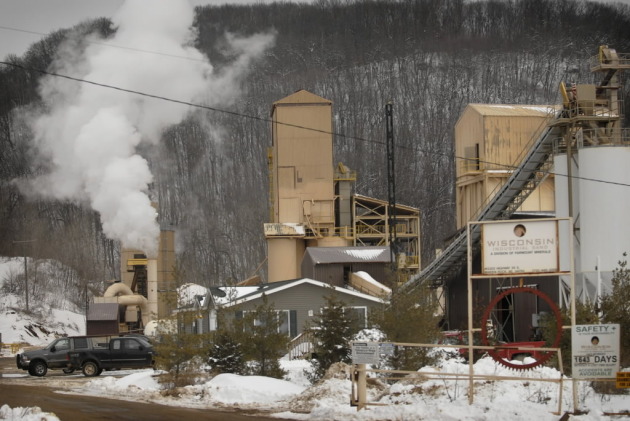
Minnesota state agencies are hosting two meetings on August 2, one in Red Wing and another in Winona, to discuss the legislative mandates of this last session, including Standards and Criteria under Minn. Stat. 116C.99:
Red Wing: 9:00 a.m. at the St. James Hotel
Winona: 1:30 p.m. at Winona State University, Tau Center Rotunda, 511 Hilbert St
OK, now add to that…
The EQB just sent out notice on what they’re calling a “Silica Sand Rulemaking” under which the EQB shall :
The EQB shall consider whether the requirements of Minnesota Statutes, section 116C.991, should remain part of the environmental review requirements for silica sand and whether the requirements should be different for different geographic areas of the state.
See also (came in same envelope) the “Mandatory Categories Rulemaking” starting up:
OK, so what does that phrase quoted above from the Silica Sand Mining Rulemaking Request for Comments mean? Let’s look at the statute, the legislative site says, “Statute section 116C.991 does not exist.” OK, so now let’s now look at the Session Laws, here’s what it says in mandating the PCA, DNR and EQB rulemaking and DoH “value” (whatever the hell that is):
Sec. 105. RULES; SILICA SAND.
(a) The commissioner of the Pollution Control Agency shall adopt rules pertaining
to the control of particulate emissions from silica sand projects. The rulemaking is exempt
from Minnesota Statutes, section 14.125.
(b) The commissioner of natural resources shall adopt rules pertaining to the
reclamation of silica sand mines. The rulemaking is exempt from Minnesota Statutes,
section 14.125.
(c) By January 1, 2014, the Department of Health shall adopt an air quality
health-based value for silica sand.
(d) The Environmental Quality Board shall amend its rules for environmental
review, adopted under Minnesota Statutes, chapter 116D, for silica sand mining and
processing to take into account the increased activity in the state and concerns over the
size of specific operations. The Environmental Quality Board shall consider whether
the requirements of Minnesota Statutes, section 116C.991, should remain part of the
environmental review requirements for silica sand and whether the requirements should
be different for different geographic areas of the state. The rulemaking is exempt from
Minnesota Statutes, section 14.125.
EFFECTIVE DATE.This section is effective the day following final enactment.
OK, so next, exempt from Minn. Stat. 14.125, what’s that? It’s a time limit, so this says they’re not bound by the time limit in Minn. Stat. 14.125.
They’re looking for Comments, at the same time, on what should be included or not included in Mandatory EAW and EIS categories (silica sand, anyone?), and wanting to know whether 1) “the requirements of Minn. Stat. 116C.991 should remain part of the environmental review requirements for silica sand” and 2) “whether the requirements should be different for different geographic areas of the state.”
I think we’d better ask Sen. Matt Schmit to explain it. I have! sen.matt.schmit@senate.mn.
But FYI, it looks to me like the statute calls into question whether the rules mandated by (a), (b), and (c) should remain part of environmental review requirements for silica sand. EH? SAY WHAT? I DON”T THINK SO! Please explain how I’m wrong about that… please…
(a) The commissioner of the Pollution Control Agency shall adopt rules pertaining
to the control of particulate emissions from silica sand projects. The rulemaking is exempt
from Minnesota Statutes, section 14.125.
(b) The commissioner of natural resources shall adopt rules pertaining to the
reclamation of silica sand mines. The rulemaking is exempt from Minnesota Statutes,
section 14.125.
(c) By January 1, 2014, the Department of Health shall adopt an air quality
health-based value for silica sand.
Comments on “Silica Sand Rulemaking” are due 4:30 p.m. August 23, 2013:
Jeff Smyser, EQB Jeff.Smyser@state.mn.us 520 Lafayette Road North St. Paul, MN 55155
Comments on “Mandatory Categories Rulemaking” are due 4:30 p.m. August 23, 2013:
Kate Frantz, EQB kate.frantz@state.mn.us 520 Lafayette Road North St. Paul, MN 55155
Stay tuned for more information.
Save the Bluffs files Application for Zoning Ordinance Change
July 15th, 2013
UPDATE: Resulting Ordinance!!!
Hot off the press — or printer — Save the Bluffs has just filed an Application for Zoning Ordinance Amendment.
It’s pretty simple — Save the Bluffs is asking for a Silica Sand and Natural Resource Overlay District. It’s pretty simple to do, too, just take the maps of silica sand information and natural information and put it all together. DOH! What’s not to like?
Tonight is the Goodhue County Planning Advisory Committee where they’re discussing whether or not to extend the Moratorium, that is, after the Mining Subcommittee said NOT to extend it. EH?
It’s third, last, on the agenda:
Be there or be square!
Post meeting update: The PAC voted to recommend the Mining Study Committee continue work on the two identified items, meeting scheduled for September, and voted to recommend the County end the Interim Ordinance/Moratorium.
Bernie Overby and Dan Rechtzigel were downright rude, bullying a speaker, and there’s no excuse for that — the chair needs to be the chair and stop that behavior. Overby seemed to think he could pooh-pooh our filing yesterday, maybe do an end run around it, but it didn’t work. He also was arguing against an overlay, noting that the Pepin County ordinance and limitation on truck traffic wouldn’t work as it’s a different situation here with all our industry (?) (Not one of them referred to the Le Sueur Mining Overlay District, and it’s not been included as an example in packets with examples!) Hey, Bernie, Pepin County’s isn’t an overlay similar to what we’ve requested, it’s not about trucks — an overlay addresses many things, and in this case, we’re asking it jointly address available sand resources and natural resources that need protection.
Point of interest, some, if not all, of the PAC were not notified of the Save the Bluffs Application, and when Lisa Hanni announced it, some seemed surprised.
7849 Rulemaking — deja vu all over again
July 12th, 2013
This post is dedicated to Kristen Eide-Tollefson, a fierce advocate for public participation who likely strikes terror into the heart of every bureaucrat trying to keep the public out.
To have come full circle again, AGAIN, with the same old arguments from utilities and agencies charged with protecting the ratepayers, public interest, and environment, it’s getting old… as I am… and tired of spending so much time countering utility self-interest and agency pandering trying to preserve a modicum of equity in review of their proposals.
 Photo from Daily Planet: Save Dinkytown effort escalates in Minneapolis as Book House and the Podium get ready to say goodbye
Having been through Minnesota’s statutory changes to the Power Plant Siting Act, and the subsequent rulemaking, remember, this was after NSP’s legislatively mandated attempt to site nuclear waste in Florence Township and post Arrowhead-Weston and Chisago Transmission Project in an effort to keep that sort of mess from happening again, I’m more than a little skeptical of the agency (arm of the executive, don’t forget) and utility agendas. Add to it the inexplicable draft proposals from Office of Administrative Hearings on the 1400-1405 rules used in utility and other contested case proceedings (oh, and I guess I’d better check to see what they did to rulemaking!?!), it’s a big job to think up the dreadful scenarios that could result from their proposals and try to prevent it.
So there I am, cleaning out the office in one house, trying to separate the wheat from the diamonds, and I found this gem:
This was an email sent March 16, 2001, over 12 years ago…
Experience shows that when timelines or processes are foreshortened, or need review &/or siting processes are circumvented, the public grows reactive. Persistent attempts to evade full review by state and public bodies create increased, and increasingly organized resistance, to utility strategies. To attempt to “streamline” or proceed with projects without due public process invites only grassroots revolt & lawsuits. Such “streamlining” may give one side or another momentary advantage (maybe just enough to get those bulk power transmission projects into place), but it will not bring the two “sides” into better working relationship.
The public rarely goes into a siting or routing situation distrusting the utility. Controversy is created time and time again by the utility itself in”
1) the disregard applications show for the qualities and values of the communities; and
2) inadequate information given to the public; and
3) lack of candor/disclosure of the real purposes or goals of a project.
Deja vu all over again… The public has spoken, over and over and over and over and over and over, in the individual project dockets and for close to two decades at the Power Plant Siting Act Annual Hearing. Back to Kristen’s missive:
Among other things, the public advised:
1) more careful screening of applications up front.
2) reviving the ongoing public advisory task force; and
3) reactivating the “planning” component with public participation in standards and criteria development (Minn. Stat. 116C.55, since deleted). To be involved with planning features up front could alleviate tensions and create more mutual accountability among all parties; and
4) greater consideration of resource discrepancies between proposers and affected public/communities.
As proof of the continuity of public response, we found in reviewing the record of the power plant siting advisory committees from the early 80s that our advisories, almost 20 years later, differed very little from theirs.
Let’s make it 30 years now… Yet what we’ve seen since these words were written in 2001 is something else entirely, for example, the removal of planning from the state, to MAPP in St. Paul, to MISO in Indiana, further away from the project area, and further away from the people, geographically and in our ability to participate. Planning has become more and more remote. Citizens complaining are told to participate at MISO — right, yeah sure, as if any participation there has any impact:
Back to Kristen’s missive:
From a public perspective, these two values are primary. Private utility investments, fair profits and returns are part of the equation. But infrastructure development for distant industrial markets for competitive advantage of private corporate interests is another matter. The development of this competitive infrastructure depends above all else, according to the January issue of Electricity Journal, upon transmission. This is the line that the public has drawn.
We do not want our lands, air and waters to become a generating and transmission ‘factory’ for industrial centers. We do not want our affordable energy to be traded, sold or transferred to other states, and to be blamed for ‘reliability’ problems when it is.
To fail to provide due process for the analysis of the implications and impacts of such proposals is to fail the public purpose of law and policy. Please consider these implications in all of your deliberations.
Hear that, Public Utilities Commission?