Contact State Agencies about frac sand rules
August 16th, 2013
Calling all Minnesotans! Remember the meetings on August 2, where the state came to visit us in Red Wing and Winona, to talk and listen and learn what we expected for regulation of frac sand mining? We gave them an earful, here’s an example (Session Law 114 with the specifics is way down at the bottom):
CASM Comments August 2, 2013
… and now we need to ramp it up with some specifics. Here’s a TO DO list with emails further below.
1) Send agencies suggested language for Standards and Criteria (see CASM Comments for hints). A draft will be released in September. Now, as they’re drafting it, is the time when comments really matter and can have some influence. Look at the CASM comments for the categories important to you for guidance, and add to it to strengthen it! Send to addresses below. This is more difficult and takes more time, so if it’s a struggle, focus on #2 and #3 to state agencies, and your city/township officials and County Board for #4.
2) Request that a Rulemaking Advisory Committee be formed for the MPCA, DNR and EQB rulemakings, again, to have input BEFORE the draft rules are issued for comment. Commissioner Stine had been thinking about the idea between Red Wing and in Winona suggested that there could be an advisory committee jointly addressing all for rulemaking proceedings. That’s a good option! See the CASM Comment cover letter for language and send a request for an Advisory Committee to the addresses below, .
3) Request that NO permitting be allowed until Standards and Criteria and Rulemaking is complete. Send this to everyone.
4) Urge each of our local governments to get active in the state’s process. This isn’t something “they” do, it’s something “WE” do, government of the people, and it’s our job to help get these Standards and Criteria and rulemakings done (action NOW, not complain about it after it’s all over when nothing can be done).
Who needs to email them? Everyone!
Why get comments in before the drafts are issued? Because once the drafts are issued, they’re pretty much engraved in stone and it’s very hard to get a change. It may be possible in the Standards and Criteria, but not in rulemaking, because agencies are unable to make any substantive changes once the draft has been issued for comment.
What does a Rulemaking Advisory Committee do? They develop and propose language for the rules (I’ve been on 4 or 5 related to utility issues) at a time when input is encouraged AND utilized! Without a rulemaking committee, it’ll just be input and pressure from industry lobbyists or those who take the initiative to send suggestions in. Get in where it counts!
Why bother? Because they HAVE been receptive to requests to facilitate public participation and commenting opportunities, because Committees are a normal part of a rulemaking process that has significant interest, and I’d say that frac sand mining has significant interest.
When you send an email, put either “EQB Standards & Criteria, Minn. Stat. 116C.99” or “Appoint Rulemaking Advisory Committees for frac sand mining” so they know what it’s about, and send to:
Suggested language for EQB Standards and Criteria under Minn. Stat. 116C.99 (see categories below):
Jeff.Smyser@state.mn.us; bob.patton@state.mn.us; kate.frantz@state.mn.us; dave.fredrickson@state.mn.us
Request for Rulemaking Advisory Committees regarding frac sand mining:
DNR – heather.arends@state.mn.us; tom.landwehr@state.mn.us
MPCA – nathan.cooley@state.mn.us; john.stine@state.mn.us
EQB – Jeff.Smyser@state.mn.us; bob.patton@state.mn.us; kate.frantz@state.mn.us; dave.fredrickson@state.mn.us
Now is the time to get involved in the state process, the train is about to leave the station!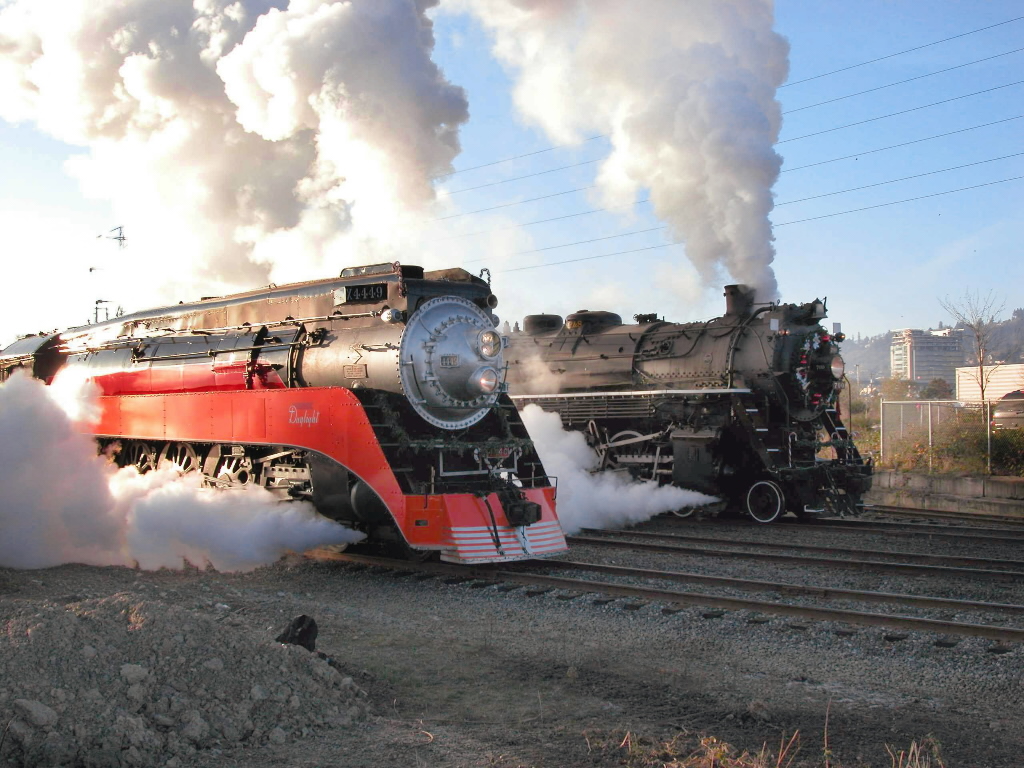
What are they looking at for Standards and Criteria? Here’s what Ch. 114, Section 91 says:
Subd. 2. Standards and criteria. (a) By October 1, 2013, the Environmental Quality Board, in consultation with local units of government, shall develop model standards and criteria for mining, processing, and transporting silica sand. These standards and criteria may be used by local units of government in developing local ordinances. The standards and criteria shall be different for different geographic areas of the state. The
unique karst conditions and landforms of southeastern Minnesota shall be considered unique when compared with the flat scoured river terraces and uniform hydrology of the Minnesota Valley. The standards and criteria developed shall reflect those differences in varying regions of the state. The standards and criteria must include:
(1) recommendations for setbacks or buffers for mining operation and processing, including:
(i) any residence or residential zoning district boundary;
(ii) any property line or right-of-way line of any existing or proposed street or highway;
(iii) ordinary high water levels of public waters;
(iv) bluffs;
(v) designated trout streams, Class 2A water as designated in the rules of the Pollution Control Agency, or any perennially flowing tributary of a designated trout
stream or Class 2A water;
(vi) calcareous fens;
(vii) wellhead protection areas as defined in section 103I.005;
(viii) critical natural habitat acquired by the commissioner of natural resources under section 84.944; and
(ix) a natural resource easement paid wholly or in part by public funds;
(2) standards for hours of operation;
(3) groundwater and surface water quality and quantity monitoring and mitigation plan requirements, including:
(i) applicable groundwater and surface water appropriation permit requirements;
(ii) well sealing requirements;
(iii) annual submission of monitoring well data; and
(iv) storm water runoff rate limits not to exceed two-, ten-, and 100-year storm events;
(4) air monitoring and data submission requirements;
(5) dust control requirements;
(6) noise testing and mitigation plan requirements;
(7) blast monitoring plan requirements;
(8) lighting requirements;
(9) inspection requirements;
(10) containment requirements for silica sand in temporary storage to protect air and water quality;
(11) containment requirements for chemicals used in processing;
(12) financial assurance requirements;
(13) road and bridge impacts and requirements; and
(14) reclamation plan requirements as required under the rules adopted by the commissioner of natural resources.
And as for rulemakings, here’s what Section 105 says:
Sec. 105. RULES; SILICA SAND.
(a) The commissioner of the Pollution Control Agency shall adopt rules pertaining
to the control of particulate emissions from silica sand projects. The rulemaking is exempt
from Minnesota Statutes, section 14.125.
(b) The commissioner of natural resources shall adopt rules pertaining to the
reclamation of silica sand mines. The rulemaking is exempt from Minnesota Statutes,
section 14.125.
(c) By January 1, 2014, the Department of Health shall adopt an air quality
health-based value for silica sand.
(d) The Environmental Quality Board shall amend its rules for environmental
review, adopted under Minnesota Statutes, chapter 116D, for silica sand mining and
processing to take into account the increased activity in the state and concerns over the
size of specific operations. The Environmental Quality Board shall consider whether
the requirements of Minnesota Statutes, section 116C.991, should remain part of the
environmental review requirements for silica sand and whether the requirements should
be different for different geographic areas of the state. The rulemaking is exempt from
Minnesota Statutes, section 14.125.
EFFECTIVE DATE.This section is effective the day following final enactment.
Obama promoting transmission again…
August 12th, 2013

On a bit of a transmission meander lately…
Based on the Fahey/AP articles on transmission lately, I mean really, how often is there anything about transmission in the STrib, I’ve felt something approaching. Perhaps it was the MISO Board of Directors meeting next week in St. Paul (HEY, check this out, you can watch it online, WebEx Information WebEx Password: Sr789456, or even head over to the shindig in St. Paul Hotel!
Then, I was reading the transcript for the PEPCO 2Q Earnings Call (pretty stimulating stuff), where they were talking about the undergrounding in DC:
Seeking Alpha – PEPCO 2Q Earnings Transcript
And here’s a news report and video about it, dig the price, $1.90 – $3.25 a month — that’s reasonable in my cheapskate book:
PEPCO, DC Officials Discuss $1 Billion Underground Wires Plan
That’s exactly what we should be doing. Complaints about “reliability” are distribution line issues, and look at how those utilities out there that are deregulated have cut maintenance to ZERO, think Aug. 13, 2003 (NERC Blackout Report HERE). And as I finish that, I see yet another Fahey/AP article published today, this time about Obama stumping for transmission AGAIN:
As cost of weather related outages rises, White House says grid should be made tougher
So off to the White House, where the PR is about “Protecting the Electric Grid From Increasingly Severe Weather Due to Climate Change” and what’s the real theme? Hey, it’s all about economics!
Economic Benefits of Increasing Grid Resilience to Weather Outages
This builds on his Memorandum earlier this summer:
Which of course builds on his Executive Order promoting transmission and naming projects for “fast tracking,” two of which I was working on at the time, Susquehanna-Roseland and CapX 2020 Hampton-La Crosse. That was:
and the Interagency Rapid Response Team for Transmission
For a list and map of the transmission line pilot projects please visit:
www.doe-etrans.us
AAAAAAAAAAAAAAAAAAAAGH!
Benefits of TRANSMISSION?
August 12th, 2013
DOH! This is NOT rocket science. This came out last month, posted on the CapX 2020 site, and around the same time, there was a PR push about the tax payments, “benefits,” that local governments were receiving for the CapX 2020 transmission lines. This report is all about the “benefits” and not about the costs, let’s be clear on that:
Now I’ll take a look at this…
What it looks like is advance work for the 765kV overlay, for which there is no logical “need” claim. They want to turn “planning” on its head, and put “benefits” at the top, the first item on the check list, in “planning.” I’ll be using a lot of “quotes” here because I’m not buying it.
What they advise, what they’re trying to sell, is that transmission planning should:
1) Identify potential transmission projects that could supplement or replace baseline reliability projects and to develop a comprehensive list of their likely benefits.
2) Estimate the value of as many of the identified benefits as practical.
3) Determine whether the proposed transmission investments would be beneficial overall by comparing the magnitude of estimated economy-wide benefits with estimates of the total costs of the projects.
4) Address cost allocation.
They say that “planners must plan for the highest value first…”

Citing my favorite Posner decision, they quote, “To the extent that a utility benefits from the costs of new facilities, it may be said to have “caused” a part of those costs to be incurred, as without the expectation of its contributions the facilities might not have been built, or might have been delayed.
Benefits should be weighed at the outset when assessing need, in essence benefits supplanting need as reason for a transmission project. Yeah, OK, what’s new???
(still reading)
Minnesota… and a little birdie
August 11th, 2013
Very odd, but it is Sunday, the day they update the website. Special thanks to the little birdie who brought this to my attention.

The Public Utilities Commission website at www.edockets.state.mn.us shows this and only this:

Very strange…
PUC deliberation on Xcel rate case
August 8th, 2013

This is a VERY interesting discussion, if you have some knitting or furniture refinishing to do, this is good background:
The link will be live for about 90 days.