Delmarva Power to rebuild transmission in DE?
January 3rd, 2015
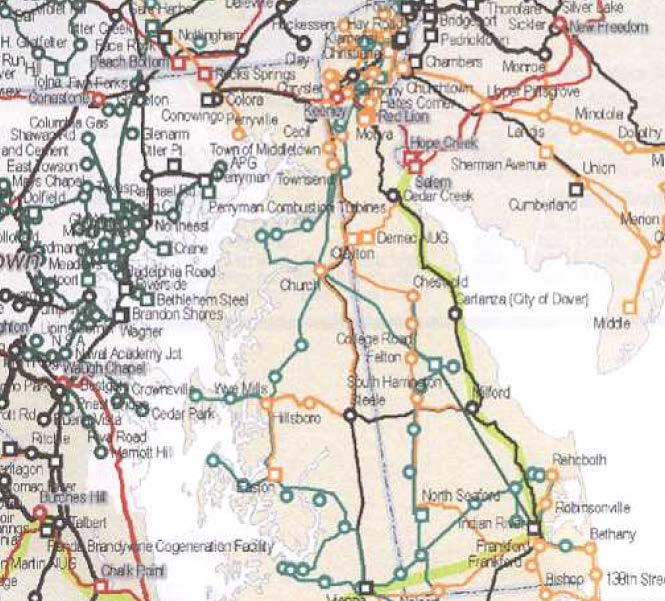
Delaware’s a small state, and it’s just the wrong shape for getting a good transmission map. Click the above one for a larger view, but it’s still hard to see. But check it out! Take a look at that black line, stretching from Red Lion down to Milford. That’s the 230 kV line that Delmarva Power wants to rebuild. If they play this as I think they will (please prove me wrong), they could use this “rebuild” to significantly increase transfer capacity, which given the withdrawal of the Mid-Alantic Power Pathway (MAPP) transmission project, that’s something to watch for.
Public meeting about transmission line rebuild
7 p.m. Wednesday, Jan. 7, 2015
Odessa Fire Company
304 Main St., Odessa, Delaware
Hosted by Delmarva Power
There’s essentially no regulation of transmission in Delaware, a fact that’s hard to believe given the impacts and power associated with transmission. This project is intended to go right down an existing easement, but the original line was built 50 years ago, and there’s been a lot of development in Delaware since then. Look at the map, and there’s a lot of development right next to this transmission line. Do you think these folks know anything about this transmission plan? Do you think anyone along that easement is getting direct notice about this???
At first glance, a couple of things occur to me.
- Rebuild? As always, I want to know the details. they say it will still be at 230 kV. Let’s have the conductor specs, particularly. How big a conductor are they using, ACSR or ACSS or higher capacity? Will they be rebuild as a single or double circuit, and will it be bundled or not? Here’s the photo of the line, photo from Snooze Urinal, and it’s as it looks to me from driving under it numerous times on the way to/fro Port Penn:
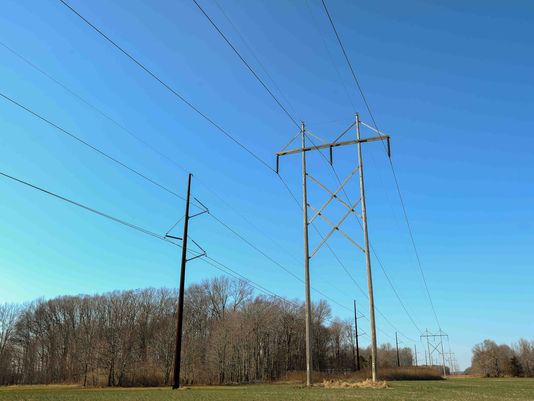 Photo from The News Journal, delawareonline.com
- Use of existing easement or extending beyond? In their press release, there’s something disturbing about how they say they’re going to build this thing:
So looking at this photo above, it’s facing north, the H-frames are on the east side, the monopole on the west, and the News Journal report says:
How is that possible? The H-frames have been there a long time, and rather recently they added the monopole next to it. Now now this will be “built along the eastern border of the existing right-of-way.” EH? Here’s an example, at the intersection of Port Penn Rd. and the line, the “east” is on right on this photo/map (click photo for larger version):
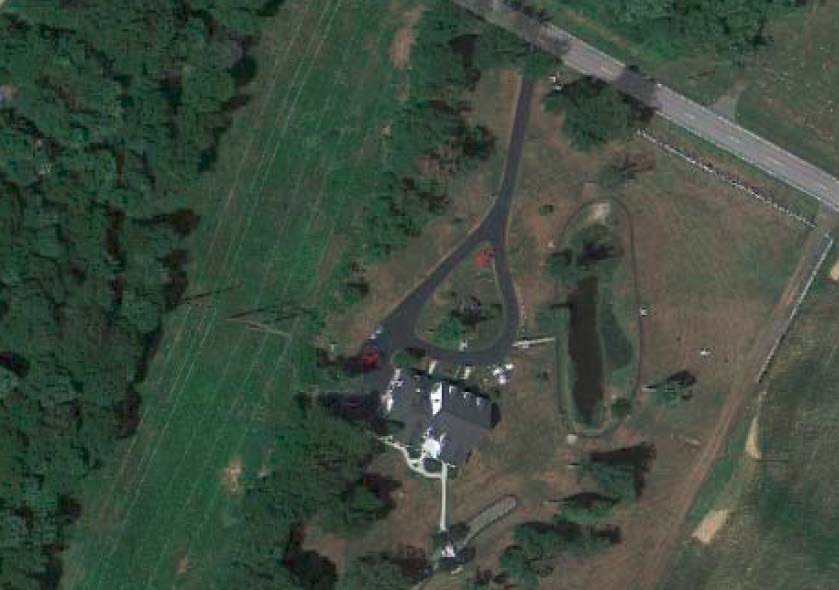
This is what it looks like at the road, looking down the easement with home on the left:

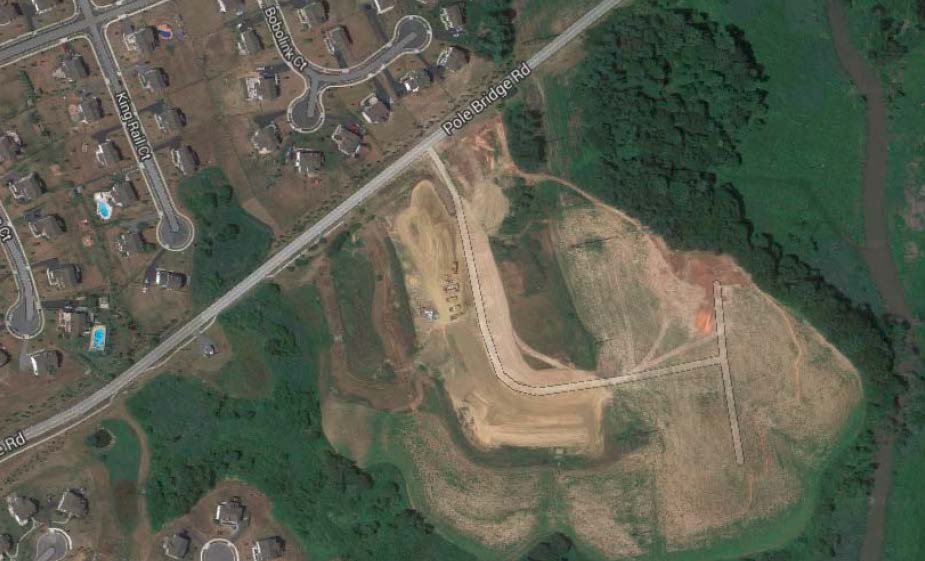
And here’s another example, at the intersection of Pole Bridge Rd. and the transmission lines, also on the way to/fro Port Penn, note the new subdivision roads, Waterbird Lane and Marsh Hawk Court:
Here’s another at 955 Vance Neck Rd (the road is just to the south):
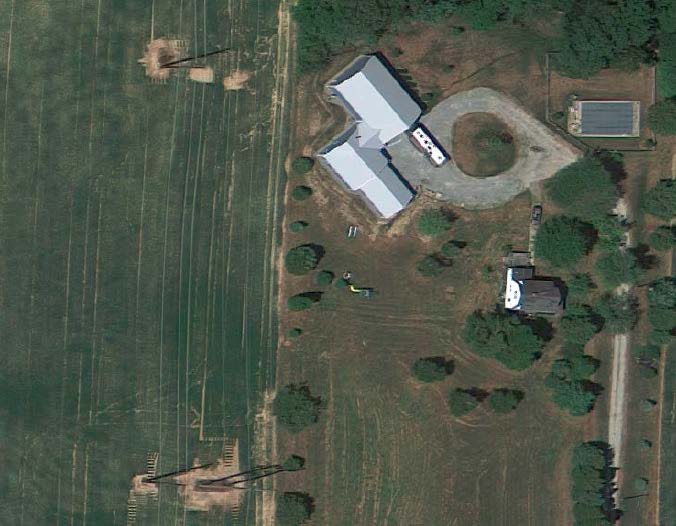
Let’s keep going further south along the easement. Here are homes along Old Corbett Rd. near the intersection of Hwy. 9 — note it’s turned around to fit better, the “easterly” direction they’ll build into is the area towards the homes:
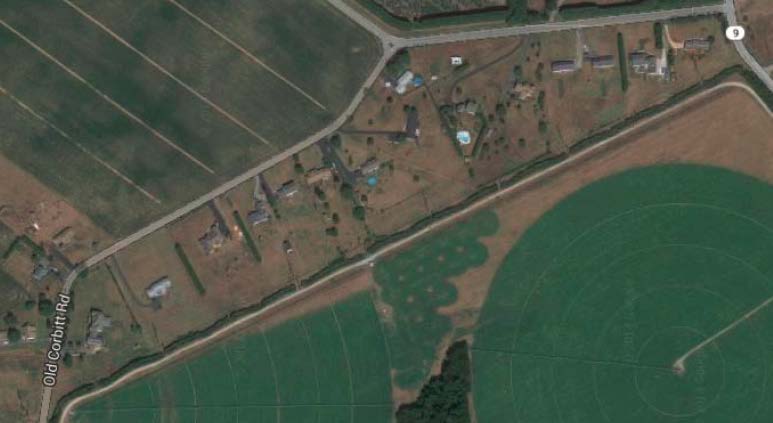
Here’s another subdivision on the other side of Hwy. 9, and the homes along Middessa Drive:
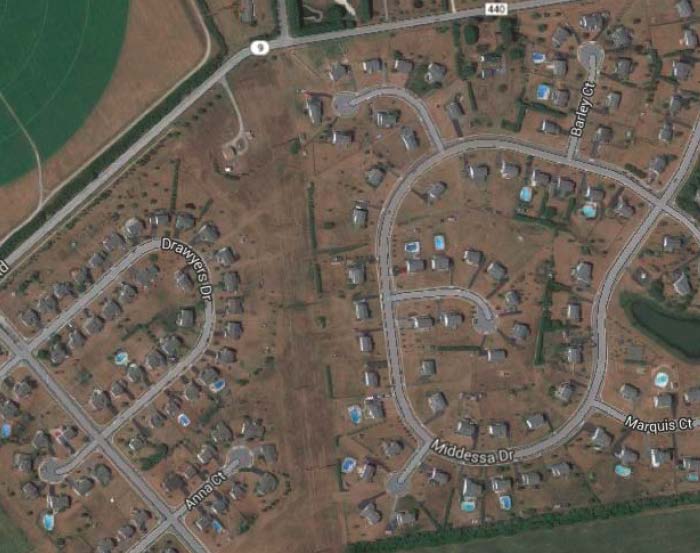
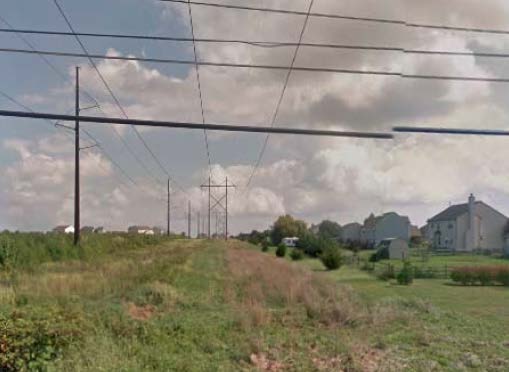
Just a little further south, where the line turns southwesterly, the line is abutted by the homes on Mailly Drive and Corbit Sharp Drive:
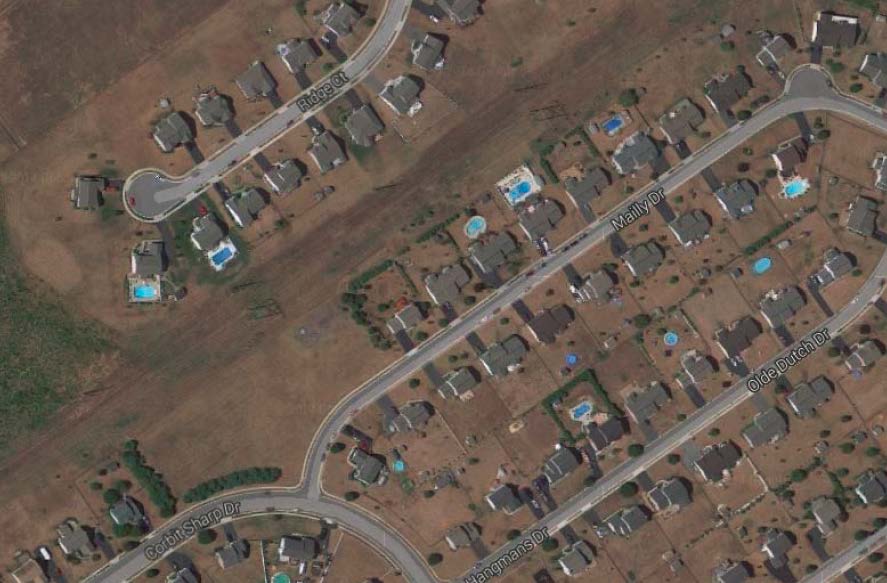
Here’s what that easement looks like — build this new thing on the easterly border of the easement? I think not!
And this northern Red Lion to Milford section of the transmission “rebuild” terminates at the Cedar Creek substation, technically in Townsend:

Again, do you think these folks know anything about this transmission plan? Do you think anyone along that easement is getting direct notice about this???
Here’s Delmarva’s Press Release:
Press Release 12/23/2014 – Delmarva Power Project to Benefit Delaware
Here’s the report from the News Journal:
Delmarva to brief public on transmission line rehab
The electrical spine of Delaware is set for a $70 million rehabilitation.
The utility will host a public meeting to brief the community on the project on Wednesday in Odessa.
Contact Staff Writer Xerxes Wilson at (302) 324-2787 or xwilson@delawareonline.com.
For more information:
Delmarva Power will host a public meeting at 7 p.m. Wednesday, Jan. 7, at the Odessa Fire Company, 304 Main St. in Odessa.
Speaking of rail, NTSB Safety Alert and Reports
January 3rd, 2015
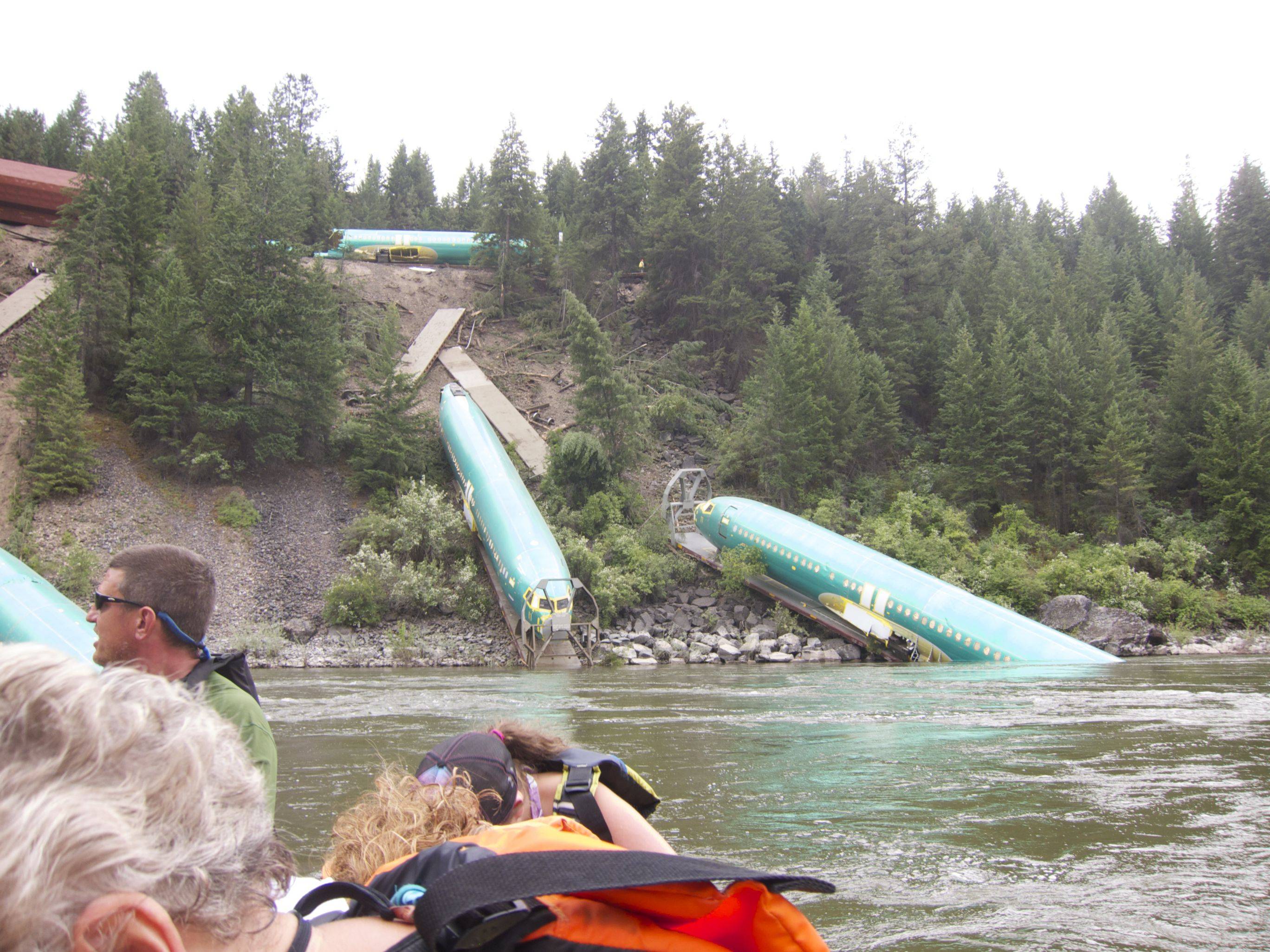
Some rail safety reports and issues hot off the press from NTSB.
- Rail alert about rail warning lighting, where LED was bright and obscured the incandescent red stop light. BOOM! It’s all about “conspicuity!” SA_038_Safety Alert – Visibility-Conspicuity
- Railroad Accident Report: NTSB Report_ChafeeMO_RAR1402
- Railroad Accident Brief: NTSB Report_KeithvilleLA_RAB1414
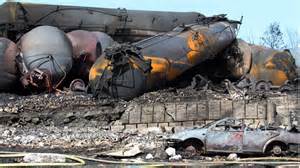
And from the Canadian Transportation Safety Board, the report on the Lac Megantic derailment and massive explosion published in August, 2014 (can’t find that I’d posted it, how can that be? Well, here it is.)
DNR Rail Hearing – January 7 in La Crosse
January 1st, 2015
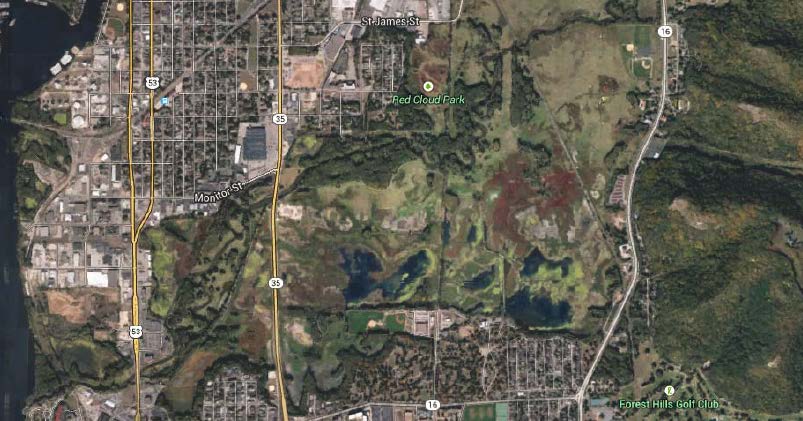
Please attend the DNR hearing on Burlington Northern’s request to build a second rail line in the La Crosse River Marsh.
2-5 p.m., Wednesday January 7
Black River Beach Center
1433 Rose Street
La Crosse, WI
https://www.youtube.com/watch?v=CgyAe2SnyUQ
More history — a stunning video:
http://insideclimatenews.org/video/boom-north-americas-explosive-oil-rail-problem
- Attend the meeting and bring friends: A room filled with concerned citizens has an impact. The press and DNR will take note. We can have an impact on the discussion and decision.
- Speak at the meeting if you are willing. You don’t have to be expert. Just say why the marsh is important to you and what your concerns are about train traffic, more of it, and the risks involved. Keep on point about the La Crosse River Marsh and the BNSF rail. This is what the meeting is for.
- Ask for an “Environmental Impact Statement” (EIS). This project warrants an EIS because of it scale, implications for safety and health, and broad public concern. An environmental expert would be hired at BNSF’s expense to assess the current use and health of the marsh, provide a baseline for future cumulative impact studies, and result in the best possible solutions if approval is given. It would be paid for BNSF.
- There is no guarantee that money BNSF pays for loss of flood plain will return to La Crosse. Ask the DNR to find a way for BNSF to pay for improvements to the Marsh to minimize the impact of lost flood plain.
- Provide written comments to the DNR before, during, or within 10 days after the meeting. A paper trail has significant impact now and for the future. Here is a link to help: Click here for help on drafting a letter.
- For citizens to make the DNR aware of the importance of the Marsh and risks of this project, to share concerns, and to ask questions.
- To provide the DNR with information to make well-informed decisions that would prevent construction of a second rail or reduce the risks and impacts.
- Rail transport of Bakken crude in unsafe DOT-111 tankers has skyrocketed to about six 100-car trains daily (430,000 barrels). Enbrige’s Alberta Clipper Pipeline carries 450,000 barrels per day. Essentially BNSF railway is a “rolling pipeline” through the Upper Mississippi Refuge and the Marsh.
- Spills are over 3 times more likely per mile by rail oil transport than by pipeline. There has been more than one spill per day from tankers this year in the US. Some have destroyed marshes and seriously polluted rivers.
- Spills into marshes are virtually impossible to clean up. There is no effective, acting model for marsh spill containment. A large spill would destroy the Marsh’s ecosystem.
- Proposed expansion would eliminate 7.28 acres of marsh, which will not be replaced in or near Myrick marsh, and may not even happen within the La Crosse watershed.
- Could increased vibration, noise, and pollution threaten habitat for species such as rare black terns and yellow headed blackbirds as well as many other species?
- Floodplain will be removed. With the increased occurrence of local flooding, is the 100-year flood criteria used by the DNR still sufficient to protect citizens? To prevent flood insurance increases?
- Could our local Hazmat team prevent a spill from spreading to the Mississippi?
- Who will pay for training for first responders?
- Who would pay for any clean-up should there be a problem?
But remember it has happened elsewhere. It’s happened recently in Lynchburg, Aliceville, Lac Megantic, and Casselton (twice in one year!). Imagine La Crosse with a fouled, dead Marsh and oil-contaminated La Crosse River flowing through the city to Riverside Park and into the Mississippi. That is the risk.
Ralph Knudson, Nancy Heerens-Knudson, Irv Balto, Marina Dvorak, Maureen Freedland, Bruce Kuehmichel, Chuck Lee, Carolyn Mahlum-Jenkins, Curtis Miller, Fred Nicklaus, George Nygaard, Rich Pein, Karen Ringstrom, Jeff Sexton, Jan Stack, Alan Stankevitz, Guy Wolf
To help defray costs of flyers, copies, ink, photos, etc, please send a check for any amount. Please be aware that CARS does not have tax-exempt status for deductions.Thank you!
CARS
Citizens Acting For Rail Safety
Jeff Sexton, Treasurer2820 Cass Street
La Crosse, WI 54601
e21 Initiative — Xcel is at it again, yet another scam
December 27th, 2014

Xcel Energy has filed its “e21_Initiative_Phase_I_Report_2014: Charting a Path to a 21st Century Energy System in Minnesota as a part of a filing entitled “INITIAL FILING–REQUEST FOR PLANNING MTG AND DIALOGUE IN SUPPORT OF E21 INITIATIVE” (now PUC Docket 14-1055) in which they make a request for consideration at a Public Utilities Commission planning meeting:
Request for Planning Mtg and Dialogue – Roadmap to Support e21 Initiative
It’s not just Xcel, but they’re the ringleaders filing the request. So what is this and why support it? Well, first, let’s look at the basic plan — “stakeholders” and Xcel are proposing things be done differently. Why? Well, here’s an egregious example. How about circumventing all that pesky criteria that they must meet to get a Certificate of Need, and we know how hard that is to prove up need when there is none… so will someone tell me what the relationship is between “use of, and give additional weight to, settlement agreements among the parties” and criteria for a Commission on anything, be it a Certificate of Need or a Rate Case?
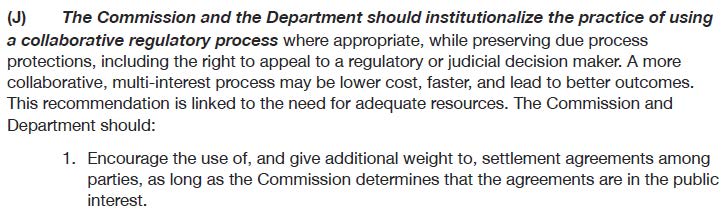
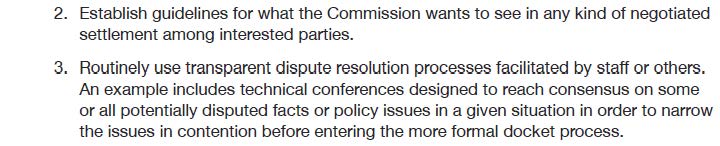
Can you believe that? But wait, how many Certificate of Need applications have ever been denied? Oh well, maybe it makes them work at it too hard to fabricate some need claim? And we know how rate cases have been going lately, not exactly in a way that Xcel wants!
Another points they’re looking for:

Don’t want those pesky intervenors in individual cases, after all. Multiple dockets for multiple projects, how on earth could people receive notice, participate and find representation in this scenario? And how about not doing anything until they’ve addressed the 09-845 “Public Health Impacts of Wind Turbines” docket that’s been languishing for five years now?
And look who the “stakeholders” are, and clearly some are more equal than others. Look who’s involved, the same utility interests, or the toadies that have sold out to the utility interests:
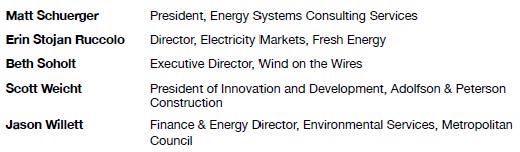
Note that not one of these “stakeholders” have bothered to join, participate, attend, or file comments on the PUC rulemaking for Minn. R. Ch. 7849 Certificate of Need and 7850 Site or Route Permt. None of them bothered to weigh in on the Office of Administrative Hearings Minn. R. Ch. 1400 and 1405 Rulemaking trial balloon either (it’s on hold, and comments have not been published and I had to file a FOIA Request to get the Comments of others).
And given what Gov. Dayton had floated as his trial ballon, it gets a little scary:
What is Gov. Dayton thinking?
AAAARGH! Anyway, back to the “stakeholders.” Utility toadies all… except I don’t know of toadying on the part of Ron Elwood, who’s often been participating on behalf of ratepayers in ratecases, and did a great report on nuclear ages ago. But the vast majority are either utility employees or have been a clear benefactor of “agreements” with utilities and are actively advocating positions beneficial to utilities, a revolving door of personnel and employers. Mikey Bull’s been on every side of this multi-party love-fest, Betsy Engelking too. Beth Soholt and Matt Schuerger, then of the Waltons and ME3, are the ones who asked 7 or 8 of us likely intervenors “what would it take for you to approve this project” just before the SW MN 345 kV transmission line 01-1958 docket was applied for, searching for a sell-out but not offering anything or disclosing what exactly they were getting:
$8.1 Million Wind on Wires grant from McKnight/Energy Foundation
And looking back on some of the deals… for example:
This “Merger Stipulation” shows the beginning of not just the wind promotion but the transmission toadyism:
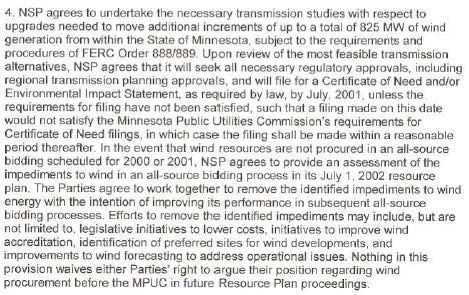 Who can forget the 01-1958 SW MN 345 kV 4 Certificates of Need docket, where parties, well, SOME parties, were actively encourage to “negotiate” by then ALJ and now PUC Chair Heydinger, and Crocker and Krikava were so busy winking at each other?
Then on p. 1 of the Commission’s Order:

Throughout that proceeding, ALJ, now PUC Chair Heydinger, encouraged certain parties to negotiate, and negotiate they did and a couple of settlements occurred at that time, one was the Community Wind agreement incorporated into that docket, and the other the TRANSLink agreement:
And shortly thereafter, let’s not forget the dough to promote transmission — once more with feeling:
$8.1 Million Wind on Wires grant from McKnight/Energy Foundation
Then we have these same folks at the legislature lobbying for the Transmission Omnibus Bill from Hell giving Xcel everything they ever wanted:
Well, apparently not everything they wanted, because now they want more. We saw how promotion of transmission worked on this ITC Midwest MN/IA 345 kV case. And don’t forget, the Walton’s Bill Grant is now Deputy Commissioner of Commerce in charge of Energy permitting and “environmental review,” and the Walton’s Nancy Lange is now on the Public Utilities Commission.
Wonder what kind of review their “e21 Initiative” will get!
Where is the public interest in this?
Accountability and misbehavior of Non-Profits
December 23rd, 2014
Here are materials sent by David Schultz after he was down here in Red Wing to speak about what it means to be on a nonprofit board, things to be aware of, basic ethics and responsibilities. Great turnout, and a lot of good, needed, information. MUCH appreciated, David!
And here’s another column about misbehavior of nonprofit and lack of oversight by the nonprofit boards, and another fresh example in TIES, which has some pretty egregious expenditures and practices. It seems the Legislative Auditor is ramping up scrutiny and enforcement actions. YES!
But below in his column, I think Schafer disses the level of training and knowledge required from his very first sentence: “There’s no reason to consult a manual of best practices in nonprofit governance, if anyone’s even thought to write one.” He’s got some homework to do, as do board members! But he ends it on a reasonable note:
Here’s what Lee Schafer has to say:
Schafer: Being a good board member just requires some common sense
Being a fine board member just isn’t that hard.
That probably also means, of course, showing up on time when the board meets.
The Malloy firm’s letter was received May 15, 2002.